Abstract Expressionism
Head (Jackson Pollock)
Jackson Pollock (1912–1956) a realizat Head. Face parte din mișcarea Abstract Expressionism. Este realizată în Acrylic On Canvas.
- Acrylic On Canvas

 Previzualizare

 Tablou în ulei pictat manual
 Trimite prin felicitare
 Distribuie
 Fișă informativă


 Descarcă imaginea
 Produse similare
 Radiografie
 Galerie foto
 Întrebări și răspunsuri

 Statistici
Head, pe scurt
- Titlu
- Head
- Artist
- Jackson Pollock (1912–1956)
- Artist născut în
- Cody, Statele Unite ale Americii
- Medium
- Acrylic On Canvas
- Mișcare
- Abstract Expressionism
- Perioadă
- Modern
- Subiect
- psychological, distortion, multiple eyes, chaos, surrealism, archetypal imagery
Ce reprezintă Head?
A Visceral Exploration of the Human Condition
Jackson Pollock’s *Head*, a work shrouded in some mystery due to its lack of definitive dating and detailed documentation, presents a profoundly unsettling yet captivating vision. It is not a portrait in any traditional sense; rather, it's a fragmented, distorted exploration of the human form pushed to the very edge of recognition. The image assaults the viewer with a multiplicity of eyes and mouths, scattered across a seemingly chaotic surface. This isn’t an attempt at realistic representation but a raw, visceral expression of inner turmoil, anxiety, and perhaps even existential dread. The painting feels less like looking *at* a head and more like being immersed *within* a fractured psyche.Echoes of Surrealism and the Primal Self
To understand *Head*, one must consider Pollock’s artistic journey during its creation – likely in the late 1930s or early 1940s. He was deeply influenced by the Surrealist movement, which sought to unlock the power of the unconscious mind. However, Pollock wasn't simply mimicking Surrealism; he was forging his own path. The multiple eyes and mouths suggest a breakdown of boundaries – a loss of control over perception and expression. This resonates with Jungian psychology, an area Pollock actively explored through therapy during this period. His psychoanalyst encouraged him to express himself through art, leading to drawings that delved into archetypal imagery and the darker recesses of the human psyche. The work also reveals echoes of Picasso’s explorations of distorted figures, particularly his interpretations of mythological creatures like the Minotaur – a symbol of primal instincts and inner conflict. Pollock wasn't merely copying these influences; he was internalizing them and transforming them into something uniquely his own.The Genesis of a Revolutionary Technique
While *Head* doesn’t yet exhibit Pollock’s signature “drip” technique in its fully developed form, it foreshadows the radical innovations that would soon define his career. The layering of forms, the sense of movement and energy within the composition, hint at the all-over painting style he would later perfect. He was beginning to move away from traditional easel painting and explore more direct, physical ways of applying paint to canvas. This experimentation stemmed from a desire to bypass conscious control and tap into a more authentic, spontaneous form of expression. The very act of creating *Head* – the building up of layers, the distortion of form – can be seen as a precursor to his later action paintings, where the process itself became as important as the final product. It’s a crucial stepping stone in understanding how Pollock moved from representational work towards complete abstraction.A Powerful Statement for Modern Interiors
For those considering a reproduction of *Head*, it's essential to understand its emotional weight and visual impact. This is not a painting that will blend seamlessly into the background; it demands attention, provokes thought, and sparks conversation. Its dark, unsettling energy can be surprisingly effective in modern interiors, particularly those with minimalist or industrial aesthetics. The fragmented forms and bold composition create a striking focal point, adding depth and complexity to any space. *Head* is more than just an artwork; it’s a statement – a testament to the power of art to confront us with uncomfortable truths about ourselves and the world around us. It's a piece that will resonate with those who appreciate challenging, thought-provoking art and are unafraid to embrace the darker side of human experience.Imagini la înaltă rezoluție ale lui Head
Domeniu public: artistul a decedat în 1956.
Jackson Pollock, Head. Domeniu public
Întrebări despre Head, răspunsuri
Din ce materiale este realizată „Head”?
Tehnica utilizată pentru "Head" de Jackson Pollock este Acrylic On Canvas, iar reproducerile urmăresc să reducă aspectul acestei tehnici.
Ce reprezintă "Head" de Jackson Pollock?
"Head" de Jackson Pollock surprinde: psychological, distortion, multiple eyes, chaos, surrealism, archetypal imagery, emotional intensity.
Imaginea pentru "Head" de Jackson Pollock poate fi reprodusă liber?
În ceea ce privește drepturile de autor, "Head" este în domeniul public – drepturile de autor au expirat.
Cine este artistul din spatele "Head"?
Artistul din spatele operei „Head” este Jackson Pollock. Lucrarea este catalogată sub numele lui Jackson Pollock.
Din ce curent artistic face parte "Head" de Jackson Pollock?
Mișcarea asociată cu "Head" de Jackson Pollock este Abstract Expressionism. Această clasificare plasează lucrarea printre artiști și opere de artă conexe.
În ce perioadă a carierei lui Jackson Pollock se încadrează "Head"?
„Head” aparține perioadei Mature Period din cariera lui Jackson Pollock. Această clasificare corelează opera cu evoluția artistului.
Este "Head" de Jackson Pollock în domeniul public și care este motivul?
„Head” de Jackson Pollock este în domeniul public – drepturile de autor au expirat. Termenul de protecție a drepturilor de autor se calculează de la data decesului artistului, iar Jackson Pollock a decedat în 1956.
Cum se încadrează „Head” în temele și stilul lui Jackson Pollock?
„Head” împarte cu celelalte opere ale lui Jackson Pollock stilul Abstract Expressionism și temele recurente: surrealist echoes, psychological depth, picasso’s distortion, jungian exploration, early technique foreshadowing.
Cum se încadrează "Head" în rândul temelor recurente ale lui Jackson Pollock?
"Head" înfățișează psychological, distortion, multiple eyes, chaos, surrealism, archetypal imagery, emotional intensity, în timp ce temele recurente ale lui Jackson Pollock sunt surrealist echoes, psychological depth, picasso’s distortion, jungian exploration, early technique foreshadowing. Compararea celor două relevă modul în care această lucrare se raportează la subiectele obișnuite ale artistului.
Despre artistul Jackson Pollock

1912–1956, Statele Unite ale Americii
Jackson Pollock
Viața timpurie, familia și formarea artistică Povestea lui Paul Jackson Pollock începe în peisajul aspre din Cody, Wyoming, unde s-a născut pe 28 ianuarie 1912. Fiind cel mai tânăr dintre cinci frați, născut de Stella May McClure și LeRoy Pollock, viața sa a fost marcată de dinamismul vieții de familie. Tatăl său lucra ca geodez, o profesie ce impunea o mișcare constantă prin vastul Vest American. Această existență nomadă a făcut ca primii ani ai tinărului să fie definiți de relocări frecvente, o neliniște care părea să oglindească orizonturile schimbătoare ale muncii tatălui său.
Despre Jackson Pollock Lucrări remarcabile ale lui Jackson Pollock
Alte lucrări ale lui Jackson Pollock
 Ritmul Toamnei Nr. 30
 Numărul 1, 19491950
 Convergența
 Numărul 1A
Eseuri despre Head
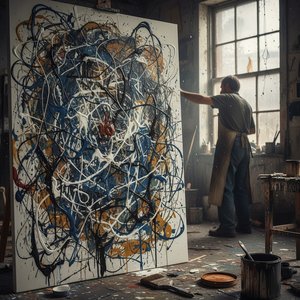 Paul Jackson Pollock: A Radical Departure – Exploring Abstract Expressionism's Pioneering Figure and His Enduring LegacyExplore the revolutionary art of Jackson Pollock & Abstract Expressionism. Discover his iconic drip paintings, lasting impact, and consider…
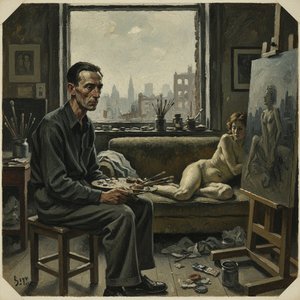 Lucian Freud: A Psychological Portraiture of Post-War ExistenceExplore the profound psychological depth of Lucian Freud's portraits. Discover his unique realism, artistic evolution, and lasting influenc…
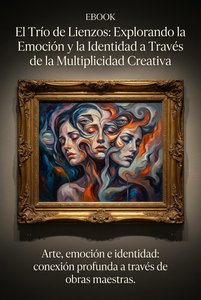 Trei Pânze, O Emoție: Explorarea Impactului Alegerii asupra Percepției Artistice și Identității PersonaleDescoperă puterea artei personalizate! Tablouri ulei realizate de artiști talentați, reproduceri fidele și consultanță gratuită. Creează o …