Expressionism
Carnival (Lyonel Feininger)
Lyonel Feininger (1871–1956) a realizat Carnival. Face parte din mișcarea Expressionism. Este realizată în Oil On Canvas.
- Oil On Canvas

 Previzualizare

 Tablou în ulei pictat manual
 Trimite prin felicitare
 Distribuie
 Fișă informativă


 Descarcă imaginea
 Produse similare
 Radiografie
 Galerie foto
 Întrebări și răspunsuri

 Statistici
Carnival, pe scurt
- Titlu
- Carnival
- Artist
- Lyonel Feininger (1871–1956)
- Artist născut în
- New York, Statele Unite ale Americii
- Medium
- Oil On Canvas
- Mișcare
- Expressionism
- Perioadă
- Early Modern
- Subiect
- people, figures, street scene, building, clock tower, umbrella
Ce reprezintă Carnival?
Identification of Carnival by Lyonel Feininger
The street comes alive in Carnival, a spirited oil on canvas work by Lyonel Feininger. Created in 1911, this piece captures a moment of public celebration. The scene unfolds with a sense of movement, as if the viewer has just stepped into the middle of a bustling procession. People move through the space, their presence adding a layer of human energy to the urban setting.
Lyonel Feininger brings this specific vision to life through his unique handling of the medium. The oil paint carries the weight of the figures and the architecture, grounding the festive atmosphere in a tangible reality. Every brushstroke contributes to the feeling of a city in motion, caught in the middle of a joyful, crowded event. It is a window into a specific time and place, preserved through the artist's hand.
Composition and Visual Elements
A lively street scene unfolds before the eyes, filled with the restless energy of a crowd in motion. At least nine individuals populate the thoroughfare, each caught in a private moment of transit. One figure carries an umbrella against the sky, while another relies on a cane to navigate the pavement. Some travelers shoulder handbags or backpacks, their bodies angled as they move through the urban space. The figures appear to drift past one another, creating a sense of constant, rhythmic movement through the heart of the city.
In the background, the architecture looms with a sense of permanence. A building with a prominent clock tower watches over the pedestrians, its structure anchoring the bustling activity below. The composition draws the eye through the layers of the street, where the interplay of people and buildings creates a complex, layered perspective. The arrangement of the crowd suggests a spontaneous gathering, a slice of daily life where every person contributes to the collective pulse of the scene.
Technique and Artistic Style
The oil on canvas pulses with a restless energy, capturing a moment of movement through a lens of Expressionism. Colors collide and dance across the surface, refusing to settle into quietude. There is a palpable sense of rhythm in the way the pigments are applied, mirroring the lively street scene unfolding before us. The brushwork feels alive, driven by a desire to translate the emotional heat of a public celebration into visible, tactile strokes.
A subtle tension exists between the emotional intensity of Expressionism and the structural discipline of Cubist influence. While the colors scream with life, the underlying forms suggest a more calculated, geometric arrangement. This intersection of styles creates a visual language where the chaos of a crowd meets the organized logic of modernism. The figures move through a space that feels both spontaneous and carefully constructed, as if the artist is balancing the raw feeling of the moment with a precise, architectural eye.
Where to See This Artwork Today
The lively energy of this scene remains preserved within the walls of the Art Institute of Chicago. Visitors traveling to Chicago, IL, US, find this piece held within the institution's permanent collection. It resides there as a part of the Joseph Winterbotham Collection, waiting for those who wander through the museum's galleries to encounter its movement.
The painting stays housed in the Art Institute of Chicago, Chicago. It exists in this specific space, allowing the colors and the figures to remain part of the city's cultural landscape. One can find it among the many works that populate the museum's halls, where the spirit of the carnival continues to exist in its physical form.
Imagini la înaltă rezoluție ale lui Carnival

Domeniu public: artistul a decedat în 1956.
Alte dimensiuni, cadrări și citări →Lyonel Feininger, Carnival. Domeniu public
Întrebări despre Carnival, răspunsuri
Din ce materiale este realizată „Carnival”?
Tehnica utilizată pentru "Carnival" de Lyonel Feininger este Oil On Canvas, iar reproducerile urmăresc să reducă aspectul acestei tehnici.
Ce reprezintă "Carnival" de Lyonel Feininger?
"Carnival" de Lyonel Feininger surprinde: people, figures, street scene, building, clock tower, umbrella, cane, handbags.
Este "Carnival" în domeniul public?
În ceea ce privește drepturile de autor, "Carnival" este în domeniul public – drepturile de autor au expirat.
La ce artist este atribuită opera „Carnival”?
„Carnival” a fost creat de Lyonel Feininger. Informațiile de pe această pagină descriu opera originală a lui Lyonel Feininger.
Din ce curent artistic face parte "Carnival" de Lyonel Feininger?
„Carnival” este o operă de Expressionism. Acest curent indică tradiția artistică din care face parte lucrarea.
În ce perioadă a carierei lui Lyonel Feininger se încadrează "Carnival"?
"Carnival" reprezintă perioada Early Period a lui Lyonel Feininger.
Care este motivul statutului drepturilor de autor pentru "Carnival"?
"Carnival" de Lyonel Feininger este în domeniul public – drepturile de autor au expirat. Durata protecției drepturilor de autor se calculează de la data decesului artistului, survenit în anul 1956.
Ce punct comun are "Carnival" cu restul creației lui Lyonel Feininger?
În creația lui Lyonel Feininger, „Carnival” se înscrie în stilul Expressionism, alături de temele expressionism and cubism influence, urban life exploration, pivotal early career work, transition to fine art.
În ce măsură subiectul operei „Carnival” se regăsește în temele obișnuite ale lui Lyonel Feininger?
Printre temele consacrate ale lui Lyonel Feininger, expressionism and cubism influence, urban life exploration, pivotal early career work, transition to fine art – „Carnival” oferă o perspectivă proprie asupra people, figures, street scene, building, clock tower, umbrella, cane, handbags.
Despre artistul Lyonel Feininger

1871–1956, Statele Unite ale Americii
Lyonel Feininger
Primii Ani și Cariera: De la Caricaturist la Artist Plastic Naștere și Familie: Lyonel Charles Adrian Feininger s-a născut pe 17 iulie 1871, în New York. Tatăl său, Karl Feininger, a fost un viobarist și compozitor germano-american, iar mama sa, Elizabeth Feindinger, a fost o interprete americană. Acest bagaj artistic bogat i-a influențat profund dezvoltarea timpurie. Educația Timpurie și Călătoriile Europene: În 1887, la vârsta de 16 ani, Feininger a călătorit în Europa pentru a studia muzică, însă curând și-a mutat atenția către artă.
Despre Lyonel Feininger Lucrări remarcabile ale lui Lyonel Feininger
Alte lucrări ale lui Lyonel Feininger
 The honeymooners
 Boats1917
 Sailing Boats
 Blue Coast

Eseuri despre Carnival
 Lyonel Feininger: Bridging Expressionism & Cubism – A Study of Spiritual GeometryExplore the captivating world of Lyonel Feininger, a pivotal figure bridging Expressionism & Cubism. Discover his architectural visions, Ba…
 The Architecture of the Crowd: Examining Human Presence in Urban CompositionsExplore the evolution of urban art from Caillebotte to modern street murals. Discover the pulse of the city through masterworks.
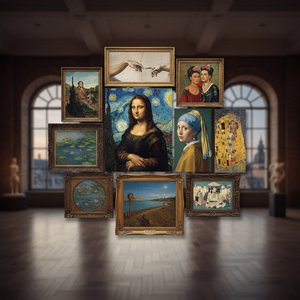 Capodopere în ulei pe pânză: 10 opere care au revoluționat arta | OriginalUniqueArt.roDescoperă cele mai importante 10 capodopere în ulei pe pânză care au schimbat istoria artei! Explorează poveștile lui Van Gogh, Da Vinci și…