Berlin Secession · 1900
Salome, Second Version (Lovis Corinth, 1900)
Lovis Corinth (1858–1925) a realizat Salome, Second Version. Data sa este din 1900. Face parte din mișcarea Berlin Secession. Este realizată în Acrylic On Canvas. Este păstrat la Museum der bildenden Künste în Leipzig, Germania. Dimensiunile sunt 127 × 148 cm.
- 1900
- Acrylic On Canvas
- 127 × 148 cm
- Museum der bildenden Künste, Leipzig

 Previzualizare

 Tablou în ulei pictat manual
 Trimite prin felicitare
 Distribuie
 Fișă informativă


 Descarcă imaginea
 Produse similare
 Radiografie
 Galerie foto
 Întrebări și răspunsuri

 Statistici
Salome, Second Version, pe scurt
- Titlu
- Salome, Second Version
- Artist
- Lovis Corinth (1858–1925)
- Artist născut în
- Tauwade, Rusia
- Date
- 1900
- Medium
- Acrylic On Canvas
- Dimensiuni
- 127 × 148 cm
- Unde poate fi vizualizată
- Museum der bildenden Künste, Leipzig, Germania
- Mișcare
- Berlin Secession
- Perioadă
- 19th Century
- Subiect
- salome, herodias, dance, tragedy, execution, biblical
Ce reprezintă Salome, Second Version?
A Descent into Shadow and Desire: Lovis Corinth’s ‘Salome, Second Version’
Lovis Corinth's “Salome, Second Version,” painted in 1900, isn’t merely a depiction of the biblical tale; it’s a visceral exploration of power, betrayal, and the unsettling allure of darkness. This arresting canvas, currently residing within the Museum der Bildenden Künste in Leipzig, immediately commands attention with its dramatic composition and intensely expressive palette. Corinth, a pivotal figure bridging Impressionism and Expressionism, masterfully eschews traditional romanticism, instead presenting a Salome far removed from the idealized figures of earlier portrayals. Instead of a passive object of desire, she emerges as a complex, almost defiant presence – a woman caught in the throes of her own ambition and haunted by the consequences of her actions.
The painting’s genesis lies within the turbulent artistic landscape of early 20th-century Berlin. Corinth, having moved there from Munich, found himself at the heart of a vibrant, often contentious, art scene. The Secession group, with its emphasis on freedom and innovation, provided a fertile ground for his evolving style. “Salome” reflects this period’s fascination with psychological depth and emotional intensity – a departure from the polished surfaces of academic painting. Corinth deliberately chose to revisit the legend, not as a straightforward narrative illustration, but as an opportunity to delve into the character's inner turmoil and the moral ambiguity at the heart of the story.
The Dance and its Discontents: Technique and Composition
Corinth’s technique is immediately striking. He employs a bold, almost frenetic brushstroke – thick impasto applied with visible energy – that imbues the canvas with a sense of movement and urgency. The colors are rich and saturated, dominated by deep reds, purples, and blacks, creating an atmosphere of dramatic intensity. The composition itself is carefully constructed to draw the viewer into the scene. Salome, positioned centrally, dominates the foreground, her body tilted forward in a pose that suggests both vulnerability and calculated seduction. The figures surrounding her – the servant bearing the head, the watchful woman with the fan, and the shadowy men – are rendered with varying degrees of detail, contributing to the painting’s overall sense of unease and disorientation.
- Brushwork: Thick, expressive strokes create a dynamic and unsettling effect.
- Color Palette: Dominated by deep reds, purples, and blacks, evoking drama and shadow.
- Composition: Salome is centrally positioned, drawing the viewer's eye and emphasizing her role as the focal point of the scene.
Symbolism and Interpretation: A Portrait of Moral Ambiguity
Beyond the literal depiction of the biblical story, “Salome” is laden with symbolic meaning. The dance itself represents a dangerous allure – a seductive invitation to transgression. The severed head on the platter isn’t simply a gruesome trophy; it's a potent symbol of ambition and the destructive consequences of unchecked desire. Corinth deliberately avoids offering a clear moral judgment, instead presenting a complex portrait of a woman driven by both her own desires and the manipulative influence of her mother. The inclusion of the fan-bearing woman, often interpreted as Herodias, adds another layer of intrigue, suggesting a conspiracy at play – a deliberate orchestration of events that leads to John the Baptist’s demise.
Furthermore, the painting can be viewed through the lens of the burgeoning feminist movement of the time. Salome's defiant gaze and her unapologetic embrace of her sexuality challenged traditional notions of female virtue and presented a powerful image of female agency – albeit one ultimately consumed by tragedy. Corinth’s decision to portray her as a figure of both beauty and menace reflects the complex and often contradictory attitudes towards women in early 20th-century society.
Emotional Resonance: A Timeless Exploration of Human Darkness
“Salome, Second Version” continues to resonate with viewers today because it taps into fundamental human emotions – desire, betrayal, guilt, and the haunting awareness of our own mortality. Corinth’s masterful use of color, composition, and symbolism creates a painting that is both visually arresting and psychologically profound. It's not a comfortable image; it confronts us with the darker aspects of human nature and reminds us that even in moments of apparent beauty and pleasure, there can be a lurking sense of unease and impending doom. Reproductions of this powerful work offer a glimpse into Corinth’s artistic genius and provide an opportunity to contemplate the timeless themes explored within its shadowed depths.
În ce muzeu se află Salome, Second Version?
Museum der bildenden Künste
Leipzig, Germania
O Moștenire Forjată în Timp: Sufletul Inimii Artistice a Leipzigului În peisajul cultural vibrant al Saxonia, Germania, se înalță o instituție care servește mult mai mult decât ca un simplu depozit de capodopere; este o mărturie vie a rezilienței umane și a puterii durabile a creativității. Museum der bildenden Künste (MdbK) din Leipzig concentrează șapte secole de efort artistic, țesând o narațiune care cuprinde de la sfârșitul Evului Mediu până la vârful avangardei contemporane. Fondată în 1837 sub numele de Asociația de Artă din Leipzig, călătoria muzeului a fost una de profundă transformare, marcată de umbrele distrugerii și de strălucirea renașterii.


Imagini la înaltă rezoluție ale lui Salome, Second Version
Domeniu public: artistul a decedat în 1925.
Lovis Corinth, Salome, Second Version (1900), Museum der bildenden Künste. Domeniu public
Întrebări despre Salome, Second Version, răspunsuri
Unde poate fi vizualizată astăzi opera "Salome, Second Version" de Lovis Corinth?
Puteți vedea originalul "Salome, Second Version" la Museum der bildenden Künste, Leipzig, Germania.
În ce an a fost creată "Salome, Second Version" de Lovis Corinth?
"Salome, Second Version" de Lovis Corinth a fost creat(ă) în 1900.
Din ce materiale este realizată „Salome, Second Version”?
Lovis Corinth a utilizat tehnica Acrylic On Canvas pentru "Salome, Second Version". Tehnica definește natura materială a lucrării originale.
Ce dimensiuni are originalul "Salome, Second Version"?
Lucrarea originală "Salome, Second Version" de Lovis Corinth are dimensiunile de 127 x 148 cm.
Ce subiecte sunt reprezentate în "Salome, Second Version" de Lovis Corinth?
Temele prezente în "Salome, Second Version" de Lovis Corinth includ salome, herodias, dance, tragedy, execution, biblical, figures. Împreună, acestea definesc subiectul întregii opere de artă.
Este "Salome, Second Version" în domeniul public?
"Salome, Second Version" de Lovis Corinth este în domeniul public (în domeniul public – drepturile de autor au expirat). Acest statut reglementează modul în care imaginea lucrării poate fi reprodusă.
Cine este artistul din spatele "Salome, Second Version"?
„Salome, Second Version” este atribuit lui Lovis Corinth.
Din ce curent artistic face parte "Salome, Second Version" de Lovis Corinth?
Mișcarea asociată cu "Salome, Second Version" de Lovis Corinth este Berlin Secession. Această clasificare plasează lucrarea printre artiști și opere de artă conexe.
În ce perioadă a carierei lui Lovis Corinth se încadrează "Salome, Second Version"?
În cariera lui Lovis Corinth, „Salome, Second Version” aparține perioadei Berlin Secession Era. Această etapă facilitează compararea sa cu celelalte opere ale artistului.
Despre artistul Lovis Corinth

1858–1925, Rusia
Lovis Corinth
A Life Forged in Paint: The World of Lovis Corinth Lovis Corinth, născut Franz Heinrich Louis pe 21 iulie 1858, în provincia prusiană a Estului Prussia, era o figură care întruchipea tranziția tumultoasă de la lumea artei din secolul al XIX-lea la cea timpurie a secolului XX. Călătoria sa nu a fost una a recunoașterii imediate, ci mai degrabă una a unei evoluții graduale, alimentată de studiu perseverent, influențe diverse și, în cele din urmă, de tragedia personală. Începuturile lui Corinth erau înrădăcinate în peisajele rurale ale locului său de naștere, Tapiau, unde tatăl său lucra ca tosător. Această expunere timpurie la fizicitatea muncii și la frumusețea brută a naturii ar permea subtil mai târziu opera sa, chiar și în mijlocul explorărilor stilistice mai sofisticate.
Despre Lovis Corinth Lucrări remarcabile ale lui Lovis Corinth
Alte lucrări ale lui Lovis Corinth
 În Șură1893
 Wilhelmine cu balonul1915
 Portrait of the Painter Paul Eugène Gorge1908
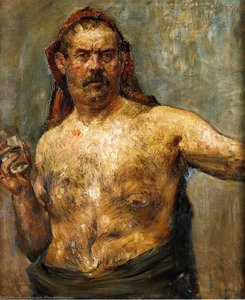 Self Portrait with a Glass1907
Eseuri despre Salome, Second Version
 Lovis Corinth: Bridging Impressionism & Expressionism – A Study of Artistic EvolutionExplore the fascinating artistic journey of Lovis Corinth, a pivotal figure bridging Impressionism & Expressionism. Discover his evolution,…
 The Soul of the Brushstroke: Why Textured Impasto Defines the Magic of Impressionist MasterpiecesDiscover the tactile magic of Impressionism. Explore how the impasto technique breathes life into masterpieces through texture and light. E…
 Unveiling the Dreamer: The 25 Most Iconic Masterpieces by Gustave MoreauStep into the dreamlike world of Gustave Moreau. Explore 25 iconic Symbolist masterpieces, from mythic legends to opulent textures. Find in…