Constructivism/Suprematism · 1923
Small composition (László Moholy-Nagy, 1923)
László Moholy-Nagy (1895–1946) a realizat Small composition. Data sa este din 1923. Face parte din mișcarea Constructivism/Suprematism. Este realizată în Acrylic On Canvas. Este păstrat la Bauhaus Dessau Foundation în Dessau-Roßlau, Germania. Dimensiunile sunt 24 × 30 cm.
- 1923
- Acrylic On Canvas
- 24 × 30 cm
- Bauhaus Dessau Foundation, Dessau-Roßlau

 Previzualizare

 Tablou în ulei pictat manual
 Trimite prin felicitare
 Distribuie
 Fișă informativă


 Descarcă imaginea
 Produse similare
 Radiografie
 Galerie foto
 Întrebări și răspunsuri

 Statistici
Small composition, pe scurt
- Titlu
- Small composition
- Artist
- László Moholy-Nagy (1895–1946)
- Artist născut în
- Bácsborsód, Ungaria
- Date
- 1923
- Medium
- Acrylic On Canvas
- Dimensiuni
- 24 × 30 cm
- Unde poate fi vizualizată
- Bauhaus Dessau Foundation, Dessau-Roßlau, Germania
- Mișcare
- Constructivism/Suprematism
- Subiect
- abstract art, geometric shapes, line composition, modern design, spatial relationships, color harmony
Ce reprezintă Small composition?
László Moholy-Nagy’s “Small Composition”: A Pioneering Leap into Abstract Form
“Small Composition,” created in 1923 by László Moholy-Nagy, isn't merely a painting; it’s a crystallized moment of artistic revolution. Emerging from the fertile ground of Constructivism and deeply influenced by the radical experimentation of the Bauhaus school, this work represents a pivotal shift in how artists approached representation – moving beyond mimetic accuracy to explore the inherent power of form, line, and color as autonomous elements of visual language. The piece, rendered in watercolor and gouache on paper, immediately captivates with its dynamic geometry, a carefully orchestrated balance between order and chaos that speaks volumes about the artist’s evolving philosophy.
At first glance, “Small Composition” appears strikingly abstract, yet closer inspection reveals a sophisticated system of relationships. A central axis line bisects the canvas, acting as a silent guide to the placement of several key shapes: a vibrant blue crescent moon, a bold yellow circle, and a striking red rectangle. These aren’t simply decorative elements; they are deliberately positioned to create a sense of spatial depth and visual tension. The overlapping forms suggest movement and interaction, inviting the viewer to actively engage with the composition and decipher its underlying structure. The flatness of the medium – watercolor and gouache on paper – further emphasizes this interplay of form, creating an illusion of three-dimensionality through careful layering and line weight.
The Bauhaus Legacy and the Embrace of Technology
To fully appreciate “Small Composition,” it’s crucial to understand its context within the broader artistic landscape of the early 20th century. Moholy-Nagy's time at the Bauhaus in Weimar was transformative, exposing him to a radical new approach to design that sought to integrate art with industry and technology. The Bauhaus championed functionalism, believing that art should serve a purpose beyond mere aesthetics – it should improve people’s lives through innovative design solutions. This ethos is powerfully reflected in “Small Composition,” which can be seen as an exploration of the principles of geometric abstraction, a technique favored by Constructivist artists like Piet Mondrian and Kazimir Malevich.
However, Moholy-Nagy wasn't simply replicating these movements; he was pushing them forward. He recognized the potential of photography – a relatively new medium at the time – to challenge traditional notions of representation. His early experiments with photograms (photographs created without a camera) demonstrated his fascination with chance and accident, suggesting that art could emerge from unexpected combinations of light and shadow. “Small Composition” can be interpreted as an extension of this exploration, utilizing the principles of photography—particularly its ability to capture fleeting moments and manipulate perception—to create a dynamic and visually arresting composition.
Symbolism and Emotional Resonance
While ostensibly abstract, "Small Composition" is rich in subtle symbolism. The dominant blue crescent moon could represent intuition or dreams, while the bold yellow circle might symbolize energy or enlightenment. The red rectangle, often associated with stability and structure, provides a grounding element to the composition. The deliberate use of color—each hue carefully chosen for its emotional impact—further enhances the work’s expressive power. It's not about depicting recognizable objects; it’s about evoking feelings and ideas through pure form and color.
Beyond these specific symbols, “Small Composition” resonates with a sense of dynamism and forward momentum. The intersecting lines and overlapping shapes create a feeling of movement and transformation, suggesting that the artwork is constantly evolving before the viewer's eyes. It’s a testament to Moholy-Nagy’s belief that art should be an active force—capable of stimulating thought, provoking emotion, and ultimately transforming our perception of the world.
A Reproduction Worthy of Display
Reproductions of “Small Composition” offer a remarkable opportunity to bring this pioneering artwork into any interior space. The vibrant colors and dynamic composition will add a touch of modern sophistication while simultaneously evoking the spirit of artistic innovation. Consider framing the reproduction in a minimalist style to allow the artwork’s inherent beauty to shine through, or opt for a bold statement piece that commands attention. “Small Composition” is more than just a print; it's an invitation to engage with the transformative power of abstract art.
În ce muzeu se află Small composition?
Bauhaus Dessau Foundation
Dessau-Roßlau, Germania
Unul dintre cele mai importante centre ale moștenirii Bauhaus Bauhaus Dessau Foundation, situată în inima orașului Dessau-Roßlau din Germania, nu este doar un muzeu; este o experiență temporală, o călătorie profundă în inima mișcării artistice și arhitecturale care a remodelat lumea. Fondată în 1994, această instituție vibrantă își propune să conserve, să cerceteze și să comunice moștenirea monumentală a Bauhausului, un proiect revoluționar născut din ideile lui Walter Gropius, un pionier al modernismului. Vizitatorii sunt întâmpinați într-o clădire iconică, o capodoperă arhitecturală în sine – Bauhaus Building, proiectat de Gropius și considerată un simbol al epocii sale.
 Bauatelier Gropius (Gropius architecture studio with Kurt Stolp, Hermann Bunzel and Hermann Trinkaus)Edmund Collein, 1928
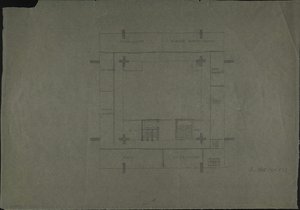 "3rd FLOOR (Design for a foreign representation of the GDR. Floor plan)" -> "Etajul 3 (Proiect pentru reprezentarea unei țări străine a RDG. Plan parțial)"Franz Ehrlich
 2nd preliminary study for billiard ball poster (notes for own class)Joost Schmidt, 1931
Imagini la înaltă rezoluție ale lui Small composition

Domeniu public: artistul a decedat în 1946.
Alte dimensiuni, cadrări și citări →László Moholy-Nagy, Small composition (1923), Bauhaus Dessau Foundation. Domeniu public
Întrebări despre Small composition, răspunsuri
În ce muzeu se află originalul "Small composition"?
Puteți vedea originalul "Small composition" la Bauhaus Dessau Foundation, Dessau-Roßlau, Germania.
În ce an a fost creată „Small composition”?
Opera "Small composition" de László Moholy-Nagy a fost creată în 1923.
Din ce materiale este realizată „Small composition”?
"Small composition" este realizat în Acrylic On Canvas."
Ce dimensiuni are originalul "Small composition"?
„Small composition” măsoară 24 x 30 cm în formatul său original. Dimensiunile originale reprezintă o referință utilă atunci când alegeți dimensiunea unei reproduceri.
Ce reprezintă "Small composition" de László Moholy-Nagy?
Subiectele din "Small composition" sunt abstract art, geometric shapes, line composition, modern design, spatial relationships, color harmony, early 20th century, minimalist form.
"Small composition" de László Moholy-Nagy face parte din domeniul public?
Statusul drepturilor de autor pentru "Small composition" de László Moholy-Nagy: opera este în domeniul public – drepturile de autor au expirat. Acest lucru determină dacă reproducerile imaginii pot fi realizate liber.
Cine este artistul din spatele "Small composition"?
„Small composition” este atribuit lui László Moholy-Nagy.
Din ce stil face parte "Small composition"?
Mișcarea asociată cu "Small composition" de László Moholy-Nagy este Constructivism/Suprematism. Această clasificare plasează lucrarea printre artiști și opere de artă conexe.
În ce perioadă a carierei lui László Moholy-Nagy se încadrează "Small composition"?
"Small composition" reprezintă perioada Early Modern a lui László Moholy-Nagy.
Despre artistul László Moholy-Nagy

1895–1946, Ungaria
László Moholy-Nagy
László Moholy-Nagy: Un pionier al artei moderne și al Bauhaus László Moholy-Nagy, o figură excepțională a scenei artistice din secolul XX, a fost un pictor, fotograf, sculptor și designer maghiar de o influență profundă. Este renumit în special pentru contribuțiile sale semnificative la școala Bauhaus și pentru munca sa pionieristă în Constructivism, tipografie, fotografie și artă cinetică. Filosofia artistică a lui Moholy-Nagy se baza pe integrarea tehnologiei și industriei în arta, pledând pentru o nouă viziune asupra creativității care îmbrățișa lumea modernă. Tinerețe și influențe László Weisz s-a născut în Bacsborsód, Ungaria, în 1895, într-o familie evreiască.
Despre László Moholy-Nagy Lucrări remarcabile ale lui László Moholy-Nagy
Alte lucrări ale lui László Moholy-Nagy
 Untitled, Dessau
 Untitled\n\nUntitled1939
 Untitled
 Hilla Rebay1924

Eseuri despre Small composition
 Cele mai importante 10 capodopere ale abstracției geometrice | Artă & Decor de lux pe OriginalUniqueArt.comDescoperă cele mai importante 10 capodopere ale abstracției geometrice! Explorează istoria, artiștii (Mondrian, Kandinsky) și culorile vibr…
 De Stijl and Bauhaus: Distinguishing Two Pillars of Modern DesignMaster the distinctions between De Stijl and Bauhaus design. Explore the history of these modern pillars now.
 Geometry with Purpose: Distinguishing Suprematism from ConstructivismMaster the differences between Suprematism and Constructivism with our expert guide. Discover the soul of the Russian avant-garde now.