Symbolist Expressionism · 1895
The Skeleton Painter (James Ensor, 1895)
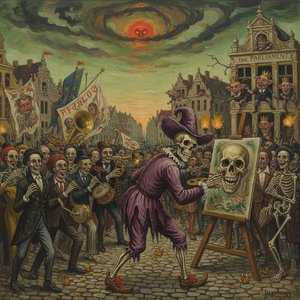
James Ensor (1860–1949) a realizat The Skeleton Painter. Data sa este din 1895. Face parte din mișcarea Symbolist Expressionism. Este realizată în Acrylic On Canvas. Este păstrat la Koninklijk Museum voor Schone Kunsten în Antwerpen, Belgia.
- 1895
- Acrylic On Canvas
- Koninklijk Museum voor Schone Kunsten, Antwerpen

 Previzualizare

 Tablou în ulei pictat manual
 Trimite prin felicitare
 Distribuie
 Fișă informativă


 Descarcă imaginea
 Produse similare
 Radiografie
 Galerie foto
 Întrebări și răspunsuri

 Statistici
The Skeleton Painter, pe scurt
- Titlu
- The Skeleton Painter
- Artist
- James Ensor (1860–1949)
- Artist născut în
- Oostende, Belgia
- Date
- 1895
- Medium
- Acrylic On Canvas
- Unde poate fi vizualizată
- Koninklijk Museum voor Schone Kunsten, Antwerpen, Belgia
- Mișcare
- Symbolist Expressionism
- Subiect
- skeleton, artist, death, masks, paintings, room
Ce reprezintă The Skeleton Painter?
A Dance with Mortality: James Ensor’s “The Skeleton Painter”
James Ensor's "The Skeleton Painter," completed in 1895, is not merely a painting; it’s an unsettling plunge into the subconscious, a meticulously crafted tableau of morbidity and artistic obsession. The image, rendered with a distinctive and increasingly personal style, immediately confronts the viewer with a scene both bizarre and profoundly familiar – a room overflowing with art, dominated by a central figure: a skeleton diligently wielding a paintbrush. This isn’t a morbid spectacle intended to shock for shock's sake; rather, it’s a complex meditation on life, death, creativity, and the inescapable nature of artistic endeavor. Ensor, born in Ostend, Belgium, in 1860, cultivated an intensely individual vision, one deeply rooted in his upbringing amidst the vibrant chaos of a seaside resort town and fueled by a fascination with masks, disguise, and the theatricality of human experience.
The Artist’s Studio – A Realm of Shadows
The setting itself is crucial to understanding the painting's power. The room is crammed with canvases, each bearing witness to Ensor’s restless hand. A dining table, laden with objects—a clock, a partially consumed meal—suggests an interrupted life, a space where sustenance and creation intertwine. The presence of other skeletons, scattered amongst the chairs and leaning against walls, reinforces the pervasive theme of mortality. These aren't simply decorative elements; they are active participants in the scene, almost as if they’re observing or even contributing to the artist’s work. The inclusion of a cat, curled up near the left edge, adds an element of domesticity and perhaps a subtle critique – a creature of instinct and survival nestled within this world of intellectual pursuit.
Symbolism and Technique: A Palette of Unease
Ensor’s technique is immediately recognizable. He employed a thick, impasto application of paint, building up layers of color to create a tactile surface that seems almost sculptural. The palette is deliberately muted – browns, greys, ochres, and deep blues dominate—contributing to the painting's somber mood. The skeletal figure itself is rendered with remarkable detail, highlighting the fragility of bone while simultaneously conveying a sense of focused determination. Notice how Ensor uses strong diagonals – particularly in the arrangement of the chairs and paintings – to create a feeling of unease and instability. The use of color is not about beauty; it’s about evoking emotion, creating a visual atmosphere of melancholy and contemplation. His style evolved significantly throughout his career, moving away from academic influences towards a highly expressive, often unsettling, approach that anticipated the Symbolist movement.
Ensor's Exploration of Artistic Identity
"The Skeleton Painter" can be interpreted as an exploration of Ensor’s own artistic identity and his relationship to mortality. The skeleton artist represents not just death but also the inevitable end of creative endeavor, the fading of inspiration with time. It speaks to the paradox of the artist – someone who often seems detached from the everyday realities of life, yet is ultimately defined by their engagement with them. Ensor’s own struggles with artistic recognition and his rejection of traditional academic training likely fueled this preoccupation with themes of isolation and the ephemeral nature of existence. The painting isn't a celebration of art; it’s a questioning of its purpose and its ultimate significance in the face of oblivion. It invites us to consider what drives an artist to create, knowing that their work, like their own physical form, will eventually succumb to time.
OriginalUniqueArt offers exquisite, hand-painted reproductions of James Ensor’s “The Skeleton Painter,” allowing you to bring this haunting masterpiece into your home or office. Each reproduction is created with the same meticulous attention to detail and expressive technique as the original, capturing the painting's unique atmosphere and emotional depth. Explore our collection today and experience the unsettling beauty of Ensor’s vision.
În ce muzeu se află The Skeleton Painter?
Koninklijk Museum voor Schone Kunsten
Antwerpen, Belgia
Origini și istoria muzeului Koninklijk Museum voor Schone Kunsten a fost înființat în anul 1810, având rădăcinile adânc înpănțuite în moștenirea Gildei de la Sfântul Luca din Antwerpen, o instituție de prestigiu care a activat de la sfârșitul secolului al XIV-lea până în 1773. Colecția muzeului a pris avânt prin operele de artă deținute de această gildă, creând astfel o punte directă între trecutul comercial al orașului și evoluția sa artistică de neegalat. Păstrarea acestor tezaure reprezintă o călătorie prin timp, acoperind un spectru cronologic vast, de la capodopere din secolul al XIV-lea până la creații din secolul al XX-lea.


Imagini la înaltă rezoluție ale lui The Skeleton Painter

Domeniu public: artistul a decedat în 1949.
Alte dimensiuni, cadrări și citări →James Ensor, The Skeleton Painter (1895), Koninklijk Museum voor Schone Kunsten. Domeniu public
Întrebări despre The Skeleton Painter, răspunsuri
Unde pot vedea originalul "The Skeleton Painter" de James Ensor?
Puteți vedea originalul "The Skeleton Painter" la Koninklijk Museum voor Schone Kunsten, Antwerpen, Belgia.
În ce an a fost creată "The Skeleton Painter" de James Ensor?
„The Skeleton Painter” datează din 1895. Această dată plasează lucrarea în cadrul carierei lui James Ensor și în contextul epocii sale.
În ce tehnică este realizată lucrarea "The Skeleton Painter" de James Ensor?
Tehnica utilizată pentru "The Skeleton Painter" de James Ensor este Acrylic On Canvas, iar reproducerile urmăresc să reducă aspectul acestei tehnici.
Ce subiecte sunt reprezentate în "The Skeleton Painter" de James Ensor?
Temele prezente în "The Skeleton Painter" de James Ensor includ skeleton, artist, death, masks, paintings, room, cat, decay. Împreună, acestea definesc subiectul întregii opere de artă.
Este "The Skeleton Painter" în domeniul public?
În ceea ce privește drepturile de autor, "The Skeleton Painter" este în domeniul public – drepturile de autor au expirat.
La ce artist este atribuită opera „The Skeleton Painter”?
„The Skeleton Painter” este atribuit lui James Ensor.
Din ce stil face parte "The Skeleton Painter"?
„The Skeleton Painter” este o operă de Symbolist Expressionism. Acest curent indică tradiția artistică din care face parte lucrarea.
Din ce perioadă a carierei lui James Ensor face parte „The Skeleton Painter”?
„The Skeleton Painter” aparține perioadei Late Period din cariera lui James Ensor. Această clasificare corelează opera cu evoluția artistului.
La ce vârstă a creat James Ensor opera „The Skeleton Painter”?
Când „The Skeleton Painter” a fost creat în 1895, James Ensor – născut în 1860 – avea 35 ani.
Despre artistul James Ensor

1860–1949, Belgia
James Ensor
Tinerețea, Familia și Formarea Artistică James Ensor s-a născut pe 13 aprilie 1860, în Ostend, Belgia. Identitatea sa a fost modelată de o intersecție culturală specifică: tatăl său, James Frederic Ensor, s-a născut în Bruxelles de părinți englezi, în timp ce mama sa, Maria Catherina Haegheman, era belgiană. Această moștenire duală a oferit fundamentul unei perspective care s-a situat adesea în afara limitelor înguste ale tradiției locale. Crescând, artistul a trăit în cadrul unei magazine de suveniruri gestionate de părinții săi în Ostend.
Alte lucrări ale lui James Ensor
 Intrarea lui Cristin în Bruxelles1888
 Autoportret cu măști1899
 Baile de la Ostend
 Schelete care se încălzesc1889

Eseuri despre The Skeleton Painter
 Beauty in Mortality: Capturing the Soul of the Skull through the Luminous Lens of Impressionist ArtExplore the profound beauty of mortality through Impressionism. Discover how masters like Monet and Renoir transformed the Memento Mori tra…
 Psihologia Imaginilor Vesele: Explorarea Picturilor Umoristice și Fantastice ca Catalizatori pentru Stare de Bine Emoțională și Conexiune SocialăDescoperă puterea vindecătoare a artei! Explorează psihologia picturilor umoristice și fantastice și găsește opere care îți îmbunătățesc st…
 James Ensor's Grotesque Visions: Social Commentary & Artistic InnovationExplore the unsettling yet captivating world of James Ensor, a pioneer of Expressionism. Discover his satirical masterpieces, symbolic imag…