High Renaissance · 1518
Jacob's Dream (Rafael, 1518)
Rafael (1483–1520) a realizat Jacob's Dream. Data sa este din 1518. Face parte din mișcarea High Renaissance. Este realizată în Fresco.
- 1518
- Fresco

 Tablou în ulei pictat manual
 Trimite prin felicitare
 Distribuie
 Fișă informativă


 Descarcă imaginea
 Produse similare
 Galerie foto
 Întrebări și răspunsuri

 Statistici
Jacob's Dream, pe scurt
- Titlu
- Jacob's Dream
- Artist
- Rafael (1483–1520)
- Artist născut în
- Urbino, Italia
- Date
- 1518
- Medium
- Fresco
- Mișcare
- High Renaissance
- Perioadă
- Renaissance
- Subiect
- biblical narrative, dream imagery, religious symbolism, angel ascension, italian renaissance, jacob's vision
Ce reprezintă Jacob's Dream?
A Vision of Divine Ascent: The Celestial Majesty of Raphael’s Jacob’s Dream
In the heart of the High Renaissance, amidst the intellectual fervor of Rome, Raphael Sanzio captured a moment of profound spiritual transcendence in his 1518 masterpiece, Jacob’s Dream. Originally conceived for the prestigious Loggia of the Palazzo Nuovo under the patronage of Pope Leo X, this fresco is far more than a mere biblical illustration; it is a breathtaking window into the divine. The scene breathes with the life of Genesis, depicting the patriarch Jacob as he rests upon a stone altar, caught in the liminal space between sleep and revelation. As he lies in contemplative repose, his eyes are drawn upward to witness a celestial procession: angels ascending and descending a heavenly ladder, bridging the gap between the earthly realm and the infinite heavens.
Raphael’s technical mastery is on full display through his sophisticated use of sfumato and linear perspective, techniques that lend the composition an almost palpable atmospheric depth. By subtly blurring edges and layering pigments with remarkable luminosity, he creates an illusionistic space that pulls the viewer into the dreamscape. The movement within the painting is masterfully orchestrated; the dynamic upward trajectory of the angels creates a sense of rhythmic energy, while the presence of birds circling above Jacob’s head serves as a poignant metaphor for divine messengers. Every brushstroke contributes to a sense of weightlessness and grace, making the ethereal quality of the dream feel strikingly real.
Symbolism and the Humanist Spirit
Beyond its visual splendor, Jacob’s Dream is a profound meditation on the human condition and our yearning for spiritual enlightenment. The stone altar upon which Jacob rests serves as a symbol of humility and groundedness, representing the physical world from which all spiritual aspiration begins. The ascending angels embody the movement of grace—the soul's upward climb toward God. This interplay between the heavy, terrestrial elements and the light, celestial figures reflects the core tenets of Renaissance humanism: the belief that through intellect, faith, and beauty, humanity can reach toward the divine. For the discerning collector or interior designer, this piece offers a sophisticated narrative of hope, aspiration, and the eternal search for meaning.
The emotional impact of the work lies in its ability to evoke both awe and tranquility. There is a quietude in Jacob’s slumber that invites introspection, yet the vibrant colors and intricate details of the heavenly figures stir the imagination. It is an artwork that commands presence in any space, offering a focal point of intellectual depth and aesthetic elegance. Whether viewed as a historical relic of the papal court or as a timeless symbol of spiritual journeying, Raphael’s vision remains an enduring testament to the power of art to capture the intangible essence of the soul.
Imagini la înaltă rezoluție ale lui Jacob's Dream

Domeniu public: artistul a decedat în 1520.
Alte dimensiuni, cadrări și citări →Rafael, Jacob's Dream (1518). Domeniu public
Întrebări despre Jacob's Dream, răspunsuri
În ce an a fost creată „Jacob's Dream”?
„Jacob's Dream” datează din 1518. Această dată plasează lucrarea în cadrul carierei lui Rafael și în contextul epocii sale.
În ce tehnică este realizată lucrarea "Jacob's Dream" de Rafael?
Tehnica utilizată pentru "Jacob's Dream" de Rafael este Fresco, iar reproducerile urmăresc să reducă aspectul acestei tehnici.
Ce subiecte sunt reprezentate în "Jacob's Dream" de Rafael?
Temele prezente în "Jacob's Dream" de Rafael includ biblical narrative, dream imagery, religious symbolism, angel ascension, italian renaissance, jacob's vision, classical composition. Împreună, acestea definesc subiectul întregii opere de artă.
"Jacob's Dream" de Rafael face parte din domeniul public?
Statusul drepturilor de autor pentru "Jacob's Dream" de Rafael: opera este în domeniul public – drepturile de autor au expirat. Acest lucru determină dacă reproducerile imaginii pot fi realizate liber.
La ce artist este atribuită opera „Jacob's Dream”?
„Jacob's Dream” este atribuit lui Rafael.
Din ce stil face parte "Jacob's Dream"?
Mișcarea asociată cu "Jacob's Dream" de Rafael este High Renaissance. Această clasificare plasează lucrarea printre artiști și opere de artă conexe.
Din ce perioadă a carierei lui Rafael face parte „Jacob's Dream”?
"Jacob's Dream" reprezintă perioada Mature Period a lui Rafael.
La ce vârstă a creat Rafael opera „Jacob's Dream”?
Rafael avea 35 ani când a creat "Jacob's Dream" în 1518. Vârsta este calculată pe baza anului nașterii artistului, 1483.
Care este situația drepturilor de autor pentru "Jacob's Dream" de Rafael?
„Jacob's Dream” de Rafael este în domeniul public – drepturile de autor au expirat. Termenul de protecție a drepturilor de autor se calculează de la data decesului artistului, iar Rafael a decedat în 1520.
Despre artistul Rafael

1483–1520, Italia
Rafael
Viața și Identitatea lui Rafael Rafael, cunoscut de istorie sub mai multe nume, printre care Raffaello Sanzio, Raffaello Santi și Raffaello Sanzio da Urbino, a fost o figură centrală a Renașterii Italene de înaltă clasificare. Viața sa a fost definită de o măiestrie duală în pictură și arhitectură, o versatilitate care i-a permis să navigheze fără efort între dimensiunea intimă a unui portret și cerințele monumentale ale construcțiilor papale. S-a născut în Urbino, Italia, pe 6 aprilie 1483, într-o lume vibrantă de activitate intelectuală și artistică. Cariera sa a fost marcată de o productivitate imensă, care a necesitat gestionarea unui atelier vast pentru a satisface nevoile patronilor săi.
Alte lucrări ale lui Rafael
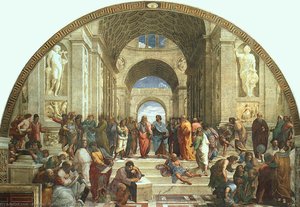 Școala Atenei1511
 Madonna Sistina1513
 Raphael1520
 Nunta Fecioarei Maria1504
Eseuri despre Jacob's Dream
 Masterpieces of Perfection: The Top 25 Greatest Artworks by RaphaelImmerse yourself in the grace of the High Renaissance. Explore 25 iconic masterpieces by Raphael, from divine Madonnas to legendary frescoe…
 High Renaissance vs. Mannerism: Harmony and the Shift to TensionMaster the shift from Renaissance harmony to Mannerist tension with our expert art analysis. Discover the evolution of Italian masterpieces…
 25 Masterpieces by Duccio di Buoninsegna: The Dawn of Sienese ArtJourney through the divine beauty of Duccio di Buoninsegna’s greatest works. From the Sienese School to Byzantine elegance, explore 25 time…