Realism · 1825
Self-Portrait (George Chinnery, 1825)
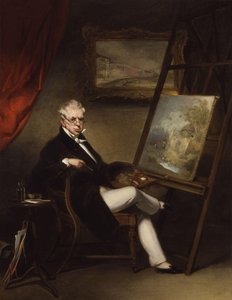
George Chinnery (1774–1852) a realizat Self-Portrait. Data sa este din 1825. Face parte din mișcarea Realism. Este realizată în Oil On Canvas. Este păstrat la Metropolitan Museum of Art în New York, Statele Unite ale Americii. Dimensiunile sunt 22 × 18 cm.
- 1825
- Oil On Canvas
- 22 × 18 cm
- Metropolitan Museum of Art, New York

 Previzualizare

 Tablou în ulei pictat manual
 Trimite prin felicitare
 Distribuie
 Fișă informativă


 Descarcă imaginea
 Produse similare
 Radiografie
 Galerie foto
 Întrebări și răspunsuri

 Statistici
Self-Portrait, pe scurt
- Titlu
- Self-Portrait
- Artist
- George Chinnery (1774–1852)
- Artist născut în
- Gough Square, Regatul Unit
- Date
- 1825
- Medium
- Oil On Canvas
- Dimensiuni
- 22 × 18 cm
- Unde poate fi vizualizată
- Metropolitan Museum of Art, New York, Statele Unite ale Americii
- Mișcare
- Realism
- Perioadă
- 19th Century
- Subiect
- portrait, self-reflection, spectacles, fur collar, china, 1825
Ce reprezintă Self-Portrait?
Identification of the Self-Portrait by George Chinnery
This work is a Self-Portrait by the artist George Chinnery. It represents a significant moment in his career, painted during his time in China between 1825 and 1828. Among the dozen self-portraits Chinnery produced throughout his life, this particular likeness is noted for being his most intimate and engaging. It offers a rare, personal glimpse into the character of a man known for his wit and his volatile, eccentric nature.
The piece was executed during a period of transition for the artist. Having moved to southern China due to mounting debts, Chinnery used his brush to document not only the landscapes and people of the region but also his own shifting circumstances. This specific portrait captures a sense of introspection that distinguishes it from his more formal commissions for the British community in India or the merchants of Macau.
Visual Composition and Subject Matter
The composition is centered on the subject's face and upper torso, presenting a middle-aged man in a moment of quiet introspection. He is positioned with his body turned slightly toward the viewer’s right, though his presence remains immediate and direct. A pair of spectacles rests upon his face, and a dark, textured fur collar frames his neck, adding a sense of weight and substance to his figure. His expression is serious, lending a somber quality to the encounter.
The color palette is restrained, relying heavily on a foundation of browns, ochres, and muted reds. These tones harmonize with the subject's warm brown skin tone, creating a cohesive and grounded atmosphere. Behind him, the background is intentionally blurred, suggesting the presence of a distant landscape without providing specific topographical detail. This lack of clarity in the distance pushes the figure forward, ensuring the viewer's attention remains fixed on the character of the man himself.
Technique and Artistic Style
This oil-on-canvas portrait is defined by a tactile, physical presence. The artist employs a technique characterized by loose brushwork and a heavy use of impasto, where the paint is applied thickly to build up the surface. This layered approach does more than just apply color; it creates a sense of volume and form, allowing the light to catch the ridges of the pigment. Such a method gives the work a textured, almost sculptural quality that emphasizes the physicality of the medium.
The style leans toward realism, yet it is executed through expressive brushstrokes that prioritize character over photographic precision. Rather than relying on smooth, blended transitions, the artist uses visible marks to define the contours of the face and the deep folds of the clothing. These lines work in tandem with the play of light and shadow to establish the subject's features. The result is a work that feels immediate and deeply personal, capturing a specific mood through the very texture of the paint itself.
History and Provenance of the Work
This intimate likeness was painted in China during the years 1825–28. It carries a distinguished lineage, having once belonged to Benjamin Chew Wilcox. A businessman involved in the opium trade, Wilcox was a prominent figure who also commissioned a full-length portrait of himself from the artist.
The provenance of the work connects it to the significant commercial history of the region. It is currently held within the collection of The Hong Kong and Shanghai Banking Corporation Ltd. This placement ensures the piece remains linked to the historical networks that the artist navigated throughout his residency in Asia.
În ce muzeu se află Self-Portrait?
Metropolitan Museum of Art
New York, Statele Unite ale Americii
Origini și Istoria Metropolitan Museum of Art Povestea Metropolitan Museum of Art a început odată cu viziunea comună a unui grup de oameni de afaceri, finanțatori și, în special, a unor artiști și gânditori de renume. În urma înființării sale în anul 1870, instituția a căutat un cămin permanent pentru a adăposti colecțiile în continuă expansiune. Înainte de a se stabili în locația actuală, muzeul a rezidat pentru o scurtă perioadă în domeniul Douglas Mansion, pe West 14th Street.


Imagini la înaltă rezoluție ale lui Self-Portrait

Domeniu public: artistul a decedat în 1852.
Alte dimensiuni, cadrări și citări →George Chinnery, Self-Portrait (1825), Metropolitan Museum of Art. Domeniu public
Întrebări despre Self-Portrait, răspunsuri
În ce muzeu se află originalul "Self-Portrait"?
"Self-Portrait" de George Chinnery este expusă la Metropolitan Museum of Art, New York, Statele Unite ale Americii. Mențiunea muzeului se referă la lucrarea originală, nu la reproduceri.
În ce an a fost creat "Self-Portrait" de George Chinnery?
"Self-Portrait" de George Chinnery a fost creat(ă) în 1825.
Din ce materiale este realizată „Self-Portrait”?
Tehnica utilizată pentru "Self-Portrait" de George Chinnery este Oil On Canvas, iar reproducerile urmăresc să reducă aspectul acestei tehnici.
Ce dimensiuni are "Self-Portrait" de George Chinnery în realitate?
Dimensiunile înregistrate pentru "Self-Portrait" de George Chinnery sunt 22 x 18 cm. Reproducerile pot fi comandate în alte dimensiuni, păstrând aceleași proporții.
Ce subiecte sunt reprezentate în "Self-Portrait" de George Chinnery?
Temele prezente în "Self-Portrait" de George Chinnery includ portrait, self-reflection, spectacles, fur collar, china, 1825, british art, eccentric figure. Împreună, acestea definesc subiectul întregii opere de artă.
"Self-Portrait" de George Chinnery face parte din domeniul public?
Statusul drepturilor de autor pentru "Self-Portrait" de George Chinnery: opera este în domeniul public – drepturile de autor au expirat. Acest lucru determină dacă reproducerile imaginii pot fi realizate liber.
Cine a creat "Self-Portrait"?
„Self-Portrait” a fost creat de George Chinnery. Informațiile de pe această pagină descriu opera originală a lui George Chinnery.
Din ce curent artistic face parte "Self-Portrait" de George Chinnery?
"Self-Portrait" de George Chinnery face parte din mișcarea Realism. Acest curent oferă contextul stilistic al operei.
În ce etapă a evoluției lui George Chinnery se încadrează „Self-Portrait”?
"Self-Portrait" reprezintă perioada Mature Period a lui George Chinnery.
Despre artistul George Chinnery
1774–1852, Regatul Unit
George Chinnery
Early Life and Training (1774-1801) George Chinnery, născut pe 5 ianuarie 1774 în Londra, a fost un pictor britanic de origine sino-engleză, renumit pentru portretele sale detaliate și studiile minuțioase ale vieții din India și China. Copilăria sa a fost marcată de influența tatălui său, un expert în sistemul Gurney de shorthand, o metodă rapidă de notare care va juca un rol crucial în munca sa ulterioară. Educat la Royal Academy Schools din Londra, Chinnery a dobândit o fundație solidă în tehnicile clasice și principiile artistice, dar a fost atras de esteticile exotice ale Orientului. Life in Asia: India and China (1802-1852) În 1802, Chinnery s-a stabilit în Madras (Chennai), India, devenind un artist prolific pentru comunitatea britanică din zonă.
Despre George Chinnery Lucrări remarcabile ale lui George Chinnery
Alte lucrări ale lui George Chinnery
 Portrait of Nathan Dunn1830
 Portrait of a Gentleman1800
 A Man Called W. C. Hunter1825
 Portrait of Harriet Low1833

Eseuri despre Self-Portrait
 Reflecting the Self: A History of Portraiture & Psychological InsightExplore the fascinating history of self-portraiture from Renaissance masters like Dürer & Rembrandt to modern interpretations. Discover the…
 Masterpieces of Henri Fantin-Latour: The Top 25 Essential ArtworksExplore the top 25 masterpieces of Henri Fantin-Latour. From floral studies to realism, discover the full collection on OriginalUniqueArt.c…
 German artworks of the 1910sGerman Expressionism in the 1910s features powerful works by Franz Marc, Max Beckmann, and Ernst Ludwig Kirchner. View the collection at Or…