Symbolism · 1911
Unity (Ferdinand Hodler, 1911)
Ferdinand Hodler (1853–1918) a realizat Unity. Data sa este din 1911. Face parte din mișcarea Symbolism. Este realizată în Painting. Dimensiunile sunt 1 × 475 cm.
- 1911
- Painting
- 1 × 475 cm

 Previzualizare

 Tablou în ulei pictat manual
 Trimite prin felicitare
 Distribuie
 Fișă informativă


 Descarcă imaginea
 Produse similare
 Radiografie
 Galerie foto
 Întrebări și răspunsuri

 Statistici
Unity, pe scurt
- Titlu
- Unity
- Artist
- Ferdinand Hodler (1853–1918)
- Artist născut în
- Berna, Elveția
- Date
- 1911
- Medium
- Painting
- Dimensiuni
- 1 × 475 cm
- Mișcare
- Symbolism
- Perioadă
- Modern
- Subiect
- symbolism, mural, unity, people, group portrait, swiss art
Ce reprezintă Unity?
A Symphony of Human Connection
In the monumental mural Unity, created in 1911, Ferdinand Hodler presents a profound meditation on the collective human spirit. This expansive work, stretching across an impressive scale, transcends mere portraiture to become a rhythmic tapestry of existence. The composition is masterfully arranged in rows of figures that seem to pulse with a shared vitality; some individuals press toward the foreground with palpable presence, while others recede into the background, creating a sense of depth that draws the viewer into their communal orbit. Each figure, meticulously rendered with distinct features and emotive expressions, contributes to a larger, singular heartbeat. As eyes wander across the canvas, one notices the subtle details—the gentle grip on a bowl, the quiet posture of a cup held in hand—elements that ground this grand symbolic vision in the intimate realities of daily life.
The technique employed by Hodler is a testament to his pioneering concept of parallelism, a stylistic hallmark where repetitive forms and rhythmic arrangements create a sense of structural harmony. In Unity, this is achieved through the deliberate placement of bodies and limbs that echo one another, weaving a visual cadence that guides the viewer's gaze through the crowd. The artist’s brushwork, though detailed enough to capture the unique character of each face, serves a higher purpose: to unify the disparate individuals into a cohesive whole. This balance between individual identity and collective rhythm is what makes the mural so captivating for the modern observer, offering a visual language that speaks of both the singular soul and the strength found in togetherness.
Symbolism and the Weight of History
To understand Unity, one must look into the soul of Ferdinand Hodler himself. Born in Bern, Switzerland, his early life was marked by the profound tragedy of losing his father and two brothers, a series of losses that deeply embedded themes of mortality and the interconnectedness of life within his psyche. In this mural, the concept of unity is not merely a social ideal but a spiritual necessity. The figures do not stand in isolation; they are bound by an invisible thread of shared destiny. The painting serves as a powerful symbol of how individual lives, despite their unique struggles and varied roles, contribute to the enduring fabric of humanity. For collectors and enthusiasts, this piece offers more than aesthetic beauty; it provides a philosophical anchor, reflecting the eternal search for harmony in an often fragmented world.
For interior designers and curators of fine art, a high-quality reproduction of Unity serves as a commanding focal point that breathes life into any space. Its large-scale presence and rich, symbolic narrative make it an ideal choice for grand halls, libraries, or sophisticated living environments where conversation and contemplation are encouraged. The mural’s ability to evoke a sense of peace and structural order makes it a versatile masterpiece, capable of anchoring a room with its historical weight while providing a window into the profound beauty of human solidarity.
Imagini la înaltă rezoluție ale lui Unity

Domeniu public: artistul a decedat în 1918.
Alte dimensiuni, cadrări și citări →Ferdinand Hodler, Unity (1911). Domeniu public
Întrebări despre Unity, răspunsuri
În ce an a fost creată "Unity" de Ferdinand Hodler?
"Unity" de Ferdinand Hodler a fost creat(ă) în 1911.
Ce tehnică a fost utilizată pentru "Unity" de Ferdinand Hodler?
"Unity" este realizat în Painting."
Care sunt dimensiunile originalului "Unity" de Ferdinand Hodler?
Lucrarea originală "Unity" de Ferdinand Hodler are dimensiunile de 475 x 1 cm.
Ce reprezintă "Unity"?
"Unity" de Ferdinand Hodler surprinde: symbolism, mural, unity, people, group portrait, swiss art.
"Unity" de Ferdinand Hodler face parte din domeniul public?
"Unity" de Ferdinand Hodler este în domeniul public (în domeniul public – drepturile de autor au expirat). Acest statut reglementează modul în care imaginea lucrării poate fi reprodusă.
Cine a creat "Unity"?
„Unity” este atribuit lui Ferdinand Hodler.
Din ce curent artistic face parte "Unity" de Ferdinand Hodler?
"Unity" de Ferdinand Hodler face parte din mișcarea Symbolism. Acest curent oferă contextul stilistic al operei.
În ce perioadă a carierei lui Ferdinand Hodler se încadrează "Unity"?
În cariera lui Ferdinand Hodler, „Unity” aparține perioadei Mature Period. Această etapă facilitează compararea sa cu celelalte opere ale artistului.
Ce vârstă avea Ferdinand Hodler când a creat "Unity" în 1911?
Când „Unity” a fost creat în 1911, Ferdinand Hodler – născut în 1853 – avea 58 ani.
Despre artistul Ferdinand Hodler
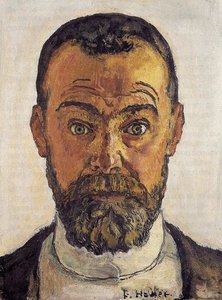
1853–1918, Elveția
Ferdinand Hodler
Arhitectura Mortalității Născut în Berna, Elveția, în 1853, primii ani ai lui Ferdinand Hodler au fost definiți de o durere tăcută și persistentă. Înainte de a ajunge la adolescență, tuberculosis care i-a luat tatăl și doi frați mai mici a lăsat un gol imens în căminul său. Această prima întâlnire cu pierderea a devenit un motiv recurent în opera sa, o umbră care l-ar fi urmărit de la începuturile modeste ale uceniciei sale până la culminele carierei sale profesionale. Și-a început formarea ca pictor decorativ, ajutându-și tatăl vitrele cu lucrări comerciale de semnalizări, o educație practică ce i-a insuflat o stăpânire precisă a liniei și a formei.
Despre Ferdinand Hodler Lucrări remarcabile ale lui Ferdinand Hodler
Alte lucrări ale lui Ferdinand Hodler
 Eiger, Monch and Jungfrau in Moonlight1908
 Woman in Ecstasy1911
 Sunset on Lake Geneva1915
 Study of two figures1897

Eseuri despre Unity
 Beyond the Void: Powerful Artworks That Capture the Raw Emotion of GriefExplore the profound power of art in capturing grief. From Expressionist masterpieces to custom hand-painted memorials, discover how iconic…
 Mastering Realism: The Top 25 Iconic Artworks by Hans Holbein the YoungerStep into the Northern Renaissance with our curated guide to the top 25 Hans Holbein the Younger masterpieces. Explore breathtaking realism…
 Mastering Parallelism: The 25 Most Iconic Artworks by Ferdinand HodlerImmerse yourself in the rhythmic beauty of Ferdinand Hodler. Explore 25 iconic masterpieces of Swiss Symbolism and Parallelism. From evocat…