Symbolism
Day (Truth) (Ferdinand Hodler)
Ferdinand Hodler (1853–1918) a realizat Day (Truth). Face parte din mișcarea Symbolism. Este realizată în Oil On Canvas. Este păstrat la Art Institute of Chicago în Chicago, Statele Unite ale Americii.
- Oil On Canvas
- Art Institute of Chicago

 Previzualizare

 Tablou în ulei pictat manual
 Trimite prin felicitare
 Distribuie
 Fișă informativă


 Descarcă imaginea
 Produse similare
 Radiografie
 Galerie foto
 Întrebări și răspunsuri

 Statistici
Day (Truth), pe scurt
- Titlu
- Day (Truth)
- Artist
- Ferdinand Hodler (1853–1918)
- Artist născut în
- Berna, Elveția
- Medium
- Oil On Canvas
- Unde poate fi vizualizată
- Art Institute of Chicago, Chicago, Statele Unite ale Americii
- Mișcare
- Symbolism
- Perioadă
- 19th Century
- Subiect
- man, nude figure, rock, landscape, sky, brown
Ce reprezintă Day (Truth)?
Identification of the Artwork and Artist
The canvas known as Day (Truth) emerges from the hand of Ferdinand Hodler, a significant figure in the evolution of Swiss art. Created about 1906, this work captures a moment of profound stillness. It exists at the intersection of Symbolism and Landscape Painting, reflecting the shifting tides of 19th-century artistic thought. The piece carries the weight of a specific era, where the boundaries between the physical world and the spiritual realm begin to blur.
Ferdinand Hodler brings a unique vision to this composition, moving away from the strictures of realism to explore deeper rhythms of existence. In Day (Truth), the artist seeks to translate the essence of a single moment into a visual language of form and light. The work belongs to a period where the landscape becomes a vessel for existential reflection, a place where the human presence and the natural environment are inextricably linked through a shared, rhythmic geometry.
Composition and Visual Elements
The canvas unfolds with a monumental presence, capturing a moment where the first light of dawn breathes life into the very concept of unity. A serene arrangement of figures mirrors the unfolding morning, creating a rhythmic, visual heartbeat that pulses through the scene. These figures, depicted in states of nakedness, move through the landscape in a way that suggests the unfolding stages of daybreak. Their postures, much like blossoming petals, seem to respond to the increasing brightness of the sky, weaving human form into the very rhythm of the natural world.
Symmetry governs the space, establishing a sense of cosmic harmony that feels both tranquil and profoundly powerful. This structural order is defined by rhythmic symmetry and deep, espresso-toned shadows that anchor the composition. The eye is guided by the horizon line and the movement of the clouds, leading toward a central focus that symbolizes a spiritual awakening. Through this deliberate arrangement, the painting transcends a simple landscape, becoming a meditation on existence itself, where the physical and the spiritual are bound together by a shared, geometric grace.
Technical Details and Medium
The medium of oil on canvas breathes life into this composition, allowing for a layering of thin washes that build an atmospheric effect. These layers create a soft, diffused light that wraps around the figure, casting a gentle glow that avoids harsh shadows. The texture of the work reveals a subtle interplay between the smooth, ethereal quality of the sky and the palpable roughness of the rocky base. Every brushstroke contributes to a sense of weight and permanence, grounding the spiritual essence of the scene in physical substance.
This work functions as a masterclass in Symbolism, where the artist employs his signature theory of parallelism to structure the visual experience. Rhythmic patterns emerge through the arrangement of forms, mirroring the natural order of the cosmos. The composition moves with a rhythmic, visual heartbeat, capturing the ephemeral beauty of daybreak and transforming it into a structured, eternal presence. Through this deliberate application of geometry and repetition, the painting transcends mere representation to touch upon the profound rhythms of existence.
În ce muzeu se află Day (Truth)?
Art Institute of Chicago
Chicago, Statele Unite ale Americii
Prezentare generală a Art Institute of Chicago Art Institute of Chicago este un muzeu de artă privat, non-profit, situat în Chicago, Illinois, Statele Unite ale Americii. De la înființarea sa în 1879, instituția a evoluat până la a deveni o prezență remarcabilă în cadrul Grant Park. Suprafața muzeului se întinde acum pe aproape un milion de picioare păstate, cuprind o varietate de spații care adăpostesc o vastă colecție de expresie umană.


Imagini la înaltă rezoluție ale lui Day (Truth)

Domeniu public: artistul a decedat în 1918.
Alte dimensiuni, cadrări și citări →Ferdinand Hodler, Day (Truth), Art Institute of Chicago. Domeniu public
Întrebări despre Day (Truth), răspunsuri
Unde poate fi vizualizată astăzi opera "Day (Truth)" de Ferdinand Hodler?
"Day (Truth)" de Ferdinand Hodler este expusă la Art Institute of Chicago, Chicago, Statele Unite ale Americii. Mențiunea muzeului se referă la lucrarea originală, nu la reproduceri.
Ce tehnică a fost utilizată pentru "Day (Truth)" de Ferdinand Hodler?
Tehnica utilizată pentru "Day (Truth)" de Ferdinand Hodler este Oil On Canvas, iar reproducerile urmăresc să reducă aspectul acestei tehnici.
Ce reprezintă "Day (Truth)"?
Temele prezente în "Day (Truth)" de Ferdinand Hodler includ man, nude figure, rock, landscape, sky, brown, tan. Împreună, acestea definesc subiectul întregii opere de artă.
Imaginea pentru "Day (Truth)" de Ferdinand Hodler poate fi reprodusă liber?
Statusul drepturilor de autor pentru "Day (Truth)" de Ferdinand Hodler: opera este în domeniul public – drepturile de autor au expirat. Acest lucru determină dacă reproducerile imaginii pot fi realizate liber.
La ce artist este atribuită opera „Day (Truth)”?
„Day (Truth)” a fost creat de Ferdinand Hodler. Informațiile de pe această pagină descriu opera originală a lui Ferdinand Hodler.
Din ce curent artistic face parte "Day (Truth)" de Ferdinand Hodler?
Mișcarea asociată cu "Day (Truth)" de Ferdinand Hodler este Symbolism. Această clasificare plasează lucrarea printre artiști și opere de artă conexe.
În ce etapă a evoluției lui Ferdinand Hodler se încadrează „Day (Truth)”?
"Day (Truth)" reprezintă perioada Mature Period a lui Ferdinand Hodler.
Care este situația drepturilor de autor pentru "Day (Truth)" de Ferdinand Hodler?
Statutul drepturilor de autor pentru "Day (Truth)" - în domeniul public – drepturile de autor au expirat - este determinat de data decesului artistului, în anul 1918.
A rămas "Day (Truth)" în țara de origine a artistului său?
Nu – opera de artă este păstrată în străinătate. „Day (Truth)” face parte din colecția din Statele Unite ale Americii, în timp ce Ferdinand Hodler s-a născut în Elveția.
Despre artistul Ferdinand Hodler
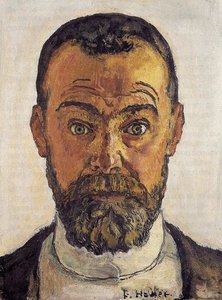
1853–1918, Elveția
Ferdinand Hodler
Arhitectura Mortalității Născut în Berna, Elveția, în 1853, primii ani ai lui Ferdinand Hodler au fost definiți de o durere tăcută și persistentă. Înainte de a ajunge la adolescență, tuberculosis care i-a luat tatăl și doi frați mai mici a lăsat un gol imens în căminul său. Această prima întâlnire cu pierderea a devenit un motiv recurent în opera sa, o umbră care l-ar fi urmărit de la începuturile modeste ale uceniciei sale până la culminele carierei sale profesionale. Și-a început formarea ca pictor decorativ, ajutându-și tatăl vitrele cu lucrări comerciale de semnalizări, o educație practică ce i-a insuflat o stăpânire precisă a liniei și a formei.
Despre Ferdinand Hodler Lucrări remarcabile ale lui Ferdinand Hodler
Alte lucrări ale lui Ferdinand Hodler
 Eiger, Monch and Jungfrau in Moonlight1908
 Woman in Ecstasy1911
 Sunset on Lake Geneva1915
 Study of two figures1897
Eseuri despre Day (Truth)
 19th century Swiss painters19th-century Swiss painters like Arnold Böcklin, Ferdinand Hodler, and Henry Fuseli defined an era. Find museum-quality reproductions on Or…
 Mastering Parallelism: The 25 Most Iconic Artworks by Ferdinand HodlerImmerse yourself in the rhythmic beauty of Ferdinand Hodler. Explore 25 iconic masterpieces of Swiss Symbolism and Parallelism. From soulfu…
 Swiss artworks of the 1910sSwiss art from the 1910s featuring masterpieces by Paul Klee, Ferdinand Hodler, and Félix Vallotton. View the full collection on OriginalUn…