Expressionism
Evening (Emil Nolde)
Emil Nolde (1867–1956) a realizat Evening. Face parte din mișcarea Expressionism.

 Previzualizare

 Tablou în ulei pictat manual
 Trimite prin felicitare
 Distribuie
 Fișă informativă


 Descarcă imaginea
 Produse similare
 Radiografie
 Galerie foto
 Întrebări și răspunsuri

 Statistici
Evening, pe scurt
- Titlu
- Evening
- Artist
- Emil Nolde (1867–1956)
- Artist născut în
- Nolde, Danemarca
- Mișcare
- Expressionism
- Subiect
- landscape painting, cloudscape artwork, water reflection, dreamlike scene, abstract nature, evening glow”
Ce reprezintă Evening?
A Symphony of Color: Experiencing Emil Nolde’s “Evening”
Emil Nolde's "Evening" is a captivating exploration of light and atmosphere, characteristic of his expressive landscape work. This piece doesn’t depict a literal evening scene, but rather an *emotional* response to one – a distillation of the feeling of twilight rendered in bold color and simplified forms. A dominant, luminous yellow cloud commands attention in the upper left quadrant, acting as a focal point that draws the eye down into the composition. Below, a gradient of blues transitions from deep indigo to lighter turquoise and verdant greens along the horizon line, suggesting water reflecting the celestial drama above.
Expressionism & The Power of Color
- Stylistic Roots: Nolde was a key figure in early 20th-century Expressionism, a movement that prioritized subjective experience and emotional impact over realistic representation. “Evening” exemplifies this approach through its non-naturalistic color palette and abstracted forms.
- Technique & Materials: The artwork appears to be executed in watercolor or gouache, evidenced by the fluidity of the washes and blending of colors. Nolde masterfully employs these techniques to create a sense of atmospheric depth despite the flattened perspective. Visible brushstrokes add texture and energy.
- Influences: While forging his own path, Nolde was influenced by artists like Vincent van Gogh and Paul Gauguin, particularly their use of intense color to convey emotion. He also drew inspiration from traditional folk art and primitive masks, evident in the bold outlines and simplified shapes.
Symbolism & Emotional Resonance
The symbolism within “Evening” is subtle yet potent. The large yellow cloud can be interpreted as a source of radiant energy or enlightenment – a beacon amidst the darkening sky. The winding body of water, reflecting the colors above, suggests a connection between the earthly and celestial realms. More broadly, Nolde’s landscapes often represent an attempt to connect with nature on a spiritual level.
The overall emotional impact is one of tranquility mixed with a hint of mystery. The stylized representation invites contemplation and allows viewers to project their own feelings onto the scene. Nolde's work frequently evokes a sense of longing or melancholy, reflecting his own complex relationship with the world around him.
Nolde’s Life & Legacy
Born in 1867 in Nordel, Germany, Emil Nolde dedicated himself to art after years working as a wood carver. Despite facing opposition from his family and later persecution under the Nazi regime (his work was deemed “degenerate”), he remained committed to his artistic vision. Nolde’s landscapes, seascapes, and portraits are celebrated for their raw emotional power and innovative use of color. His ability to capture the essence of a place or feeling – rather than simply its appearance – continues to resonate with audiences today.
Imagini la înaltă rezoluție ale lui Evening
Domeniu public: artistul a decedat în 1956.
Emil Nolde, Evening. Domeniu public
Întrebări despre Evening, răspunsuri
Ce reprezintă "Evening"?
Subiectele din "Evening" sunt landscape painting, cloudscape artwork, water reflection, dreamlike scene, abstract nature, evening glow”, “stylized landscape”.
Este "Evening" în domeniul public?
În ceea ce privește drepturile de autor, "Evening" este în domeniul public – drepturile de autor au expirat.
Cine este artistul din spatele "Evening"?
Artistul din spatele operei „Evening” este Emil Nolde. Lucrarea este catalogată sub numele lui Emil Nolde.
Din ce curent artistic face parte "Evening" de Emil Nolde?
„Evening” este o operă de Expressionism. Acest curent indică tradiția artistică din care face parte lucrarea.
În ce etapă a evoluției lui Emil Nolde se încadrează „Evening”?
În cariera lui Emil Nolde, „Evening” aparține perioadei Mature Period. Această etapă facilitează compararea sa cu celelalte opere ale artistului.
Care este situația drepturilor de autor pentru "Evening" de Emil Nolde?
"Evening" de Emil Nolde este în domeniul public – drepturile de autor au expirat. Durata protecției drepturilor de autor se calculează de la data decesului artistului, survenit în anul 1956.
Unde se încadrează "Evening" în întreaga creație a lui Emil Nolde?
"Evening" face parte din perioada Expressionism a lui Emil Nolde, ale cărei teme recurente includ german romanticism influence, nature's ethereal beauty", "symbolic, spiritual themes", expressionist color theory, reflects coastal landscapes, nolde's personal visions.
Cum se încadrează "Evening" în rândul temelor recurente ale lui Emil Nolde?
Printre temele consacrate ale lui Emil Nolde, german romanticism influence, nature's ethereal beauty", "symbolic, spiritual themes", expressionist color theory, reflects coastal landscapes, nolde's personal visions – „Evening” oferă o perspectivă proprie asupra landscape painting, cloudscape artwork, water reflection, dreamlike scene, abstract nature, evening glow”, “stylized landscape”.
Despre artistul Emil Nolde
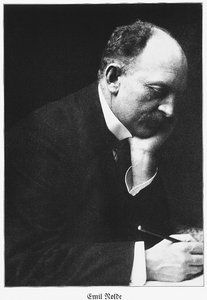
1867–1956, Danemarca
Emil Nolde
Viața și Identitatea lui Emil Nolde Născut sub numele de Hans Emil Hansen, pe 7 august 1867, omul care avea să devină cunoscut sub numele de Emil Nolde, a crescut în apropierea satului Nolde, în Duchia Schleswig. Primii săi ani de viață au fost modelați de viața rurală și agrară a familiei sale, un univers guvernat de ritmurile pământului. Cu toate acestea, el a ales să se îndepărteze de acest destin predeterminat, preferând să lucreze ca sculptor pe lemn și decorator de mobilier. Această muncă tactilă și fizică a fost fundamentul care a precedat transformarea sa către pictură și gravură.
Alte lucrări ale lui Emil Nolde
 Sunset
 Sea with Red Sky
 Couple on the beach1903
 Masks1911
Eseuri despre Evening
 Masterpieces of Emotion: The Top 25 Vincent van Gogh ArtworksImmerse yourself in the vibrant world of Vincent van Gogh. Explore 25 iconic Post-Impressionist masterpieces, from Starry Night to Sunflowe…
 Chasing Shadows: The Enchanting Beauty of Dim Light in Impressionist MasterpiecesDiscover the ethereal magic of Impressionist nightscapes. Explore how masters like Monet and Whistler captured the alchemy of moonlight, sh…
 Unveiling Inner Worlds: Exploring Psychological Depth in 20th & 21st Century ArtExplore the profound psychological themes within 20th & 21st-century art. Discover Expressionism, Surrealism & more – and learn how to coll…