Fauvism · 1911
Vegetable fields (August Macke, 1911)
August Macke (1887–1914) a realizat Vegetable fields. Data sa este din 1911. Face parte din mișcarea Fauvism. Este realizată în Oil On Canvas. Este păstrat la Kunstmuseum Bonn în Bonn, Germania. Dimensiunile sunt 47 × 64 cm.
- 1911
- Oil On Canvas
- 47 × 64 cm
- Kunstmuseum Bonn

 Previzualizare

 Tablou în ulei pictat manual
 Trimite prin felicitare
 Distribuie
 Fișă informativă


 Descarcă imaginea
 Produse similare
 Radiografie
 Galerie foto
 Întrebări și răspunsuri

 Statistici
Vegetable fields, pe scurt
- Titlu
- Vegetable fields
- Artist
- August Macke (1887–1914)
- Artist născut în
- Meschede, Germania
- Date
- 1911
- Medium
- Oil On Canvas
- Dimensiuni
- 47 × 64 cm
- Unde poate fi vizualizată
- Kunstmuseum Bonn, Bonn, Germania
- Mișcare
- Fauvism
- Subiect
- rural landscape, haystacks, blue flowers, path, roads, color field
Ce reprezintă Vegetable fields?
August Macke’s ‘Vegetable Fields’: A Fauvist Echo of Rural Melancholy
This captivating oil painting, “Vegetable Fields,” created in 1911 by August Macke, offers a potent glimpse into the burgeoning world of German Expressionism. Measuring 47 x 64 cm, this work transcends a simple depiction of a rural landscape; it’s an intensely felt experience rendered through bold color and simplified forms – hallmarks of the Fauvist movement. Macke, tragically cut short by the First World War at just 27, was already producing art that resonated with a raw emotionality, anticipating the full force of Expressionism while still retaining traces of Impressionist influence.
- Subject Matter: The scene unfolds in a stylized countryside, dominated by haystacks, fields ablaze with blue flowers, and a prominent pathway leading the viewer’s eye into the distance. This isn't a meticulous rendering of reality; rather, it’s an interpretation filtered through Macke’s emotional lens.
- Style & Technique: The painting firmly embraces Fauvist principles – prioritizing color over precise representation. Thick impasto brushstrokes build texture and physicality onto the canvas, creating a vibrant, almost tactile surface. Lines are deliberately expressive, guiding the viewer's gaze and contributing to the overall sense of movement.
Decoding the Emotional Landscape
Macke’s use of color is particularly striking. The dominant blues and greens evoke a feeling of tranquility, yet they’re punctuated by jarring yellows and reds, creating an underlying tension. This deliberate dissonance reflects the anxieties and uncertainties of the era – a world on the cusp of profound change. The flattened perspective, prioritizing emotional impact over realistic spatial illusion, further intensifies this effect. It's as if Macke is inviting us to step into his subjective experience, rather than simply observing a landscape.
- Symbolism: The diverging paths in the distance are rich with symbolic potential, representing choices, journeys, or perhaps the fragmented nature of modern life. The isolated setting contributes to a sense of melancholy, hinting at themes of loneliness and contemplation.
- Historical Context: Created in 1911, “Vegetable Fields” sits squarely within the period of experimentation that preceded the full flowering of German Expressionism. Macke’s work foreshadowed the movement's emphasis on subjective emotion and distorted form, while still retaining a connection to earlier artistic traditions.
A Masterclass in Texture and Light
The painting’s technical brilliance lies not just in its color palette but also in Macke’s masterful manipulation of light and texture. The diffuse lighting suggests an overcast day, eliminating harsh shadows and contributing to the overall mood of quiet contemplation. The thick impasto technique – applying paint thickly to create a textured surface – is particularly evident in the haystacks and fields, adding a remarkable physicality to the composition. This deliberate roughness further emphasizes the emotional intensity of the work.
Collecting this Powerful Image
A hand-painted reproduction of “Vegetable Fields” offers an exceptional opportunity to bring this evocative artwork into your home or office. OriginalUniqueArt’s meticulous reproductions capture the essence of Macke's vision, faithfully recreating the painting’s vibrant colors and expressive brushwork. This piece is more than just a decoration; it’s a window into the soul of a brilliant artist and a poignant reflection on the human condition.
În ce muzeu se află Vegetable fields?
Kunstmuseum Bonn
Bonn, Germania
Un Sanctuar al Expresionismului: Sufletul Kunstmuseum Bonn Așezat în inima istorică a orașului Bonn, un oraș în care ecourile compozițiilor lui Beethoven încă plutesc în aer, se află Kunstmuseum Bonn —un sanctuar profund pentru cei care caută puterea brută și emoționantă a modernismului. A păși în această instituție înseamnă a porni într-o călătorie prin psihicul turbulent, dar frumos, al secolului al XX-lea. Născut din necesitatea de a reconstrui nu doar ziduri, ci și o identitate culturală în timpul erei transformative a reconstrucției postbelice, muzeul a evoluat de atunci într-un far global pentru Expresionismul Renan .

Imagini la înaltă rezoluție ale lui Vegetable fields

Domeniu public: artistul a decedat în 1914.
Alte dimensiuni, cadrări și citări →August Macke, Vegetable fields (1911), Kunstmuseum Bonn. Domeniu public
Întrebări despre Vegetable fields, răspunsuri
Unde poate fi vizualizată astăzi opera "Vegetable fields" de August Macke?
Puteți vedea originalul "Vegetable fields" la Kunstmuseum Bonn, Bonn, Germania.
În ce an a fost creată "Vegetable fields" de August Macke?
„Vegetable fields” datează din 1911. Această dată plasează lucrarea în cadrul carierei lui August Macke și în contextul epocii sale.
În ce tehnică este realizată lucrarea "Vegetable fields" de August Macke?
Tehnica utilizată pentru "Vegetable fields" de August Macke este Oil On Canvas, iar reproducerile urmăresc să reducă aspectul acestei tehnici.
Ce dimensiuni are "Vegetable fields" de August Macke în realitate?
Lucrarea originală "Vegetable fields" de August Macke are dimensiunile de 47 x 64 cm.
Ce reprezintă "Vegetable fields" de August Macke?
"Vegetable fields" de August Macke surprinde: rural landscape, haystacks, blue flowers, path, roads, color field, expressionism, geometric forms.
Este "Vegetable fields" în domeniul public?
În ceea ce privește drepturile de autor, "Vegetable fields" este în domeniul public – drepturile de autor au expirat.
La ce artist este atribuită opera „Vegetable fields”?
Artistul din spatele operei „Vegetable fields” este August Macke. Lucrarea este catalogată sub numele lui August Macke.
Din ce curent artistic face parte "Vegetable fields" de August Macke?
„Vegetable fields” este o operă de Fauvism. Acest curent indică tradiția artistică din care face parte lucrarea.
În ce etapă a evoluției lui August Macke se încadrează „Vegetable fields”?
„Vegetable fields” aparține perioadei Mature Period din cariera lui August Macke. Această clasificare corelează opera cu evoluția artistului.
Despre artistul August Macke
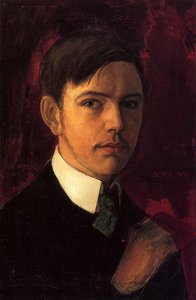
1887–1914, Germania
August Macke
Tinerețe, Familie și Formare Povestea lui August Macke începe în orășelul Meschede, din Germania, unde s-a născut pe 3 ianuarie 1887. El a fost singurul fiu al lui August Friedrich Hermann Macke, un antreprenor în construcții și artist amator, și al Mariei Florentine. Copilăria sa a fost modelată de fluctuațiile noroase ale afacerii tatălui său, care a dus familia în Koln și, ulterior, la Bonn. Încă de la vârsta de copil, atracția către expresia vizuală era evidentă; și-a petrecut primii ani schițând și concepând decoruri pentru piesele de teatru școlare, găsind o cale de a traduce mediul înconjurător pe hârtie mult înainte de a păși într-o academie oficială.
Despre August Macke Lucrări remarcabile ale lui August Macke
Alte lucrări ale lui August Macke
 Femeia în cămașă verde1913
 Bathing girls with town in the background1913
 Hat Shop1913
 Portrait of the Artist's Wife with Hat1909

Eseuri despre Vegetable fields
 August Macke: Expressionist Visions of Harmony & Modern LifeExplore the vibrant Expressionist paintings of August Macke (1887-1914). Discover his key role in Der Blaue Reiter, Fauvist influences, and…
 Expresionismul în Artă: Cele Mai Reprezentative 10 Capodopere | OriginalUniqueArt.roDescoperă cele mai importante 10 capodopere ale expresionismului! Explorează poveștile lui Munch, Van Gogh și Kandinsky. Reproduceri de art…
 Brushes of Anguish: The Psychological Landscape of Emotional Distress in Post-Impressionist ArtExplore the profound psychological depth of Post-Impressionist masters. Discover how color and form mirror human emotion.