Symbolism
La peste (Arnold Böcklin)
Arnold Böcklin (1827–1901) a realizat La peste. Face parte din mișcarea Symbolism. Este realizată în Oil On Canvas.
- Oil On Canvas

 Previzualizare

 Tablou în ulei pictat manual
 Trimite prin felicitare
 Distribuie
 Fișă informativă


 Descarcă imaginea
 Produse similare
 Radiografie
 Galerie foto
 Întrebări și răspunsuri

 Statistici
La peste, pe scurt
- Titlu
- La peste
- Artist
- Arnold Böcklin (1827–1901)
- Artist născut în
- Basel, Elveția
- Medium
- Oil On Canvas
- Mișcare
- Symbolism
- Perioadă
- 19th Century
- Subiect
- monster, rider, buildings, dead bodies, sky, red cloth
Ce reprezintă La peste?
The Shadow of Mortality
In this unsettling scene, we find ourselves witnessing a moment of profound, inevitable decay. A monstrous, winged creature, reminiscent of a bat, moves through the narrow streets of a medieval European city. Atop this beast sits a skeletal figure, a personification of death that moves with a terrifying, silent purpose. The atmosphere is heavy, thick with a hazy, yellow-grey light that suggests a world choked by sickness. There is a sense of chaos here, yet it is a quiet, suffocating kind of chaos. The buildings, with their rigid, angular lines, seem to press in on the viewer, creating a claustrophobic environment where escape feels impossible.
The color palette is deliberately somber, leaning heavily into the earthy tones of ochre, brown, and grey. However, there is a specific, unsettling use of pale green—a hue often associated with the physical reality of decomposition—that permeates the work. This sickly tint contrasts sharply with the single, startling shock of red found in the foreground. A woman lies there, her clothing a vivid crimson against the muted, dying world around her, a stark reminder of the human cost of the plague passing through the streets.
Symbolic Elements and Composition
The composition is structured with a certain architectural precision that heightens the sense of dread. The rider and the beast form a central, pyramidal apex that draws the eye upward and then forces it back down toward the suffering below. The artist uses several layers of visual language to communicate the theme of pestilence:
- The winged creature, acting as a vessel for the plague, disrupts the orderly geometry of the urban landscape.
- The use of atmospheric perspective, where the background fades into a murky haze, suggests an endless, spreading contagion.
- The fallen figures in the foreground and middle ground represent the victims, their forms partially obscured by shadow and the weight of the scene.
- The contrast between organic, irregular shapes of the monster and the rigid, rectangular shapes of the architecture emphasizes the unnatural intrusion of death into civilization.
The technique involves a careful layering of oil paints, creating a texture that feels both rough and weathered. In certain areas, the impasto is visible, giving the creature a visceral, tactile presence. This physical depth mirrors the psychological depth of the subject matter, where the veil between the physical world and a nightmare state feels dangerously thin.
The Weight of the Unseen
There is a profound stillness in the way the figures are arranged, despite the violence of the subject. It is a stillness born of hopelessness. The lighting is diffused and uneven, casting deep shadows that hide as much as they reveal. This lack of a clear light source contributes to the sense of mystery and the feeling that the plague is an unstoppable, elemental force rather than a mere biological event. The work captures a specific tension between the tangible reality of a city and the intangible, spectral presence of death, leaving the viewer with a lingering sense of unease that remains long after the first glance.
Imagini la înaltă rezoluție ale lui La peste
Domeniu public: artistul a decedat în 1901.
Arnold Böcklin, La peste. Domeniu public
Întrebări despre La peste, răspunsuri
În ce tehnică este realizată lucrarea "La peste" de Arnold Böcklin?
Tehnica utilizată pentru "La peste" de Arnold Böcklin este Oil On Canvas, iar reproducerile urmăresc să reducă aspectul acestei tehnici.
Ce reprezintă "La peste" de Arnold Böcklin?
Subiectele din "La peste" sunt monster, rider, buildings, dead bodies, sky, red cloth, cityscape.
"La peste" de Arnold Böcklin face parte din domeniul public?
În ceea ce privește drepturile de autor, "La peste" este în domeniul public – drepturile de autor au expirat.
Cine a creat "La peste"?
„La peste” este atribuit lui Arnold Böcklin.
Din ce stil face parte "La peste"?
Mișcarea asociată cu "La peste" de Arnold Böcklin este Symbolism. Această clasificare plasează lucrarea printre artiști și opere de artă conexe.
Din ce perioadă a carierei lui Arnold Böcklin face parte „La peste”?
În cariera lui Arnold Böcklin, „La peste” aparține perioadei Late Period. Această etapă facilitează compararea sa cu celelalte opere ale artistului.
Este "La peste" de Arnold Böcklin în domeniul public și care este motivul?
"La peste" de Arnold Böcklin este în domeniul public – drepturile de autor au expirat. Durata protecției drepturilor de autor se calculează de la data decesului artistului, survenit în anul 1901.
Cum se încadrează „La peste” în temele și stilul lui Arnold Böcklin?
"La peste" face parte din perioada Symbolism a lui Arnold Böcklin, ale cărei teme recurente includ symbolist movement, mythology and mortality, themes of death, war and pestilence, exploration of the subconscious.
În ce măsură subiectul operei „La peste” se regăsește în temele obișnuite ale lui Arnold Böcklin?
Temele recurente ale lui Arnold Böcklin includ symbolist movement, mythology and mortality, themes of death, war and pestilence, exploration of the subconscious; „La peste” se concentrează pe monster, rider, buildings, dead bodies, sky, red cloth, cityscape.
Despre artistul Arnold Böcklin
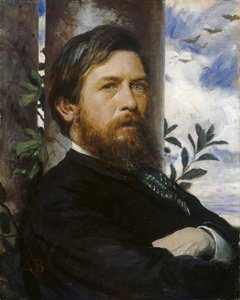
1827–1901, Elveția
Arnold Böcklin
Umbra Insulei Basel, Elveția, reprezintă punctul de plecare al unei vieți definite de tensiunea dintre tangibil și spectral. Născut pe 16 octombrie 1827, de Christian Frederick Böcklin și Ursula Lippe, tânărul ar fi depășit în cele din urmă comerțul cu mătase al tatălui său pentru a ajunge în sălile riguroase ale Academiei din Düsseldorf. Sub îndrumarea lui Schirmer, a început să absoarbă limbajul peisajului, o abilitate care ar fi fost folosită ulterior pentru a cartografia geografia sufletului uman. El nu a pictat doar decoruri; el a construit tărâmuri în care clasicul și macabrul se ciocnesc.
Despre Arnold Böcklin Lucrări remarcabile ale lui Arnold Böcklin
Alte lucrări ale lui Arnold Böcklin
 Insula morților (Prima versiune)1880
 Autoportret cu moartea cântând la vioară
 Război1896
 The Isle of the Dead (Version 2)1880
Eseuri despre La peste
 Beyond Reality: Unveiling the Enigmatic Depths of Metaphysical Art and its Philosophical EchoesExplore the profound mystery of Metaphysical Art. Delve into the philosophical depths of Giorgio de Chirico’s dreamscapes and discover how …
 25 Essential Works by Arnold Böcklin: A Journey Through Myth and SymbolismExplore 25 iconic Arnold Böcklin paintings and Symbolist works. Discover the full collection online at OriginalUniqueArt.com.
 Swiss artworks of the 1890sSwiss Symbolism in the 1890s features the iconic works of Félix Vallotton and Arnold Hodler. View the full collection online at OriginalUni…