Baroque Painting · 1601
Rinaldo and Armida (Annibale Carracci, 1601)
Annibale Carracci (1560–1609) a realizat Rinaldo and Armida. Data sa este din 1601. Face parte din mișcarea Baroque Painting. Este păstrat la Museo di Capodimonte în Napoli, Italia.

 Previzualizare

 Tablou în ulei pictat manual
 Trimite prin felicitare
 Distribuie
 Fișă informativă


 Descarcă imaginea
 Produse similare
 Radiografie
 Galerie foto
 Întrebări și răspunsuri

 Statistici
Rinaldo and Armida, pe scurt
- Titlu
- Rinaldo and Armida
- Artist
- Annibale Carracci (1560–1609)
- Artist născut în
- Bologna, Italia
- Date
- 1601
- Unde poate fi vizualizată
- Museo di Capodimonte, Napoli, Italia
- Mișcare
- Baroque Painting
- Subiect
- rinaldo, armida, love, romance, saracen, tasso
Ce reprezintă Rinaldo and Armida?
The Genesis of a Dramatic Narrative
Annibale Carracci’s “Rinaldo and Armida,” painted in 1601, isn't merely a depiction of a legendary tale; it’s a vibrant distillation of the late Renaissance’s fascination with classical mythology interwoven with burgeoning Baroque drama. Commissioned for the Palazzo Farnese in Rome, this monumental canvas embodies a pivotal moment within Tasso’s epic poem “Rinaldo,” a work that captivated audiences with its blend of chivalry, love, and perilous adventure. Carracci, along with his brother Agostino and cousin Ludovico, were tasked with transforming the complex narrative into a series of grand frescoes, aiming to revive the grandeur of High Renaissance ideals while injecting a palpable sense of dynamism – a hallmark of the emerging Baroque style. The painting itself is a testament to this ambition, radiating an energy that pulls the viewer directly into the heart of the scene.
A Symphony of Color and Movement
Carracci’s masterful technique is immediately apparent in the rich, layered application of paint. He employs a sophisticated *sfumato* – a subtle blurring of lines and edges – to create an atmosphere of both immediacy and depth. The figures are not rendered with sharp, precise outlines but rather emerge from a haze of color, lending them a sense of ethereal beauty and vulnerability. Notice the dramatic use of light; it’s not uniformly distributed but strategically employed to highlight key elements—Rinaldo's heroic stance, Armida’s sorrowful gaze, and the swirling vortex of the enchanted garden. The palette is dominated by warm reds, golds, and deep blues, creating a visual feast that mirrors the passionate emotions at play. The artist’s meticulous attention to detail extends to the intricate folds of their garments, the textures of the foliage, and even the subtle reflections in the water – all contributing to an astonishingly realistic effect for its time.
Symbolism Woven into a Romantic Scene
Beyond the immediate narrative, “Rinaldo and Armida” is laden with symbolic meaning. The scene itself—a passionate embrace amidst a fantastical garden—represents the precarious balance between love and duty, desire and obligation. Armida’s enchanted realm, filled with exotic birds and shimmering foliage, symbolizes her seductive power and the allure of escape from the constraints of war and responsibility. Rinaldo's struggle to resist her charms speaks to the internal conflict faced by heroes caught between their romantic passions and their sworn oaths. The presence of the two birds—one perched near the top left corner, the other towards the center-right—adds another layer of interpretation, perhaps representing messengers or omens, subtly guiding the viewer’s eye through the composition. The swords held by Rinaldo and his companions are not merely weapons but symbols of their commitment to Christian ideals and the defense of Jerusalem.
A Bridge Between Eras
“Rinaldo and Armida” stands as a crucial link between the High Renaissance’s emphasis on harmony and balance and the Baroque’s embrace of drama, emotion, and movement. Carracci skillfully synthesizes these influences, creating an artwork that is both formally sophisticated and emotionally resonant. His work profoundly impacted subsequent generations of artists, particularly influencing the development of illusionistic painting in Rome. Studying this masterpiece offers a valuable insight into the artistic currents of its time—a period of intense intellectual and creative ferment that ultimately shaped the course of Western art history. It’s a testament to Carracci's ability to capture not just a story but the very essence of human experience, rendered with breathtaking skill and profound beauty.
În ce muzeu se află Rinaldo and Armida?
Museo di Capodimonte
Napoli, Italia
Istoria Museo di Capodimonte Originea Museo di Capodimonte se regăsește în primele decenii ale secolului al XVIII-lea. În anul 1738, regele Carlo VII al Neapolei și Sicilei a dispus construcția unei modeste cabane de vânătoare pe dealul Capodimonte. Pe măsură ce amploarea rezidenței regale creștea, scopul acestui loc s-a transformat radical.


Imagini la înaltă rezoluție ale lui Rinaldo and Armida

Domeniu public: artistul a decedat în 1609.
Alte dimensiuni, cadrări și citări →Annibale Carracci, Rinaldo and Armida (1601), Museo di Capodimonte. Domeniu public
Întrebări despre Rinaldo and Armida, răspunsuri
În ce muzeu se află originalul "Rinaldo and Armida"?
Puteți vedea originalul "Rinaldo and Armida" la Museo di Capodimonte, Napoli, Italia.
În ce an a fost creată "Rinaldo and Armida" de Annibale Carracci?
"Rinaldo and Armida" de Annibale Carracci a fost creat(ă) în 1601.
Ce reprezintă "Rinaldo and Armida"?
"Rinaldo and Armida" de Annibale Carracci surprinde: rinaldo, armida, love, romance, saracen, tasso, italy, 1601.
"Rinaldo and Armida" de Annibale Carracci face parte din domeniul public?
În ceea ce privește drepturile de autor, "Rinaldo and Armida" este în domeniul public – drepturile de autor au expirat.
Cine este artistul din spatele "Rinaldo and Armida"?
„Rinaldo and Armida” a fost creat de Annibale Carracci. Informațiile de pe această pagină descriu opera originală a lui Annibale Carracci.
Din ce curent artistic face parte "Rinaldo and Armida" de Annibale Carracci?
„Rinaldo and Armida” este o operă de Baroque Painting. Acest curent indică tradiția artistică din care face parte lucrarea.
În ce perioadă a carierei lui Annibale Carracci se încadrează "Rinaldo and Armida"?
În cariera lui Annibale Carracci, „Rinaldo and Armida” aparține perioadei Late Renaissance. Această etapă facilitează compararea sa cu celelalte opere ale artistului.
Ce vârstă avea Annibale Carracci când a creat "Rinaldo and Armida" în 1601?
Când „Rinaldo and Armida” a fost creat în 1601, Annibale Carracci – născut în 1560 – avea 41 ani.
Care este motivul statutului drepturilor de autor pentru "Rinaldo and Armida"?
Statutul drepturilor de autor pentru "Rinaldo and Armida" - în domeniul public – drepturile de autor au expirat - este determinat de data decesului artistului, în anul 1609.
Despre artistul Annibale Carracci
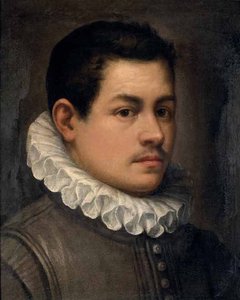
1560–1609, Italia
Annibale Carracci
Early Life and the Bolognese Roots Annibale Carracci, born on November 3, 1560, in Bologna, Italy, emerged from a family deeply intertwined with artistic tradition—a lineage that profoundly shaped his life and career. His initial training likely unfolded within the nurturing environment of his familial workshop, a space where he absorbed fundamental techniques and developed an early appreciation for the visual arts. Bologna at this time was a vibrant hub of intellectual and artistic ferment, yet it possessed a certain provincial character compared to the dominant currents flowing from Rome and Venice. This sense of relative isolation fueled a desire among a group of young artists—Annibale, his brother Agostino, and cousin Ludovico—to forge their own path, one that would revitalize Italian art by drawing inspiration from the masters of the High Renaissance while simultaneously embracing a more naturalistic approach.
Despre Annibale Carracci Lucrări remarcabile ale lui Annibale Carracci
Alte lucrări ale lui Annibale Carracci
 Soarele celui care mănâncă fasole
 Alegerea lui Hercule
 Hercules la cruce1596
 Peisaj cu Râu1589

Eseuri despre Rinaldo and Armida
 Top 10 Capodopere Baroc Olandez: Artă, Istorie și Decorațiuni Interioare de LuxDescoperă top 10 capodopere Baroc Olandez! Rembrandt, Vermeer și alți maeștri. Explorează istoria artei, tehnicile unice și atmosfera luxoa…
 Annibale Carracci: Bridging Renaissance Ideals & Baroque InnovationExplore the life & art of Annibale Carracci, a pivotal figure bridging Renaissance ideals with Baroque innovation. Discover his masterpiece…
 Giorgione: Enigma and Innovation in Early Venetian Renaissance PaintingExplore the enigmatic world of Giorgione, a pivotal figure in the Venetian Renaissance. Discover his innovative techniques, iconic painting…