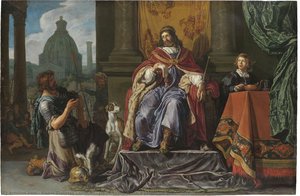
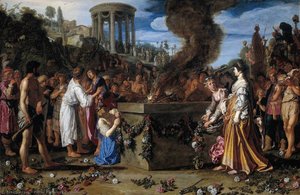
Portretul lui Pieter Pietersz Lastman

Cele 59 cele mai faimoase picturi ale lui Pieter Pietersz Lastman, o selecție de galerie

Actualizat Octombrie 2026 · clasat în funcție de scorul nostru de popularitate (căutări, vizite și comenzi pentru fiecare operă) · 60 lucrări ale lui Pieter Pietersz Lastman în catalogul nostru

Pe scurt

Dintre toate originalele lăsate de Pieter Pietersz Lastman, cea mai faimoasă este The adoration of the kings (1608), din colecția Muzeul Ermitaj, Sankt Petersburg. Imediat după acestea urmează Abraham and the Three Angels (1623) și The Resurrection (1612). Catalogul nostru cuprinde 60 lucrări ale lui Pieter Pietersz Lastman; galeria a păstrat cele 59 pe care lumea le admiră cel mai mult, fiecare fiind prezentată împreună cu data, muzeul și povestea sa.

1583 – 1633, Amsterdam Baroque Cele mai multe lucrări: Muzeul Ermitaj

Cele mai importante 10 picturi ale lui Pieter Pietersz Lastman: selecția galeriei

1
The adoration of the kings (1608) de Pieter Pietersz Lastman

The adoration of the kings

1608 · Oil On Canvas · Muzeul Ermitaj, Sankt Petersburg

In 1608, Pieter Lastman painted The adoration of the kings, an oil work that captures a profound moment of religious significance. The scene depicts the biblical episode of the Adoration of the Magi, focusing on the intimate encounter between the divine and the earthly. Within this composition, the Virgin Mary and the Christ Child are the central figures, receiving the homage of the three kings: Melchior, Caspar, and Balthazar. It…

2
Abraham and the Three Angels (1623) de Pieter Pietersz Lastman

Abraham and the Three Angels

1623 · Oil On Panel · Muzeul Ermitaj, Sankt Petersburg

In this 1623 oil on panel, the biblical patriarch Abraham meets a divine presence through three celestial visitors. Pieter Lastman captures the moment of profound hospitality and revelation that defines this sacred encounter. The scene unfolds with a sense of immediate spiritual weight, as the elderly Abraham kneels in reverence before the visitors. This religious art focuses on the quiet intensity of the meeting, where the mortal realm brushes against…

3
The Resurrection (1612) de Pieter Pietersz Lastman

The Resurrection

1612 · Oil On Canvas · J. Paul Getty Museum, Los Angeles

The Resurrection is a significant oil painting by Pieter Pietersz Lastman, created in 1612. This work captures a pivotal biblical scene, depicting the moment of Christ's Resurrection. The composition focuses on the triumph of the divine over the earthly realm, a theme central to Lastman's narrative approach to religious subjects.

4
The beheading of S. Paul (1601) de Pieter Pietersz Lastman

The beheading of S. Paul

1601 · Oil On Panel · Museum Catharijneconvent, Utrecht

The tension in The beheading of S. Paul by Pieter Lastman hangs heavy in the air. Created about 1601, this work captures a moment of profound religious and visceral intensity. We find ourselves witnessing the martyrdom of Saint Paul, a scene where the spiritual weight of faith meets the brutal reality of physical sacrifice. The air seems to thicken with the gravity of the event as the executioner prepares to…

5
The Rest on the Flight to Egypt (1608) de Pieter Pietersz Lastman

The Rest on the Flight to Egypt

1608 · Oil On Canvas · Gemäldegalerie, Berlin

The shadows of a dense, dark thicket press against the left side of the canvas. Within this cool, shaded sanctuary, three figures find a brief respite. The Virgin Mary, draped in deep blue and red, cradles the Christ Child, whose skin catches a soft, luminous light. Beside them, Saint Joseph sits in the stillness. The composition forms a steady triangle, anchoring the family against the ruggedness of the landscape. To…

6
The baptism of the eunuch (1608) de Pieter Pietersz Lastman

The baptism of the eunuch

1608 · Oil On Panel · Gemäldegalerie, Berlin

The baptism of the eunuch is an oil on panel by Pieter Lastman. The artist, born in Amsterdam in 1583, captured this moment on a surface measuring 85 by 115 cm. A quiet weight resides in the wood, holding the figures within its grain. Lastman lived until 1633, leaving behind this specific window into a biblical encounter.

7
The Baptism of the Moorish Chamberlain (1620) de Pieter Pietersz Lastman

The Baptism of the Moorish Chamberlain

The painting titled The Baptism of the Moorish Chamberlain is an oil work by the Dutch artist Pieter Lastman. This specific piece was executed about 1620. The artist, who was born in Amsterdam in 1583, utilized a painterly technique to render this biblical scene. The composition focuses on a group of figures gathered at a water's edge, involving both individuals on foot and those on horseback.

8
Joseph Selling Corn in Egypt (1612) de Pieter Pietersz Lastman

Joseph Selling Corn in Egypt

1612 · Oil On Canvas · National Gallery of Ireland, Dublin

In this work, titled Joseph Selling Corn in Egypt, the artist Pieter Lastman presents a crowded, dramatic scene of commerce and abundance. The narrative draws from the Book of Genesis, focusing on the period when Joseph, having risen to power in Egypt, manages the distribution of grain during a time of famine. It is a moment of intense human activity, where the necessity of survival meets the organized structure of…

9
Balaam and his Ass (1622) de Pieter Pietersz Lastman

Balaam and his Ass

1622 · Oil · Muzeul Israel, Ierusalim

In this work, titled Balaam and his Ass, Pieter Lastman captures a moment of divine interruption. Created about 1622, the painting presents a man on a donkey facing a winged angel. The scene is frozen in a state of sudden tension. A sword is held aloft, cutting through the stillness of the landscape. The figure of Balaam, draped in a deep crimson cloak, reacts to the celestial presence that blocks…

10
Entombment of Christ (1612) de Pieter Pietersz Lastman

Entombment of Christ

1612 · Oil · Palais des Beaux-Arts de Lille, Lille

Pieter Lastman, born in Amsterdam in 1583, executed this oil painting titled Entombment of Christ. The work emerged during the Dutch Golden Age, a period in which Lastman established himself as a significant figure in historical and biblical narrative painting. His approach to religious subject matter focused on the psychological weight of the scene, utilizing the dramatic tension inherent in the moment of Christ's burial.

Selecția pentru Pieter Pietersz Lastman continuă, de la 11 la 59

11Hippocrates and Democritus (1622) de Pieter Pietersz LastmanHippocrates and Democritus1622 · Palais des Beaux-Arts de Lille 12King David Handing the Letter to Uriah (1611) de Pieter Pietersz LastmanKing David Handing the Letter to Uriah1611 · Detroit Institute of Arts 13Saint Matthew (1613) de Pieter Pietersz LastmanSaint Matthew1613 · Rhode Island School of Design Museum of Art 14Paris and Oenone (1619) de Pieter Pietersz LastmanParis and Oenone1619 · Worcester Art Museum 15The Raising of Lazarus (1622) de Pieter Pietersz LastmanThe Raising of Lazarus1622 · Mauritshuis 16Tobias catches the fish (1613) de Pieter Pietersz LastmanTobias catches the fish1613 · Fries Museum 17Haman begging Esther for mercy (1618) de Pieter Pietersz LastmanHaman begging Esther for mercy1618 · Muzeul Național din Varșovia 18Wedding Night of Tobias and Sarah (1611) de Pieter Pietersz LastmanWedding Night of Tobias and Sarah1611 · Muzeul de Artă Plastică din Boston 19Paul and Barnabas at Lystra (1617) de Pieter Pietersz LastmanPaul and Barnabas at Lystra1617 · Amsterdam Museum 20Ecce Homo (1610) de Pieter Pietersz LastmanEcce Homo1610 · Amsterdam Museum 21David in the temple (1618) de Pieter Pietersz LastmanDavid in the temple1618 · Herzog Anton Ulrich Museum 22The meeting of Nausicaa and Ulysses: Ulysses, almost naked, comes out of the bushes; Nausicaa and her companions are startled at the sight (1609) de Pieter Pietersz LastmanThe meeting of Nausicaa and Ulysses: Ulysses, almost naked, comes out of the bushes; Nausicaa and her companions are startled at the sight1609 · Herzog Anton Ulrich Museum 23The Annunciation of the birth of Samson to Manoah and his wife (Judges 13:2-3) (1617) de Pieter Pietersz LastmanThe Annunciation of the birth of Samson to Manoah and his wife (Judges 13:2-3)1617 · Agnes Etherington Art Center 24The Good Samaritan tending the wounds of the traveller (1614) de Pieter Pietersz LastmanThe Good Samaritan tending the wounds of the traveller1614 25Laban Searching for the Idols (1622) de Pieter Pietersz LastmanLaban Searching for the Idols1622 · château-musée de Boulogne-sur-Mer 26The baptism of the Eunuch (1620) de Pieter Pietersz LastmanThe baptism of the Eunuch1620 · Fondation Custodia 27St John the Baptist Preaching (1627) de Pieter Pietersz LastmanSt John the Baptist Preaching1627 · Mauritshuis 28Hagar and the Angel in the Wilderness (1625) de Pieter Pietersz LastmanHagar and the Angel in the Wilderness1625 · Muzeul Israel 29Athena and Odysseus (1625) de Pieter Pietersz LastmanAthena and Odysseus1625 · Rembrandt House Museum 30Dido's Sacrifice to Juno (1630) de Pieter Pietersz LastmanDido's Sacrifice to Juno1630 · Nationalmuseum 31The Baptism of the Eunuch (1623) de Pieter Pietersz LastmanThe Baptism of the Eunuch1623 · Staatliche Kunsthalle Karlsruhe 32De gortenteller (1730) de Pieter Pietersz LastmanDe gortenteller1730 · Amsterdam Museum 33Saint John on the Isle of Patmos (1613) de Pieter Pietersz LastmanSaint John on the Isle of Patmos1613 · Museum Boijmans Van Beuningen 34The flight into Egypt (1608) de Pieter Pietersz LastmanThe flight into Egypt1608 · Museum Boijmans Van Beuningen 35Jonah and the Whale (1621) de Pieter Pietersz LastmanJonah and the Whale1621 · Kunstpalast 36The Angel and the Young Tobit with the Fish (1610) de Pieter Pietersz LastmanThe Angel and the Young Tobit with the Fish1610 · Muzeul de Artă Fine din Budapesta 37The Baptism of Christ (1629) de Pieter Pietersz LastmanThe Baptism of Christ1629 · Scottish National Gallery 38David Gives Uriah a Letter for Joab (1619) de Pieter Pietersz LastmanDavid Gives Uriah a Letter for Joab1619 · The Leiden Collection 39LE SACRIFICE D'ABRAHAM de Pieter Pietersz LastmanLE SACRIFICE D'ABRAHAMMuzeul Luvru 40Haman begging the mercy of Esther (Esther 7:6-7) de Pieter Pietersz LastmanHaman begging the mercy of Esther (Esther 7:6-7)Muzeul Național din Varșovia 41The lamentation of abel de Pieter Pietersz LastmanThe lamentation of abel 42Susanna And The Elders de Pieter Pietersz LastmanSusanna And The EldersGemäldegalerie 43Christ And The Canaanite Woman de Pieter Pietersz LastmanChrist And The Canaanite WomanRijksmuseum 44The Angel Raphael Takes Leave of Old Tobit and his Son Tobias (1618) de Pieter Pietersz LastmanThe Angel Raphael Takes Leave of Old Tobit and his Son Tobias1618 · Galeria Națională a Danemarcei 45The Battle of Constantine and Maxentius (1613) de Pieter Pietersz LastmanThe Battle of Constantine and Maxentius1613 · Kunsthalle Bremen 46The Angel And Tobias With The Fish de Pieter Pietersz LastmanThe Angel And Tobias With The Fish 47Juno Discovering Jupiter With Io de Pieter Pietersz LastmanJuno Discovering Jupiter With Io 48The Triumph Of Mordecai de Pieter Pietersz LastmanThe Triumph Of MordecaiRembrandt House Museum 49The Angel And Tobias With The Fish (detail) de Pieter Pietersz LastmanThe Angel And Tobias With The Fish (detail) 50Hagar and the Angel de Pieter Pietersz LastmanHagar and the AngelLos Angeles County Museum of Art 51Orestes And Pylades Disputing At The Altar de Pieter Pietersz LastmanOrestes And Pylades Disputing At The AltarRijksmuseum 52The Angel Of The Lord Preventing Abraham From Sacrificing His Son Isaac de Pieter Pietersz LastmanThe Angel Of The Lord Preventing Abraham From Sacrificing His Son IsaacMuzeul Plantin-Moretus 53The Sacrifice Of Abraham de Pieter Pietersz LastmanThe Sacrifice Of AbrahamRijksmuseum 54The Rest on the Flight into Egypt de Pieter Pietersz LastmanThe Rest on the Flight into EgyptNational Gallery 55Juno discovering Jupiter with Io (1618) de Pieter Pietersz LastmanJuno discovering Jupiter with Io1618 · National Gallery 56Bathsheba at her Toilette (1619) de Pieter Pietersz LastmanBathsheba at her Toilette1619 · Muzeul Ermitaj 57Annunciation de Pieter Pietersz LastmanAnnunciationMuzeul Ermitaj 58Odysseus And Nausicaa de Pieter Pietersz LastmanOdysseus And NausicaaColecțiile Statale de Pictură din Bavaria 59Abraham's Journey To Canaan de Pieter Pietersz LastmanAbraham's Journey To CanaanMuzeul Ermitaj

Piesele celebre ale lui Pieter Pietersz Lastman, perioadă cu perioadă

Subiectele care i-au captivat privirea lui Pieter Pietersz Lastman

Cele patru teme care revin cel mai des în aceste opere originale, fiecare având cel mai sublim exemplu.

Muzeele care păstrează originalele lui Pieter Pietersz Lastman

Cele 8 muzee care dețin cele mai multe dintre picturile de pe această pagină.

Muzee Oraș Lucrări lui Pieter Pietersz Lastman Picturi din această listă
Muzeul Ermitaj, Sankt PetersburgMuzeul Ermitaj Sankt Petersburg 5 The adoration of the kings, Abraham and the Three Angels, Bathsheba at her Toilette
Gemäldegalerie, BerlinGemäldegalerie Berlin 3 The Rest on the Flight to Egypt, The baptism of the eunuch, Susanna And The Elders
Amsterdam Museum, AmsterdamAmsterdam Museum Amsterdam 3 Paul and Barnabas at Lystra, Ecce Homo, De gortenteller
Rijksmuseum, AmsterdamRijksmuseum Amsterdam 3 Christ And The Canaanite Woman, Orestes And Pylades Disputing At The Altar, The Sacrifice Of Abraham
Colecțiile Statale de Pictură din Bavaria, MunchenColecțiile Statale de Pictură din Bavaria Munchen 2 The Baptism of the Moorish Chamberlain, Odysseus And Nausicaa
Muzeul Israel, IerusalimMuzeul Israel Ierusalim 2 Balaam and his Ass, Hagar and the Angel in the Wilderness
Palais des Beaux-Arts de Lille, LillePalais des Beaux-Arts de Lille Lille 2 Entombment of Christ, Hippocrates and Democritus
Mauritshuis, HaagMauritshuis Haag 2 The Raising of Lazarus, St John the Baptist Preaching

Pieter Pietersz Lastman deceniu cu deceniu: originalul care definește fiecare

Lucrări pe deceniu

Alege o deceniu pentru a descoperi opera originală care îl definește.

Întrebări ale colecționarilor despre picturile lui Pieter Pietersz Lastman

Pentru ce operă este cel mai cunoscut Pieter Pietersz Lastman?Află răspunsul

The adoration of the kings (1608), Muzeul Ermitaj, Sankt Petersburg. Urmează Abraham and the Three Angels (1623) și The Resurrection (1612).

Ce vârstă avea Pieter Pietersz Lastman când a fost creată The adoration of the kings?Află răspunsul

25 ani: The adoration of the kings datează din 1608, iar Pieter Pietersz Lastman s-a născut în 1583.

Care sunt cele mai celebre zece picturi ale lui Pieter Pietersz Lastman?Află răspunsul

The adoration of the kings, Abraham and the Three Angels, The Resurrection, The beheading of S. Paul, The Rest on the Flight to Egypt, The baptism of the eunuch, The Baptism of the Moorish Chamberlain, Joseph Selling Corn in Egypt, Balaam and his Ass și Entombment of Christ. Clasamentul de mai sus indică anul și muzeul pentru fiecare piesă.

Câte picturi a lăsat Pieter Pietersz Lastman?Află răspunsul

Catalogul nostru cuprinde 60 lucrări ale lui Pieter Pietersz Lastman, datate între 1601 și 1630.

În ce muzee sunt expuse capodoperele lui Pieter Pietersz Lastman?Află răspunsul

În principal în Muzeul Ermitaj (Sankt Petersburg), Gemäldegalerie (Berlin) și Amsterdam Museum (Amsterdam). Tabelul cu muzee de mai sus le enumeră pe toate.

În ce ani a pictat Pieter Pietersz Lastman cele mai cunoscute opere?Află răspunsul

În 1610s: 21 dintre cele 59 lucrări de pe această pagină au fost realizate atunci, fiind The Resurrection dintre acestea.

Care sunt prima și ultima pictură originală celebră a lui Pieter Pietersz Lastman?Află răspunsul

Pe această pagină, cea mai veche lucrare datează din The beheading of S. Paul (1601), iar cea mai recentă este din Dido's Sacrifice to Juno (1630).

Ce subiecte a ales cel mai des Pieter Pietersz Lastman?Află răspunsul

Man (19), Woman (15) și People (14), din cele 59 lucrări de pe această pagină.

Ce tehnică a folosit cel mai des Pieter Pietersz Lastman?Află răspunsul

Oil, pentru 18 dintre cele 59 lucrări de pe această pagină.

Din ce mișcare artistică face parte Pieter Pietersz Lastman?Află răspunsul

Baroque, judecând după originalele de pe această pagină.

Ce lucrări ale lui Pieter Pietersz Lastman sunt expuse la Muzeul Ermitaj?Află răspunsul

The adoration of the kings, Abraham and the Three Angels și Bathsheba at her Toilette: Muzeul Ermitaj, Sankt Petersburg deține 5 dintre lucrările de pe această pagină.

Pieter Pietersz Lastman: viață și operă

Un pionier al narațiunii olandeze: Moștenirea durabilă a lui Pieter Lastman

Pieter Pietersz Lastman, născut în Amsterdam în 1583, ocupă o poziție fascinantă și crucială în istoria picturii Epocii de Aur olandeze. Timp de prea mult timp, fiind umbrit de cel mai celebru elev al său, Rembrandt van Rijn, Lastman nu a fost doar un profesor, ci un artist revoluționar pe cont propriu — un pionier care a revitalizat pictura istorică în Țările de Jos și a pus bazele narațiunilor dramatice care vor defini acea eră. Viața sa, deși relativ scurtă, a fost marcată de o ambiție artistică profundă, de o călătorie semnificativă în Italia și de un angajament neclintit față de povestirea prin imagini vii. Primele ani ai lui Lastman au oferit un teren fertil pentru talentul său înflorissant; tatăl său, Pieter Segersz, deși înlăturat din funcția de primar local datorită convingerilor religioase, i-a transmis un simț al datoriei civice, iar mama sa, Barber Jacobsdr, poseda un ochi fin pentru artă, fiind expert în evaluarea tablourilor și a bunurilor. Acest mediu familial a cultivat o apreciere atât pentru artele vizuale, cât și pentru lumea de dincolo de pânza picturii. El și-a început formarea artistică sub îndrumarea lui Gerrit Pietersz Sweelinck, frate al renumitului compozitor Jan Pieterszoon Sweelinck, primind o bază solidă în tehnică înainte de a porni într-o călătorie transformatoare în Italia, în jurul anului 1604.

Influența italiană și întoarcerea la Amsterdam

Timpul petrecut de Lastman în Italia s-a dovedit a fi crucial în modelarea viziunii sale artistice. Immers în scena artistică vibrantă a Romei, el a întâlnit operele lui Caravaggio și Adam Elsheimer — artiști care i-au influențate profund abordarea picturii. Spre deosebire de stilul manierist prevalent, naturalismul lui Caravaggio și utilizarea dramatică a luminii au rezonat profund în sufletul lui Lastman, în timp ce detaliul meticulos și concentrarea pe subiecte istorice ale lui Elsheimer au oferit o nouă direcție ambițiilor sale narative. El a adoptat practica italiană de a-și semna lucrările cu numele de „Pietro”, demonstrând îmbrățișarea mediului cultural local. La întoarcerea sa în Amsterdam, în 1607, Lastman a devenit o figură de prim-plan în comunitatea artistică a orașului. S-a impus ca pictor de istorie — un gen care fusese somewhat neglijat în arta olandeză — și a câștigat rapid recunoaștere pentru compozițiile sale inovatoare și pentru capacitatea de a spune povești captivante. Atelierul său a atras în scurt timp ucenici talentați, cel mai notabil fiind Rembrandt van Rijn, care a petrecut șase luni formative sub îndrumarea lui Lastman în anul 1625.

Un maestru al narațiunii biblice

Tablourile lui Lastman sunt caracterizate prin intensitatea lor dramatică, atenția meticuloasă la detalii și o perspicacitate psihologică acută asupra subiectelor sale. El a preferat scenele biblice, alegând adesea narațiuni mai puțin cunoscute care îi permiteau să exploreze teme complexe precum credința, trădarea și mântuirea. Lucrări precum „Bătălia lui Constantin” exemplifică capacitatea sa de a crea compoziții dinamice, pline de mișcare și emoție. Scena nu este doar o reprezentare a unor evenimente istorice, ci o explorare puternică a conflictului uman și a intervenției divine. În mod similar, picturi precum „David îi trimite lui Ioab o scrisoare lui Urias” demonstrează dorința lui Lastman de a aborda subiecte dificile — pictând momente de ambiguitate morală și tensiune psihologică. El a acordat o atenție deosebită fețelor, mâinilor și picioarelor personajelor sale, dotându-le cu detalii expresive care să transmită tulburarea lor interioară. Utilizarea culorilor a fost îndrăzneață și vibrantă, sporind și mai mult impactul emoțional al scenelor sale.

Moștenirea lui Lastman: Modelarea unei generații

Influența lui Pieter Lastman s-a extins mult dincolo de propria sa producție artistică. În calitate de profesor, el a jucat un rol esențial în modelarea următoarei generații de pictori olandezi. Rembrandt van Rिन्, fără îndoială cel mai faimos elev al său, a absorbit multe dintre tehnicile și abordările narative ale lui Lastman — în special utilizarea dramatică a luminii și umbrei, accentul pe realismul psihologic și pasiunea pentru subiectele biblice. Jan Lievens a beneficiat, de asemenea, de îndrumarea lui Lastman, dezvoltând un stil similar, caracterizat prin emoție intensă și compoziții dinamice. Dincolo de aceste figuri proeminente, Lastman a mentorat alți câțiva artiști care au contribuit la înflorirea picturii Epocii de Aur olandeze. El a fost instrumental în stabilirea Amsterdamului ca centru pentru pictura istorică, deschizând calea pentru inovațiile artistice care vor defini secolul al XVII-lea. Deși a murit relativ tânăr, în 1633, impactul său asupra artei olandeze rămâne profund — o mărturie a viziunii, abilității și angajamentului său neclintit față de povestirea prin pensulă.

Redescoperirea lui Lastman: O apreciere în creștere

Timp de secole, contribuțiile lui Pieter Lastman au fost adesea umbrite de strălucirea lui Rembrandt. Totuși, cercetările recente au început să corecteze acest dezechilibru, recuno Recognându-l ca o figură pivot în istoria artei olandeze. Pe măsură ce se acordă mai multă atenție lucrărilor sale individuale și influenței sale asupra altor artiști, începe să emergă o apreciere mai deplină pentru talentul său unic. Muzeele din întreaga lume își reevaluează colecțiile, expunând picturile lui Lastman alături de cele ale elevilor săi, permițând privitorilor să aprecieze conexiunea directă dintre munca sa și capodoperele care au urmat. Redescoperirea lui Lastman nu este doar un exercițiu academic, ci un pas vital în înțelegerea evoluției complexe a picturii Epocii de Aur olandeze — recunoașterea contribuției unui adevărat pionier care a pus bazele uneia dintre cele mai celebrate perioade din istoria artei.