Portretul lui Piero Di Cosimo

Cele 82 cele mai faimoase picturi ale lui Piero Di Cosimo, o selecție de galerie

Actualizat Octombrie 2026 · clasat în funcție de scorul nostru de popularitate (căutări, vizite și comenzi pentru fiecare operă) · 84 lucrări ale lui Piero Di Cosimo în catalogul nostru

Pe scurt

Dintre toate originalele lăsate de Piero Di Cosimo, cea mai faimoasă este Portret al unei femei, se spune că fiind Simonetta Vespucci (1490), din colecția Muzeul Condé, Chantilly. Imediat după acestea urmează Andromeda freed by Perseus (1515) și Allegory (1500). Catalogul nostru cuprinde 84 lucrări ale lui Piero Di Cosimo; galeria a păstrat cele 82 pe care lumea le admiră cel mai mult, fiecare fiind prezentată împreună cu data, muzeul și povestea sa.

1462 – 1522, Florența Renaissance Cele mai multe lucrări: Galleria degli Uffizi

Cele mai importante 10 picturi ale lui Piero Di Cosimo: selecția galeriei

1
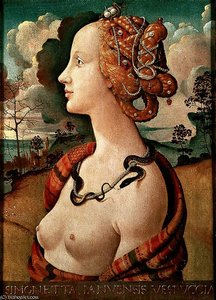
Portret al unei femei, se spune că fiind Simonetta Vespucci (1490) de Piero Di Cosimo

Portret al unei femei, se spune că fiind Simonetta Vespucci

1490 · Ulei pe pânză · Muzeul Condé, Chantilly

Păstrând în minte subiectul și rezonanța mitologică, pictura îl înfățișează pe Simonetta Vespucci (născută Cattaneo), o nobilă genoveză celebrată ca epitomul frumuseții în Florența—o femeie a cărei alură captivantă a fascinat artiștii și intelectualii deopotrivă. Alegerea lui Cosimo de a o portretiza pe Vespucci ca pe Venus, zeița iubirii și a fertilității, spune multe despre sensibilitățile artistice ale Renașterii. Această invocare deliberată a mitologiei clasice nu era pur decorativă; ea…

2
Andromeda freed by Perseus (1515) de Piero Di Cosimo

Andromeda freed by Perseus

1515 · Oil On Panel · Galleria degli Uffizi, Florența

The oil on panel titled Andromeda freed by Perseus captures a moment of sudden, violent salvation. Created by Piero di Cosimo, the work emerged from the artist's late production period. It remains one of the most well-known works by the Florentine painter. The scene depicts the rescue of a young woman from a sea monster, a narrative that has long occupied the artist's imagination.

3
Allegory (1500) de Piero Di Cosimo

Allegory

1500 · Oil On Canvas · National Gallery of Art, Washington

Piero di Cosimo’s “Allegory,” painted around 1500, is not merely a depiction of a biblical scene; it's a meticulously crafted visual poem brimming with symbolic weight and rendered in the vibrant, emotionally charged style characteristic of Early Netherlandish painting. The artwork immediately commands attention with its dynamic composition – a powerful diagonal thrust driven by the angel’s forceful pull on the fallen warrior. This isn’t a static tableau but a…

4
Portrait of Simonetta Vespucci (1480) de Piero Di Cosimo

Portrait of Simonetta Vespucci

1480 · Oil On Panel · Musée Condé, Chantilly

In the heart of the Florentine Renaissance, where the boundaries between reality and myth often blurred, Piero di Cosimo captured an image of eternal grace in his Portrait of Simonetta Vespucci. This captivating masterpiece does more than merely record the likeness of a noblewoman; it invites the viewer into a contemplative state of elegance. The subject, renowned throughout Florence for her incomparable beauty, gazame towards the observer with a serene…

5
Perseus Frees Andromeda (detail) (1513) de Piero Di Cosimo

Perseus Frees Andromeda (detail)

1513 · Oil On Canvas · Galleria degli Uffizi, Florența

To gaze upon a detail from Piero di Cosimo’s Perseus Frees Andromeda is to step directly into the vibrant, dramatic heart of the Florentine Renaissance. This work is not merely a depiction of classical mythology; it is an immersive narrative, a moment suspended between terror and salvation. The scene pulses with untold drama—the exquisite vulnerability of Andromeda chained against the unforgiving rock, juxtaposed against the primal menace of the sea…

6
Perseus Frees Andromeda (detail) (8) (1515) de Piero Di Cosimo

Perseus Frees Andromeda (detail) (8)

1515 · Oil On Canvas · Galleria degli Uffizi, Florența

Piero di Cosimo’s “Perseus Frees Andromeda” – a detail from the larger painting, currently housed in the Uffizi Gallery in Florence – is more than just a depiction of a classical myth; it's a vibrant testament to the burgeoning humanist spirit of 16th-century Italy. Completed around 1515, this oil on panel work encapsulates the era’s fascination with both the grandeur of antiquity and the innovative possibilities of artistic representation. The…

7
Incarnation of Jesus (1505) de Piero Di Cosimo

Incarnation of Jesus

1505 · Tempera On Panel · Galleria degli Uffizi, Florența

Incarnation of Jesus is a painting by the Florentine Renaissance artist Piero di Cosimo. The work was executed in 1505. This piece is currently housed in the Uffizi Gallery in Florence, Italy. It is a significant example of the artist's output during the early sixteenth century.

8
The Death of Procris (detail) (1500) de Piero Di Cosimo

The Death of Procris (detail)

1500 · Oil On Panel · National Gallery, Londra

Piero di Cosimo’s “The Death of Procris,” a captivating panel painting from 1500, resides within the National Gallery in London as a poignant testament to the Florentine Renaissance's fascination with classical mythology and its ability to imbue timeless tales with deeply human emotion. More than simply a depiction of a tragic love story, this work is a masterclass in atmospheric storytelling, utilizing subtle color palettes, masterful rendering of texture, and…

9
A Young Man (1500) de Piero Di Cosimo

A Young Man

1500 · Oil On Panel · Dulwich Picture Gallery, London

A single figure occupies the frame, a young man turned slightly toward the left. His skin possesses a porcelain clarity, smoothed by delicate transitions of light and shadow. A warm red tunic covers his shoulders, a sharp contrast to the expansive, cool blue of the sky behind him. His dark, shoulder-length hair falls in soft, wavy lines, catching a glint of light that suggests a sun beating down from the…

10
The Myth of Prometheus (1515) de Piero Di Cosimo

The Myth of Prometheus

1515 · Oil On Panel · Alte Pinakothek, Munchen

The Myth of Prometheus is an oil on panel work by the Florentine painter Piero di Cosimo. Executed in 1515, the painting captures a specific episode from Greek mythology. The composition focuses on the central figure of the myth, rendered with the anatomical precision characteristic of the High Renaissance.

Selecția pentru Piero Di Cosimo continuă, de la 11 la 82

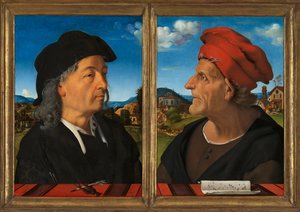
11Adoration of the Christ Child (1501) de Piero Di CosimoAdoration of the Christ Child1501 · Muzeul Ermitaj 12Virgin and Child with the Young Saint John the Baptist, Saint Cecilia, and Angels (1505) de Piero Di CosimoVirgin and Child with the Young Saint John the Baptist, Saint Cecilia, and Angels1505 · Art Institute of Chicago 13Madonna and Child Enthroned with Sts. Peter, John the Baptist, Dominic and Nicholas of Bari (1483) de Piero Di CosimoMadonna and Child Enthroned with Sts. Peter, John the Baptist, Dominic and Nicholas of Bari1483 · Saint Louis Art Museum 14Holy Family with Angels (1520) de Piero Di CosimoHoly Family with Angels1520 · Muzeul Ermitaj 15Sacra conversazione (1480) de Piero Di CosimoSacra conversazione1480 · Musée des Beaux-Arts de Strasbourg 16Christ on the Cross ("Volto Santo") (1500) de Piero Di CosimoChrist on the Cross ("Volto Santo")1500 · Muzeul de Artă Fine din Budapesta 17Holy Family (1495) de Piero Di CosimoHoly Family1495 · Gemäldegalerie Alte Meister 18Virgin and Child with Young St. John the Baptist, and an Angel (1500) de Piero Di CosimoVirgin and Child with Young St. John the Baptist, and an Angel1500 · Muzeul de Artă din São Paulo Assis Chateaubriand (MASP) 19The Myth of Prometheus (1510) de Piero Di CosimoThe Myth of Prometheus1510 · Musée des Beaux-Arts de Strasbourg 20The Myth of Prometheus (1515) de Piero Di CosimoThe Myth of Prometheus1515 · Colecțiile Statale de Pictură din Bavaria 21Madonna and Child with Saints and Angels (1510) de Piero Di CosimoMadonna and Child with Saints and Angels1510 · Philbrook Museum of Art 22Two Angels (1512) de Piero Di CosimoTwo Angels1512 · Muzeul de Artă Plastică din Boston 23Adoration of the Christ Child (1510) de Piero Di CosimoAdoration of the Christ Child1510 · Gemäldegalerie 24Perseus Frees Andromeda (detail) (1510) de Piero Di CosimoPerseus Frees Andromeda (detail)1510 · Galleria degli Uffizi 25Adoration of the Child (1510) de Piero Di CosimoAdoration of the Child1510 · Museo di Palazzo Martelli 26Virgin and Child with Saints Vincent Ferrer and Jerome (1508) de Piero Di CosimoVirgin and Child with Saints Vincent Ferrer and Jerome1508 · Yale University Art Gallery 27Venus, Mars, and Cupid (detail) (1490) de Piero Di CosimoVenus, Mars, and Cupid (detail)1490 · Muzeele Statale din Berlin 28Virgin and Child Enthroned with Saints (1493) de Piero Di CosimoVirgin and Child Enthroned with Saints1493 · Spedale degli Innocenti 29Portraits of Giuliano and Francesco Giamberti da Sangallo, Piero di Cosimo, 1482 - 1485 (1485) de Piero Di CosimoPortraits of Giuliano and Francesco Giamberti da Sangallo, Piero di Cosimo, 1482 - 14851485 30The Adoration of the Child (1500) de Piero Di CosimoThe Adoration of the Child1500 · Toledo Museum of Art 31Forest Fire (detail) (1500) de Piero Di CosimoForest Fire (detail)1500 · Ashmolean Museum 32The Nativity with the Infant Saint John (1505) de Piero Di CosimoThe Nativity with the Infant Saint John1505 · National Gallery of Art 33Venus, Mars, and Cupid (detail) (1490) de Piero Di CosimoVenus, Mars, and Cupid (detail)1490 · Muzeele Statale din Berlin 34Perseus Frees Andromeda (detail) (10) (1513) de Piero Di CosimoPerseus Frees Andromeda (detail) (10)1513 · Galleria degli Uffizi 35Portrait of a Woman (1500) de Piero Di CosimoPortrait of a Woman1500 36The discovery of honey, Detalj 2, ca (1510) de Piero Di CosimoThe discovery of honey, Detalj 2, ca1510 37The discovery of honey, Detalj 1, ca (1510) de Piero Di CosimoThe discovery of honey, Detalj 1, ca1510 38Perseus Frees Andromeda (detail) (1510) de Piero Di CosimoPerseus Frees Andromeda (detail)1510 · Galleria degli Uffizi 39Immaculate Conception with Saints (1510) de Piero Di CosimoImmaculate Conception with Saints1510 · San Francesco 40Simonetta Vespucci (1480) de Piero Di CosimoSimonetta Vespucci1480 · Château de Chantilly 41Madonna with Child and the Young St John (1505) de Piero Di CosimoMadonna with Child and the Young St John1505 · Liechtenstein Museum 42Holy Family with the Young St John the Baptist (1520) de Piero Di CosimoHoly Family with the Young St John the Baptist1520 · Collezione Vittorio Cini 43Incarnation of Jesus (detail) (1505) de Piero Di CosimoIncarnation of Jesus (detail)1505 · Galleria degli Uffizi 44The Visitation with Sts Nicholas and Anthony (detail) (1489) de Piero Di CosimoThe Visitation with Sts Nicholas and Anthony (detail)1489 · National Gallery of Art 45The Young Saint John the Baptist (1480) de Piero Di CosimoThe Young Saint John the Baptist1480 · Metropolitan Museum of Art 46The Adoration of the Christ Child (1505) de Piero Di CosimoThe Adoration of the Christ Child1505 · Galleria Borghese 47The Return from the Hunt (1500) de Piero Di CosimoThe Return from the Hunt1500 · Metropolitan Museum of Art 48Building of a Palace de Piero Di CosimoBuilding of a PalaceMuzeul John și Mable Ringling 49Two Censing Angels Holding a Crown de Piero Di CosimoTwo Censing Angels Holding a CrownScottish National Gallery 50Rest on the Flight into Egypt de Piero Di CosimoRest on the Flight into Egypt 51Visitation de Piero Di CosimoVisitation 52Giuliano da Sangallo (1500) de Piero Di CosimoGiuliano da Sangallo1500 · Rijksmuseum 53The Building of a Palace (1515) de Piero Di CosimoThe Building of a Palace1515 · Ringling Museum of Art 54Prometheus de Piero Di CosimoPrometheus 55allegory - Forest Fire (detail) de Piero Di Cosimoallegory - Forest Fire (detail) 56Sermon on the Mount and Healing of the Leper de Piero Di CosimoSermon on the Mount and Healing of the Leper 57allegory - Forest Fire de Piero Di Cosimoallegory - Forest Fire 58Portrait of a young woman, Musée Condé, Chan de Piero Di CosimoPortrait of a young woman, Musée Condé, Chan 59allegory - The Death of Procris (detail) de Piero Di Cosimoallegory - The Death of Procris (detail) 60allegory - Venus, Mars, and Cupid (detail) de Piero Di Cosimoallegory - Venus, Mars, and Cupid (detail) 61Madonna and Sleeping Christ Child with the Infant St John the Baptist de Piero Di CosimoMadonna and Sleeping Christ Child with the Infant St John the Baptist 62The Fight between the Lapiths and the Centaurs de Piero Di CosimoThe Fight between the Lapiths and the Centaurs 63allegory - The Death of Procris de Piero Di Cosimoallegory - The Death of ProcrisNational Gallery 64allegory - Venus, Mars, and Cupid de Piero Di Cosimoallegory - Venus, Mars, and CupidGemäldegalerie 65The Immaculate Conception with Saints (1510) de Piero Di CosimoThe Immaculate Conception with Saints1510 · Galleria degli Uffizi 66The Visitation with Sts Nicholas and Anthony (1489) de Piero Di CosimoThe Visitation with Sts Nicholas and Anthony1489 · National Gallery of Art 67allegory - Perseus Frees Andromeda de Piero Di Cosimoallegory - Perseus Frees Andromeda 68The Discovery of Honey (1505) de Piero Di CosimoThe Discovery of Honey1505 · Worcester Art Museum 69Portrait of Francesco Giamberti da Sangallo (1483) de Piero Di CosimoPortrait of Francesco Giamberti da Sangallo1483 · Rijksmuseum 70Virgin and Child with a Dove (1490) de Piero Di CosimoVirgin and Child with a Dove1490 · Muzeul Luvru 71Saint Jerome in Meditation (1490) de Piero Di CosimoSaint Jerome in Meditation1490 · Museo Horne 72St Mary Magdalene (1490) de Piero Di CosimoSt Mary Magdalene1490 · Galleria Nazionale d'Arte Antica 73Return from the Hunt by Piero di Cosimo (1500) de Piero Di CosimoReturn from the Hunt by Piero di Cosimo1500 · Metropolitan Museum of Art 74The forest fire de Piero Di CosimoThe forest fireAshmolean Museum 75allegory - Hunting Scene de Piero Di Cosimoallegory - Hunting SceneMetropolitan Museum of Art 76The Finding of Vulcan on Lemnos (1495) de Piero Di CosimoThe Finding of Vulcan on Lemnos1495 · Wadsworth Atheneum 77The Misfortunes of Silenus (1505) de Piero Di CosimoThe Misfortunes of Silenus1505 · Fogg Museum 78Vulcan and Aeolus (1495) de Piero Di CosimoVulcan and Aeolus1495 · National Gallery of Canada 79allegory - Battle of Lapiths and Centaurs de Piero Di Cosimoallegory - Battle of Lapiths and CentaursNational Gallery 80Virgin and Child with Infant John the Baptist (1489) de Piero Di CosimoVirgin and Child with Infant John the Baptist1489 · Musée des Beaux-Arts de Strasbourg 81Virgin and Child with Two Angels (1505) de Piero Di CosimoVirgin and Child with Two Angels1505 · Collezione Vittorio Cini 82Allegory (1500) de Piero Di CosimoAllegory1500 · National Gallery of Art

Piesele celebre ale lui Piero Di Cosimo, perioadă cu perioadă

Subiectele care i-au captivat privirea lui Piero Di Cosimo

Cele patru teme care revin cel mai des în aceste opere originale, fiecare având cel mai sublim exemplu.

Muzeele care păstrează originalele lui Piero Di Cosimo

Cele 8 muzee care dețin cele mai multe dintre picturile de pe această pagină.

Muzee Oraș Lucrări lui Piero Di Cosimo Picturi din această listă
Galleria degli Uffizi, FlorențaGalleria degli Uffizi Florența 9 Andromeda freed by Perseus, Perseus Frees Andromeda (detail), Perseus Frees Andromeda (detail) (8)
National Gallery of Art, WashingtonNational Gallery of Art Washington 5 Allegory, The Nativity with the Infant Saint John, The Visitation with Sts Nicholas and Anthony (detail)
Metropolitan Museum of Art, New YorkMetropolitan Museum of Art New York 4 The Young Saint John the Baptist, The Return from the Hunt, Return from the Hunt by Piero di Cosimo
National Gallery, LondraNational Gallery Londra 3 The Death of Procris (detail), allegory - The Death of Procris, allegory - Battle of Lapiths and Centaurs
Musée des Beaux-Arts de Strasbourg, StrasbourgMusée des Beaux-Arts de Strasbourg Strasbourg 3 Sacra conversazione, The Myth of Prometheus, Virgin and Child with Infant John the Baptist
Muzeul Ermitaj, Sankt PetersburgMuzeul Ermitaj Sankt Petersburg 2 Adoration of the Christ Child, Holy Family with Angels
Gemäldegalerie, BerlinGemäldegalerie Berlin 2 Adoration of the Christ Child, allegory - Venus, Mars, and Cupid
Muzeele Statale din Berlin, BerlinMuzeele Statale din Berlin Berlin 2 Venus, Mars, and Cupid (detail), Venus, Mars, and Cupid (detail)

Piero Di Cosimo deceniu cu deceniu: originalul care definește fiecare

Lucrări pe deceniu

Alege o deceniu pentru a descoperi opera originală care îl definește.

Întrebări ale colecționarilor despre picturile lui Piero Di Cosimo

Pentru ce operă este cel mai cunoscut Piero Di Cosimo?Află răspunsul

Portret al unei femei, se spune că fiind Simonetta Vespucci (1490), Muzeul Condé, Chantilly. Urmează Andromeda freed by Perseus (1515) și Allegory (1500).

Ce vârstă avea Piero Di Cosimo când a fost creată Portret al unei femei, se spune că fiind Simonetta Vespucci?Află răspunsul

28 ani: Portret al unei femei, se spune că fiind Simonetta Vespucci datează din 1490, iar Piero Di Cosimo s-a născut în 1462.

Care sunt cele mai celebre zece picturi ale lui Piero Di Cosimo?Află răspunsul

Portret al unei femei, se spune că fiind Simonetta Vespucci, Andromeda freed by Perseus, Allegory, Portrait of Simonetta Vespucci, Perseus Frees Andromeda (detail), Perseus Frees Andromeda (detail) (8), Incarnation of Jesus, The Death of Procris (detail), A Young Man și The Myth of Prometheus. Clasamentul de mai sus indică anul și muzeul pentru fiecare piesă.

Câte picturi a lăsat Piero Di Cosimo?Află răspunsul

Catalogul nostru cuprinde 84 lucrări ale lui Piero Di Cosimo, datate între 1480 și 1520.

În ce muzee sunt expuse capodoperele lui Piero Di Cosimo?Află răspunsul

În principal în Galleria degli Uffizi (Florența), National Gallery of Art (Washington) și Metropolitan Museum of Art (New York). Tabelul cu muzee de mai sus le enumeră pe toate.

În ce ani a pictat Piero Di Cosimo cele mai cunoscute opere?Află răspunsul

În 1500s: 23 dintre cele 82 lucrări de pe această pagină au fost realizate atunci, fiind Allegory dintre acestea.

Care sunt prima și ultima pictură originală celebră a lui Piero Di Cosimo?Află răspunsul

Pe această pagină, cea mai veche lucrare datează din Portrait of Simonetta Vespucci (1480), iar cea mai recentă este din Holy Family with Angels (1520).

Ce subiecte a ales cel mai des Piero Di Cosimo?Află răspunsul

Landscape (21), Mythology (12) și Child (11), din cele 82 lucrări de pe această pagină.

Ce tehnică a folosit cel mai des Piero Di Cosimo?Află răspunsul

Oil On Panel, pentru 20 dintre cele 82 lucrări de pe această pagină.

Din ce mișcare artistică face parte Piero Di Cosimo?Află răspunsul

Renaissance, judecând după originalele de pe această pagină.

Ce lucrări ale lui Piero Di Cosimo sunt expuse la Galleria degli Uffizi?Află răspunsul

Andromeda freed by Perseus, Perseus Frees Andromeda (detail) și Perseus Frees Andromeda (detail) (8): Galleria degli Uffizi, Florența deține 9 dintre lucrările de pe această pagină.

Piero Di Cosimo: viață și operă

Piero di Cosimo (1462-1522): Între Fantezie și Realism în Pictura Renașterii Florentine

Piero di Cosimo, născut Piero di Lorenzo Battista în jurul anului 1462 la Florența, Italia, se impune ca o figură singulară în tapiseria vibrantă a Renașterii florentine. Spre deosebire de mulți dintre contemporanii săi, care respectau cu strictețe idealurile clasice, Cosimo poseda un spirit imaginar care infuza operele sale cu elemente fantastice, alăturate unei observații meticuloase a naturii — un amestec distinctiv care i-a consolidat reputație de unul dintre cei mai inovatori pictori ai epocii. Călătoria sa artistică s-a desfășurat pe fundalul unei gândiri umaniste în plină expansiune și al experimentării artistice, oglindind transformările culturale mai largi care remodelau Europa în această perioadă.
  • Primii ani și formarea: Detaliile biografice precise referitoare la anii de formare ai lui Cosimo rămân elusive, bazându-se în principal pe referințe fragmentare din „Vite” lui Vasari. El a fost ucenic sub îndrumarea lui Andrea del Verrocchio, un sculptor și pictor renumit, a cărui atelier a servit drept creuzet pentru talentul artistic. Această asociere l-a expus pe Cosimo tehnicilor picturii în fresco și sculpturii, modelându-i abilitățile fundamentale.
  • Influențe și stil artistic: Stilul lui Cosimo a fost profund influențat de Botticelli și Giovanni Battista Van Eyck — artiști care au susținut atât frumusețea, cât și profunzimea psihologică. Liniile grațioase și figurile etere ale lui Botticelli i-au insuflat lui Cosimo o predilecție pentru eleganță și reprezentare idealizată, în timp ce măiestria lui Van Eyck în pictura în ulei l-a încurajat să exploreze gradații tonale nuanțate și bogăția texturală. Aceste influențe s-au combinat pentru a produce un idiom artistic caracterizat prin culori luminoase, o pensulă delicată și o fuziune captivantă a narațiunilor mitologice cu peisaje realiste.

Opere Remarcabile și Realizări Artistice

Opera lui Cosimo cuprinde o colecție remarcabilă de picturi care demonstrează talentul său excepțional și viziunea imaginară. Printre cele mai celebrate creații ale sale se numără „Vulcan și Aeolus”, o pictură monumentală în ulei pe suport circular, care înfățișează confruntarea mitologică dintre fiul lui Zeus și Poseidon — o dovadă a capacității lui Cosimo de a transmite emoție dramatică într-o compoziție atent construită. În mod similar, „Madonna și Copilul Isus dormind împreună cu Sfântul Ioan Botezul în copilărie” exemplifică atenția sa meticuloasă la detalii și înțelegerea profundă a iconografiei religioase. Mai mult, „Adorația Copilului”, o altă capodoperă circulară, întruchipează frumusețea senină și contemplația spirituală caracteristică artei Renașterii timpurii.

Moștenire și Semnificație Istorică

Contribuția lui Piero di Cosimo la pictura florentină transcende simpla inovație stilistică; el reprezintă un moment crucial în istoria artei. Refuzând constrângerile convenției academice stricte și îmbrățișând povestirea imaginară alături de reprezentarea realistă, Cosimo a deschis calea generațiilor ulterioare de artiști — inclusiv lui Rafael și Michelangelo — de a explora noi posibilități expresive. Opera sa continuă să inspire admirație pentru amestecul său armonios de fantezie și realism, asigurându-și locul ca un simbol durabil al creativității și geniului artistic din perioada Renașterii. El este rememorat nu doar pentru capodoperele sale individuale, ci și pentru modelarea traiectoriei mai largi a artei europene.