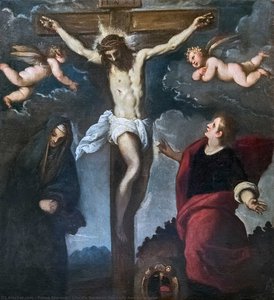
Portretul lui Palma cel Tânăr

Cele 100 cele mai faimoase picturi ale lui Palma cel Tânăr, o selecție de galerie

Actualizat Octombrie 2026 · clasat în funcție de scorul nostru de popularitate (căutări, vizite și comenzi pentru fiecare operă) · 161 lucrări ale lui Palma cel Tânăr în catalogul nostru

Pe scurt

Dintre toate originalele lăsate de Palma cel Tânăr, cea mai faimoasă este The Crucifixion of St Peter (1614), din colecția Gallerie dell'Accademia di Venezia, Veneția. Imediat după acestea urmează Pietà with Angels (1620) și Paolo Veronese (1600). Catalogul nostru cuprinde 161 lucrări ale lui Palma cel Tânăr; galeria a păstrat cele 100 pe care lumea le admiră cel mai mult, fiecare fiind prezentată împreună cu data, muzeul și povestea sa.

1550 – 1628, Veneția Renaissance Cele mai multe lucrări: Colecțiile Statale de Pictură din Bavaria

Cele mai importante 10 picturi ale lui Palma cel Tânăr: selecția galeriei

1
The Crucifixion of St Peter (1614) de Palma cel Tânăr

The Crucifixion of St Peter

1614 · Oil On Canvas · Gallerie dell'Accademia di Venezia, Veneția

Michelangelo Palma il Giovane’s “The Crucifixion of St Peter,” painted in 1614, is not merely a depiction of a pivotal moment in Christian history; it's a profound exploration of suffering, faith, and the raw emotion of martyrdom. This monumental canvas, measuring 170 x 135 cm, transports the viewer directly into the heart of the scene – a chaotic yet deeply moving tableau unfolding outdoors beneath a dramatic, stormy sky. Palma,…

2
Pietà with Angels (1620) de Palma cel Tânăr

Pietà with Angels

A heavy, limp body rests across the lap of the Virgin Mary. The pale skin of Christ contrasts against the deep red of her tunic and the dark blue of her mantle. Shadows swallow the background, pushing the figures forward into a sharp, theatrical light. Two large angels flank the upper scene, their faces etched with grief. Below, small cherubs support the weight of the limbs, one near the arm…

3
Paolo Veronese (1600) de Palma cel Tânăr

Paolo Veronese

1600 · Oil · Galleria degli Uffizi, Florența

A dark, shadow-filled void recedes behind the subject, stripping away the distractions of the physical world. This absence of background detail pushes the figure forward, creating a sudden sense of depth. The man emerges from this gloom, his presence anchored by a crisp white collar that catches the light. His gaze is direct, meeting the viewer with an unwavering eye contact that bridges the gap between the painted space and…

4
The Conversion of Saint Paul (1590) de Palma cel Tânăr

The Conversion of Saint Paul

1590 · Oil · Muzeul Prado, Madrid

The air thickens with sudden, celestial violence as the scene erupts in a chaotic swirl of motion. Saul, once a persecutor of the faithful, is caught in a moment of profound physical and spiritual disorientation. He is thrown from his horse, a heavy, muscular form tumbling toward the earth, while the animal recoils in a tangle of limbs and frantic energy. Above this earthly commotion, a brilliant, piercing light breaks…
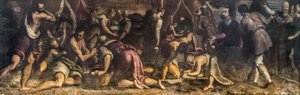
5
The Crucifixion (1596) de Palma cel Tânăr

The Crucifixion

1596 · Oil On Canvas · Metropolitan Museum of Art, New York

The composition reflects the transition from the High Renaissance to the burgeoning drama of the Baroque. The style is characterized by intense emotional weight and dynamic movement typical of the late Renaissance or Mannerist period. The texture appears smooth yet painterly, capturing the anatomical detail of Christ's torso and the heavy fabric of the mourning figures. Through the use of light as a narrative tool, the composition guides the eye…

6
Venus and Mars (1605) de Palma cel Tânăr

Venus and Mars

1605 · Oil On Canvas · J. Paul Getty Museum, Los Angeles

The oil on canvas work titled Venus and Mars presents a mythological encounter between the personification of love and the god of war. Painted by Palma il Giovane, the scene captures these lovers in a moment of intimate proximity. The figures of Venus and Mars respond to one another through anticipatory gestures, their bodies arranged in a way that suggests a shared, private space. A small Cupid occupies the lower…

7
The prophet Nathan admonishes King David (1600) de Palma cel Tânăr

The prophet Nathan admonishes King David

1600 · Oil On Canvas · Muzeul Kunsthistorisches din Viena, Viena

The oil painting The prophet Nathan admonishes King David presents an emotionally charged biblical scene set within a shallow, stage-like space. The composition centers on two primary figures engaged in an intense interaction. On the left, King David is depicted sitting in a large, ornate golden throne. He wears a red velvet robe trimmed with thick white ermine fur and a prominent gold crown, his posture heavy and dejected with…

8
Portrait of a Sculptor (1605) de Palma cel Tânăr

Portrait of a Sculptor

1605 · Oil On Canvas · Muzeul Kunsthistorisches din Viena, Viena

The room falls into a heavy, quiet stillness as we gaze upon an elderly man, his face etched with the deep lines of a life spent in focused labor. He sits in a three-quarter view, caught in a moment of profound introspection. A sharp, directional light enters from the upper left, carving his features out of the surrounding darkness. This intense chiaroscuro pulls his weathered forehead and greyish-white beard into…

9
Lamentation with angels (1612) de Palma cel Tânăr

Lamentation with angels

In this 1612 oil painting, we find ourselves drawn into the immediate, heavy atmosphere of the Lamentation. The composition centers on the pale, lifeless body of Christ, which lies horizontally across the lower half of the frame. There is a stillness here that feels almost physical, a quietude that contrasts with the intense emotional weight of the scene. To the left, a figure draped in deep red robes holds a…

10
Judith Placing the Head of Holofernes onto a Cloth Held by Another Female Figure, the Foreshortened Body of Holofernes Gushes with Blood from the Neck (1628) de Palma cel Tânăr

Judith Placing the Head of Holofernes onto a Cloth Held by Another Female Figure, the Foreshortened Body of Holofernes Gushes with Blood from the Neck

1628 · Etching

In this etching print, we find ourselves witnessing a scene of profound, sudden movement. The composition centers on the aftermath of a decisive act: Judith is captured in the precise, heavy moment of placing the severed head of Holofernes onto a cloth. Another female figure assists, her hands steadying the fabric to catch the weight of the deed. There is a certain anatomical tension here, particularly in the foreshortened body…

Selecția pentru Palma cel Tânăr continuă, de la 11 la 100

11Portrait of Niccolo da Ponte (1491-1585), Doge of Venice (1580) de Palma cel TânărPortrait of Niccolo da Ponte (1491-1585), Doge of Venice1580 · Muzeul Kunsthistorisches din Viena 12The Pope allows Otto to go to his father to negotiate peace (1582) de Palma cel TânărThe Pope allows Otto to go to his father to negotiate peace1582 · Palatul Dogilor 13Pietá (1611) de Palma cel TânărPietá1611 · Muzeul Prado 14David with Goliath's Head (1590) de Palma cel TânărDavid with Goliath's Head1590 · Muzeul Prado 15Salomé with the Head of John the Baptist (1599) de Palma cel TânărSalomé with the Head of John the Baptist1599 · Muzeul Kunsthistorisches din Viena 16Moses Brings the Tablets of the Law (1586) de Palma cel TânărMoses Brings the Tablets of the Law1586 · Colecțiile Statale de Pictură din Bavaria 17St Sebastian (1590) de Palma cel TânărSt Sebastian1590 · Muzeul Ermitaj 18Dead Christ Supported by an Angel (1612) de Palma cel TânărDead Christ Supported by an Angel1612 · Muzeul Kunsthistorisches din Viena 19Adoration of the Shepherds (1575) de Palma cel TânărAdoration of the Shepherds1575 · Colecțiile Statale de Pictură din Bavaria 20Flagellation of Christ (1586) de Palma cel TânărFlagellation of Christ1586 · Colecțiile Statale de Pictură din Bavaria 21Christ calling Zacchaeus (1575) de Palma cel TânărChrist calling Zacchaeus1575 · Fitzwilliam Museum 22Elijah and the Angel (1575) de Palma cel TânărElijah and the Angel1575 · Fitzwilliam Museum 23Portrait of a Gentleman (1590) de Palma cel TânărPortrait of a Gentleman1590 · Art Institute of Chicago 24Fighting soldiers (1569) de Palma cel TânărFighting soldiers1569 25soldiers on horseback (1569) de Palma cel Tânărsoldiers on horseback1569 26Soldiers on horseback (1569) de Palma cel TânărSoldiers on horseback1569 27supraporte: fighting soldiers (1569) de Palma cel Tânărsupraporte: fighting soldiers1569 28fighting soldiers (1569) de Palma cel Tânărfighting soldiers1569 29Battle - scene in landscape with town (1569) de Palma cel TânărBattle - scene in landscape with town1569 30soldiers on horseback (1569) de Palma cel Tânărsoldiers on horseback1569 31soldiers on horseback (1569) de Palma cel Tânărsoldiers on horseback1569 32six citizens after war scene (1569) de Palma cel Tânărsix citizens after war scene1569 33Gentlemen on horse - back (1569) de Palma cel TânărGentlemen on horse - back1569 34Victory of Francesco Bembo over Filippo Maria Visconti (1578) de Palma cel TânărVictory of Francesco Bembo over Filippo Maria Visconti1578 · Palatul Dogilor 35The Descent of Manna (1575) de Palma cel TânărThe Descent of Manna1575 36Christ Deposed In The Sepulchre (1575) de Palma cel TânărChrist Deposed In The Sepulchre1575 37Crucifix Between Our Lady And Saint John (1575) de Palma cel TânărCrucifix Between Our Lady And Saint John1575 38The Paschal Lamb (1575) de Palma cel TânărThe Paschal Lamb1575 39St Lawrence Giving the Wealth to the Poor (1575) de Palma cel TânărSt Lawrence Giving the Wealth to the Poor1575 40Lamentation of Christ (1586) de Palma cel TânărLamentation of Christ1586 · Colecțiile Statale de Pictură din Bavaria 41Lamentation of Christ (1586) de Palma cel TânărLamentation of Christ1586 · Colecțiile Statale de Pictură din Bavaria 42Thetis on the Sea (1586) de Palma cel TânărThetis on the Sea1586 · Colecțiile Statale de Pictură din Bavaria 43Lamentation of Christ (1586) de Palma cel TânărLamentation of Christ1586 · Colecțiile Statale de Pictură din Bavaria 44Annunciation of Mary (1585) de Palma cel TânărAnnunciation of Mary1585 · Colecțiile Statale de Pictură din Bavaria 45Christ and the Samaritan Woman (1586) de Palma cel TânărChrist and the Samaritan Woman1586 · Colecțiile Statale de Pictură din Bavaria 46Saint Sebastian (1586) de Palma cel TânărSaint Sebastian1586 · Colecțiile Statale de Pictură din Bavaria 47Ecce homo (1586) de Palma cel TânărEcce homo1586 · Colecțiile Statale de Pictură din Bavaria 48The Expulsion of the Vices of the Church (1582) de Palma cel TânărThe Expulsion of the Vices of the Church1582 · Colecția Regală 49Venus and Cupid (1590) de Palma cel TânărVenus and Cupid1590 · Colecția Regală 50Prometheus Chained to the Caucasus (1589) de Palma cel TânărPrometheus Chained to the Caucasus1589 · Colecția Regală 51Massacre of the Inhabitants of Hippo (1593) de Palma cel TânărMassacre of the Inhabitants of Hippo1593 · Musée Fabre 52Scene from the History of Joseph (1587) de Palma cel TânărScene from the History of Joseph1587 · Isabella Stewart Gardner Museum 53Scene from the History of Joseph (1587) de Palma cel TânărScene from the History of Joseph1587 · Isabella Stewart Gardner Museum 54Judas Cyriacus (1593) de Palma cel TânărJudas Cyriacus1593 55Sant'elena Ritrova La Vera Croce (1593) de Palma cel TânărSant'elena Ritrova La Vera Croce1593 56L'imperatore Eraclio Riporta La Croce Al Calvario (1593) de Palma cel TânărL'imperatore Eraclio Riporta La Croce Al Calvario1593 57Pius II (1593) de Palma cel TânărPius II1593 58Judith and Holofernes (1600) de Palma cel TânărJudith and Holofernes1600 59The Virgin and Child, Saint Luke and a Donor (1602) de Palma cel TânărThe Virgin and Child, Saint Luke and a Donor1602 · Colecția Regală 60The Penitent Magdalene (1600) de Palma cel TânărThe Penitent Magdalene1600 · Colecția Regală 61Return of the Prodigal Son (1595) de Palma cel TânărReturn of the Prodigal Son1595 · Gallerie dell'Accademia di Venezia 62The Virgin and Child with Saints and Angels (1620) de Palma cel TânărThe Virgin and Child with Saints and Angels1620 · National Gallery of Ireland 63Lamentation of Christ (1620) de Palma cel TânărLamentation of Christ1620 · Colecțiile Statale de Pictură din Bavaria 64Self Portrait (1614) de Palma cel TânărSelf Portrait1614 65Studies of an Arm, and of the Heads of an Old Man and Young Woman (1628) de Palma cel TânărStudies of an Arm, and of the Heads of an Old Man and Young Woman1628 66Seated Female Holding a Book, Two Heads of Bearded Men, Seated Male Nude, and Four Sketches for Christ Judging (recto); Studies for Cain Slaying Abel (verso) (1628) de Palma cel TânărSeated Female Holding a Book, Two Heads of Bearded Men, Seated Male Nude, and Four Sketches for Christ Judging (recto); Studies for Cain Slaying Abel (verso)1628 67Apostles at the Virgin's Tomb (1582) de Palma cel TânărApostles at the Virgin's Tomb1582 · Muzeul Ermitaj 68Cain and Abel (1603) de Palma cel TânărCain and Abel1603 · Muzeul Kunsthistorisches din Viena 69Annunciation (1600) de Palma cel TânărAnnunciation1600 · Madonna dell'Orto 70Martirio Di San Giovanni Battista Tra San Lanfranco Beccari E San Liberio (1593) de Palma cel TânărMartirio Di San Giovanni Battista Tra San Lanfranco Beccari E San Liberio1593 71Washing of the Feet (1591) de Palma cel TânărWashing of the Feet1591 · San Giovanni in Bragora 72Lamentation (1620) de Palma cel TânărLamentation1620 · National Gallery of Art 73Joseph and Potiphar's Wife de Palma cel TânărJoseph and Potiphar's WifeStatens Museum For Kunst 74Allegory of the Victory over the League of Cambrai (detail) (1590) de Palma cel TânărAllegory of the Victory over the League of Cambrai (detail)1590 · Palatul Dogilor 75The Dead Christ Supported by An Angel with Two Putti Each Supporting a Cero (1575) de Palma cel TânărThe Dead Christ Supported by An Angel with Two Putti Each Supporting a Cero1575 76The Paschal Lamb (1575) de Palma cel TânărThe Paschal Lamb1575 77Eucharist Worshipped By The Four Evangelists (1575) de Palma cel TânărEucharist Worshipped By The Four Evangelists1575 78Elia Cibato From angel (1575) de Palma cel TânărElia Cibato From angel1575 79The Parish Priest Da Ponte in front of the Virgin, Saint Mark, Saint Sylvester and Saint James (1575) de Palma cel TânărThe Parish Priest Da Ponte in front of the Virgin, Saint Mark, Saint Sylvester and Saint James1575 80Red Sea Passage (1575) de Palma cel TânărRed Sea Passage1575 81The Flagellation de Palma cel TânărThe FlagellationMuzeul Prado 82Papa Cleto (1593) de Palma cel TânărPapa Cleto1593 83Elia nutrito dall'angelo (1593) de Palma cel TânărElia nutrito dall'angelo1593 84Lanfranco Beccari (1593) de Palma cel TânărLanfranco Beccari1593 85David riceve dal sacerdote Achimelec i pani offerti nel santuario (1593) de Palma cel TânărDavid riceve dal sacerdote Achimelec i pani offerti nel santuario1593 86Saint Helena (1593) de Palma cel TânărSaint Helena1593 87Il Serpente Di Bronzo (1593) de Palma cel TânărIl Serpente Di Bronzo1593 88Alexander III confirms the Crucifixes and gives them the rule (1593) de Palma cel TânărAlexander III confirms the Crucifixes and gives them the rule1593 89Pope San Cleto Founds the Order of the Crucifer - St. Cyril's Bishop of Jerusalem Reaffirms the Order (1593) de Palma cel TânărPope San Cleto Founds the Order of the Crucifer - St. Cyril's Bishop of Jerusalem Reaffirms the Order1593 90David and Achimelech (1590) de Palma cel TânărDavid and Achimelech1590 · Santissimo Redentore 91The Pool (1592) de Palma cel TânărThe Pool1592 · Collezione Molinari Pradelli 92The Martyrdom of St Lawrence (1581) de Palma cel TânărThe Martyrdom of St Lawrence1581 · San Giacomo dall'Orio 93Sketch for An Entablature (1628) de Palma cel TânărSketch for An Entablature1628 94The Arrest of Christ, Christ and the Canaanite Woman, Seated Male Figures, and Head of a Child (1628) de Palma cel TânărThe Arrest of Christ, Christ and the Canaanite Woman, Seated Male Figures, and Head of a Child1628 95Studies of Horsemen and Study of a Figure for a Deposition (1628) de Palma cel TânărStudies of Horsemen and Study of a Figure for a Deposition1628 96Seated Female Holding a Book, Two Heads of Bearded Men, Seated Male Nude, and Four Sketches for Christ Judging (recto); Studies for Cain Slaying Abel (verso) (1628) de Palma cel TânărSeated Female Holding a Book, Two Heads of Bearded Men, Seated Male Nude, and Four Sketches for Christ Judging (recto); Studies for Cain Slaying Abel (verso)1628 97Sheet of Studies with St. Jerome, Seated at Right and Resting His Right Forearm on a Book, at Left An Ecclesiastical Figure Wearing a Cope and Miter, and at Bottom Two Putti (1628) de Palma cel TânărSheet of Studies with St. Jerome, Seated at Right and Resting His Right Forearm on a Book, at Left An Ecclesiastical Figure Wearing a Cope and Miter, and at Bottom Two Putti1628 98A Venetian Senator de Palma cel TânărA Venetian SenatorMuzeul Prado 99Amusements of the Prodigal Son (1595) de Palma cel TânărAmusements of the Prodigal Son1595 · Gallerie dell'Accademia di Venezia 100Christ as Teacher de Palma cel TânărChrist as TeacherColecțiile Statale de Pictură din Bavaria

Piesele celebre ale lui Palma cel Tânăr, perioadă cu perioadă

Subiectele care i-au captivat privirea lui Palma cel Tânăr

Cele patru teme care revin cel mai des în aceste opere originale, fiecare având cel mai sublim exemplu.

Muzeele care păstrează originalele lui Palma cel Tânăr

Cele 8 muzee care dețin cele mai multe dintre picturile de pe această pagină.

Muzee Oraș Lucrări lui Palma cel Tânăr Picturi din această listă
Colecțiile Statale de Pictură din Bavaria, MunchenColecțiile Statale de Pictură din Bavaria Munchen 14 Moses Brings the Tablets of the Law, Adoration of the Shepherds, Flagellation of Christ
Muzeul Kunsthistorisches din Viena, VienaMuzeul Kunsthistorisches din Viena Viena 8 Pietà with Angels, The prophet Nathan admonishes King David, Portrait of a Sculptor
Muzeul Prado, MadridMuzeul Prado Madrid 5 The Conversion of Saint Paul, Pietá, David with Goliath's Head
Colecția Regală, LondraColecția Regală Londra 5 The Expulsion of the Vices of the Church, Venus and Cupid, Prometheus Chained to the Caucasus
Palatul Dogilor, VenețiaPalatul Dogilor Veneția 4 The Pope allows Otto to go to his father to negotiate peace, Victory of Francesco Bembo over Filippo Maria Visconti, Allegory of the Victory over the League of Cambrai (detail)
Gallerie dell'Accademia di Venezia, VenețiaGallerie dell'Accademia di Venezia Veneția 3 The Crucifixion of St Peter, Return of the Prodigal Son, Amusements of the Prodigal Son
Muzeul Ermitaj, Sankt PetersburgMuzeul Ermitaj Sankt Petersburg 2 St Sebastian, Apostles at the Virgin's Tomb
Fitzwilliam MuseumFitzwilliam Museum 2 Christ calling Zacchaeus, Elijah and the Angel

Palma cel Tânăr deceniu cu deceniu: originalul care definește fiecare

Lucrări pe deceniu

Alege o deceniu pentru a descoperi opera originală care îl definește.

Întrebări ale colecționarilor despre picturile lui Palma cel Tânăr

Pentru ce operă este cel mai cunoscut Palma cel Tânăr?Află răspunsul

The Crucifixion of St Peter (1614), Gallerie dell'Accademia di Venezia, Veneția. Urmează Pietà with Angels (1620) și Paolo Veronese (1600).

Ce vârstă avea Palma cel Tânăr când a fost creată The Crucifixion of St Peter?Află răspunsul

64 ani: The Crucifixion of St Peter datează din 1614, iar Palma cel Tânăr s-a născut în 1550.

Care sunt cele mai celebre zece picturi ale lui Palma cel Tânăr?Află răspunsul

The Crucifixion of St Peter, Pietà with Angels, Paolo Veronese, The Conversion of Saint Paul, The Crucifixion, Venus and Mars, The prophet Nathan admonishes King David, Portrait of a Sculptor, Lamentation with angels și Judith Placing the Head of Holofernes onto a Cloth Held by Another Female Figure, the Foreshortened Body of Holofernes Gushes with Blood from the Neck. Clasamentul de mai sus indică anul și muzeul pentru fiecare piesă.

Câte picturi a lăsat Palma cel Tânăr?Află răspunsul

Catalogul nostru cuprinde 161 lucrări ale lui Palma cel Tânăr, datate între 1569 și 1628.

În ce muzee sunt expuse capodoperele lui Palma cel Tânăr?Află răspunsul

În principal în Colecțiile Statale de Pictură din Bavaria (Munchen), Muzeul Kunsthistorisches din Viena (Viena) și Muzeul Prado (Madrid). Tabelul cu muzee de mai sus le enumeră pe toate.

În ce ani a pictat Palma cel Tânăr cele mai cunoscute opere?Află răspunsul

În 1590s: 27 dintre cele 100 lucrări de pe această pagină au fost realizate atunci, fiind The Conversion of Saint Paul dintre acestea.

Care sunt prima și ultima pictură originală celebră a lui Palma cel Tânăr?Află răspunsul

Pe această pagină, cea mai veche lucrare datează din Fighting soldiers (1569), iar cea mai recentă este din Judith Placing the Head of Holofernes onto a Cloth Held by Another Female Figure, the Foreshortened Body of Holofernes Gushes with Blood from the Neck (1628).

Ce subiecte a ales cel mai des Palma cel Tânăr?Află răspunsul

Man (26), Woman (19) și People (15), din cele 100 lucrări de pe această pagină.

Ce tehnică a folosit cel mai des Palma cel Tânăr?Află răspunsul

Oil On Canvas, pentru 36 dintre cele 100 lucrări de pe această pagină.

Din ce mișcare artistică face parte Palma cel Tânăr?Află răspunsul

Renaissance și Baroque, judecând după originalele de pe această pagină.

Ce lucrări ale lui Palma cel Tânăr sunt expuse la Colecțiile Statale de Pictură din Bavaria?Află răspunsul

Moses Brings the Tablets of the Law, Adoration of the Shepherds și Flagellation of Christ: Colecțiile Statale de Pictură din Bavaria, Munchen deține 13 dintre lucrările de pe această pagină.

Palma cel Tânăr: viață și operă

Moștenirea radiantă a lui Jacopo Palma il Giovane

În crepusculul de aur al Renașterii venețiene, o perioadă definită de o măiestrie fără egal a culorii și luminii, a apărut un pictor al cărui pensulă a triumfat peste prăpastia dintre Înalta Renaștere și drama emergentă a Barocului. Jacopo Palma il Giovane, născut sub numele de Iacopo Negretti în jurul anului 1548, nu a fost doar un succesor al marilor maeștri, ci o legătură vitală în continuitatea Școlii Venețiene. Fiind nepotul celebru lui Palma Vecchio, s-a născut într-o linie de excelență artistică, moștenind o înțelegere profundă a bogăției cromatice care definește tradiția venețiană. Viața și opera sa reprezintă o tranziție fluidă, purtând eleganța luminoasă a predecesorilor săi într-o nouă eră a intensității emoționale și a măreției teatrale.

Fundamentele artei lui Palma au fost puse în atelierul din Veneția, unde aerul era încărcat de moștenirea lui Titian și Tintoretto. Deși relatările istorice sugerează că și-ar fi putut rafina tehnica prin studiul paletelor de culori uluitoare ale lui Titian, energia dinamică a lui Tintoretto a fost cea care i-a modelat cu adevărat viziunea matură. În urma decesului lui Tintoretto în 1594, Palma il Giovane a urcat pe o poziție de primărang, devenind forța artistică dominantă în Veneția. El poseda o capacitate rară de a sintetiza aceste două influențe disparate: de la Titian, a extras o stăpânire sofisticată a luminii și a tonurilor de piele; de la Tintoretto, a adoptat un simț al mișcării, un chiaroscuro dramatic și o urgență narativă ce rezonează profund cu fervoarea religioasă a Contrareformei.

Un maestru al narațiunii și al emoției

Opera lui Palma il Giovane este o mărturie a capacității sale de a transforma temele biblice și mitologice în experiențe umane viscerale. Picturile sale sunt rareori statice; ele pulsează cu o forță vitală ce atrage privitorul în inima dramei. Fie că depinde de solemnitatea unui martiriu religios sau de haosul viu al unei scene de tavernă, munca sa utilizează lumina ca pe un instrument narativ, ghidând ochiul prin compoziții complexe pentru a găsi nucleul emoțional al poveștii. Măiestria sa este deosebit vizibilă în lucrări precum Marturiul Sfântei Ecaterine a Alexandriei, unde jocul dintre umbră și strălucire intensifică senzația luptei divine, și Apostolii la mormântul Fecioarei, care surprinde un moment profund de tristeală colectivă printr-o pensulă energică și amplă.

Dincolo de comenzile sale religioase, versatilitatea lui Palma i-a permis să exploreze un spectru larg de subiecte. Talentul său de a surprinde spiritul uman este poate cel mai intim vizibil în Autoportretul său, o lucrare care dezvălucă o introspecție plină de suflet și o pricepere tehnică capabilă să reducă nuanțele subtile ale expresiei. Chiar și în scene mai seculare sau anecdotice, precum Amuzamentele Fiului Prodigal, el menține o calitate vibrantă și ritmică ce celebrează texturile și culorile vieții venețiene. Această capacitate de a oscila între profund și ludic i-a asigurat relevanța în diverse cercuri de patronaj, de la autoritățile ecleziastice din Veneția până la curțile imperiale din Europa Centrală.

Semnificație istorică și influență durabilă

Importanța istorică a lui Jacopo Palma il Giovane se extinde mult dincolo de granițele Republicii Venețiene. Influența sa a radiat spre exterior, ajungând până în Bergamo și la curtea împăratului Rudolf al II-lea din Praga, marcându-l ca pe un artist de talie internațională. El nu s-a limitat doar la a replica trecutul; el l-a evoluat, pregătind terenul pentru stilurile mai emotive și dramatice care vor defini secolul al XVII-lea. Prin mentoratul oferit generațiilor următoare, inclusiv figurilor care vor rafina și mai mult estetica venețiană, el s-a asigurat că tradițiile liniei sale rămân vibrante și transformatoare.

Astăzi, îl recunoaștem pe Palma il Giovane ca pe o figură pivot, a cărei operă servește drept punte între epoci. Moștenirea sa se regăsește în:

  • Sinteza stilurilor: Integrarea perfectă a strălucirii coloristice a lui Titian cu dinamismul dramatic al lui Tintoretto.
  • Artisticitatea Contrareformei: Utilizarea unor imagini puternice pentru a comunica intensitatea spirituală cerută de Biserica Catolică într-o perioadă de schimbări religioase profunde.
  • <Continuarea Școlii Venețiene: Menținerea statutului Veneției de epicentru global al artei prin numeroasele sale comenzi și influența sa pedagogică.

Prin pensula sa expresivă și utilizarea magistrală a luminii, Palma il Giovane a capturat însăși esența unei lumi în schimbare, lăsând în urmă un corpus de lucrări care continuă să încante și să emoționeze observatorul modern.