


1


Actualizat Octombrie 2026 · clasat în funcție de scorul nostru de popularitate (căutări, vizite și comenzi pentru fiecare operă) · 48 lucrări ale lui Othon Friesz în catalogul nostru
Pe scurt
Scene in a Parisian Brasserie (1906) este pictura lui Othon Friesz care atrage cele mai multe priviri; originalul aparține Museum Barberini, Potsdam. După aceasta, privirea se îndreaptă către The Bathers of Andelys (1908) și Interior (1914). Dintre cele 48 opere ale lui Othon Friesz din catalogul nostru, acestea 48 sunt cele mai celebre, fiecare fiind o piesă unică, prezentată împreună cu anul creării, muzeul deținător și motivul pentru care aceasta rămâne memorabilă.


The oil on canvas titled Temptation (Adam and Eve) was painted by Othon Friesz in 1910. This work measures 73 x 60 cm. It captures a moment of profound weight through the figures of Adam and Eve. The scene is held within the permanent collection of the Hermitage Museum.


 Nude Reclining
12
 The CreekMuseum of Art
13
 The Harbour in Honfleur1907 · Muzeul Național de Artă, Arhitectură și Design
14
 Flowers (Tulips and Daisies)1910 · Muzeul Ermitaj
15
 Vue du château Fallet1907 · Musée d'Unterlinden
16
 The Sunken Road in Winter1913 · Statens Museum For Kunst
17
 The Arbour in the Pine Wood1914 · Statens Museum For Kunst
18
 Still Life with Brioches1916 · Statens Museum For Kunst
19
 Still Life with Apples1915 · Statens Museum For Kunst
20
 Terrace with Palms1914 · Statens Museum For Kunst
21
 The Cliff at Sainte Marguerite1914 · Statens Museum For Kunst
22
 The Peaches1914 · Statens Museum For Kunst
23
 Spring1913 · Statens Museum For Kunst
24
 The Harbour of Le Havre1921 · Muzeul Regal de Arte Frumoase din Anvers
25
 Under the Fig1922 · Statens Museum For Kunst
26
 The Mountain Coudon Seen from Cap BrunMuzeul Regal de Arte Frumoase din Anvers
27
 The ramparts of Saint-MaloMusée Toulouse-Lautrec
28
 Port
29
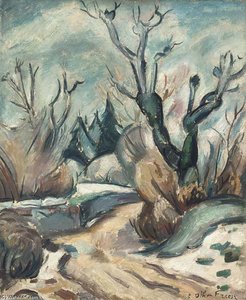 The Jura
30
 Landscape
31
 Port Of Toulon
32
 Baigneuses
33
 Flowers
34
 Construction Of Sheds At Istres
35
 Window On The Port Of Toulon
36
 Bateau Et Coquillages
37
 Seated Woman
38
 Nature Morte
39
 Landscape At Home
40
 A Village Street
41
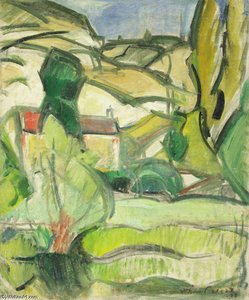 Landscape -
42
 A Still Life With Flowers In A Vase
43
 Drawings for ceramic platesMuseu do Caramulo
44
 Landscape of La Ciotat1907 · Centre Pompidou
45
 The Port of Anvers1906 · La Boverie
46
 Autumn Work1908 · Muzeul Național de Artă, Arhitectură și Design
47
 Roofs and Cathedral in Rouen1908 · Muzeul Ermitaj
48
 Le Havre, Bassin du Roy1906
Cele patru teme care revin cel mai des în aceste opere originale, fiecare având cel mai sublim exemplu.
Cele 8 muzee care dețin cele mai multe dintre picturile de pe această pagină.
| Muzee | Oraș | Lucrări lui Othon Friesz | Picturi din această listă |
|---|---|---|---|
 Statens Museum For Kunst |
Copenhaga | 13 | Interior, Mother's Love, The Lady on the Terrace |
 Muzeul Ermitaj |
Sankt Petersburg | 3 | Temptation (Adam and Eve), Flowers (Tulips and Daisies), Roofs and Cathedral in Rouen |
 Muzeul Național de Artă, Arhitectură și Design |
Oslo | 2 | The Harbour in Honfleur, Autumn Work |
 Muzeul Regal de Arte Frumoase din Anvers |
Antwerpen | 2 | The Harbour of Le Havre, The Mountain Coudon Seen from Cap Brun |
 Museum Barberini |
Potsdam | 1 | Scene in a Parisian Brasserie |
 Musee du Petit Palais |
Geneva | 1 | The Bathers of Andelys |
 Muzeul Israel |
Ierusalim | 1 | The Decorated Cruiser, Antwerp |
 Museum of Art |
San Diego | 1 | The Creek |
Alege o deceniu pentru a descoperi opera originală care îl definește.
Scene in a Parisian Brasserie (1906), Museum Barberini, Potsdam. Urmează The Bathers of Andelys (1908) și Interior (1914).
27 ani: Scene in a Parisian Brasserie datează din 1906, iar Othon Friesz s-a născut în 1879.
Scene in a Parisian Brasserie, The Bathers of Andelys, Interior, Mother's Love, The Lady on the Terrace, Female Nude, Temptation (Adam and Eve), The Decorated Cruiser, Antwerp, Le Havre Port și Nude Lying in a Landscape. Clasamentul de mai sus indică anul și muzeul pentru fiecare piesă.
Catalogul nostru cuprinde 48 lucrări ale lui Othon Friesz, datate între 1903 și 1923.
În principal în Statens Museum For Kunst (Copenhaga), Muzeul Ermitaj (Sankt Petersburg) și Muzeul Național de Artă, Arhitectură și Design (Oslo). Tabelul cu muzee de mai sus le enumeră pe toate.
În 1910s: 13 dintre cele 48 lucrări de pe această pagină au fost realizate atunci, fiind Interior dintre acestea.
Pe această pagină, cea mai veche lucrare datează din Le Havre Port (1903), iar cea mai recentă este din Female Nude (1923).
Flowers (2) și Landscape (2), din cele 48 lucrări de pe această pagină.
Interior, Mother's Love și The Lady on the Terrace: Statens Museum For Kunst, Copenhaga deține 13 dintre lucrările de pe această pagină.