Portretul lui Henri Le Sidaner

Picturi Henri Le Sidaner: Cele 100 de cele mai faimoase, prin ochii unei galerii

Actualizat Noiembrie 2026 · clasat în funcție de scorul nostru de popularitate (căutări, vizite și comenzi pentru fiecare operă) · 223 lucrări ale lui Henri Le Sidaner în catalogul nostru

Pe scurt

În ochii galeriei, cea mai celebră pictură a lui Henri Le Sidaner este A Beauvais Square by Moonlight (1900). Sunday (1898) și La Piazatta (1914) completează trioul pe care orice ochi îl recunoaște. Dintre cele 223 opere ale lui Henri Le Sidaner din catalogul nostru, galeria prezintă mai jos cele 100 cele mai faimoase, fiecare fiind originală, cu anul creării, muzeul de păstrare și elementul care o face unică.

1862 – 1939, Port Louis Impressionism Cele mai multe lucrări: Petit Palais

Cele mai apreciate 10 picturi ale lui Henri Le Sidaner din galerie

1
A Beauvais Square by Moonlight (1900) de Henri Le Sidaner

A Beauvais Square by Moonlight

1900 · Oil

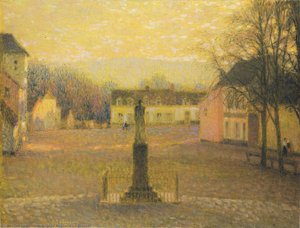
A Beauvais Square by Moonlight1900 is a painting that captures a serene street scene under the soft glow of a moonlit atmosphere. The composition focuses on a grand building characterized by a large archway that serves as an entrance to a courtyard. The facade of this structure is detailed with numerous windows and doors, contributing to its imposing presence.

2
Sunday (1898) de Henri Le Sidaner

Sunday

1898 · Oil On Canvas · Musée de la Chartreuse, Duffel

A Moment of Tranquility: Henri Le Sidaner's "Sunday" Henri Le Sidaner’s “Sunday,” painted in 1898, is more than just a depiction of women gathered in a park; it’s an invitation to pause and absorb the quiet beauty of a fleeting moment. The canvas breathes with a soft, diffused light that suggests either dawn or dusk, bathing the scene in an ethereal glow. This isn't a bustling social gathering captured mid-conversation,…

3
La Piazatta (1914) de Henri Le Sidaner

La Piazatta

1914 · Oil On Canvas

We are looking at La Piazatta, an oil on canvas painted by Henri Le Sidaner in 1914. This work captures a specific moment in the artist's career, rendered during his travels through Venice. It offers a view from inside St Mark's Square, looking out toward the architectural grandeur of the city. The scene is anchored by the presence of the Doge's Palace on the left and the Campanile of San…

4
Table on the Terrace (1927) de Henri Le Sidaner

Table on the Terrace

1927 · Oil

A terrace waits in the soft light of 1927. Two plates sit upon the table, one toward the left and one toward the right, as if the diners have only just stepped away. Three wine glasses are positioned around the setting, catching the fading light. A single bowl rests near the center, a silent witness to the meal that was or is about to be. In the background, the silhouettes…

5
The House in Summer (1924) de Henri Le Sidaner

The House in Summer

1924 · Oil

A house sits anchored against the light, its facade defined by shutters of deep green. Vines climb the walls, tracing slow, organic paths toward the eaves. The structure feels settled, a permanent fixture in a world of shifting shadows. Two large windows face the viewer, their glass reflecting a stillness that suggests the interior is a sanctuary of silence. A doorway remains centered, a dark threshold leading into a private,…

6
Canal in Bruges (1900) de Henri Le Sidaner

Canal in Bruges

1900 · Oil

Canal in Bruges by Henri Le Sidaner presents a serene view of a Belgian waterway, centered around a bridge spanning the canal. The composition is anchored by two boats resting upon the water; one is positioned near the left foreground, while the second is situated further back toward the right. This arrangement directs the eye through the depth of the canal scene.

7
The Quay in Twilight (1926) de Henri Le Sidaner

The Quay in Twilight

1926 · Oil On Canvas

In "The Quay in Twilight" by Henri Le Sidaner, a lively harbor scene unfolds under a hazy, diffused sky. The composition is dominated by the expansive water, which acts as a mirror for the world above. Buildings line the waterfront, their facades rendered in shifting shades of pink, red, yellow, and blue. These structures create a rhythmic boundary against the sky, while several boats are scattered throughout the scene, adding…

8
Little place by the river (1902) de Henri Le Sidaner

Little place by the river

1902 · Oil On Canvas

The oil on canvas titled Little place by the river was painted by Henri Le Sidaner in 1902. This work captures a quiet winter scene where the river flows through a landscape of snow. The artist, Henri Le Sidaner, uses the medium to fix a specific moment of seasonal stillness. Cold air and white drifts define the setting.

10
The Orphan Walk, Berck (1888) de Henri Le Sidaner

The Orphan Walk, Berck

1888 · Oil On Canvas · Musée des Beaux-Arts de Dunkerque, Dunkirk

In The Orphan Walk, Berck, Henri Le Sidaner organizes a horizontal landscape centered on a group of women in traditional regional French folk costume. These figures are distributed across the middle ground, their movement along a sandy coastal path or dunes guiding the viewer's eye through the terrain. The perspective is set at eye level, establishing an intimate connection with the subjects as they navigate the dunes. Depth is achieved…

Picturi cu Henri Le Sidaner, clasate de la 11 la 100

11The Table in the Gerberoy Garden at Dusk (1902) de Henri Le SidanerThe Table in the Gerberoy Garden at Dusk1902 · Chimei Museum 12Full Moon (1909) de Henri Le SidanerFull Moon1909 13The Lighted Window (1906) de Henri Le SidanerThe Lighted Window1906 14The Italian Boutique (1924) de Henri Le SidanerThe Italian Boutique1924 15Landscape, Goose Girl (1888) de Henri Le SidanerLandscape, Goose Girl1888 · musée Petiet de Limoux 16The Bedroom (La Chambre à Coucher) (1890) de Henri Le SidanerThe Bedroom (La Chambre à Coucher)1890 · Indianapolis Museum of Art 17Blue River, Montreuil-Bellay (1897) de Henri Le SidanerBlue River, Montreuil-Bellay1897 · Petit Palais 18The Quay (1898) de Henri Le SidanerThe Quay1898 · Groeningemuseum 19Snowy Evening, Etaples (1894) de Henri Le SidanerSnowy Evening, Etaples1894 20The Dessert (1904) de Henri Le SidanerThe Dessert1904 · Musée d'Orsay 21Fountain in the Tuileries (1900) de Henri Le SidanerFountain in the Tuileries1900 · Wallraf-Richartz-Museum 22The Stained Glass, Chartres (1901) de Henri Le SidanerThe Stained Glass, Chartres1901 · Petit Palais 23The Village, Twilight (1902) de Henri Le SidanerThe Village, Twilight1902 · Dublin City Gallery The Hugh Lane 24In the Garden (1901) de Henri Le SidanerIn the Garden1901 · Toledo Museum of Art 25Gypsy Wagon in Moonlight de Henri Le SidanerGypsy Wagon in MoonlightThe Phillips Collection 26Boat on the Canal (Morning) (1905) de Henri Le SidanerBoat on the Canal (Morning)1905 · Groeningemuseum 27The Table in the White Garden at Gerberoy (1900) de Henri Le SidanerThe Table in the White Garden at Gerberoy1900 · Museum of Fine Arts Ghent (MSK) 28Grand Trianon (1905) de Henri Le SidanerGrand Trianon1905 · Muzeul de Artă Plastică din Boston 29The Tuileries (1902) de Henri Le SidanerThe Tuileries1902 30The Tunnel (1902) de Henri Le SidanerThe Tunnel1902 31The Cathedral at Beauvais (1900) de Henri Le SidanerThe Cathedral at Beauvais1900 32Gerberoy in the snow (1902) de Henri Le SidanerGerberoy in the snow1902 33Orpheus Realizing the Loss of Eurydice (1900) de Henri Le SidanerOrpheus Realizing the Loss of Eurydice1900 34Snow in the Moonlight (1903) de Henri Le SidanerSnow in the Moonlight1903 35The Pillar (1901) de Henri Le SidanerThe Pillar1901 36The Canal, Snow (1901) de Henri Le SidanerThe Canal, Snow1901 37The Cradle (1905) de Henri Le SidanerThe Cradle1905 38The Tuilleries (1900) de Henri Le SidanerThe Tuilleries1900 39Terrace in Gerberoy (1903) de Henri Le SidanerTerrace in Gerberoy1903 40The House (1901) de Henri Le SidanerThe House1901 41Small house by the Eau River at Chartres (1902) de Henri Le SidanerSmall house by the Eau River at Chartres1902 42Le banc (1903) de Henri Le SidanerLe banc1903 43The Belfry at Bruges, Belgium (1900) de Henri Le SidanerThe Belfry at Bruges, Belgium1900 44The Snow (1901) de Henri Le SidanerThe Snow1901 45Terrace in Springtime (1904) de Henri Le SidanerTerrace in Springtime1904 46The Jet of Water (1905) de Henri Le SidanerThe Jet of Water1905 47Dinner in the Garden (1903) de Henri Le SidanerDinner in the Garden1903 48Moonlight at Gerberoy (Clair de Lune à Gerberoy) (1904) de Henri Le SidanerMoonlight at Gerberoy (Clair de Lune à Gerberoy)1904 49Boats, Heyst (1900) de Henri Le SidanerBoats, Heyst1900 50Old Houses (1903) de Henri Le SidanerOld Houses1903 51Le gouter au jardin (1903) de Henri Le SidanerLe gouter au jardin1903 52The House with the Green Shutters (Beguinage. Maisons à contre jour, Bruges) (1899) de Henri Le SidanerThe House with the Green Shutters (Beguinage. Maisons à contre jour, Bruges)1899 53The Bridge of Sighs (1906) de Henri Le SidanerThe Bridge of Sighs1906 · Petit Palais 54Roses and Wisterias on the House (1907) de Henri Le SidanerRoses and Wisterias on the House1907 55Window with Carnations, Gerberoy (1908) de Henri Le SidanerWindow with Carnations, Gerberoy1908 · Museum Barberini 56The Garden of the Gerberoy House (1909) de Henri Le SidanerThe Garden of the Gerberoy House1909 · Cantor Arts Center at Stanford University 57L'île Madre Clair de Lune (1909) de Henri Le SidanerL'île Madre Clair de Lune1909 · Walker Art Gallery 58Village at Bellay (1911) de Henri Le SidanerVillage at Bellay1911 59Summer Afternoon at the palace of Hampton Court (1908) de Henri Le SidanerSummer Afternoon at the palace of Hampton Court1908 60Full Moon on the River (1910) de Henri Le SidanerFull Moon on the River1910 61The Small Shop (1906) de Henri Le SidanerThe Small Shop1906 62Sunflowers (1909) de Henri Le SidanerSunflowers1909 63The Rose Window (1908) de Henri Le SidanerThe Rose Window1908 64The Ducal Palace (1906) de Henri Le SidanerThe Ducal Palace1906 65Garden at Hampton Court (1908) de Henri Le SidanerGarden at Hampton Court1908 66The Canal (1906) de Henri Le SidanerThe Canal1906 67House by the Quentin Canal (1910) de Henri Le SidanerHouse by the Quentin Canal1910 68The Gray Palace (1906) de Henri Le SidanerThe Gray Palace1906 69The Suburbs (1909) de Henri Le SidanerThe Suburbs1909 70Plaza under Snow, Gerberoy (1910) de Henri Le SidanerPlaza under Snow, Gerberoy1910 71Unknown (1910) de Henri Le SidanerUnknown1910 72Fishing Boats (1910) de Henri Le SidanerFishing Boats1910 73The Wall, Autumn (1910) de Henri Le SidanerThe Wall, Autumn1910 74Courtyard from a Window (1910) de Henri Le SidanerCourtyard from a Window1910 75The Red Palace in Venice (1908) de Henri Le SidanerThe Red Palace in Venice1908 76Rooftops in Moonlight (1910) de Henri Le SidanerRooftops in Moonlight1910 77Small Villa in Afternoon (1910) de Henri Le SidanerSmall Villa in Afternoon1910 78Trafalgar Square (1908) de Henri Le SidanerTrafalgar Square1908 79The Old Palace, Moonlight, Venice (1907) de Henri Le SidanerThe Old Palace, Moonlight, Venice1907 80Port at Villefranche (1911) de Henri Le SidanerPort at Villefranche1911 81The Great Gate at Hampton Court (1908) de Henri Le SidanerThe Great Gate at Hampton Court1908 82Roses of Trianon (1917) de Henri Le SidanerRoses of Trianon1917 · Petit Palais 83Versailles: Cour d'Honneur (1912) de Henri Le SidanerVersailles: Cour d'Honneur1912 · National Gallery of Ireland 84Country house among roses (1913) de Henri Le SidanerCountry house among roses1913 · Muzeul Plantin-Moretus 85Canal in Autumn (Gisors) (1913) de Henri Le SidanerCanal in Autumn (Gisors)1913 · Cleveland Museum of Art 86The Window at Croisic (1915) de Henri Le SidanerThe Window at Croisic1915 87Departure of Tobie (1915) de Henri Le SidanerDeparture of Tobie1915 88Steps at Chartes (1913) de Henri Le SidanerSteps at Chartes1913 89Grand Canal in Venice (1914) de Henri Le SidanerGrand Canal in Venice1914 90Neptune Fountain at twilight (1916) de Henri Le SidanerNeptune Fountain at twilight1916 91Garden at Gerberoy (1917) de Henri Le SidanerGarden at Gerberoy1917 92Snow at Chartres (1914) de Henri Le SidanerSnow at Chartres1914 93The Grey Mill, Montreuil-Bellay (1914) de Henri Le SidanerThe Grey Mill, Montreuil-Bellay1914 94The Red Palace (1914) de Henri Le SidanerThe Red Palace1914 95Still Life (1917) de Henri Le SidanerStill Life1917 96Garden in the full moon (1914) de Henri Le SidanerGarden in the full moon1914 97A Window, Gisors (1912) de Henri Le SidanerA Window, Gisors1912 98Spring Sky (1913) de Henri Le SidanerSpring Sky1913 99The House in the Snow (1913) de Henri Le SidanerThe House in the Snow1913 100The Pavillion and the Alley (1916) de Henri Le SidanerThe Pavillion and the Alley1916

Subiectele care i-au captivat privirea lui Henri Le Sidaner

Cele patru teme care revin cel mai des în aceste opere originale, fiecare având cel mai sublim exemplu.

Muzeele care păstrează originalele lui Henri Le Sidaner

Cele 8 muzee care dețin cele mai multe dintre picturile de pe această pagină.

Muzee Oraș Lucrări lui Henri Le Sidaner Picturi din această listă
Petit Palais, ParisPetit Palais Paris 4 Blue River, Montreuil-Bellay, The Stained Glass, Chartres, The Bridge of Sighs
Groeningemuseum, BrugesGroeningemuseum Bruges 2 The Quay, Boat on the Canal (Morning)
Musée des Beaux-Arts de Dunkerque, DunkirkMusée des Beaux-Arts de Dunkerque Dunkirk 2 The Orphan Walk, Berck
Indianapolis Museum of Art, IndianapolisIndianapolis Museum of Art Indianapolis 2 The Bedroom (La Chambre à Coucher)
Musée d'Orsay, ParisMusée d'Orsay Paris 2 The Dessert
Wallraf-Richartz-Museum, CologneWallraf-Richartz-Museum Cologne 2 Fountain in the Tuileries
Walker Art Gallery, LiverpoolWalker Art Gallery Liverpool 2 L'île Madre Clair de Lune
Musée de la Chartreuse, DuffelMusée de la Chartreuse Duffel 1 Sunday

Henri Le Sidaner, o pictură emblematică pe deceniu

Lucrări pe deceniu

Alege o deceniu pentru a descoperi opera originală care îl definește.

Picturile lui Henri Le Sidaner: răspunsurile galeriei

Care este cea mai celebră pictură a lui Henri Le Sidaner?Află răspunsul

A Beauvais Square by Moonlight (1900). Urmează Sunday (1898) și La Piazatta (1914).

Ce vârstă avea Henri Le Sidaner când a finalizat A Beauvais Square by Moonlight?Află răspunsul

38 ani: A Beauvais Square by Moonlight datează din 1900, iar Henri Le Sidaner s-a născut în 1862.

Care sunt cele mai importante 10 picturi ale lui Henri Le Sidaner?Află răspunsul

A Beauvais Square by Moonlight, Sunday, La Piazatta, Table on the Terrace, The House in Summer, Canal in Bruges, The Quay in Twilight, Little place by the river, A Beauvais Square by Moonlight și The Orphan Walk, Berck. Clasamentul de mai sus indică anul și muzeul pentru fiecare piesă.

Câte lucrări a creat Henri Le Sidaner?Află răspunsul

Catalogul nostru cuprinde 223 lucrări ale lui Henri Le Sidaner, datate între 1888 și 1927.

Unde sunt expuse cele mai celebrele opere originale ale lui Henri Le Sidaner?Află răspunsul

În principal în Petit Palais (Paris), Groeningemuseum (Bruges) și Musée des Beaux-Arts de Dunkerque (Dunkirk). Tabelul cu muzee de mai sus le enumeră pe toate.

Când a creat Henri Le Sidaner cele mai faimoase picturi?Află răspunsul

În 1900s: 56 dintre cele 100 lucrări de pe această pagină au fost realizate atunci, fiind A Beauvais Square by Moonlight dintre acestea.

Care sunt cele mai vechi și cele mai recente opere celebre ale lui Henri Le Sidaner?Află răspunsul

Pe această pagină, cea mai veche lucrare datează din The Orphan Walk, Berck (1888), iar cea mai recentă este din Table on the Terrace (1927).

La ce subiecte s-a întors cel mai des Henri Le Sidaner?Află răspunsul

Buildings (14), Sky (6) și Winter (6), din cele 100 lucrări de pe această pagină.

În ce tehnică a lucrat cel mai mult Henri Le Sidaner?Află răspunsul

Oil On Canvas, pentru 7 dintre cele 100 lucrări de pe această pagină.

Cu ce mișcare este asociat(ă) Henri Le Sidaner?Află răspunsul

Impressionism, judecând după originalele de pe această pagină.

Ce opere originale ale lui Henri Le Sidaner deține Petit Palais?Află răspunsul

Blue River, Montreuil-Bellay, The Stained Glass, Chartres și The Bridge of Sighs: Petit Palais, Paris deține 4 dintre lucrările de pe această pagină.

Henri Le Sidaner: artistul

Early Life and Background

Henri Le Sidaner, a name synonymous with evocative domestic scenes and tranquil landscapes, was born on August 7th, 1862, in the vibrant port city of Port Louis, Mauritius. His origins were deeply rooted in Breton heritage – his father, Jean Marie Le Sidaner, worked as a ship inspector for Lloyd’s, a position that necessitated frequent travels and ultimately led to the family's relocation to France in 1872. This move brought them to Dunkerque, a bustling coastal town in northern France, where young Henri began to develop his nascent artistic inclinations.

From an early age, Le Sidaner displayed a remarkable sensitivity to color and light, qualities that were nurtured by his parents’ support for his burgeoning passion. He attended the Collège et Lycée Notre Dame des Dunes in Dunkerque, immersing himself in both academic studies and artistic pursuits. A pivotal moment arrived when he received a scholarship – a rare opportunity afforded to him thanks to the city's recognition of his talent – that enabled him to pursue his dreams in Paris, the heart of French art and culture.

Artistic Training and Influences

Paris proved to be a transformative environment for Le Sidaner. He enrolled at the prestigious École nationale supérieure des beaux-arts, where he studied under Alexandre Cabanel, a renowned academic painter known for his mastery of classical techniques. However, a fundamental divergence in artistic philosophies led to a somewhat strained relationship and ultimately, Le Sidaner’s departure from the traditional curriculum. Despite this initial setback, his artistic journey was profoundly shaped by the diverse influences surrounding him.

Le Sidaner's early years were marked by an intense admiration for Impressionism and Post-Impressionism. He found himself captivated by the innovative approaches of artists like Édouard Manet, whose bold brushstrokes and rejection of academic conventions resonated deeply with his own artistic sensibilities. Claude Monet’s exploration of light and color also exerted a significant influence, inspiring Le Sidaner to capture the fleeting effects of natural illumination in his paintings. Furthermore, he became drawn to the Pointillist movement, intrigued by its systematic use of small dots of color to create vibrant images – a technique that subtly informed his own approach to composition and palette.

Seeking further artistic development and camaraderie, Le Sidaner joined the Colonie artistique d’Étaples, a collective of artists who gathered in Étaples to share their ideas, critique each other's work, and collectively pursue their creative visions. This collaborative environment proved invaluable in honing his skills and solidifying his artistic identity.

Artistic Style and Development

Le Sidaner’s distinctive style is immediately recognizable for its subdued color palette, nuanced greys, and the masterful application of opals – tiny, iridescent pigments that create a shimmering effect. His brushwork is characterized by uneven, dappled strokes, lending his paintings an atmospheric depth and a sense of quiet mysticism. This technique wasn't simply about replicating reality; it was about capturing the *feeling* of a scene, imbuing it with a subtle emotional resonance.

He became particularly celebrated for his nocturnes – paintings of twilight scenes – where he expertly rendered the delicate interplay of light and shadow. These works are not merely depictions of darkness; they are imbued with a sense of serenity and contemplation, inviting viewers to lose themselves in their ethereal beauty. Over time, Le Sidaner’s style evolved, moving beyond his early influences towards a more personal expression that blended Impressionistic techniques with elements of Symbolism. This synthesis resulted in paintings that were both technically proficient and deeply evocative.

In 1905, he exhibited a series of Venice paintings to great acclaim in London and Paris, showcasing the influence of his travels and his ability to capture the unique atmosphere of the Italian lagoon city. Later, he settled at Gerberoy in the Picardy countryside for over thirty years, transforming a medieval fortress ruin into a personal paradise – a garden filled with roses, dappled sunlight, and tables inviting quiet contemplation. These paintings became synonymous with his name, solidifying his reputation as an artist who could transform ordinary landscapes into extraordinary works of art.

Major Works and Recognition

Throughout his career, Le Sidaner produced a remarkable body of work that continues to be admired for its beauty, subtlety, and emotional depth. Some of his most celebrated paintings include “Still Life and a Window, Gisors,” a masterful depiction of domestic tranquility; "A Beauvais Square by Moonlight," capturing the magic of twilight in a Parisian setting; and “Les Cygnes” (The Swans), a poignant portrayal of graceful birds gliding across a serene lake. His works have been exhibited at prestigious venues such as the Musée des Beaux-Arts Tournai in Belgium, showcasing his enduring influence on the art world.

In 1913, Le Sidaner was awarded the rank of Chevalier (Officer) in the Legion of Honour, a testament to his contributions to French culture and his distinguished artistic career. His legacy extends beyond individual paintings; he is remembered as a pivotal figure in bridging the gap between Impressionism and Post-Impressionism, leaving an indelible mark on the history of French art.

Historical Significance

Henri Le Sidaner is often regarded as “the last of the Impressionists,” representing a transitional period in art history. While deeply influenced by the innovations of his predecessors, he ultimately forged his own unique style – one that retained the luminosity and spontaneity of Impressionism while incorporating elements of Symbolism and Pointillism. His paintings are not simply representations of reality; they are carefully constructed expressions of mood, atmosphere, and emotion.

Le Sidaner’s distinctive use of color, light, and brushwork – characterized by uneven, dappled strokes and a subtle shimmer created by the application of opals – sets him apart from his contemporaries. He possessed an extraordinary ability to capture the essence of everyday life, transforming ordinary domestic interiors and tranquil landscapes into works of art that resonate with viewers on a deeply personal level. His legacy continues to inspire artists and art enthusiasts alike, ensuring that his paintings will be enjoyed and appreciated for generations to come.