

A Sanctuary of Australian Memory
In the heart of Canberra, where the deliberate geometry of the capital meets the sprawling spirit of the continent, stands the National Library of Australia. It is far more than a mere repository for the written word; it is a living, breathing sanctuary where the soul of a nation is meticulously preserved and celebrated. To step through its doors is to enter a space where history converges with innovation, a place designed not just to store the past, but to illuminate the path toward an ever-evolving future. For the art lover and the historian alike, the library serves as a profound cultural anchor, offering a deep, tactile connection to the stories that have forged the Australian identity.
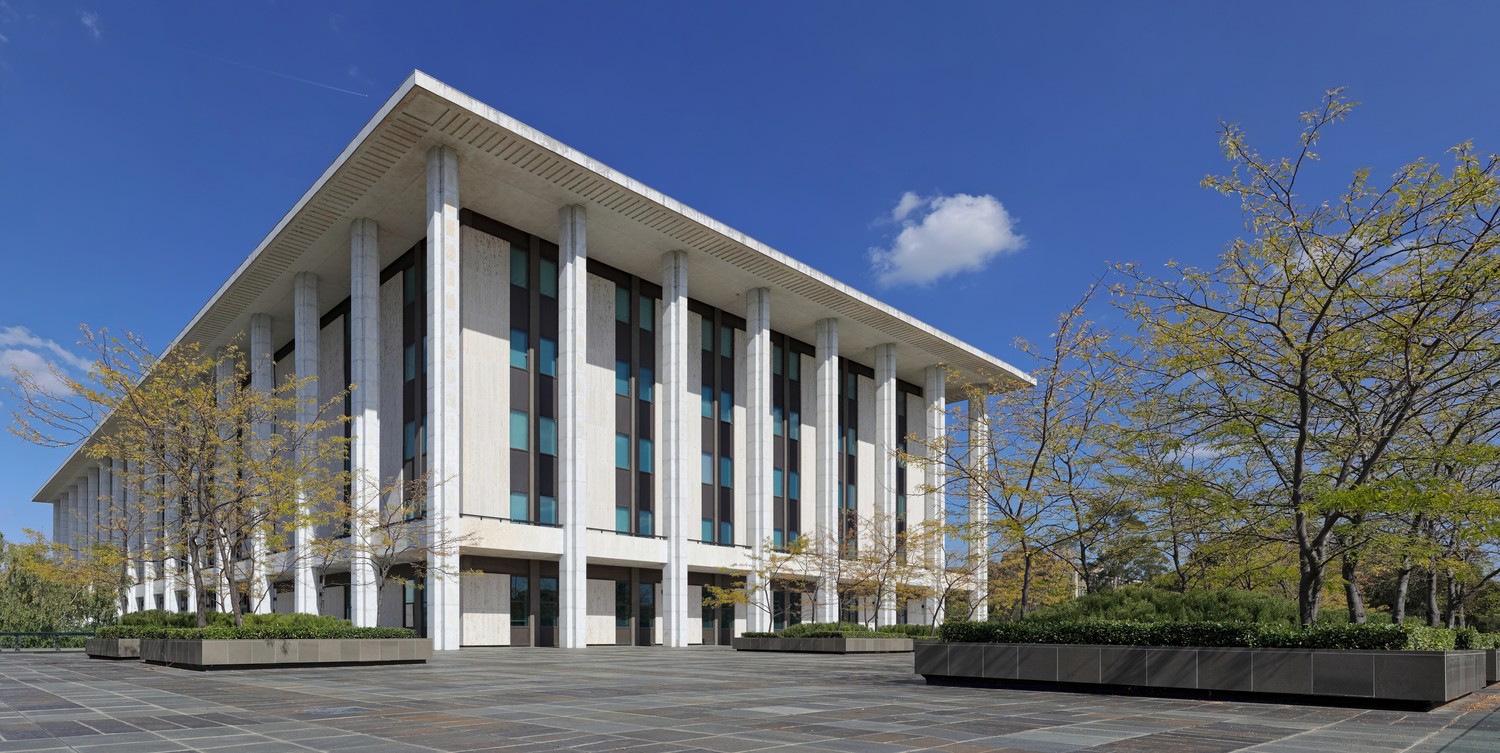
The architecture of the building itself is a masterclass in the Late Twentieth Century Stripped Classical style, a design choice that lends the institution an air of timeless authority and monumental grace. Conceived by the architects Bunning and Madden, the structure commands respect through its clean lines and imposing presence. Upon entering, one is immediately swept into the grandeur of the soaring marble foyer, a space that feels both intimate and infinite. This entrance is transformed into a celestial experience by the breathtaking stained-scale windows crafted by the master artist Leonard French. These windows act as luminous tapestries of light, filtering color through glass to create a shifting, kaleidoscopic atmosphere that reflects the vibrant, multifaceted spirit of Australia.
Beyond its architectural bones, the library houses an astonishing assemblage of treasures that transcend the boundaries of traditional archives. The collection exceeds 7.7 million items, ranging from delicate rare books and evocative manuscripts to a vast digital landscape through platforms like Trove. For those with an eye for visual narrative, the building is adorned with monumental Aubusson tapestries woven by Mathieu Matégot. These vibrant, large-scale works depict scenes of Australian folklore and history, weaving threads of myth and reality into the very fabric of the walls. This seamless blend of fine art and historical record creates a sensory experience that is rare even among the world's great institutions.
The National Library also serves as a vital stage for the exploration of contemporary and classical Australian artistry. The halls frequently echo with the presence of works by celebrated figures such as Henry Gritten, James Peter Quinn, and Frank Hurley, whose evocative landscapes and poignant portraits capture the raw essence of the Australian experience. Whether through the preservation of oral histories that capture the voices of the people or the curation of groundbreaking exhibitions like those exploring Indigenous language and culture, the library remains an active participant in the nation's cultural dialogue. It is a destination where collectors, designers, and scholars find not just information, but inspiration—a beacon of heritage that continues to shape our understanding of who we were, and who we are becoming.