

Origins and History of the Museum
The Musée des Beaux-Arts de Libourne was established in 1818 following a decision by the Duke Elie Decazes. The institution's early history is tied to the local architecture of Libourne, France, as it was originally installed within the Ursulines convent. This initial setting provided the foundation for a collection that has grown through various acquisitions and donations over the centuries.
In 1836, the museum underwent a significant relocation, moving to the second floor of the Libourne City Hall. This move integrated the collection into the civic heart of the commune. The museum's importance is recognized by its status as a Musée de France, a designation granted by the Ministry of Culture and Communication. This official recognition confirms its role in preserving the artistic history of the region.
The Museum Buildings and Exhibition Spaces
The museum occupies two distinct locations within Libourne, France. The primary site for the permanent collections is situated on the second floor of the Libourne City Hall, located at 42, place Abel-Surchamp. This space houses the core of the institution's holdings, ranging from the 14th to the 20th century. The layout has undergone recent reorganization to improve the chronological and stylistic grouping of works, particularly regarding European schools of painting.
Temporary exhibitions are held in a separate venue, the Chapelle du Carmel. This religious structure provides a different atmosphere for rotating displays and seasonal programming. The museum's presence is divided between these two functional sites, allowing for a variety of presentation styles across its collections.
The Diverse Art Collections
The museum presents a panorama of works from European schools spanning the 14th to the 20th century. The holdings consist of paintings, sculptures, drawings, and various art objects. This breadth allows for a study of stylistic shifts across several centuries of European production.
The collection includes significant works by Raoul Dufy, Léonard Foujita, Roland Oudot, and Yves Brayer. These artists represent the stylistic developments of the first half of the 20th century. Additionally, the museum preserves a selection of paintings, watercolors, and drawings by René Princeteau, a native of Libourne.
Beyond these primary holdings, the museum manages several important loans and specific groupings:
- Tsuguharu Foujita, L'Amitié, 1924
- Jacques-André Edouard Van der Burch, Berger luttant avec une bête qu'il étouffe de ses bras dans un paysage de haute montagne, 1794
- Saint Jean-Baptiste, alabaster, early 15th century
- Scènes du Jugement Dernier, three alabaster plaques, 15th century
Masterpieces and Notable Works
The collection includes several significant works on loan from major French institutions. Jacques-André Edouard Van der Burch’s 1794 oil on canvas, Berger luttant avec une bête qu'il étouffe de ses bras dans un paysage de haute montagne, is held on loan from the Louvre. Similarly, the museum presents Tsuguharu Foujita’s 1924 work, L'Amitié, which is on loan from the Centre Pompidou.
Sculpture remains a central component of the permanent holdings. The museum houses a bust of Louis XV, created by Etienne Maurice Falconet and Augustin Pajou. Other notable sculptural pieces include a bust of the doctoresse Fabre by Charles Despiau.
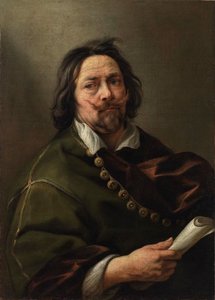
- Three studies of the head of an old man, about 1650 - Jacob Jordaens
- Firsts Steps, 1818 - Hortense Haudebourt Lescot
- Blanche of Castile freeing prisoners, 1818 - Eugénie Servières
- Fabricius, Accompanied by His Family, Refuses the Gifts Sent to Him by Pyrrhus, 1777 - Louis-Jean-François Lagrenée
- Nymphe et amours - Jean Pierre Granger
Recent Projects and Reorganization
The museum has recently undergone a significant reorganization to present its collections in a new configuration. This updated layout aims to create a more intuitive experience for visitors. Within the main exhibition spaces, two large white partitions now traverse the rooms, altering the traditional flow of the galleries. This structural change allows for a more organized presentation of the various schools of painting.
As part of this recent reorganization, approximately 50 new works have been added to the display. These additions complement the existing permanent collection, which is housed on the second floor of the Libourne City Hall. The updated arrangement seeks to clarify the chronological and stylistic connections between the works on view.
Digital integration has also become a feature of the museum's current offerings. A virtual reality module is available to visitors, providing an 18th-century view of the Port of Libourne. This module offers a specific historical perspective of the local landscape through immersive technology.


