Retrato de William Holman Hunt

As 100 Pinturas Mais Famosas de William Holman Hunt, uma Seleção da Galeria

Atualizado em Novembro 2026 · classificado pela nossa pontuação de popularidade (pesquisas, visitas e pedidos de cada obra) · 126 obras de William Holman Hunt em nosso catálogo

Em resumo

De todas as obras originais que William Holman Hunt deixou, a mais famosa é W H A Luz do Mundo. Logo atrás vêm A Consciência Desperta e O Bode Expiatório (1854). Nosso catálogo contém 126 obras de William Holman Hunt; a galeria preservou as 100 que o mundo mais admira, cada uma exibida com sua data, seu museu e sua história.

1827 – 1910, Londres Retorno pré-rafaelita Mais obras: Birmingham Museum and Art Gallery

As 10 principais pinturas de William Holman Hunt: a escolha da galeria

1
W H A Luz do Mundo de William Holman Hunt

W H A Luz do Mundo

Óleo sobre tela

W H A Luz do Mundo é uma obra de William Holman Hunt, concluída em 1851. A composição centra-se na figura de Jesus, que segura uma lanterna acesa para iluminar a escuridão circundante. Esta cena religiosa extrai o seu fundamento temático das passagens bíblicas de João 8:12 e Apocalipse 3:20.

2
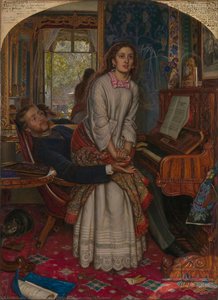
A Consciência Desperta de William Holman Hunt

A Consciência Desperta

Óleo sobre tela

A obra O Despertar da Consciência (1853), de William Holman Hunt, é muito mais do que uma simples representação da vida doméstica; é uma narrativa poderosamente evocativa, congelada no tempo. A pintura revela um momento crucial – o despertar da percepção em uma mulher, presa entre as expectativas sociais e a transgressão pessoal, enquanto experimenta o despertar de sua moralidade.

3
O Bode Expiatório (1854) de William Holman Hunt

O Bode Expiatório

1854 · Óleo sobre tela · Lady Lever Art Gallery, Liverpool

Nesta obra, intitulada O Bode Expiatório, o artista William Holman Hunt volta sua atenção para uma profunda narrativa bíblica. Criada entre 1854 e 1856, a pintura extrai seu tema do Livro de Levítico. Ela apresenta um momento singular e pesado de isolamento, focando no animal que carrega o peso das transgressões da comunidade para o deserto.

4
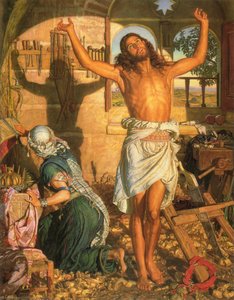
Sombra da Morte de William Holman Hunt

Sombra da Morte

Óleo · Manchester Art Gallery, Manchester

Em Sombra da Morte, William Holman Hunt apresenta uma representação profunda do sacrifício de Cristo. A tela captura Jesus na cruz, com os braços estendidos em um gesto de sofrimento profundo. Ele pende da madeira, seu corpo transmitindo a realidade física de uma grande dor. Este momento é retratado com uma franqueza que enfatiza o peso do evento.

5
O Pastor Zeloso (1851) de William Holman Hunt

O Pastor Zeloso

1851 · Óleo sobre tela · Manchester Art Gallery, Manchester

Mergulhe no mundo encantador de "O Pastor Contratado", de William Holman Hunt, uma obra cativante que sintetiza a dedicação da Irmandade Pré-Rafaelita ao naturalismo e à profundidade simbólica. Esta obra-prima de 1851 convida os espectadores para uma cena pastoral repleta de detalhes intrincados, cores vibrantes e camadas narrativas profundas.

6
A Luz do Mundo (1851) de William Holman Hunt

A Luz do Mundo

1851 · Óleo sobre tela · Keble College, Oxford

A obra “A Luz do Mundo”, de William Holman Hunt, concluída em 1851, é mais do que uma simples pintura; é uma meditação imersiva sobre a fé e a redenção. Com 59 x 125 cm, esta obra-prima em óleo sobre tela, que reside atualmente no Keble College, em Oxford, atrai imediatamente o espectador para uma cena de profunda quietude e significado espiritual. Hunt, um artista profundamente devoto, buscou capturar não…

7
Fanny Waugh Hunt (1868) de William Holman Hunt

Fanny Waugh Hunt

1868 · Acrylic On Canvas · Toledo Museum of Art, Toledo

The Lady of Shalott: A Vision of Faith and Fate William Holman Hunt’s “The Lady of Shalott,” completed in 1905, stands as arguably the Pre-Raphaelite Brotherhood's most ambitious undertaking—a monumental canvas that transcends mere depiction to embody a profound meditation on faith, duty, and the inescapable pull of time. More than just a visual representation of Tennyson’s iconic poem, it is an immersive experience designed to transport the viewer into…

8
The Shadow of Death de William Holman Hunt

The Shadow of Death

Oil On Canvas · Manchester Art Gallery, Manchester

William Holman Hunt’s “The Shadow of Death,” completed in 1873 during his second pilgrimage to the Holy Land, is not merely a depiction of Christ's crucifixion; it’s a profound meditation on mortality, faith, and the human condition. This monumental oil painting, measuring an impressive 214.2 cm x 168.2 cm, resides within the hallowed halls of the Manchester Art Gallery, inviting viewers into a scene brimming with symbolic weight and emotional…

9
The Lady of Shalott (1889) de William Holman Hunt

The Lady of Shalott

1889 · Oil On Canvas · Manchester Art Gallery, Manchester

To gaze upon William Holman Hunt’s “The Lady of Shalott” is to step across the threshold into a realm suspended between myth and melancholy. This evocative oil on canvas, a cornerstone of the Pre-Raphaelite movement, transcends mere visual representation to become an embodiment of artistic fate. The painting captures the profound tension between a sheltered, solitary existence and the inevitable, often tragic, confrontation with the outside world. Through his meticulous…

10
The Risen Christ with the Two Marys in the Garden of Joseph of Arimathea (1897) de William Holman Hunt

The Risen Christ with the Two Marys in the Garden of Joseph of Arimathea

1897 · Oil On Canvas · Art Gallery of South Australia, Adelaide

William Holman Hunt’s “The Risen Christ with the Two Marys in the Garden of Joseph of Arimathea,” completed in 1897, is more than a painting; it's a meticulously crafted meditation on faith, grief, and the profound mystery of resurrection. This monumental oil-on-canvas work, currently residing at the Art Gallery of South Australia in Adelaide, stands as a cornerstone of the Pre-Raphaelite Brotherhood’s artistic vision – a movement dedicated to rejecting…

A seleção de William Holman Hunt continua, de 11 a 100

11The Awakening Conscience (1853) de William Holman HuntThe Awakening Conscience1853 · Tate Britain 12The Light of the World (1853) de William Holman HuntThe Light of the World1853 · Keble College 13Design for a Monk Succoured by a Christian (2000) de William Holman HuntDesign for a Monk Succoured by a Christian2000 14The flight of Madeline and Porphyro during the drunkenness attending the revelry (The Eve of St. Agnes) (1857) de William Holman HuntThe flight of Madeline and Porphyro during the drunkenness attending the revelry (The Eve of St. Agnes)1857 · Walker Art Gallery 15The Scapegoat (1854) de William Holman HuntThe Scapegoat1854 · Lady Lever Art Gallery 16Isabella and the Pot of Basil (1868) de William Holman HuntIsabella and the Pot of Basil1868 · Laing Art Gallery 17Mary Walker Waugh (1868) de William Holman HuntMary Walker Waugh1868 · Cleveland Museum of Art 18Past And Present (1868) de William Holman HuntPast And Present1868 19The Ship (1875) de William Holman HuntThe Ship1875 20My Son Cyril (1877) de William Holman HuntMy Son Cyril1877 21The Triumph of the Innocents (1886) de William Holman HuntThe Triumph of the Innocents1886 · Harvard Art Museums 22The Eve of St. Agnes: The Flight of Madeleine and Porphyro during the Drunkenness attending the Revelry (1848) de William Holman HuntThe Eve of St. Agnes: The Flight of Madeleine and Porphyro during the Drunkenness attending the Revelry1848 23The Dead Sea from Siloam (1855) de William Holman HuntThe Dead Sea from Siloam1855 24The Triumph of the Innocents (1887) de William Holman HuntThe Triumph of the Innocents1887 · Walker Art Gallery 25Study of a bloodhound (1848) de William Holman HuntStudy of a bloodhound1848 · Art Gallery of New South Wales 26Portrait of William Pink (1842) de William Holman HuntPortrait of William Pink1842 27Cornfield at Ewell (1849) de William Holman HuntCornfield at Ewell1849 28The Scapegoat (1854) de William Holman HuntThe Scapegoat1854 · Manchester Art Gallery 29Portrait of Dante Gabriel Rossetti (1853) de William Holman HuntPortrait of Dante Gabriel Rossetti1853 · Birmingham Museum and Art Gallery 30The Sphinx at Gizeh (1854) de William Holman HuntThe Sphinx at Gizeh1854 31Valentine Rescuing Silvia from Proteus (1851) de William Holman HuntValentine Rescuing Silvia from Proteus1851 32Our English Coasts (1852) de William Holman HuntOur English Coasts1852 33The Dead Sea from Siloam (1857) de William Holman HuntThe Dead Sea from Siloam1857 · Birmingham Museum and Art Gallery 34The Schoolgirl's Hymn (1859) de William Holman HuntThe Schoolgirl's Hymn1859 35Portrait of Fanny Holman Hunt (1868) de William Holman HuntPortrait of Fanny Holman Hunt1868 · Toledo Museum of Art 36The Birthday (A Portrait Of The Artist's Wife, Edith) (1868) de William Holman HuntThe Birthday (A Portrait Of The Artist's Wife, Edith)1868 37The Ponte Vecchio, Florence (1867) de William Holman HuntThe Ponte Vecchio, Florence1867 38Lady Fairbairn with her Children (1864) de William Holman HuntLady Fairbairn with her Children1864 39Self-Portrait (1875) de William Holman HuntSelf-Portrait1875 40The Festival of St. Swithin or The Dovecote (1875) de William Holman HuntThe Festival of St. Swithin or The Dovecote1875 41The Apple Harvest, Valley of The Rhine, Ragaz (1885) de William Holman HuntThe Apple Harvest, Valley of The Rhine, Ragaz1885 · Birmingham Museum and Art Gallery 42Cornfield at Ewell (1849) de William Holman HuntCornfield at Ewell1849 43May Morning on Magdalen College Tower, Oxford (1891) de William Holman HuntMay Morning on Magdalen College Tower, Oxford1891 44The Importunate Neighbour (1895) de William Holman HuntThe Importunate Neighbour1895 · National Gallery of Victoria 45Claudio and Isabella (1850) de William Holman HuntClaudio and Isabella1850 · Tate Gallery 46John Key de William Holman HuntJohn Key 47John Hunt de William Holman HuntJohn Hunt 48The Beloved de William Holman HuntThe BelovedRoyal Collection 49The Ballad of Oriana de William Holman HuntThe Ballad of Oriana 50The Lady of Shalott (study) de William Holman HuntThe Lady of Shalott (study) 51The Artist de William Holman HuntThe ArtistBirmingham Museum of Art 52Stephen lushington de William Holman HuntStephen lushingtonNational Portrait Gallery 53Quakers Meeting de William Holman HuntQuakers Meeting 54The Woman Taken in Adultery de William Holman HuntThe Woman Taken in Adultery 55Cyril benoni holman hunt de William Holman HuntCyril benoni holman huntFitzwilliam Museum 56May Morning on Magdalen Tower (1888) de William Holman HuntMay Morning on Magdalen Tower1888 · Lady Lever Art Gallery 57A Study for Oriana (2000) de William Holman HuntA Study for Oriana2000 58The Ballad of Oriana (2000) de William Holman HuntThe Ballad of Oriana2000 59Sunset in the Val d’Arno (2000) de William Holman HuntSunset in the Val d’Arno2000 60Portrait of Henry Wentworth Monk (1858) de William Holman HuntPortrait of Henry Wentworth Monk1858 61Self Portrait (1845) de William Holman HuntSelf Portrait1845 · Birmingham Museum and Art Gallery 62The Lost Child de William Holman HuntThe Lost Child 63The Ponte Vecchio de William Holman HuntThe Ponte Vecchio 64Risen Lord appearing to Mary Magdalene de William Holman HuntRisen Lord appearing to Mary Magdalene 65Robert Braithwaite Martineau de William Holman HuntRobert Braithwaite Martineau 66The Ship de William Holman HuntThe Ship 67John david jenkins de William Holman HuntJohn david jenkins 68The Abundance of Egypt de William Holman HuntThe Abundance of Egypt 69F. g. stephens de William Holman HuntF. g. stephens 70The Eve of Saint Agnes de William Holman HuntThe Eve of Saint Agnes 71On English Coasts de William Holman HuntOn English Coasts 72Afterglow in Egypt de William Holman HuntAfterglow in Egypt 73The Afterglow in Egypt de William Holman HuntThe Afterglow in Egypt 74Study for 'The Eve of Saint Agnes' de William Holman HuntStudy for 'The Eve of Saint Agnes' 75The Children's Holiday de William Holman HuntThe Children's Holiday 76The Scapegoat de William Holman HuntThe Scapegoat 77The Thames at Chelsea, Evening de William Holman HuntThe Thames at Chelsea, EveningFitzwilliam Museum 78British artist William Holman Hunt de William Holman HuntBritish artist William Holman Hunt 79A Summer Landscape de William Holman HuntA Summer Landscape 80Plain of Esdraelon from the Heights above Nazareth de William Holman HuntPlain of Esdraelon from the Heights above Nazareth 81John Ruskin's dead chick de William Holman HuntJohn Ruskin's dead chick 82Little Nell and Her Grandfather de William Holman HuntLittle Nell and Her Grandfather 83Sir richard owen de William Holman HuntSir richard owen 84Morning de William Holman HuntMorning 85The haunted manor de William Holman HuntThe haunted manor 86Nazareth de William Holman HuntNazareth 87Harold rathbone de William Holman HuntHarold rathbone 88Self-portrait at the Age of - (14) de William Holman HuntSelf-portrait at the Age of - (14) 89The Festival of St Swithin (The Dovecot) de William Holman HuntThe Festival of St Swithin (The Dovecot) 90London Bridge on the Night of the Marriage of the Prince and Princess of Wales de William Holman HuntLondon Bridge on the Night of the Marriage of the Prince and Princess of Wales 91A Bloodhound de William Holman HuntA Bloodhound 92May Morning on Magdalen College Tower, Oxford, Ancient Annual Ceremony de William Holman HuntMay Morning on Magdalen College Tower, Oxford, Ancient Annual CeremonyBirmingham Museum and Art Gallery 93Study of a Head de William Holman HuntStudy of a Head 94Study of Firelight de William Holman HuntStudy of Firelight 95Henry Clark's Mother-in-Law, Mrs Davies, and Four of His Children in the Drawing Room of His Home de William Holman HuntHenry Clark's Mother-in-Law, Mrs Davies, and Four of His Children in the Drawing Room of His Home 96Amaryllis de William Holman HuntAmaryllis 97London Bridge on the Night of the Wedding of the Prince and Princess of Wales de William Holman HuntLondon Bridge on the Night of the Wedding of the Prince and Princess of Wales 98The Lady of Shalott de William Holman HuntThe Lady of Shalott 99The Sphinx de William Holman HuntThe Sphinx 100A Converted British Family Sheltering a Christian Missionary de William Holman HuntA Converted British Family Sheltering a Christian Missionary

Pinturas famosas de William Holman Hunt, período por período

Os temas que cativaram o olhar de William Holman Hunt

Os quatro temas que mais se repetem nestas obras originais, cada um com o seu melhor exemplo.

Os museus que guardam os originais de William Holman Hunt

Os 8 museus que detêm a maioria das pinturas desta página.

Museus Cidade Obras de William Holman Hunt Pinturas desta lista
Birmingham Museum and Art Gallery, BirminghamBirmingham Museum and Art Gallery Birmingham 7 Portrait of Dante Gabriel Rossetti, The Dead Sea from Siloam, The Apple Harvest, Valley of The Rhine, Ragaz
Manchester Art Gallery, ManchesterManchester Art Gallery Manchester 6 Sombra da Morte, O Pastor Zeloso, The Shadow of Death
Lady Lever Art Gallery, LiverpoolLady Lever Art Gallery Liverpool 2 O Bode Expiatório, May Morning on Magdalen Tower
Keble College, OxfordKeble College Oxford 2 A Luz do Mundo, The Light of the World
Toledo Museum of Art, ToledoToledo Museum of Art Toledo 2 Fanny Waugh Hunt, Portrait of Fanny Holman Hunt
Walker Art Gallery, LiverpoolWalker Art Gallery Liverpool 2 The flight of Madeline and Porphyro during the drunkenness attending the revelry (The Eve of St. Agnes), The Triumph of the Innocents
Fitzwilliam MuseumFitzwilliam Museum 2 Cyril benoni holman hunt, The Thames at Chelsea, Evening
Tate Britain, LondresTate Britain Londres 3 The Awakening Conscience

William Holman Hunt década a década: a obra original que define cada uma

Obras por década

Escolha uma década para ver a obra original que a define.

Perguntas de colecionadores sobre as pinturas de William Holman Hunt

Por qual obra William Holman Hunt é mais conhecido(a)?Revelar a resposta

W H A Luz do Mundo. A Consciência Desperta e O Bode Expiatório (1854) vêm a seguir.

Quais são as dez pinturas mais famosas de William Holman Hunt?Revelar a resposta

W H A Luz do Mundo, A Consciência Desperta, O Bode Expiatório, Sombra da Morte, O Pastor Zeloso, A Luz do Mundo, Fanny Waugh Hunt, The Shadow of Death, The Lady of Shalott e The Risen Christ with the Two Marys in the Garden of Joseph of Arimathea. O ranking acima apresenta o ano e o museu de cada uma.

Quantas pinturas William Holman Hunt deixou?Revelar a resposta

Nosso catálogo contém 126 obras de William Holman Hunt, datadas de 1842 a 1897.

Em quais museus estão expostas as obras-primas de William Holman Hunt?Revelar a resposta

Principalmente em Birmingham Museum and Art Gallery (Birmingham), Manchester Art Gallery (Manchester) e Lady Lever Art Gallery (Liverpool). A tabela de museus acima lista todos eles.

Em que anos William Holman Hunt pintou as suas obras mais famosas?Revelar a resposta

Em 1850s: 17 das 100 obras nesta página foram feitas então, sendo O Bode Expiatório delas.

Quais são as primeiras e as últimas obras originais famosas de William Holman Hunt?Revelar a resposta

Nesta página, a mais antiga é Portrait of William Pink (1842) e a mais recente é The Risen Christ with the Two Marys in the Garden of Joseph of Arimathea (1897).

Quais temas William Holman Hunt escolheu com mais frequência?Revelar a resposta

Portraits (8), Women (8) e Victorian era (6), entre as 100 obras nesta página.

Qual técnica William Holman Hunt mais utilizou?Revelar a resposta

Oil On Canvas, para 16 das 100 obras nesta página.

A qual movimento artístico pertence William Holman Hunt?Revelar a resposta

Retorno pré-rafaelita, a julgar pelos originais nesta página.

Quais obras de William Holman Hunt estão expostas no Birmingham Museum and Art Gallery?Revelar a resposta

Portrait of Dante Gabriel Rossetti, The Dead Sea from Siloam e The Apple Harvest, Valley of The Rhine, Ragaz: o Birmingham Museum and Art Gallery, Birmingham detém 5 das obras desta página.

William Holman Hunt: vida e obra

A Vida e a Arte de William Holman Hunt

William Holman Hunt, nascido em Cheapside, Londres, em 2 de abril de 1827, foi muito mais do que um simples pintor; ele personificava uma busca filosófica e espiritual, traduzindo suas convicções mais profundas em telas que buscavam transcender a mera representação visual. Sua infância, embora enraizada no dinâmico mundo comercial da fábrica de armazém de seu pai, abrigava um talento artístico que, eventualmente, desafiaria todas as expectativas. Inicialmente destinado a uma carreira semelhante à do pai, Hunt encontrou refúgio e propósito na arte, começando com esboços furtivos e, posteriormente, após alguma dificuldade, recebendo treinamento formal nas Escolas Reais de Arte. Este período de aprendizado, no entanto, se mostrou restritivo. Ele anseava por uma expressão artística que superasse as convenções acadêmicas predominantes – um desejo que logo o impulsionaria em direção a uma revolução. Sentia-se sufocado pela artificialidade da arte contemporânea e buscava retornar à sinceridade e ao detalhe encontrados nos mestres renascentistas, um sentimento central na formação da Irmandade Pré-Rafaelita. A jornada de Hunt não se limitava à estética; era uma busca por verdade, moralidade e ressonância espiritual dentro do domínio da representação visual.

O Nascimento de um Bando Revolucionário

Em 1848, ao lado de Dante Gabriel Rossetti e John Everett Millais, Hunt estabeleceu a Irmandade Pré-Rafaelita (IPR). Este coletivo não era apenas um movimento artístico; era uma rebelião contra o que eles viam como o declínio da arte desde Rafael. A IPR defendia um retorno à meticulosa atenção aos detalhes, cores vibrantes e temas sinceros característicos da pintura italiana primitiva – antes da artificialidade das ideias renascentistas de High Renaissance tomar conta. O compromisso de Hunt com essa filosofia permaneceu inabalável ao longo de sua carreira. Suas primeiras obras, como *The Hireling Shepherd*, pintada em 1851, exemplificam essa dedicação. A pintura, com seu realismo meticuloso – desde a textura da lã das ovelhas até cada único pedregulho do chão – era revolucionária para a época. Não se tratava apenas de uma representação da vida rural; era um esforço para transmitir significado moral e simbólico através da observação detalhada da natureza. *The Awakening Conscience*, também datada desse período, solidificou ainda mais a reputação de Hunt por cenas intensamente naturalistas imbuídas de profundidade psicológica e peso moral. Essas pinturas não eram apenas visualmente impressionantes; elas eram declarações sobre sua crença no poder da arte – para elevar, inspirar e guiar os espectadores em direção à iluminação espiritual. O bando buscava desafiar as normas estabelecidas da produção artística, rejeitando o que consideravam uma representação formulaica da pintura acadêmica em favor de um engajamento mais direto e honesto com o mundo ao seu redor.

Uma Jornada de Fé e Profunda Simbolização

A jornada artística de Hunt tomou uma reviravolta extraordinária com suas viagens à Terra Santa na década de 1850 e 1860. Impulsionado por um desejo de precisão histórica e topográfica, ele embarcou em uma peregrinação ao Levante, documentando meticulosamente paisagens, trajes e costumes. Essa dedicação à autenticidade influenciou profundamente suas obras posteriores, imbuindo-as com uma ressonância espiritual incomparável. *The Shadow of Death*, pintada durante este período, é um exemplo poderoso dessa síntese de fé e habilidade artística. A pintura representa a cena do sacrifício de Cristo de uma forma que era ao mesmo tempo visualmente impactante e profundamente simbólica, refletindo as convicções religiosas profundas de Hunt. Talvez sua obra mais icônica, *The Light of the World*, iniciada em 1851 e concluída em 1853, encapsulasse essa síntese de fé e habilidade artística. A imagem de Cristo batendo à porta, oferecendo salvação a aqueles que abrem seus corações, tornou-se incrivelmente popular e permanece uma das pinturas religiosas mais reconhecíveis do século XIX. O compromisso de Hunt se estendeu além da mera representação; ele buscava imbuir suas obras com camadas de significado simbólico, recorrendo aos textos bíblicos, à alegoria medieval e aos comentários sociais contemporâneos. Acreditava que a arte tinha um propósito moral – para elevar, inspirar e guiar os espectadores em direção à iluminação espiritual.

Legado Duradouro e Anos Posteriores

Apesar de enfrentar problemas de visão progressivamente mais graves na velhice – um revés devastador para um artista tão dedicado ao detalhe –, Hunt continuou a criar arte, frequentemente contando com a assistência de seu assistente, Edward Robert Hughes. Ele publicou uma autobiografia em 1905, oferecendo percepções valiosas sobre sua filosofia artística e vida pessoal. Seu compromisso foi reconhecido com a nomeação à Ordem do Mérito pelo Rei Eduardo VII no mesmo ano. A vida pessoal de Hunt foi marcada tanto pela alegria quanto pela tristeza; ele se casou duas vezes, primeiro com Fanny Waugh, que serviu como modelo para várias de suas obras, e mais tarde com sua irmã, Edith, após navegar pelas complexidades legais relacionadas ao casamento com uma falecida esposa. Ele faleceu em 7 de setembro de 1910 e foi homenageado com o sepultamento na Catedral de São Paulo – um testemunho de sua significativa contribuição para a arte e a cultura britânicas. O legado de William Holman Hunt transcende a beleza de suas pinturas. Ele revolucionou a arte vitoriana ao defender o realismo, o simbolismo e a profundidade espiritual, deixando uma marca indelével nas gerações de artistas e espectadores. Suas obras continuam a inspirar admiração e contemplação, lembrando-nos do poder da arte para iluminar a condição humana e explorar os mistérios da fé.

Influências Chave e Temas

  • Influências: Escritos de John Ruskin sobre arte e moralidade; Pintura italiana renascentista primitiva (pré-Rafaelita); Textos bíblicos e alegorias medievais.
  • Temas Principais: Fé religiosa, despertar moral, a beleza da natureza, comentário social, simbolismo. Hunt explorou consistentemente temas de redenção, sacrifício e a busca pela verdade espiritual em seu trabalho.
  • Datas Chave: 2 de abril de 1827: Nascido em Cheapside, Londres; 1851-1853: Pintou *The Light of the World*; 7 de setembro de 1910: Faleceu e foi sepultado na Catedral de São Paulo, Londres.