Retrato de William Eyre Walker

Pinturas de William Eyre Walker: As 85 mais famosas, sob o olhar de uma galeria

Atualizado em Outubro 2026 · classificado pela nossa pontuação de popularidade (pesquisas, visitas e pedidos de cada obra) · 86 obras de William Eyre Walker em nosso catálogo

Em resumo

Aos olhos da galeria, a pintura mais famosa de William Eyre Walker é Charles Robert Darwin (1809–1882), Fellow Commoner, Writer of 'The Origin of Species' (1859) and 'The Descent of Man' (1871) (1883), cuja obra original está exposta no Christ's College, em Cambridge. John Henry, Cardinal Newman e Sir Alexander Matheson (1805–1886) (1879) completam o trio que todos reconhecem. Dos 86 trabalhos de William Eyre Walker em nosso catálogo, a galeria apresenta abaixo as 85 obras mais famosas, cada uma original, com seu ano, seu museu e o que a torna única.

1847 – 1930, Manchester Academic realism Mais obras: National Portrait Gallery

As 10 principais pinturas de William Eyre Walker na galeria

1
Charles Robert Darwin (1809–1882), Fellow Commoner, Writer of 'The Origin of Species' (1859) and 'The Descent of Man' (1871) (1883) de William Eyre Walker

Charles Robert Darwin (1809–1882), Fellow Commoner, Writer of 'The Origin of Species' (1859) and 'The Descent of Man' (1871)

1883 · Oil On Canvas · Christ's College, Cambridge

In the quiet, shadowed corridors of scientific history, few faces command as much reverence as that of Charles Robert Darwin. In Walter William Ouless’s 1883 masterpiece, we are not merely presented with a likeness of the man who authored The Origin of Species; we are invited into the very crucible of his thought. This oil on canvas portrait serves as a profound psychological study, capturing the weight of discovery and…

2
John Henry, Cardinal Newman de William Eyre Walker

John Henry, Cardinal Newman

Oil · Oriel College, Oxford

The gaze of John Henry, Cardinal Newman, meets the viewer with an intensity that feels immediate, as if he has just turned his attention from a private prayer to acknowledge a guest. He sits enveloped in the heavy, deep red of his cardinal's robes, a color that carries the weight of his ecclesiastical station. The hood of his garment rests upon his shoulders, framing a face marked by a quiet,…

3
Sir Alexander Matheson (1805–1886) (1879) de William Eyre Walker

Sir Alexander Matheson (1805–1886)

1879 · Oil On Canvas · Inverness Town House, Inverness

Introduction to the Artist and his Work Walter William Ouless was a renowned British painter, born in 1848 in Jersey. He studied at the Royal Academy Schools and later in Paris, where he was influenced by the works of French artists such as Jean-Baptiste-Camille Corot and Gustave Courbet. Ouless's work is characterized by his mastery of portraiture, with a particular focus on capturing the individuality and character of his subjects.…

4
John William Dupre (1790–1866), HM Attorney General (1869) de William Eyre Walker

John William Dupre (1790–1866), HM Attorney General

1869 · Oil On Canvas

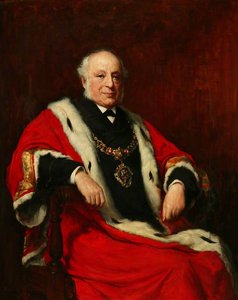
This painting depicts John William Dupre, who served as the HM Attorney General in 1869. The subject is portrayed with a white beard, dressed in a formal red robe that signifies his professional standing. A tie is visible hanging from his neck, adding to his formal attire. He is positioned in a setting that suggests a museum atmosphere, characterized by a green curtain positioned behind him.

Pinturas de William Eyre Walker, classificadas de 11 a 85

11Thomas Sidney Cooper, RA (1891) de William Eyre WalkerThomas Sidney Cooper, RA1891 12Sir Frederick Thorpe Mappin (1821–1910), Bt (1892) de William Eyre WalkerSir Frederick Thorpe Mappin (1821–1910), Bt1892 13John Scott of London and Wetheral (1887) de William Eyre WalkerJohn Scott of London and Wetheral1887 14Alderman Philip Goldschmidt (1887) de William Eyre WalkerAlderman Philip Goldschmidt1887 15Alderman Edward Wood (1839–1917), JP, Mayor of Leicester (1888, 1895, 1901 1906) (1898) de William Eyre WalkerAlderman Edward Wood (1839–1917), JP, Mayor of Leicester (1888, 1895, 1901 1906)1898 · Leicester Town Hall 16Portrait of Alderman Charles Gabriel Beale (1901) de William Eyre WalkerPortrait of Alderman Charles Gabriel Beale1901 · Birmingham Museum and Art Gallery 17Sir George Franklin (d.1916) (1909) de William Eyre WalkerSir George Franklin (d.1916)1909 18Alfred Pope (1842–1934) (1909) de William Eyre WalkerAlfred Pope (1842–1934)1909 19Sir Monier Monier Williams (1819–1899) (1882) de William Eyre WalkerSir Monier Monier Williams (1819–1899)1882 · Bodleian Libraries 20Philip Westlake (1873) de William Eyre WalkerPhilip Westlake1873 21Alderman Charles Williams David, Five Times Mayor of Cardiff (1873) de William Eyre WalkerAlderman Charles Williams David, Five Times Mayor of Cardiff1873 22Henry Stacey Marks (1829–1898) (1875) de William Eyre WalkerHenry Stacey Marks (1829–1898)1875 · Walker Art Gallery 23Andrew George Kurtz (1824–1890) (1877) de William Eyre WalkerAndrew George Kurtz (1824–1890)1877 · Walker Art Gallery 24Robert Needham Philips (1815–1890) (1875) de William Eyre WalkerRobert Needham Philips (1815–1890)1875 25Charles Robert Darwin (1809–1882) (1875) de William Eyre WalkerCharles Robert Darwin (1809–1882)1875 · Darwin College 26Thomas Oldham Barlow (1824–1889), RA (1882) de William Eyre WalkerThomas Oldham Barlow (1824–1889), RA1882 27Evan Evans (1813–1891) (1883) de William Eyre WalkerEvan Evans (1813–1891)1883 · Pembroke College 28Benjamin Hall Kennedy (1804–1889), DD, Regius Professor of Greek, Headmaster of Shrewsbury School (1883) de William Eyre WalkerBenjamin Hall Kennedy (1804–1889), DD, Regius Professor of Greek, Headmaster of Shrewsbury School1883 · St John’s College (Cambridge) 29Alderman Thomas Southam (1880) de William Eyre WalkerAlderman Thomas Southam1880 30Admiral Sir Alexander Milne (1808–1896) (1879) de William Eyre WalkerAdmiral Sir Alexander Milne (1808–1896)1879 · National Maritime Museum 31William Wegg (1815–1893) (1883) de William Eyre WalkerWilliam Wegg (1815–1893)1883 32Sir George Scharf (1885) de William Eyre WalkerSir George Scharf1885 · National Portrait Gallery 33Albert Brassey, Esq. (1844–1914), MA, JP, MFH, MP of Heythrop Park (1890) de William Eyre WalkerAlbert Brassey, Esq. (1844–1914), MA, JP, MFH, MP of Heythrop Park1890 34Mark Morris (1818–1895) (1889) de William Eyre WalkerMark Morris (1818–1895)1889 · Museu e Arquivo do Hospital St. Bartholomew 35John Lloyd Wharton (1837–1912), of Dryburn, Durham (1891) de William Eyre WalkerJohn Lloyd Wharton (1837–1912), of Dryburn, Durham1891 36Thomas Sidney Cooper (1803–1902), RA (1889) de William Eyre WalkerThomas Sidney Cooper (1803–1902), RA1889 37Ewan Christian (1814–1895), PRIBA (1888) de William Eyre WalkerEwan Christian (1814–1895), PRIBA1888 · Royal Institute of British Architects 38Sir John Robert Mowbray (1815–1899) (1886) de William Eyre WalkerSir John Robert Mowbray (1815–1899)1886 · Reading Museum - Town Hall 39Sir Horace Jones (1819–1887), Architect (1886) de William Eyre WalkerSir Horace Jones (1819–1887), Architect1886 · Guildhall Art Gallery 40Thomas Charles Reginald Agar Robartes (1844–1930), 2nd Lord Robartes and 6th Viscount Clifden (1887) de William Eyre WalkerThomas Charles Reginald Agar Robartes (1844–1930), 2nd Lord Robartes and 6th Viscount Clifden1887 · National Trust 41William Aldis Wright (1831–1914), Fellow, Literary and Biblical Scholar (1887) de William Eyre WalkerWilliam Aldis Wright (1831–1914), Fellow, Literary and Biblical Scholar1887 42Professor Sir George Murray Humphrey (1886) de William Eyre WalkerProfessor Sir George Murray Humphrey1886 · Museu Fitzwilliam 43John Loughborough Pearson (1889) de William Eyre WalkerJohn Loughborough Pearson1889 · National Portrait Gallery 44George Henry Pope, Treasurer (1876–1901), Master (1904) (1889) de William Eyre WalkerGeorge Henry Pope, Treasurer (1876–1901), Master (1904)1889 · Merchants Hall 45Charles Edward Searle (1828–1902) (1892) de William Eyre WalkerCharles Edward Searle (1828–1902)1892 · Pembroke College 46Sir John Scott Burdon Sanderson, Bt (1886) de William Eyre WalkerSir John Scott Burdon Sanderson, Bt1886 47Edward Armitage (1817–1896), RA (1886) de William Eyre WalkerEdward Armitage (1817–1896), RA1886 48John Morley, 1st Viscount Morley of Blackburn (1891) de William Eyre WalkerJohn Morley, 1st Viscount Morley of Blackburn1891 · National Portrait Gallery 49John James Robert Manners, 7th Duke of Rutland (1886) de William Eyre WalkerJohn James Robert Manners, 7th Duke of Rutland1886 · National Portrait Gallery 50William Scovell Savory (1826–1895), Surgeon at St Bartholomew's Hospital (1893) de William Eyre WalkerWilliam Scovell Savory (1826–1895), Surgeon at St Bartholomew's Hospital1893 · Museu e Arquivo do Hospital St. Bartholomew 51Colonel Sir Charles Seely (1833–1915), 1st Bt (1897) de William Eyre WalkerColonel Sir Charles Seely (1833–1915), 1st Bt1897 52Sir Horatio Lloyd, Recorder of Chester (1866–1921) (1896) de William Eyre WalkerSir Horatio Lloyd, Recorder of Chester (1866–1921)1896 · Chester Castle 53Charles John Vaughan (1816–1897), Fellow and Classical Scholar, Headmaster and Dean of Llandaff (1895) de William Eyre WalkerCharles John Vaughan (1816–1897), Fellow and Classical Scholar, Headmaster and Dean of Llandaff1895 54William Henry (1856–1905), Lord Leigh, Lord Lieutenant (1898) de William Eyre WalkerWilliam Henry (1856–1905), Lord Leigh, Lord Lieutenant1898 · Warwick Shire Hall 55John Dent Dent, Chairman, North Eastern Railway (copy of an earlier work) (1896) de William Eyre WalkerJohn Dent Dent, Chairman, North Eastern Railway (copy of an earlier work)1896 56The Right Hon. William McEwan MP (1827-1913) (1901) de William Eyre WalkerThe Right Hon. William McEwan MP (1827-1913)1901 · Polesden Lacey 57James Bell Pettigrew (1832–1908) (1902) de William Eyre WalkerJames Bell Pettigrew (1832–1908)1902 58Alderman Charles Gabriel Beale (1901) de William Eyre WalkerAlderman Charles Gabriel Beale1901 59The Right Honourable William McEwan (1827–1913), MP (1901) de William Eyre WalkerThe Right Honourable William McEwan (1827–1913), MP1901 60David with Goliath's Head de William Eyre WalkerDavid with Goliath's Head 61Cecil E. Bewes, Esq. (1818–1903) de William Eyre WalkerCecil E. Bewes, Esq. (1818–1903) 62Sir William Ogilvy Dalgleish of Errol Park (1832–1913) (1911) de William Eyre WalkerSir William Ogilvy Dalgleish of Errol Park (1832–1913)1911 63Alderman George Franklin (d.1916), JP, Lord Mayor of Sheffield (1897–1898) (1909) de William Eyre WalkerAlderman George Franklin (d.1916), JP, Lord Mayor of Sheffield (1897–1898)1909 64Donald Currie (1825–1909) (1907) de William Eyre WalkerDonald Currie (1825–1909)1907 65Edward Liveing (1832–1919) (1910) de William Eyre WalkerEdward Liveing (1832–1919)1910 66Henry Morris (1844–1926) (1910) de William Eyre WalkerHenry Morris (1844–1926)1910 67Edward Atkinson (1819–1915), Master (1856–1915) (1906) de William Eyre WalkerEdward Atkinson (1819–1915), Master (1856–1915)1906 · Clare College 68Sir Donald Currie (1825–1909), Shipping Magnate and Educational Benefactor (1908) de William Eyre WalkerSir Donald Currie (1825–1909), Shipping Magnate and Educational Benefactor1908 · Galeria Nacional de Retratos de Escócia 69Sir Cyril Jackson (1863–1924), Educationist (1916) de William Eyre WalkerSir Cyril Jackson (1863–1924), Educationist1916 · Guildhall Art Gallery 70Self Portrait (1918) de William Eyre WalkerSelf Portrait1918 71Thomas Hardy (1922) de William Eyre WalkerThomas Hardy1922 · National Portrait Gallery 72Sir Arthur Keith (1866–1955) (1928) de William Eyre WalkerSir Arthur Keith (1866–1955)1928 73Thomas Fletcher Twemlow of Betley (1816–1894) (1925) de William Eyre WalkerThomas Fletcher Twemlow of Betley (1816–1894)1925 · Staffordshire County Buildings 74Landscape - Galloway de William Eyre WalkerLandscape - GallowayThe Suter Te Aratoi o Whakatū 75The Very Reverend William Henderson (1819–1905), First Headmaster of Victoria College (1852–1862) de William Eyre WalkerThe Very Reverend William Henderson (1819–1905), First Headmaster of Victoria College (1852–1862) 76Scene from the French Revolution de William Eyre WalkerScene from the French Revolution 77Sir Donald Currie (1825–1909) de William Eyre WalkerSir Donald Currie (1825–1909) 78The Blind Beggar de William Eyre WalkerThe Blind Beggar 79Sir Mark Wilks Collet (1816–1905), Governor of the Bank of England (1887–1889) de William Eyre WalkerSir Mark Wilks Collet (1816–1905), Governor of the Bank of England (1887–1889) 80Frederick Harrison (1831–1923), Scholar (1848), Fellow (1854), Honorary Fellow (1899), DCL de William Eyre WalkerFrederick Harrison (1831–1923), Scholar (1848), Fellow (1854), Honorary Fellow (1899), DCLWadham College 81Thomas Elliott Harrison, Civil Engineer, North Eastern Railway de William Eyre WalkerThomas Elliott Harrison, Civil Engineer, North Eastern Railway 82Christopher James Thomas, Mayor (1874–1875) de William Eyre WalkerChristopher James Thomas, Mayor (1874–1875)The Mansion House 83Robert W. Darwin (1766–1848), Charles Darwin's Father de William Eyre WalkerRobert W. Darwin (1766–1848), Charles Darwin's Father 84James Porter, DD, Mestre (1896) de William Eyre WalkerJames Porter, DD, Mestre1896 · Peterhouse 85Roundell Palmer (1812–1895), Conde de Selborne, Fellow (1834–1848), Lord Chanceler de William Eyre WalkerRoundell Palmer (1812–1895), Conde de Selborne, Fellow (1834–1848), Lord ChancelerMagdalen College

Os temas que cativaram o olhar de William Eyre Walker

Os quatro temas que mais se repetem nestas obras originais, cada um com o seu melhor exemplo.

Os museus que guardam os originais de William Eyre Walker

Os 8 museus que detêm a maioria das pinturas desta página.

Museus Cidade Obras de William Eyre Walker Pinturas desta lista
National Portrait Gallery, LondresNational Portrait Gallery Londres 5 Sir George Scharf, John Loughborough Pearson, John Morley, 1st Viscount Morley of Blackburn
Walker Art Gallery, LiverpoolWalker Art Gallery Liverpool 2 Henry Stacey Marks (1829–1898), Andrew George Kurtz (1824–1890)
Museu e Arquivo do Hospital St. Bartholomew, LondresMuseu e Arquivo do Hospital St. Bartholomew Londres 2 Mark Morris (1818–1895), William Scovell Savory (1826–1895), Surgeon at St Bartholomew's Hospital
Guildhall Art Gallery, LondresGuildhall Art Gallery Londres 2 Sir Horace Jones (1819–1887), Architect, Sir Cyril Jackson (1863–1924), Educationist
Christ's College, CambridgeChrist's College Cambridge 1 Charles Robert Darwin (1809–1882), Fellow Commoner, Writer of 'The Origin of Species' (1859) and 'The Descent of Man' (1871)
Oriel College, OxfordOriel College Oxford 1 John Henry, Cardinal Newman
Inverness Town House, InvernessInverness Town House Inverness 1 Sir Alexander Matheson (1805–1886)
Leicester Town Hall, LeicesterLeicester Town Hall Leicester 1 Alderman Edward Wood (1839–1917), JP, Mayor of Leicester (1888, 1895, 1901 1906)

William Eyre Walker, uma pintura emblemática por década

Obras por década

Escolha uma década para ver a obra original que a define.

Pinturas de William Eyre Walker: a galeria responde

Qual pintura de William Eyre Walker é a mais famosa de todas?Revelar a resposta

Charles Robert Darwin (1809–1882), Fellow Commoner, Writer of 'The Origin of Species' (1859) and 'The Descent of Man' (1871) (1883), Christ's College, Cambridge. John Henry, Cardinal Newman e Sir Alexander Matheson (1805–1886) (1879) vêm a seguir.

Qual era a idade de William Eyre Walker ao concluir Charles Robert Darwin (1809–1882), Fellow Commoner, Writer of 'The Origin of Species' (1859) and 'The Descent of Man' (1871)?Revelar a resposta

36 anos: Charles Robert Darwin (1809–1882), Fellow Commoner, Writer of 'The Origin of Species' (1859) and 'The Descent of Man' (1871) data de 1883, e William Eyre Walker nasceu em 1847.

Quais são as 10 principais pinturas de William Eyre Walker?Revelar a resposta

Charles Robert Darwin (1809–1882), Fellow Commoner, Writer of 'The Origin of Species' (1859) and 'The Descent of Man' (1871), John Henry, Cardinal Newman, Sir Alexander Matheson (1805–1886), John William Dupre (1790–1866), HM Attorney General, Portrait of Lord Wantage, Vice-Chancellor, KCB, Henry Stacy Marks (1829–1898), Portrait of William Fane De Salis, John Evan Hodgson (1831–1895), Sir Henry Alfred Pitman (1808–1908) e John Bright. O ranking acima apresenta o ano e o museu de cada uma.

Quantas obras William Eyre Walker criou?Revelar a resposta

Nosso catálogo contém 86 obras de William Eyre Walker, datadas de 1869 a 1928.

Onde estão expostos os originais mais famosos de William Eyre Walker?Revelar a resposta

Principalmente em National Portrait Gallery (Londres), Walker Art Gallery (Liverpool) e Museu e Arquivo do Hospital St. Bartholomew (Londres). A tabela de museus acima lista todos eles.

Quando é que William Eyre Walker criou as suas pinturas mais famosas?Revelar a resposta

Em 1880s: 26 das 85 obras nesta página foram feitas então, sendo Charles Robert Darwin (1809–1882), Fellow Commoner, Writer of 'The Origin of Species' (1859) and 'The Descent of Man' (1871) delas.

Quais são as obras mais famosas de William Eyre Walker no início e no fim de sua carreira?Revelar a resposta

Nesta página, a mais antiga é John William Dupre (1790–1866), HM Attorney General (1869) e a mais recente é Sir Arthur Keith (1866–1955) (1928).

Quais temas William Eyre Walker mais explorou?Revelar a resposta

Men (14), Victorian era (9) e Portraiture (7), entre as 85 obras nesta página.

Em qual técnica William Eyre Walker mais trabalhou?Revelar a resposta

Oil On Canvas, para 4 das 85 obras nesta página.

Com qual movimento William Eyre Walker está associado(a)?Revelar a resposta

Academic realism, a julgar pelos originais nesta página.

Quais obras originais de William Eyre Walker o National Portrait Gallery possui?Revelar a resposta

Sir George Scharf, John Loughborough Pearson e John Morley, 1st Viscount Morley of Blackburn: o National Portrait Gallery, Londres detém 5 das obras desta página.

William Eyre Walker: o artista

Um Legado de Semelhança: A Vida de Walter William Ouless

Nascido no charme costeiro de Saint Helier, Jersey, Walter William Ouless emergiu de uma linhagem profundamente enraizada nas artes visuais. Como filho do artista marítimo Philip John Ouless, seus primeiros anos foram imersos na atmosfera de um estúdio de trabalho, uma base que eventualmente o impulsionaria em direção ao coração do establishment artístico britânico. Após receber sua educação no Victoria College, Ouless partiu para Londres em 1864, buscando refinar seus talentos emergentes nas prestigiadas escolas da Royal Academy. Embora seus impulsos criativos iniciais o tenham conduzido ao charme narrativo da pintura de gênero, um momento crucial de mentoria redirecionou sua trajetória; foi o renomado artista Millais quem o aconselhou a focar seu olhar no semblante humano, colocando-o no caminho para se tornar um dos retratistas mais distintos de sua era.

Maestria do Retrato e Eminência Acadêmica

A carreira de Ouless é um testemunho do poder da profundidade psicológica e da precisão técnica. Sua ascensão na Royal Academy foi marcada por marcos significativos, rendendo-lhe o título de Associado da Royal Academy em 1877 e alcançando o status de membro pleno como Royal Academician em 1881. Este reconhecimento consolidou seu status entre os praticantes de elite do realismo acadêmico britânico. Ouless possuía uma habilidade rara de transcender a mera semelhança física, capturando, em vez disso, a própria essência e a gravidade intelectual de seus temas. Seja retratando o brilhantismo científico de Charles Robert Darwin ou a devoção erudita de Sir Monier Monier Williams, sua pincelada soprava vida nas figuras, utilizando frequentemente o dramático chiaroscuro e detalhes meticulosos para evocar um senso de caráter e posição social.

Sua técnica era caracterizada por um equilíbrio sofisticado entre a rígida disciplina acadêmica e uma sensibilidade requintada à luz. Em muitas de suas obras mais celebradas, pode-se observar um jogo sutil de texturas e tons que sugere uma consciência do movimento impressionista emergente, mesmo enquanto ele permanecia ancorado nas tradições da retratística. Seus retratos serviam como janelas para a alma vitoriana, documentando a dignidade, a ambição e a natureza contemplativa das figuras mais proeminentes da época.

Influência Artística e Herança Familiar

O mundo artístico de Ouless não era solitário, mas sim uma tapeçaria tecida com conexões familiares e respeito profissional. Sua influência estendeu-se através das gerações, notavelmente vista no trabalho de sua filha, Catherine Ouless, que deu continuidade à tradição de realismo meticuloso estabelecida por seu pai. Através de sua dedicação ao ofício, Ouless ajudou a definir um período da arte britânica onde o retrato funcionava tanto como um registro histórico quanto como um profundo estudo psicológico. Sua capacidade de render o peso da descoberta nos olhos de um cientista ou o prestígio silencioso da presença de um estadista garante que sua contribuição para a história da retratística britânica permaneça como um legado duradouro de luz, sombra e caráter humano.