

1

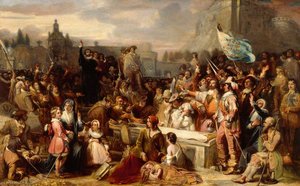
The Slave Market, Constantinople
The painting titled The Slave Market, Constantinople is a work by the artist William Allan. This specific piece was created about 1838. The canvas measures 129 x 198 cm.

Atualizado em Outubro 2026 · classificado pela nossa pontuação de popularidade (pesquisas, visitas e pedidos de cada obra) · 56 obras de William Allan em nosso catálogo
Em resumo
Aos olhos da galeria, a pintura mais famosa de William Allan é The Slave Market, Constantinople (1838), cuja obra original está exposta no Scottish National Gallery, em Edimburgo. The Signing of the National Covenant in Greyfriars Kirkyard, Edinburgh (1838) e Tartar Robbers Dividing Spoil (1817) completam o trio que todos reconhecem. Dos 56 trabalhos de William Allan em nosso catálogo, a galeria apresenta abaixo as 48 obras mais famosas, cada uma original, com seu ano, seu museu e o que a torna única.
The painting titled The Slave Market, Constantinople is a work by the artist William Allan. This specific piece was created about 1838. The canvas measures 129 x 198 cm.

The oil painting titled The Signing of the National Covenant in Greyfriars Kirkyard, Edinburgh is a work by the artist William Allan. Created in 1838, this piece depicts the historical event of the signing of the National Covenant within the Greyfriars Kirkyard in Edinburgh. The scene captures a specific moment of religious and political significance in Scottish history.

The scene unfolds in Tartar Robbers Dividing Spoil, a work painted by William Allan around 1817. Within the shadows of a cavernous space, the tension of a sudden encounter hangs heavy in the air. The composition centers on the interaction between two men, their presence illuminated against the dark, textured stone of their surroundings. Every brushstroke captures a moment of high drama, frozen in time as the figures negotiate their…

This large-scale oil painting, created in 1824, presents a crowded and dynamic street scene reminiscent of a public disturbance or uprising. The composition is defined by a diagonal thrust, driven by a central group of people and a horse, which creates a sense of instability and movement. Within this chaotic scene, numerous figures are engaged in various actions; some are seen falling, others are gesturing, and many are observing the…

The air inside the room feels thick with the scent of woodsmoke and spilled ale. Shadows dance across the walls, cast by the flickering light of candles and the glowing embers of a fireplace. In this crowded, rustic space, a lively chaos unfolds as figures press together in a moment of boisterous celebration. There is a sense of movement in every corner; some guests lean in to share a whispered…

This black and white pen and ink drawing presents a study of form and gesture, focusing on a single male figure depicted in profile. The subject is a gentleman dressed in formal attire, including a hat and a coat, and he is shown holding what appears to be a walking stick or cane. The composition is characterized by its simplicity, placing the figure against a neutral background to emphasize the…

An older gentleman sits anchored at a desk, his presence filling the frame with a heavy, quiet gravity. The light falls across his features with a dramatic intensity, carving deep shadows into the folds of his coat and the lines of his face. He gazes outward, his eyes meeting the viewer in a direct, intimate connection that feels almost intrusive, as if we have stumbled upon a private moment of…

This work, titled Study for 'The Murder of David Rizzio', was painted by William Allan in 1833. It offers a glimpse into the artist's process, capturing a moment of intense preparation for a larger historical scene. The piece reflects the specific interests of an artist deeply engaged with the dramatic narratives of the nineteenth century.

The air thickens with the weight of a historical drama in The Murder of David Rizzio. Painted by William Allan in 1833, this work captures a moment of profound betrayal and royal tragedy. The scene freezes the violent 1566 assassination of David Rizzio, the Italian secretary to Mary Queen of Scots. Chaos erupts within the palace, a sudden fracture in the order of the court that leaves the viewer suspended…

 Matthew Hardie, Violin Maker1822
12
 Matthew Hardie (1755–1826), Violin Maker1822 · Galeria Nacional de Retratos de Escócia
13
 William Hey (1736–1819)1815 · Leeds General Infirmary
14
 The Black Dwarf1831 · Scottish National Gallery
15
 Sir Walter Scott in His Study with His Dog 'Maida'1831 · Abbotsford House
16
 William Blackwood (1776–1834), Publisher1830 · Galeria Nacional de Retratos de Escócia
17
 Sir Walter Scott (1771–1832), Novelist and Poet – Gala Day at Abbotsford1827 · Galeria Nacional de Retratos de Escócia
18
 Sir Walter Scott with One of his Daughters1826 · Galeria Nacional de Retratos de Escócia
19
 Sir Walter Scott, 1st Bt1831 · National Portrait Gallery
20
 The Facade of Abbotsford, seen through the Entrance Gate1832 · Scottish National Gallery
21
 The Shepherd's Grace1835
22
 The Bride of Abydos (from the poem by Byron)1836
23
 The Stirrup Cup1836 · Royal Scottish Academy of Art - Architecture
24
 Heroism and Humanity1840
25
 The Battle of Waterloo1843 · English Heritage
26
 The Recovery of the Stolen Child1841
27
 Sir Walter Scott (1771–1832), Novelist and Poet1844
28
 The Visit of Queen Victoria and Prince Albert to Hawthornden, 14 September 18421844 · Galeria Nacional de Retratos de Escócia
29
 William Henry Murray (1790–1852), Actor and Manager of Theatre Royal, Edinburgh1848 · Galeria Nacional de Retratos de Escócia
30
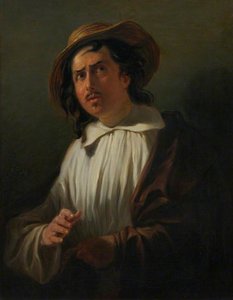 William Henry Murray (1790–1852), Actor and Manager of Theatre Royal, Edinburgh, as 'Paul Pry' (Crombie Sketchbook, fo.4)1843 · Galeria Nacional de Retratos de Escócia
31
 An Officer of the 18th Regiment of (Light) Dragoons (Hussars), c.18151840
32
 Sir Walter Scott Dictating to His Daughter, Anne, in the Armoury at Abbotsford1844 · The National Trust For Scotland
33
 Highland Gillie and His Pony1850 · The Stirling Smith Art Gallery - Museum
34
 Frederick William Robert Stewart (1805–1872), Viscount Castlereagh, Later 4th Marquess of Londonderry, Wearing Hunting Costume1823 · National Trust
35
 Fair Maid of Perth
36
 The Ballad of Old Robin Gray1826
37
 The Battle of Bannockburn1850 · Royal Scottish Academy of Art - Architecture
38
 Bude harbour, DevonNational Maritime Museum
39
 Fair Maid of PerthUniversity of Edinburgh Fine Art Collection
40
 Field of Waterloo
41
 Christmas Eve
42
 The Battle of Cape St Vincent, 14 February 1797National Maritime Museum
43
 Mr Mackay of the Edinburgh Theatre as Baillie Nicol JarvieAbbotsford House
44
 James Russell, the ActorAbbotsford House
45
 The Bashkirs1814 · Museu Hermitage
46
 The Murder of David Rizzio1833 · Scottish National Gallery
47
 The Orphan1838 · Royal Collection
48
 Frontier Guards (Circassian Prince on Horseback Selling Two Boys)1814 · Museu Hermitage
Os quatro temas que mais se repetem nestas obras originais, cada um com o seu melhor exemplo.
Os 8 museus que detêm a maioria das pinturas desta página.
| Museus | Cidade | Obras de William Allan | Pinturas desta lista |
|---|---|---|---|
 Galeria Nacional de Retratos de Escócia |
Edimburgo | 8 | James Hogg (1770–1835), Poet (The Ettrick Shepherd) (The Ettrick Shepherd's House Heating or The Celebration of his Birthday), Matthew Hardie (1755–1826), Violin Maker, William Blackwood (1776–1834), Publisher |
 Scottish National Gallery |
Edimburgo | 7 | The Slave Market, Constantinople, Compositional Sketch for 'Death of the Regent Moray', Study for 'The Murder of David Rizzio' |
 Royal Scottish Academy of Art - Architecture |
Edimburgo | 3 | Self Portrait, The Stirrup Cup, The Battle of Bannockburn |
 Abbotsford House |
Malvern | 3 | Sir Walter Scott in His Study with His Dog 'Maida', Mr Mackay of the Edinburgh Theatre as Baillie Nicol Jarvie, James Russell, the Actor |
 National Maritime Museum |
Londres | 2 | Bude harbour, Devon, The Battle of Cape St Vincent, 14 February 1797 |
 Museu Hermitage |
São Petersburgo | 2 | The Bashkirs, Frontier Guards (Circassian Prince on Horseback Selling Two Boys) |
 The Company of Merchants of The City of Edinburgh |
Edinburgh | 1 | John Robertson |
 Leeds General Infirmary |
Leeds | 1 | William Hey (1736–1819) |
Escolha uma década para ver a obra original que a define.
The scene unfolds in Tartar Robbers Dividing Spoil, a work painted by William Allan around 1817. Within the shadows of a cavernous space, the tension of a sudden encounter hangs heavy in the air. The composition centers on the interaction between two men, their presence illuminated against the dark, textured stone of their surroundings. Every brushstroke captures a moment of high drama, frozen in time as the figures negotiate their…
This large-scale oil painting, created in 1824, presents a crowded and dynamic street scene reminiscent of a public disturbance or uprising. The composition is defined by a diagonal thrust, driven by a central group of people and a horse, which creates a sense of instability and movement. Within this chaotic scene, numerous figures are engaged in various actions; some are seen falling, others are gesturing, and many are observing the…
The painting titled The Slave Market, Constantinople is a work by the artist William Allan. This specific piece was created about 1838. The canvas measures 129 x 198 cm.


The Slave Market, Constantinople (1838), Scottish National Gallery, Edimburgo. The Signing of the National Covenant in Greyfriars Kirkyard, Edinburgh (1838) e Tartar Robbers Dividing Spoil (1817) vêm a seguir.
56 anos: The Slave Market, Constantinople data de 1838, e William Allan nasceu em 1782.
The Slave Market, Constantinople, The Signing of the National Covenant in Greyfriars Kirkyard, Edinburgh, Tartar Robbers Dividing Spoil, Compositional Sketch for 'Death of the Regent Moray', James Hogg (1770–1835), Poet (The Ettrick Shepherd) (The Ettrick Shepherd's House Heating or The Celebration of his Birthday), Joseph Mallord William Turner, Self Portrait, Study for 'The Murder of David Rizzio', The Murder of David Rizzio e John Robertson. O ranking acima apresenta o ano e o museu de cada uma.
Nosso catálogo contém 56 obras de William Allan, datadas de 1803 a 1850.
Principalmente em Galeria Nacional de Retratos de Escócia (Edimburgo), Scottish National Gallery (Edimburgo) e Royal Scottish Academy of Art - Architecture (Edimburgo). A tabela de museus acima lista todos eles.
Em 1830s: 16 das 48 obras nesta página foram feitas então, sendo The Slave Market, Constantinople delas.
Nesta página, a mais antiga é John Robertson (1803) e a mais recente é Highland Gillie and His Pony (1850).
Men (5), Historical scene (4) e People (3), entre as 48 obras nesta página.
Oil On Canvas, para 7 das 48 obras nesta página.
Romanticism, a julgar pelos originais nesta página.
James Hogg (1770–1835), Poet (The Ettrick Shepherd) (The Ettrick Shepherd's House Heating or The Celebration of his Birthday), Matthew Hardie (1755–1826), Violin Maker e William Blackwood (1776–1834), Publisher: o Galeria Nacional de Retratos de Escócia, Edimburgo detém 8 das obras desta página.
Sir William Allan (1782-1850) ergue-se como uma figura fundamental na arte escocesa do século XIX, um mestre da pintura histórica que fundiu com maestria o realismo meticuloso a um sentido evocativo de drama. Nascido no seio de uma proeminente família de mercadores em Edimburgo, sua jornada artística foi, em grande parte, autodirigiente, nutrida pela exposição precoce à efervescente cena artística da época e, mais tarde, guiada pela mentoria de Sir Henry Raeburn, uma figura de liderança do Iluminismo Escocês. A obra de Allan transcende o mero retrato; é uma tapeçaria vibrante tecida com fios da cultura escocesa, intrigas russas e o espírito romântico de sua era. Seu legado estende-se muito além de pinturas individuais, moldando a identidade da National Gallery of Scotland e influenciando gerações de artistas que o sucederam.
Os anos formativos de Allan foram imersos nas tradições dos círculos artísticos de Edimburgo. Embora seu treinamento formal tenha sido limitado, ele absorveu influências de John Graham na Trustees’ Academy, juntamente com as técnicas de David Wilkie e Alexander George Fraser. Essa exposição inicial instilou um profundo apreço pelo detalhe e pela composição — marcas registradas que definiriam seu estilo distinto. Crucialmente, Raeburn reconheceu o talento de Allan e ofereceu orientação, fomentando uma compreensão de como capturar não apenas a semelhança física, mas também o caráter e a emoção. Essa conexão com o Iluminismo Escocês moldou profundamente a visão artística de Allan, enfatizando a observação, a curiosidade intelectual e o desejo de representar o mundo com precisão e nuance.
Um momento decisivo na carreira de Allan foi sua decisão de viajar para a Rússia em 1805. Movido por uma fascinação pelas culturas orientais e pelo desejo de inspiração artística, ele embarcou em uma estada prolongada que impactaria profundamente sua obra. Allan imergiu-se no cotidiano de cossacos, circassianos e tártaros, documentando meticulosamente seus costumes, vestimentas e interações sociais. Ele não estava apenas esboçando; ele engajava-se ativamente com essas comunidades, conquistando sua confiança e ganhando acesso a cenas raramente vistas por artistas ocidentais. Essa experiência imersiva resultou em uma série de pinturas que ofereceram visões sem precedentes sobre a sociedade russa — um tema amplamente inexplorado pela arte europeia da época.
Suas obras mais celebradas deste período incluem “As Cativas Circassianas”, uma representação pungente de um grupo de mulheres aguardando seu destino, e “Camponeses Russos em seu Dia de Folga”, que captura a energia vibrante de uma celebração rural. Estas pinturas são notáveis não apenas por sua habilidade técnica, mas também pelo retrato empático de comunidades marginalizadas. A abordagem de Allan foi revolucionária; ele buscou representar essas culturas com respeito e compreensão, indo além das representações estereotipadas frequentemente encontradas em obras anteriores.
O estilo artístico de Allan é caracterizado por uma mistura notável de realismo e romantismo. Ele possuía uma habilidade excepcional de renderizar texturas — desde a lã áspera das vestimentas cossacas até o brilho cintilante das joias circassianas — com um detalhamento surpreendente. Suas composições são frequentemente dinâmicas, empregando uma iluminação dramática e figuras cuidadosamente arranjadas para criar uma sensação de movimento e narrativa. A cor desempenha um papel crucial em seu trabalho, utilizada não apenas para efeito decorativo, mas para transmitir humor e atmosfera.
Obras fundamentais como o “Retrato de John Renny” exemplificam sua destreza em capturar a semelhança e a personalidade de seus modelos. O autorretrato, pintado mais tarde na vida, revela um olhar contemplativo e uma consciência sutil do próprio envelhecimento. “A Balada de Old Robin Gray”, uma representação assombrosa de um homem idoso relembrando seu passado, demonstra a capacidade de Allan de evocar emoção através do gesto e da expressão. Estas pinturas, juntamente com outras abrigadas na Scottish National Gallery, demonstram uma evolução notável em seu estilo artístico — desde as influências iniciais de John Opie até uma abordagem mais madura e matizada.
O impacto de Sir William Allan na arte escocesa estende-se muito além de suas conquistas individuais. Ele desempenhou um papel vital no estabelecimento da Scottish National Portrait Gallery, contribuindo significativamente para sua coleção e moldando sua identidade como um repositório do patrimônio artístico escocês. Seu trabalho ajudou a elevar o status da pintura escocesa dentro do contexto mais amplo do mundo da arte europeia, desafiando as noções predominantes sobre o que constituía a arte “séria”.
O legado de Allan também se reflete nas obras das gerações subsequentes de artistas escoceses. Ele demonstrou a importância de estudar a cultura e as tradições locais, incentivando uma representação mais matizada e autêntica da Escócia na tela. Seu compromisso com o detalhe, sua capacidade de capturar a emoção e sua disposição para explorar temas não convencionais continuam a inspirar artistas hoje. O apelo duradouro das pinturas de Allan reside não apenas em seu brilhantismo técnico, mas também em suas percepções profundas sobre a condição humana e na rica tapeçaria da vida escocesa e russa.

