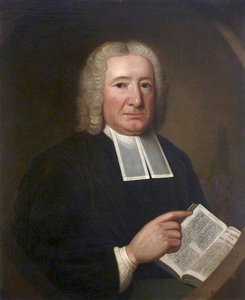
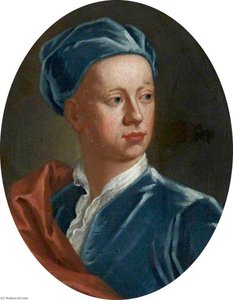
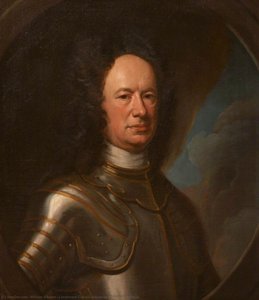
Retrato de William Aikman

As 65 Pinturas Mais Famosas de William Aikman, Cada Uma Única

Atualizado em Novembro 2026 · classificado pela nossa pontuação de popularidade (pesquisas, visitas e pedidos de cada obra) · 73 obras de William Aikman em nosso catálogo

Em resumo

John Campbell, Second Duke of Argyll and Duke of Greenwich (1680-1743) (1709) é a pintura de William Aikman que mais atrai olhares; a obra original pertence ao Royal Collection, Londres. Depois disso, o olhar recai sobre Anne Dalrymple, Lady Steuart, d. 1736 (1710) e James Gibbs (1682-1754) holding a Plan of St Mary le Strand, London (1713). Entre as 73 obras de William Aikman em nosso catálogo, estas 65 são as mais famosas, cada uma uma original única apresentada com o seu ano, o seu museu e a razão pela qual perdura.

1682 – 1731, Aberdeenshire Neoclassicism Mais obras: Galeria Nacional de Retratos de Escócia

As 10 principais pinturas de William Aikman, sob o olhar da galeria

1
John Campbell, Second Duke of Argyll and Duke of Greenwich (1680-1743) (1709) de William Aikman

John Campbell, Second Duke of Argyll and Duke of Greenwich (1680-1743)

1709 · Oil On Canvas · Royal Collection, Londres

The subject of this oil on canvas is John Campbell, Second Duke of Argyll and Duke of Greenwich. He is depicted in a vertical, three-quarter length pose, positioned slightly off-center against a background of heavy dark drapery and a distant, hazy landscape. The sitter wears a deep crimson coat accented by metallic silver and gold details, paired with a bright blue sash. His posture is upright, conveying a sense of…

2
Anne Dalrymple, Lady Steuart, d. 1736 (1710) de William Aikman

Anne Dalrymple, Lady Steuart, d. 1736

1710 · Oil On Canvas · Galeria Nacional de Retratos de Escócia, Edimburgo

This three-quarter length portrait presents Anne Dalrymple, Lady Steuart, d. 1736, captured by the hand of William Aikman. Painted about 1710, the work fixes the subject in a moment of quietude. She exists within a space of soft light and deep shadow, her presence defined by the stillness of her posture. The artist, William Aikman, focuses on the steady gaze of the sitter, anchoring the composition with her steady, pale…

3
James Gibbs (1682-1754) holding a Plan of St Mary le Strand, London (1713) de William Aikman

James Gibbs (1682-1754) holding a Plan of St Mary le Strand, London

1713 · Oil On Canvas · Wimpole Hall

The air in the studio feels heavy and still as the light catches the fine, white powder of a meticulously styled wig. We find ourselves in the presence of an older man, his gaze fixed forward with a quiet, steady intensity that suggests a mind preoccupied with geometry and stone. He sits in a three-quarter pose, his dark brown coat absorbing the shadows of the room, while a crisp white…

4
Archibald Campbell, Earl of Ilay, later 3rd Duke of Argyll (1682-1761) (1715) de William Aikman

Archibald Campbell, Earl of Ilay, later 3rd Duke of Argyll (1682-1761)

1715 · Oil On Canvas · Royal Collection, Londres

Archibald Campbell, Earl of Ilay, later 3rd Duke of Argyll, occupies the space with a commanding stillness that demands immediate recognition. He stands in a vertical three-quarter length pose, his figure cutting a sharp silhouette against a dark, muted background of umber and black. A single light source from the upper left sweeps across the scene, catching the pale sheen of his wig and the luminous texture of his skin.…

5
Patie Birnie, the Fiddler of Kinghorn (1721) de William Aikman

Patie Birnie, the Fiddler of Kinghorn

1721 · Oil On Canvas · Galeria Nacional de Retratos de Escócia, Edimburgo

The air feels heavy with the scent of aged wood and wool as Patie Birnie, the Fiddler of Kinghorn, meets our gaze. He sits in a three-quarter pose, his body angled slightly away while his eyes lock onto ours with a warmth that suggests a shared joke or a song just about to begin. A gentle smile creases his weathered face, softening the deep lines carved by years of laughter…

6
Sir Thomas Saunders Sebright, 4th Bt (1692-1736) or Mr Crawley (1730) de William Aikman

Sir Thomas Saunders Sebright, 4th Bt (1692-1736) or Mr Crawley

1730 · Oil On Canvas · Blickling Hall

A single figure occupies the center of this vertical landscape, a man caught in a moment of poised stillness. He wears a grey frock coat, its surface punctuated by the hard glint of silver buttons. Beneath the coat, a blue tunic reveals a pattern of brown damask braid, a subtle detail against the pale skin of his neck. A white cravat is knotted precisely, leading the eye upward to a…

7
An Unfinished Study of the Head of James Thomson (1725) de William Aikman

An Unfinished Study of the Head of James Thomson

1725 · Oil · Yale Center for British Art, New Haven

In this unfinished oil study, the young man James Thomson emerges from a haze of muted tones. William Aikman captures a fleeting moment of quietude, freezing the subject in a three-quarter view as he gazes toward the right. The portrait feels immediate, as if the artist has just stepped back to observe the play of light across a face that is still being brought into being. It is a glimpse…

8
Henry Kelsall (1692–1762) (1729) de William Aikman

Henry Kelsall (1692–1762)

1729 · Oil On Canvas · National Trust, Norwich

In this 1729 portrait, we encounter Henry Kelsall, a man whose presence commands the space he occupies. He is depicted in a full-length pose, standing with a quiet authority that suggests a life of significant social standing. The composition is traditional, placing him centrally against a backdrop that hints at a stately interior. A heavy red curtain drapes to one side, providing a deep, saturated contrast to the cool tones…

9
Sir Robert Walpole (1676–1745), 1st Earl of Orford, KG (1730) de William Aikman

Sir Robert Walpole (1676–1745), 1st Earl of Orford, KG

1730 · Oil On Canvas · National Trust, Norwich

This oil on canvas portrait, dating to 1730, depicts Sir Robert Walpole, 1st Earl of Orford, KG. The subject is presented in a three-quarter pose, facing slightly to the left, and occupies most of the frame. He is dressed in elaborate robes that signify wealth, power, and rank. The composition is centered, with the figure set against a dark and indistinct background that serves to highlight the subject. The lighting…

10
Dorothy Boyle (1699–1758), Countess of Burlington (1728) de William Aikman

Dorothy Boyle (1699–1758), Countess of Burlington

1728 · Oil On Canvas

In this 1728 oil on canvas, we encounter Dorothy Boyle, Countess of Burlington, presented in a formal, waist-up portrait. She gazes toward the viewer with a composure that suggests a life lived within the highest circles of British nobility. The composition is intimate, utilizing an oval frame to focus our attention entirely upon her figure against a muted, neutral brown background. There is a quietude in her expression, a seriousness…

Pinturas famosas de William Aikman, números 11 a 65

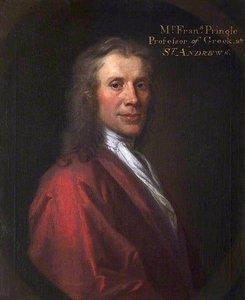
11Caroline of Brandenburg Ansbach (1683–1737), and Her Son Prince William Augustus (1721–1765), Duke of Cumberland (1730) de William AikmanCaroline of Brandenburg Ansbach (1683–1737), and Her Son Prince William Augustus (1721–1765), Duke of Cumberland1730 · Museu Nacional da Inglaterra 12James Hadow de William AikmanJames HadowUniversity of St Andrews 13George Alexander (1704) de William AikmanGeorge Alexander1704 14Robert Geddes, FRCSEd (1709) (1709) de William AikmanRobert Geddes, FRCSEd (1709)1709 · The Royal College of Surgeons of Edinburgh 15John Lauder (c.1680–1737), FRCSEd (1709) (1700) de William AikmanJohn Lauder (c.1680–1737), FRCSEd (1709)1700 · The Royal College of Surgeons of Edinburgh 16Robert Clerk (1664–1720), FRCSEd (1689) (1700) de William AikmanRobert Clerk (1664–1720), FRCSEd (1689)1700 · The Royal College of Surgeons of Edinburgh 17John Gay, Poet and Dramatist (1720) de William AikmanJohn Gay, Poet and Dramatist1720 18James Thomson, Poet (1720) de William AikmanJames Thomson, Poet1720 19John Campbell, 2nd Duke of Argyll and Greenwich, Soldier and Statesman (1720) de William AikmanJohn Campbell, 2nd Duke of Argyll and Greenwich, Soldier and Statesman1720 20James Thomson (1700–1748), Poet (1720) de William AikmanJames Thomson (1700–1748), Poet1720 · Galeria Nacional de Retratos de Escócia 21Allan Ramsay (1684–1758), Poet (1722) de William AikmanAllan Ramsay (1684–1758), Poet1722 · Galeria Nacional de Retratos de Escócia 22John Gay (1685–1732), Poet and Dramatist (1720) de William AikmanJohn Gay (1685–1732), Poet and Dramatist1720 · Galeria Nacional de Retratos de Escócia 23John McGill (d.1735), FRCSEd (1710) (1711) de William AikmanJohn McGill (d.1735), FRCSEd (1710)1711 · The Royal College of Surgeons of Edinburgh 24Sir Patrick Hume (1641–1724), 1st Earl of Marchmont, Statesman (1720) de William AikmanSir Patrick Hume (1641–1724), 1st Earl of Marchmont, Statesman1720 · Museu Nacional de Varsóvia 25William Aikman (1682–1731), Artist, Self Portrait (1711) de William AikmanWilliam Aikman (1682–1731), Artist, Self Portrait1711 · Galeria Nacional de Retratos de Escócia 26John Campbell (1680–1743), 2nd Duke of Argyll and Greenwich, Soldier and Statesman (1720) de William AikmanJohn Campbell (1680–1743), 2nd Duke of Argyll and Greenwich, Soldier and Statesman1720 · Galeria Nacional de Retratos de Escócia 27John Monro (1670–1740), FRCSEd (1703) (1715) de William AikmanJohn Monro (1670–1740), FRCSEd (1703)1715 · The Royal College of Surgeons of Edinburgh 28Lieutenant Colonel Alexander Campbell of Finab (1715) de William AikmanLieutenant Colonel Alexander Campbell of Finab1715 · The Black Watch Castle - Museum 29Field Marshal Sir Robert Rich (1685–1768), 4th Bt (1729) de William AikmanField Marshal Sir Robert Rich (1685–1768), 4th Bt1729 · National Trust 30Francis Pringle, Professor of Greek at St Andrews (1723) de William AikmanFrancis Pringle, Professor of Greek at St Andrews1723 · University of St Andrews 31Sir Thomas Saunders Sebright (1692–1736), 4th Bt (or 'Mr Crawley') (1730) de William AikmanSir Thomas Saunders Sebright (1692–1736), 4th Bt (or 'Mr Crawley')1730 · National Trust 32Colonel Harbord Harbord (1675 –1742) (Harbord Cropley) (1732) de William AikmanColonel Harbord Harbord (1675 –1742) (Harbord Cropley)1732 · National Trust 33Sir John Cope (1690–1760) (1730) de William AikmanSir John Cope (1690–1760)1730 · National Trust 34Edmund Prideaux (1693–1745) (detail) (1730) de William AikmanEdmund Prideaux (1693–1745) (detail)1730 · National Trust 35Sir William Harbord (1696 –1770), MP, KB (1729) de William AikmanSir William Harbord (1696 –1770), MP, KB1729 · National Trust 36Thomas Coke (1697–1759), 1st Earl of Leicester (1731) de William AikmanThomas Coke (1697–1759), 1st Earl of Leicester1731 · National Trust 37Sir William Leman (d.1741), 2nd Bt of Northaw, Hertfordshire (1729) de William AikmanSir William Leman (d.1741), 2nd Bt of Northaw, Hertfordshire1729 · National Trust 38William Kent (1725) de William AikmanWilliam Kent1725 · National Portrait Gallery 39Sir Charles Blois (1657–1738), 1st Bt, MP for Ipswich and Dunwich (1725) de William AikmanSir Charles Blois (1657–1738), 1st Bt, MP for Ipswich and Dunwich1725 40John Hay, 4th Marquess of Tweeddale, Lord Justice General for Scotland (1728) de William AikmanJohn Hay, 4th Marquess of Tweeddale, Lord Justice General for Scotland1728 41Sir Gilbert Elliot (1693–1766), 1st Lord Minto (1726) de William AikmanSir Gilbert Elliot (1693–1766), 1st Lord Minto1726 · Galeria Nacional de Retratos de Escócia 42Sir Henry Harpur (1708–1748), 5th Bt (1728) de William AikmanSir Henry Harpur (1708–1748), 5th Bt1728 · National Trust 43Mary Savile (1700–1751), Countess of Thanet (1728) de William AikmanMary Savile (1700–1751), Countess of Thanet1728 44John St John (1702–1748), 2nd Viscount St John (1742) de William AikmanJohn St John (1702–1748), 2nd Viscount St John1742 · Lydiard House 45Adam Cockburn, Lord Ormiston, 1656 - 1735. Lord Justice-Clerk de William AikmanAdam Cockburn, Lord Ormiston, 1656 - 1735. Lord Justice-ClerkGaleria Nacional de Retratos de Escócia 46Sir James Steuart, 1st Baronet, of Goodtrees and Coltness, 1681 - 1727 de William AikmanSir James Steuart, 1st Baronet, of Goodtrees and Coltness, 1681 - 1727Galeria Nacional de Retratos de Escócia 47John Dalrymple (1673–1747), 2nd Earl of Stair or John Campbell (1680–1743), Duke of Argyll and Greenwich de William AikmanJohn Dalrymple (1673–1747), 2nd Earl of Stair or John Campbell (1680–1743), Duke of Argyll and Greenwich 48Lady Anne Maxwell de William AikmanLady Anne Maxwell 49John Erskine, 14th of Dun, Son of Lord Dun, Aged 10 de William AikmanJohn Erskine, 14th of Dun, Son of Lord Dun, Aged 10 50Landscape with a River de William AikmanLandscape with a River 51Katherine Erskine, Daughter of Sir Charles Erskine of Alva, Wife of Patrick Campbell of Monzie de William AikmanKatherine Erskine, Daughter of Sir Charles Erskine of Alva, Wife of Patrick Campbell of Monzie 52Elizabeth Graham of Airth de William AikmanElizabeth Graham of AirthThe National Trust For Scotland 53John Erskine (1712–1787), 14th of Dun, Son of Lord Dun, Aged 10 de William AikmanJohn Erskine (1712–1787), 14th of Dun, Son of Lord Dun, Aged 10National Trust of Scotland 54Self Portrait de William AikmanSelf PortraitScottish National Gallery 55Elizabeth Ogilvy, Countess of Lauderdale de William AikmanElizabeth Ogilvy, Countess of Lauderdale 56John Lumsden of Blanearn de William AikmanJohn Lumsden of BlanearnThe National Trust For Scotland 57Charles Maitland (1688–1744), 6th Earl of Lauderdale de William AikmanCharles Maitland (1688–1744), 6th Earl of Lauderdale 58Rachel Graham, Wife of John Lumsden of Blanearn de William AikmanRachel Graham, Wife of John Lumsden of BlanearnThe National Trust For Scotland 59David Erskine (1672–1758), 13th of Dun, in the Robes of the Court of Session de William AikmanDavid Erskine (1672–1758), 13th of Dun, in the Robes of the Court of SessionNational Trust of Scotland 60Anne Erskine (1709–1735), Daughter of Lord Dun and Wife Successively of James, 9th Earl of Airlie and Sir Alexander Macdonald de William AikmanAnne Erskine (1709–1735), Daughter of Lord Dun and Wife Successively of James, 9th Earl of Airlie and Sir Alexander MacdonaldNational Trust of Scotland 61George Watson (1654–1723) de William AikmanGeorge Watson (1654–1723)The Merchant's Hall 62Walter Scott, 'Beardie' (1679–1729), Great Grandfather of Sir Walter Scott de William AikmanWalter Scott, 'Beardie' (1679–1729), Great Grandfather of Sir Walter ScottAbbotsford House 63Susanna Kennedy (1689–1780), Countess of Eglinton, Third Wife of the 9th Earl of Eglinton, Patroness of Letters de William AikmanSusanna Kennedy (1689–1780), Countess of Eglinton, Third Wife of the 9th Earl of Eglinton, Patroness of LettersGaleria Nacional de Retratos de Escócia 64Sir James Campbell of Lawers and Rowallan (1667–1745), Soldier de William AikmanSir James Campbell of Lawers and Rowallan (1667–1745), SoldierGaleria Nacional de Retratos de Escócia 65John Campbell, 2nd Duke of Argyll and Duke of Greenwich (1725) de William AikmanJohn Campbell, 2nd Duke of Argyll and Duke of Greenwich1725 · National Portrait Gallery

Pinturas famosas de William Aikman, período por período

Os temas que cativaram o olhar de William Aikman

Os quatro temas que mais se repetem nestas obras originais, cada um com o seu melhor exemplo.

Os museus que guardam os originais de William Aikman

Os 8 museus que detêm a maioria das pinturas desta página.

Museus Cidade Obras de William Aikman Pinturas desta lista
Galeria Nacional de Retratos de Escócia, EdimburgoGaleria Nacional de Retratos de Escócia Edimburgo 12 Anne Dalrymple, Lady Steuart, d. 1736, Patie Birnie, the Fiddler of Kinghorn, James Thomson (1700–1748), Poet
National Trust, NorwichNational Trust Norwich 10 Henry Kelsall (1692–1762), Sir Robert Walpole (1676–1745), 1st Earl of Orford, KG, Field Marshal Sir Robert Rich (1685–1768), 4th Bt
The Royal College of Surgeons of Edinburgh, EdimburgoThe Royal College of Surgeons of Edinburgh Edimburgo 5 Robert Geddes, FRCSEd (1709), John Lauder (c.1680–1737), FRCSEd (1709), Robert Clerk (1664–1720), FRCSEd (1689)
The National Trust For Scotland, EdimburgoThe National Trust For Scotland Edimburgo 3 Elizabeth Graham of Airth, John Lumsden of Blanearn, Rachel Graham, Wife of John Lumsden of Blanearn
National Trust of Scotland, MontroseNational Trust of Scotland Montrose 3 John Erskine (1712–1787), 14th of Dun, Son of Lord Dun, Aged 10, David Erskine (1672–1758), 13th of Dun, in the Robes of the Court of Session, Anne Erskine (1709–1735), Daughter of Lord Dun and Wife Successively of James, 9th Earl of Airlie and Sir Alexander Macdonald
Royal Collection, LondresRoyal Collection Londres 2 John Campbell, Second Duke of Argyll and Duke of Greenwich (1680-1743), Archibald Campbell, Earl of Ilay, later 3rd Duke of Argyll (1682-1761)
University of St Andrews, St AndrewsUniversity of St Andrews St Andrews 2 James Hadow, Francis Pringle, Professor of Greek at St Andrews
National Portrait Gallery, LondresNational Portrait Gallery Londres 2 William Kent, John Campbell, 2nd Duke of Argyll and Duke of Greenwich

William Aikman ao longo das décadas: uma obra original única para cada uma

Obras por década

Escolha uma década para ver a obra original que a define.

Pinturas de William Aikman: perguntas para a galeria

Qual é a obra mais famosa de William Aikman?Revelar a resposta

John Campbell, Second Duke of Argyll and Duke of Greenwich (1680-1743) (1709), Royal Collection, Londres. Anne Dalrymple, Lady Steuart, d. 1736 (1710) e James Gibbs (1682-1754) holding a Plan of St Mary le Strand, London (1713) vêm a seguir.

Com que idade William Aikman criou John Campbell, Second Duke of Argyll and Duke of Greenwich (1680-1743)?Revelar a resposta

27 anos: John Campbell, Second Duke of Argyll and Duke of Greenwich (1680-1743) data de 1709, e William Aikman nasceu em 1682.

Quais são as dez pinturas mais famosas de William Aikman?Revelar a resposta

John Campbell, Second Duke of Argyll and Duke of Greenwich (1680-1743), Anne Dalrymple, Lady Steuart, d. 1736, James Gibbs (1682-1754) holding a Plan of St Mary le Strand, London, Archibald Campbell, Earl of Ilay, later 3rd Duke of Argyll (1682-1761), Patie Birnie, the Fiddler of Kinghorn, Sir Thomas Saunders Sebright, 4th Bt (1692-1736) or Mr Crawley, An Unfinished Study of the Head of James Thomson, Henry Kelsall (1692–1762), Sir Robert Walpole (1676–1745), 1st Earl of Orford, KG e Dorothy Boyle (1699–1758), Countess of Burlington. O ranking acima apresenta o ano e o museu de cada uma.

Quantas obras de William Aikman são conhecidas?Revelar a resposta

Nosso catálogo contém 73 obras de William Aikman, datadas de 1700 a 1731.

Onde se pode ver os originais mais famosos de William Aikman?Revelar a resposta

Principalmente em Galeria Nacional de Retratos de Escócia (Edimburgo), National Trust (Norwich) e The Royal College of Surgeons of Edinburgh (Edimburgo). A tabela de museus acima lista todos eles.

Em que período William Aikman criou as suas pinturas mais conhecidas?Revelar a resposta

Em 1720s: 23 das 65 obras nesta página foram feitas então, sendo Patie Birnie, the Fiddler of Kinghorn delas.

Qual pintura famosa de William Aikman é a mais antiga e qual é a mais recente?Revelar a resposta

Nesta página, a mais antiga é John Lauder (c.1680–1737), FRCSEd (1709) (1700) e a mais recente é Thomas Coke (1697–1759), 1st Earl of Leicester (1731).

Quais temas William Aikman preferia?Revelar a resposta

Man (46), Portrait (17) e Wig (12), entre as 65 obras nesta página.

Com quais materiais William Aikman mais pintou?Revelar a resposta

Oil On Canvas, para 44 das 65 obras nesta página.

A qual movimento pertence a obra de William Aikman?Revelar a resposta

Neoclassicism, a julgar pelos originais nesta página.

Quais originais de William Aikman posso ver no Galeria Nacional de Retratos de Escócia?Revelar a resposta

Anne Dalrymple, Lady Steuart, d. 1736, Patie Birnie, the Fiddler of Kinghorn e James Thomson (1700–1748), Poet: o Galeria Nacional de Retratos de Escócia, Edimburgo detém 12 das obras desta página.

William Aikman: um retrato do artista

A Alma do Iluminismo Escocês: A Vida e a Arte de William Aikman

Na vibrante paisagem intelectual da Escócia do século XVIII, poucas figuras personificaram a união harmoniosa entre a arte visual e a profundidade literária com tanta graça quanto William Aikman. Nascido em 1682 no seio de uma família que vislumbrava para ele um futuro nos rigorosos corredores da jurisprudência, Aikman acabou por escolher um caminho muito mais evocativo e etéreo. Em vez de perseguir as complexidades áridas do Direito, ele entregou-se ao pincel, tornando-se um retratista cujo trabalho capturaria a própria essência do Iluminismo Escocês. Sua vida não foi apenas uma busca pela maestria técnica, mas um envolvimento profundo com os ideais humanistas que começavam a remodelar a consciência europeia.

A base da identidade artística de Aikman foi lançada durante os seus anos formativos na Universidade de Edimburgo. Foi ali que ele forjou um vínculo duradouro e transformador com Allan Ramsay, o celebrado poeta da tradição Doriment. Esta amizade foi muito mais do que uma conexão social; foi uma jornada intelectual partilhada. Através de Ramsay, Aikman mergulhou profundamente num ethos poético caracterizado pela sinceridade, ressonância emocional e uma delicada apreciação pela natureza. Esta sensibilidade literária manifestar-se-ia mais tarde nas suas pinturas, conferindo uma certa profundidade psicológica e uma dignidade serena aos seus temas, transcendendo o mero registo da semelhança física.

Uma Jornada pela Grandeza Clássica

Para refinar o seu talento emergente, Aikman procurou o rigoroso treino disponível em Londres, onde encontrou as crescentes influências do neoclassicismo italiano. No entanto, a sua verdadeira metamorfose artística ocorreu durante as suas extensas viagens pela Itália. Imerso no berço do Renascimento, Aikman estudou meticulosamente os mestres, encontrando uma inspiração profunda nas composições equilibradas e nas formas idealizadas de Rafael e Michelangelo. Este período de peregrinação permitiu-lhe absorver os princípios da antiguidade, integrando um sentido de permanência estrutural e graça clássica na sua retratística.

Ao regressar à Escócia, o estilo de Aikman surgiu como uma mistura sofisticada de sensibilidade nórdica e grandeza meridional. A sua obra caracterizava-se por uma elegância serena, evitando os floreados excessivamente dramáticos do Barroco em favor de uma apresentação mais composta e ponderada. Ele possuía uma capacidade notável de renderizar texturas — o brilho subtil da seda, o peso do veludo e a suavidade da pele — com uma precisão que parecia simultaneamente realista e elevada por um ideal artístico. Os seus retratos não eram meros reflexos de um espelho, mas estavam imbuídos de um sentido de caráter e presença intelectual.

Patrocínio, Legado e Significado Histórico

Para além das suas conquistas técnicas individuais, Aikman desempenhou um papel fundamental no ecossistema cultural da sua era. Ele foi uma ponte crucial entre os mundos das belas-artes e da literatura, atuando como um dos primeiros defensores de figuras como James Thomson. Ao utilizar as suas conexões sociais para assegurar o patrocínio de figuras influentes como Robert Walpole, Aikman ajudou a fomentar um ambiente onde os intelectuais escoceses pudessem prosperar num cenário europeu mais amplo. A sua habilidade de navegar pelos corredores do poder, mantendo a sua integridade artística, tornou-o uma figura central no florescente renascimento cultural de Edimburgo.
O legado de William Aikman reside na força silenciosa dos seus retratos, que continuam a servir como janelas para o espírito de uma era definida pela razão e pelo refinamento. As suas contribuições podem ser resumidas através de vários pilares fundamentais da sua carreira:

  • A Síntese das Artes: Ele fundiu com sucesso a linguagem visual do neoclassicismo italiano com a sinceridade emocional da poesia escocesa.
  • Gestão Cultural: Através do seu patrocínio e conexões, ajudou a elevar o estatuto dos intelectuais escoceses dentro das Ilhas Britânicas.
  • Maestria Técnica: A sua dedicação ao estudo dos Velhos Mestres permitiu-lhe introduzir um nível de sofisticação clássica na retratística escocesa que era anteriormente inédito.
  • Influência Duradoura: A sua obra permanece como um ponto de referência vital para compreender as correntes estéticas e intelectuais do Iluminismo do século XVIII.

Embora a sua vida tenha sido relativamente breve, terminando em 1731, o impacto de William Aikman permanece gravado na história da arte britânica. Ele ergue-se como um testemunho do poder de seguir a verdadeira vocação, provando que, quando o pincel é guiado pelo intelecto e pelo coração, é capaz de capturar não apenas um rosto, mas a própria alma de uma era.