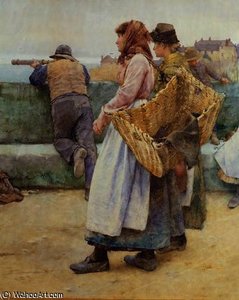
Retrato de Walter Langley

As 59 Pinturas Mais Famosas de Walter Langley, Cada Uma Única

Atualizado em Novembro 2026 · classificado pela nossa pontuação de popularidade (pesquisas, visitas e pedidos de cada obra) · 59 obras de Walter Langley em nosso catálogo

Em resumo

Old Market Hall and Fountain, Birmingham (1880) é a pintura de Walter Langley que mais atrai olhares; a obra original pertence ao Birmingham Museum and Art Gallery, Birmingham. Depois disso, o olhar recai sobre Memories (1885) e But Men Must Work and Women Must Weep (1883). Entre as 59 obras de Walter Langley em nosso catálogo, estas 59 são as mais famosas, cada uma uma original única apresentada com o seu ano, o seu museu e a razão pela qual perdura.

1852 – 1922, Birmingham Social realism Mais obras: Birmingham Museum and Art Gallery

As 10 principais pinturas de Walter Langley, sob o olhar da galeria

1
Old Market Hall and Fountain, Birmingham (1880) de Walter Langley

Old Market Hall and Fountain, Birmingham

1880 · Watercolor · Birmingham Museum and Art Gallery, Birmingham

The interior of the Old Market Hall in Birmingham stretches upward, a vast shell of iron and glass. High above, a skylight filters the daylight, casting a soft, diffused glow over the architecture. At the heart of this space sits an ornate bronze fountain, its presence anchored by a heavy base of Yorkshire sandstone. A solitary woman, draped in dark, Victorian-era clothing, moves past the basin. Her silhouette provides a…

2
Memories (1885) de Walter Langley

Memories

1885 · Oil On Canvas · Birmingham Museum and Art Gallery, Birmingham

In this 1885 oil on canvas, three generations of women occupy a rustic interior, their presence anchored by a heavy visual weight on the left. A seated elderly woman and a young girl reading create a focal point of stillness, while a third figure stands near a window on the right. The composition relies on an asymmetrical balance, using the verticality of the standing figure to counter the seated group.…

3
But Men Must Work and Women Must Weep (1883) de Walter Langley

But Men Must Work and Women Must Weep

1883 · Oil On Canvas · Birmingham Museum and Art Gallery, Birmingham

The composition centers on two female figures within a dimly lit, enclosed interior. A younger woman sits slumped forward, her head resting heavily in her hands. Her posture suggests a state of profound exhaustion or sorrow. Standing behind her, an older woman observes the scene, her features weathered and her expression somber. The lighting originates from a single source to the left, casting soft shadows across the heavy folds of…

4
In Memoriam (1882) de Walter Langley

In Memoriam

1882 · Oil · Birmingham Museum and Art Gallery, Birmingham

In In Memoriam, Walter Langley presents an oil painting of an elderly woman captured in a moment of profound grief or exhaustion. The subject is seated slightly to the left of the center, her head resting heavily upon her hand near a table. This posture, combined with the stillness of the figure, suggests themes of mourning, loss, or weary reflection. The work, dating from about 1882, focuses on the quietude…

5
Disaster Scene in a Cornish Fishing Village (1889) de Walter Langley

Disaster Scene in a Cornish Fishing Village

1889 · Oil · Birmingham Museum and Art Gallery, Birmingham

In this oil painting, titled Disaster Scene in a Cornish Fishing Village, the artist Walter Langley explores the heavy emotional toll of life on the coast. Created about 1889, the work focuses on the immediate human impact of a maritime disaster. Rather than focusing on the sea itself, the subject matter centers on the communal grief found within the village. It is a quiet, somber study of how a single…

6
Study of an Old Fisherwoman (1889) de Walter Langley

Study of an Old Fisherwoman

1889 · Watercolor · Birmingham Museum and Art Gallery, Birmingham

A single figure sits anchored in the dim light of an interior. She is an old fisherwoman, her body slumped in a posture of heavy, settled weariness. The light enters from a window to the left, a soft and diffused glow that traces the deep folds of her clothing and the weathered topography of her skin. She does not look at the viewer. Her gaze is turned inward, lost in…

7
But O For the Touch of a Vanished Hand (1888) de Walter Langley

But O For the Touch of a Vanished Hand

1888 · Oil · Birmingham Museum and Art Gallery, Birmingham

In this 1888 work, titled But O For the Touch of a Vanished Hand, we encounter the quiet, observational style of Walter Langley. Born in Birmingham, United Kingdom, Langley developed a perspective deeply rooted in the realities of the working class, a focus that would define much of his career. This piece emerged during a period when he was establishing himself as a significant figure within the Newlyn School of…

8
An Old Cornish Woman (1891) de Walter Langley

An Old Cornish Woman

1891 · Oil On Canvas · Birmingham Museum and Art Gallery, Birmingham

An Old Cornish Woman is a portrait by Walter Langley, executed about 1891. The subject is an elderly woman seated within a dimly lit interior. This portrait utilizes a vertical orientation to emphasize her presence against the sparse surroundings of the room. The depiction follows the conventions of late 19th-century realism, focusing on a truthful and unidealized representation of everyday life and character.

9
Never Morning Wore to Evening but Some Heart Did Break (1894) de Walter Langley

Never Morning Wore to Evening but Some Heart Did Break

1894 · Oil · Birmingham Museum and Art Gallery, Birmingham

Painted in 1894, this work reflects the social realism that defined much of the period's interest in the working class. The subject matter avoids embellishment, choosing instead to honor the humanity found within quiet struggles. There is a palpable sense of shared sorrow in the way the figures interact, suggesting a narrative of loss that extends beyond the frame. The composition uses the receding perspective of the coastline to provide…

10
Expert Opinion (1905) de Walter Langley

Expert Opinion

1905 · Oil On Canvas · Birmingham Museum and Art Gallery, Birmingham

In Expert Opinion by Walter Langley, a quiet moment unfolds by the seaside. Painted about 1905, this genre scene captures a pause in the rhythm of coastal life. Three figures occupy the space, arranged in a way that draws the eye across their silent interaction. An older man sits on the left, his presence grounded and steady. In the center, a young boy becomes the focal point of the group,…

Pinturas famosas de Walter Langley, números 11 a 59

Pinturas famosas de Walter Langley, período por período

Os temas que cativaram o olhar de Walter Langley

Os quatro temas que mais se repetem nestas obras originais, cada um com o seu melhor exemplo.

Os museus que guardam os originais de Walter Langley

O museu que detém a maioria das pinturas desta página.

Museus Cidade Obras de Walter Langley Pinturas desta lista
Birmingham Museum and Art Gallery, BirminghamBirmingham Museum and Art Gallery Birmingham 10 Old Market Hall and Fountain, Birmingham, Memories, But Men Must Work and Women Must Weep

Walter Langley ao longo das décadas: uma obra original única para cada uma

Obras por década

Escolha uma década para ver a obra original que a define.

Pinturas de Walter Langley: perguntas para a galeria

Qual é a obra mais famosa de Walter Langley?Revelar a resposta

Old Market Hall and Fountain, Birmingham (1880), Birmingham Museum and Art Gallery, Birmingham. Memories (1885) e But Men Must Work and Women Must Weep (1883) vêm a seguir.

Com que idade Walter Langley criou Old Market Hall and Fountain, Birmingham?Revelar a resposta

28 anos: Old Market Hall and Fountain, Birmingham data de 1880, e Walter Langley nasceu em 1852.

Quais são as dez pinturas mais famosas de Walter Langley?Revelar a resposta

Old Market Hall and Fountain, Birmingham, Memories, But Men Must Work and Women Must Weep, In Memoriam, Disaster Scene in a Cornish Fishing Village, Study of an Old Fisherwoman, But O For the Touch of a Vanished Hand, An Old Cornish Woman, Never Morning Wore to Evening but Some Heart Did Break e Expert Opinion. O ranking acima apresenta o ano e o museu de cada uma.

Quantas obras de Walter Langley são conhecidas?Revelar a resposta

Nosso catálogo contém 59 obras de Walter Langley, datadas de 1880 a 1905.

Onde se pode ver os originais mais famosos de Walter Langley?Revelar a resposta

Principalmente em Birmingham Museum and Art Gallery (Birmingham). A tabela de museus acima lista todos eles.

Em que período Walter Langley criou as suas pinturas mais conhecidas?Revelar a resposta

Em 1880s: 7 das 59 obras nesta página foram feitas então, sendo Old Market Hall and Fountain, Birmingham delas.

Qual pintura famosa de Walter Langley é a mais antiga e qual é a mais recente?Revelar a resposta

Nesta página, a mais antiga é Old Market Hall and Fountain, Birmingham (1880) e a mais recente é Expert Opinion (1905).

Quais temas Walter Langley preferia?Revelar a resposta

Woman (9), Elderly woman (5) e Interior (4), entre as 59 obras nesta página.

Com quais materiais Walter Langley mais pintou?Revelar a resposta

Oil, para 5 das 59 obras nesta página.

A qual movimento pertence a obra de Walter Langley?Revelar a resposta

Social realism e Newlyn school, a julgar pelos originais nesta página.

Quais originais de Walter Langley posso ver no Birmingham Museum and Art Gallery?Revelar a resposta

Old Market Hall and Fountain, Birmingham, Memories e But Men Must Work and Women Must Weep: o Birmingham Museum and Art Gallery, Birmingham detém 10 das obras desta página.

Walter Langley: um retrato do artista

Uma Voz de Cornualha no Realismo Vitoriano

Walter Langley (1852–1922) ergue-se como uma figura fundamental dentro da Escola de Newlyn, um grupo de pintores de plein air que representou uma vertente significativa da história da arte britânica na virada do século. Nascido em Birmingham, sua criação instilou nele uma conexão profunda com a classe trabalhadora — uma influência formativa que permearia sua visão artística e moldaria profundamente suas representações da vida na Cornualha. Seu pai era um alfaiate itinerante, proporcionando a Langley uma compreensão precoce do artesanato e do trabalho manual, valores que ele carregou por toda a vida e que, posteriormente, traduziu para suas telas. Esse respeito fundamental pela dignidade do labor tornou-se o pulsar de sua produção criativa.

Aos quinze anos, Langley iniciou um aprendizado com um litógrafo, aperfeiçoando habilidades cruciais para capturar detalhes e texturas — competências que se revelariam inestimáveis em suas futuras aquarelas. Aos vinte e um, conquistou uma bolsa de estudos na South Kensington Art School, onde estudou design ao lado de artistas como Frederic Leighton, absorvendo as convenções estilísticas da arte acadêmica enquanto nutria, simultaneamente, suas crescentes sensibilidades artísticas. Essa dupla exposição promoveu uma mistura distinta de proficiência técnica e exploração imaginativa, permitindo-lhe construir uma ponte entre o treinamento formal e a verdade crua da observação.

A Alma de Newlyn

O grande salto artístico de Langley ocorreu em 1881, quando recebeu 500 libras por um ano de trabalho do Sr. Thrupp, um fotógrafo de Birmingham — um patrocínio generoso que permitiu a mudança de sua família para Newlyn, na Cornualidade. Este movimento consolidou o compromisso de Langley em documentar o cotidiano dos pescadores de Cornualha e suas famílias, estabelecendo-o como um dos primeiros artistas a se fixar nesta crescente comunidade artística. Sua decisão de priorizar a pintura em detrimento da fotografia reflete uma dedicação em capturar a essência da experiência humana através da arte visual, em vez da mera reprodução fotográfica.

Como um mestre da aquarela, Langley possuía uma capacidade insuperável de capturar a forma humana e as sutis nuances da luz dentro deste meio. Sua obra frequentemente transcendia a mera paisagem, focando, em vez disso, na intimidade doméstica e nas lutas silenciosas dos habitantes do litoral. Seja através dos tons suaves de In The Firelight ou das narrativas comoventes encontradas em The Letter, sua pincelada transmitia uma profunda empatia por seus temas. Ele não era apenas um observador da costa de Newlyn; ele era seu cronista, tecendo o tecido social da vila de pescadores em cada lavagem de cor.

Realismo Social e Legado Duradouro

Politicamente alinhado aos ideais socialistas — apoiando particularmente Charles Bradlaugh, um político radical — o trabalho de Langley defendeu consistentemente o realismo social. Ele retratou com maestria as dificuldades e a resiliência silenciosa da classe trabalhadora, tornando sua arte um veículo para a observação social. Esse compromisso com a verdade rendeu-lhe reconhecimento internacional; notavelmente, o grande escritor Leo Tolstoy citou a obra de Langley como um exemplo exemplar de arte boa e significativa. Suas pinturas não buscavam embelezar a pobreza, mas sim honrar a humanidade contida nela.

A importância histórica de Walter Langley reside em seu papel como fundador da comunidade artística de Newlyn e em sua habilidade de elevar as lutas mundanas da vida rural ao nível das belas artes. Seu legado é definido por contribuições fundamentais:

  • Pioneirismo no Realismo Social: Ele trouxe uma profundidade política e empática à Escola de Newlyn, indo além da pura estética para abordar a condição humana.
  • Maestria da Aquarela: É lembrado como um dos mais finos aquarelistas que o Reino Unido já produziu, particularmente por sua capacidade de renderizar textura e emoção em um meio tão delicado.
  • Documentação Cultural: Sua obra serve como um registro visual vital da indústria pesqueira da Cornualha e das estruturas sociais da Grã-Bretanha tardo-vitoriana e eduardiana.

Através de sua dedicação à pintura en plein air e seu foco inabalável na dignidade do trabalho, Walter Langley garantiu que as vozes dos pescadores da Cornualha ressoassem muito além das margens de Newlyn, deixando uma marca indelével na paisagem do Realismo Britânico.