


1

Pink Roses
The painting titled Pink Roses is a work by the artist Victor Pasmore. This piece was created in 1944. The artist's name is visible in the top left corner of the image.

Atualizado em Novembro 2026 · classificado pela nossa pontuação de popularidade (pesquisas, visitas e pedidos de cada obra) · 58 obras de Victor Pasmore em nosso catálogo
Em resumo
Aos olhos da galeria, a pintura mais famosa de Victor Pasmore é Pink Roses (1944). Spiral Motif, Sea and Sky (1950) e The Café (Tea Gardens) (1935) completam o trio que todos reconhecem. Dos 58 trabalhos de Victor Pasmore em nosso catálogo, a galeria apresenta abaixo as 57 obras mais famosas, cada uma original, com seu ano, seu museu e o que a torna única.
The painting titled Pink Roses is a work by the artist Victor Pasmore. This piece was created in 1944. The artist's name is visible in the top left corner of the image.

The artwork Spiral Motif, Sea and Sky is a vertical abstract composition characterized by a structured arrangement of three distinct horizontal bands. Each section is defined by rectangular shapes and filled with repetitive, densely packed spiral motifs that create a sense of rhythmic movement. The composition utilizes a muted and earthy color palette, primarily featuring shades of beige, grey, and brown, with subtle touches of gold. A gentle gradient is…


In the captivating realm of mid-century abstraction, few works command the eye with such rhythmic intensity as Victor Pasmore’s "The Snowstorm: Spiral Motif in Black and White." This masterpiece serves as a profound window into the artist's transformative journey, capturing that precise moment where the boundaries between the tangible world and pure geometric form begin to dissolve. At first glance, the viewer is swept up in a whirlwind of motion;…


 The Front at Seaford, East Sussex1932 · Towner
12
 Window, Finsbury Park1933 · Government Art Collection
13
 Girl with Bows in her Hair1930
14
 The Life Class1938 · The Hepworth Wakefield
15
 The Palace Pier, Brighton1936 · The Hepworth Wakefield
16
 The Quiet River The Thames at Chiswick1943
17
 Irish Girl1940
18
 Girl at a Curtain1943
19
 Nude1941
20
 Camberwell1943
21
 Girl in a Straw Hat1940
22
 Portrait of a Jewish Woman1943
23
 Portrait of a Girl1941 · Arts Council Collection
24
 Green Landscape with Gate1943
25
 Lamplight1941
26
 Still Life with Flowers1939
27
 Café Interior1946
28
 Snow Scene1944 · The Ashmolean Museum of Art and Archaeology
29
 Roses in a Jar1947
30
 Riverside Gardens, Hammersmith1944 · Arts Council Collection
31
 Woman in a red Hat1944 · The Ashmolean Museum of Art and Archaeology
32
 Carnations in Vase1948 · Coleção do Conselho Britânico
33
 Still Life with a Skull1944 · Walker Art Gallery
34
 Girl with a Mirror1945 · Laing Art Gallery
35
 Green Abstract1948 · The Stanley - Audrey Burton Gallery
36
 Spiral Motif in Black and White - The Wave1950 · Galeria Nacional do Canadá
37
 Abstract in White, Grey and Ochre1949 · Tate Modern
38
 The Gardens of Hammersmith No. 21949
39
 Triangular Motif1949 · Ferens Art Gallery
40
 Rectangular Motif, Black and Olive1950 · Arts Council Collection
41
 Square Motif, Blue and Gold The Eclipse1950
42
 Motif in Indian Red and Mustard1950 · Walker Art Gallery
43
 Abstract in White, Black, Indian and Lilac1957 · Tate Modern
44
 Synthetic Construction (White and Black)1965
45
 Relief Construction in White, Black and Maroon1963 · Tate Modern
46
 Yellow Abstract1961 · Tate Modern
47
 Abstract in White, Black, Brown and Lilac1957 · British Council
48
 Suburban Gardens1947 · Coleção do Conselho Britânico
49
 The SuffragettesArt Gallery of New South Wales
50
 The Thames at Chiswick: Sun shining through the mistNational Gallery of Victoria
51
 Linear Development The Coast of the Inland Sea II
52
 Vase of Flowers
53
 Head of a Girl
54
 Brown Development (Peat)
55
 Mother and FlorenceTowner
56
 Carnations in a Glass VaseTowner
57
 Relief. Construction in Black, White & CedarMAC-Lima
Os quatro temas que mais se repetem nestas obras originais, cada um com o seu melhor exemplo.
Os 8 museus que detêm a maioria das pinturas desta página.
| Museus | Cidade | Obras de Victor Pasmore | Pinturas desta lista |
|---|---|---|---|
 Arts Council Collection |
Londres | 4 | The Snowstorm: Spiral Motif in Black and White, Portrait of a Girl, Riverside Gardens, Hammersmith |
 Towner |
Eastbourne | 4 | Study of a Cast of a Child's Head, The Front at Seaford, East Sussex, Mother and Florence |
 Tate Modern |
Londres | 4 | Abstract in White, Grey and Ochre, Abstract in White, Black, Indian and Lilac, Relief Construction in White, Black and Maroon |
 The Hepworth Wakefield |
Wakefield | 2 | The Life Class, The Palace Pier, Brighton |
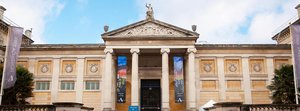 The Ashmolean Museum of Art and Archaeology |
Oxford | 2 | Snow Scene, Woman in a red Hat |
 Coleção do Conselho Britânico |
Londres | 2 | Carnations in Vase, Suburban Gardens |
 Walker Art Gallery |
Liverpool | 2 | Still Life with a Skull, Motif in Indian Red and Mustard |
 Abbot Hall Art Gallery |
Kendal | 1 | Seated Figure, The Maid Florence Head |
Escolha uma década para ver a obra original que a define.
The painting titled Pink Roses is a work by the artist Victor Pasmore. This piece was created in 1944. The artist's name is visible in the top left corner of the image.
The artwork Spiral Motif, Sea and Sky is a vertical abstract composition characterized by a structured arrangement of three distinct horizontal bands. Each section is defined by rectangular shapes and filled with repetitive, densely packed spiral motifs that create a sense of rhythmic movement. The composition utilizes a muted and earthy color palette, primarily featuring shades of beige, grey, and brown, with subtle touches of gold. A gentle gradient is…

Pink Roses (1944). Spiral Motif, Sea and Sky (1950) e The Café (Tea Gardens) (1935) vêm a seguir.
36 anos: Pink Roses data de 1944, e Victor Pasmore nasceu em 1908.
Pink Roses, Spiral Motif, Sea and Sky, The Café (Tea Gardens), The Quiet River The Thames at Chiswick, Reclining Nude, Linear Development: The Coast of the Inland Sea II, The Snowstorm: Spiral Motif in Black and White, Landscape with Cattle, Study of a Cast of a Child's Head e Seated Figure, The Maid Florence Head. O ranking acima apresenta o ano e o museu de cada uma.
Nosso catálogo contém 58 obras de Victor Pasmore, datadas de 1924 a 1965.
Principalmente em Arts Council Collection (Londres), Towner (Eastbourne) e Tate Modern (Londres). A tabela de museus acima lista todos eles.
Em 1940s: 26 das 57 obras nesta página foram feitas então, sendo Pink Roses delas.
Nesta página, a mais antiga é Study of a Cast of a Child's Head (1924) e a mais recente é Synthetic Construction (White and Black) (1965).
Abstract (3), Geometric (3) e Spiral motif (2), entre as 57 obras nesta página.
Oil On Canvas, para 4 das 57 obras nesta página.
The Snowstorm: Spiral Motif in Black and White, Portrait of a Girl e Riverside Gardens, Hammersmith: o Arts Council Collection, Londres detém 4 das obras desta página.
