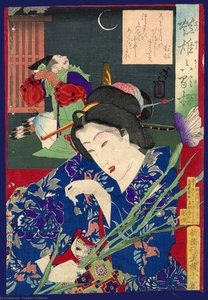
Portrait of Yoshitoshi

The 100 Most Famous Yoshitoshi Paintings, Each One of a Kind

Updated Outubro 2026 · ranked by our popularity score (searches, visits and orders for each work) · 1.344 works by Yoshitoshi in our catalogue

In short

Kingio Hideaki From Kaidai Hyaku Senso is the Yoshitoshi painting that draws the most eyes. After it, the eye goes to Asakusa and Tokugawa Iemitsu Recebendo Senhores em Audiência (1875). Among the 1,344 works of Yoshitoshi in our catalog, these 100 are the most famous, each a unique original presented with its year, its museum and the reason it endures.

1839 – 1892, Edo Japanese ukiyo-e tradition Most works: Minneapolis Institute of Art

Top 10 paintings by Yoshitoshi, through the gallery's eye

2
Asakusa by Yoshitoshi

Asakusa

Xilogravura

A obra de Tsukioka Yoshitoshi, datada de 1882, *Asakusa*, transcende uma simples cena urbana. É um retrato pungente e habilmente executado de um Japão à beira de uma transformação profunda – um vislumbre da alma de Edo, a antiga capital. Criada no estilo quintessential do Ukiyo-e, esta impressão em bloco de madeira não apenas captura a aparência física do movimentado distrito, mas também as ansiedades, esperanças e, finalmente, a beleza…

3
Tokugawa Iemitsu Recebendo Senhores em Audiência (1875) by Yoshitoshi

Tokugawa Iemitsu Recebendo Senhores em Audiência

1875 · Xilogravura · Museu de Arte do Condado de Los Angeles, Los Angeles

A obra "Tokugawa Iemitsu Recebendo os Senhores em Audiência", criada por Tsukioka Yoshitoshi em 1875, transcende a mera representação visual; ela encarna as ansiedades e aspirações do Japão em um momento crucial — o crepúsculo do domínio feudal e o amanhecer da modernização. Executada como uma xilogravura colorida, esta obra exemplifica o auge do ukiyo-e, demonstrando um detalhamento inigualável e capturando uma atmosfera imersa em formalidade e contemplação solene. É…

4
Okuko Hikozaemon Protects The Tokugawa Shogun From The Spear Of Goro Matabei Mototsugu by Yoshitoshi

Okuko Hikozaemon Protects The Tokugawa Shogun From The Spear Of Goro Matabei Mototsugu

Acrylic On Canvas

Dynamic Depiction of Heroism and Mythology This captivating artwork vividly captures a dramatic moment of heroism and mythic confrontation, set against a dark, nocturnal backdrop illuminated by a crescent moon. The scene is filled with intense action, depicting legendary warriors engaged in a fierce battle that embodies themes of bravery, conflict, and divine justice. The central figures, clad in detailed armor and traditional garments, evoke a sense of movement and…

5
Moon Over The Waters At Daimotsu Bay by Yoshitoshi

Moon Over The Waters At Daimotsu Bay

Woodblock Print

Moon Over The Waters At Daimotsu Bay is a significant woodblock print by the Japanese artist Yoshitoshi. This work belongs to his celebrated series, One Hundred Aspects of the Moon, also known as Tsuki hyakkei. Published between 1885 and 1892, the series represents a profound period in the artist's career, capturing a unique intersection of traditional aesthetics and the shifting social landscape of the Meiji era.

6
Uesugi Kenshin Nyudo Terutora Cavalgando para a Batalha (1883) by Yoshitoshi

Uesugi Kenshin Nyudo Terutora Cavalgando para a Batalha

1883 · Acrílico · Museu de Arte do Condado de Los Angeles, Los Angeles

A obra “Uesugi Kenshin Nyudo Terutora Riding into Battle”, criada por Tsukioka Yoshitoshi em 1883, transcende a mera representação visual; ela encarna as ansiedades e aspirações do Japão durante sua transição crucial do domínio feudal para a modernização. Esta monumental xilogravura não é apenas um registro de proeza militar, mas um quadro cuidadosamente elaborado, repleto de simbolismos que revelam profundamente a paisagem psicológica da época.

7
Komori No Godan by Yoshitoshi

Komori No Godan

Woodblock Print

Tsukioka Yoshitoshi’s “Komori No Godan” – literally “Six Bats Under the Umbrella” – is more than just a captivating image; it's a poignant meditation on mortality, protection, and the enduring spirit of Japanese folklore. Executed in stark monochrome with the meticulous precision characteristic of Ukiyo-e woodblock prints, this artwork transports the viewer to a world steeped in layered meaning and evocative atmosphere. Created during a period of immense social change…

8
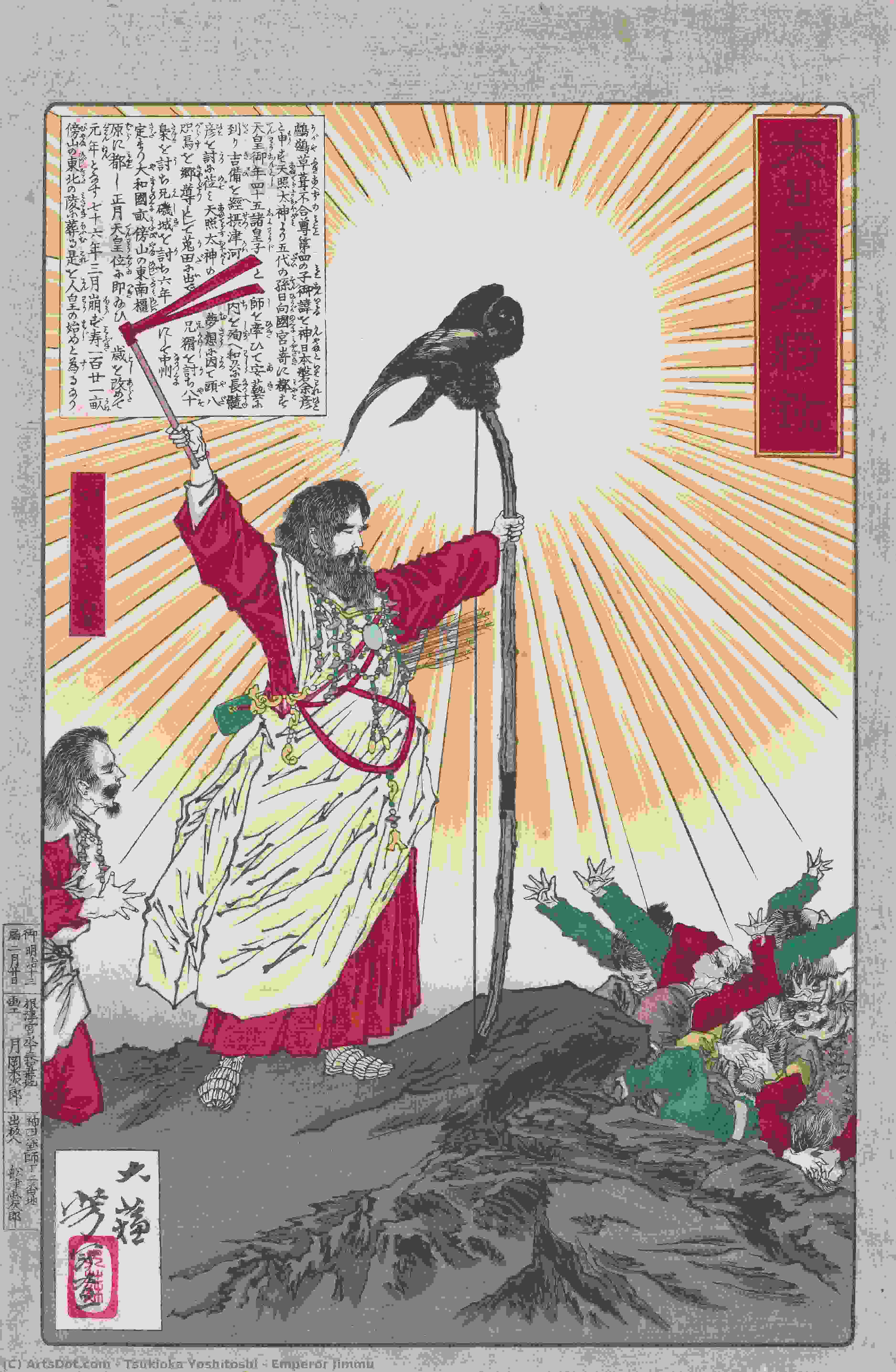
Emperor Jimmu by Yoshitoshi

Emperor Jimmu

Acrílico sobre tela

Emperor Jimmu: A Vision of Mythic Leadership Captured in Woodblock Print Tsukioka Yoshitoshi’s “Emperor Jimmu” stands as a cornerstone of Ukiyo-e art, embodying the final flourish of Japan's artistic heritage during the Meiji Restoration. Published in 1880 as part of his monumental "Illustrated History of Great Japan" (*Dai nippon-shi ryaku zue*), this triptych isn’t merely a depiction; it’s an immersive experience into the formative myths that shaped Japanese identity. Yoshitoshi,…

9
Sadanobu Ameaçando Um Demônio No Palácio À Noite by Yoshitoshi

Sadanobu Ameaçando Um Demônio No Palácio À Noite

Acrílico sobre tela

Sadanobu Threatening A Demon In The Palace At Night: A Dramatic Echo of Meiji Japan Este impreso de madera policromo “Sadanobu Amenazando Un Demonio En El Palacio Por La Noche” es un ejemplo impresionante del arte *ukiyo-e* tardío del siglo XIX realizado por Tsukioka Yoshitoshi. Captura una escena dramática y llena de tensión dentro de un entorno palaciego ricamente decorado, presentando a un guerrero – probablemente Sadanobu – enfrentándose a…

10
Restaurante by Yoshitoshi

Restaurante

Acrílico sobre tela

Um Retrato da Vida Urbana em Edo: O Restaurante de Tsukioka Yoshitoshi Uma pausa na agitada vida cotidiana do século XIX japonês é capturada magistralmente pela obra "Restaurant" (レストラン) de Tsukioka Yoshitoshi, um artista que permanece como o último grande mestre do estilo *ukiyo-e*, ou “imagens do mundo flutuante”. Esta impressão em bloco de madeira não busca grandiosidade ou heroísmo; ao contrário, ela revela um momento comum – uma caminhada…

Yoshitoshi's famous paintings, numbers 11 to 100

11Woman With Iris by YoshitoshiWoman With Iris 12The Moon And The Abandoned Old Woman by YoshitoshiThe Moon And The Abandoned Old Woman 13Miyamoto Musashi by YoshitoshiMiyamoto Musashi 14Great Generals of the East and West (1874) by YoshitoshiGreat Generals of the East and West1874 · Minneapolis Institute of Art 15Great Generals of the East and West (1874) by YoshitoshiGreat Generals of the East and West1874 · Minneapolis Institute of Art 16January: Celebrating the New Year (1860) by YoshitoshiJanuary: Celebrating the New Year1860 · Museu de Arte do Condado de Los Angeles 17Ghost (1883) by YoshitoshiGhost1883 · Minneapolis Institute of Art 18Kiyohime changing into a serpent at Hidaka River, from the series New Forms of Thirty-six Ghosts (1890) by YoshitoshiKiyohime changing into a serpent at Hidaka River, from the series New Forms of Thirty-six Ghosts1890 · Smithsonian’s National Museum of Asian Art 19The Spirit of the Deceased Yūgao Entwined in Moonflower Vines, based on the print “The Lady of the Evening Faces,” from the series One Hundred Aspects of the Moon (Tsuki hyakushi: Genji Yūgao no maki) (1892) by YoshitoshiThe Spirit of the Deceased Yūgao Entwined in Moonflower Vines, based on the print “The Lady of the Evening Faces,” from the series One Hundred Aspects of the Moon (Tsuki hyakushi: Genji Yūgao no maki)1892 · Metropolitan Museum of Art 20Murasaki Shikibu at Ishiyamadera Temple, based on the print “The Moon at Ishiyama,” from the series One Hundred Aspects of the Moon (Tsuki hyakushi: Ishiyama no tsuki) (1892) by YoshitoshiMurasaki Shikibu at Ishiyamadera Temple, based on the print “The Moon at Ishiyama,” from the series One Hundred Aspects of the Moon (Tsuki hyakushi: Ishiyama no tsuki)1892 · Metropolitan Museum of Art 21Sumidagawa- Koji Of Umewaka by YoshitoshiSumidagawa- Koji Of Umewaka 22Comic Picture by YoshitoshiComic Picture 23Hikoshichi Carries A Demon by YoshitoshiHikoshichi Carries A Demon 24The Great Thieves Of Japan Compared by YoshitoshiThe Great Thieves Of Japan Compared 25A young woman from Kansei period playing with her cat (1888) by YoshitoshiA young woman from Kansei period playing with her cat1888 26Murasaki Shikibu at Ishiyamadera Temple, based on the print “The Moon at Ishiyama,” from the series One Hundred Aspects of the Moon (Tsuki hyakushi: Ishiyama no tsuki) (1892) by YoshitoshiMurasaki Shikibu at Ishiyamadera Temple, based on the print “The Moon at Ishiyama,” from the series One Hundred Aspects of the Moon (Tsuki hyakushi: Ishiyama no tsuki)1892 27Inaba Mountain Moon by YoshitoshiInaba Mountain Moon 28Moon Above The Sea At Daimotsu Bay by YoshitoshiMoon Above The Sea At Daimotsu Bay 29Mt. Yoshino At Midnight by YoshitoshiMt. Yoshino At Midnight 30Susanoo No Mikoto by YoshitoshiSusanoo No Mikoto 31The Takisoba Restaurant At Otowa by YoshitoshiThe Takisoba Restaurant At Otowa 32Oda... Nobunaga by YoshitoshiOda... Nobunaga 33Coast Of Kiyomi by YoshitoshiCoast Of Kiyomi 34Mirror Of The Famous Generals by YoshitoshiMirror Of The Famous Generals 35Sanada Saemon-no-jô Yukimura by YoshitoshiSanada Saemon-no-jô Yukimura 36Female Warrior Hangaku Gozen by YoshitoshiFemale Warrior Hangaku Gozen 37Moon At Kuruwa by YoshitoshiMoon At Kuruwa 38The Underwater Fight by YoshitoshiThe Underwater Fight 39Koi Swimming Beneath Wisteria by YoshitoshiKoi Swimming Beneath Wisteria 40Demon Triptych by YoshitoshiDemon Triptych 41Konkai by YoshitoshiKonkai 42Death Stone Of Nasu Moor by YoshitoshiDeath Stone Of Nasu Moor 43Ôishi Kuranosuke Yoshio by YoshitoshiÔishi Kuranosuke Yoshio 44Yoshitsune And Benkei by YoshitoshiYoshitsune And Benkei 45Shizu Peak Moon by YoshitoshiShizu Peak Moon 46The Great Battle At Okehazama by YoshitoshiThe Great Battle At Okehazama 47Akashi Gidayu And Tiger by YoshitoshiAkashi Gidayu And Tiger 48Taira no Kiyomori sees the skulls of his victims by YoshitoshiTaira no Kiyomori sees the skulls of his victims 49Princess Kaguya by YoshitoshiPrincess Kaguya 50Inamura Promontory Moon by YoshitoshiInamura Promontory Moon 51Ariwara no Yukihira by YoshitoshiAriwara no Yukihira 52Maisaka (1863) by YoshitoshiMaisaka1863 53A scene of Journey to the West (1864) by YoshitoshiA scene of Journey to the West1864 54Onogawa (1865) by YoshitoshiOnogawa1865 55Japanese war in Kagoshima (1879) by YoshitoshiJapanese war in Kagoshima1879 56Warrior (General Yamanaka Shikanasake) (1884) by YoshitoshiWarrior (General Yamanaka Shikanasake)1884 57Looking refined - a court lady of the Kyowa era (1888) by YoshitoshiLooking refined - a court lady of the Kyowa era1888 58Benkei e a Onda by YoshitoshiBenkei e a Onda 59Clam Digging by YoshitoshiClam DiggingMinneapolis Institute of Art 60Sagami Jirô And Taira No Masakado by YoshitoshiSagami Jirô And Taira No Masakado 61Taira No Kiyomori Holding Back The Sun by YoshitoshiTaira No Kiyomori Holding Back The Sun 62Tze Lu by YoshitoshiTze Lu 63Looking Indecisive by YoshitoshiLooking Indecisive 64Katada Bay Moon by YoshitoshiKatada Bay Moon 65Takatoki Tengu by YoshitoshiTakatoki Tengu 66Poem By Hitotose by YoshitoshiPoem By Hitotose 67Tsuki No Monogurui by YoshitoshiTsuki No Monogurui 68The Moon's Four Strings by YoshitoshiThe Moon's Four Strings 69Yugao From The Tale Of Genji by YoshitoshiYugao From The Tale Of Genji 70Hitotose by YoshitoshiHitotose 71The Hag by YoshitoshiThe Hag 7236 Ghosts by Yoshitoshi36 Ghosts 73The Moon And The Helm Of A Boat by YoshitoshiThe Moon And The Helm Of A Boat 74Kinoshita Tokichiro by YoshitoshiKinoshita Tokichiro 75Kabuki Actor - by YoshitoshiKabuki Actor - 76Gojo Bridge Moon by YoshitoshiGojo Bridge Moon 77Yukugawa Sanpei Munenori by YoshitoshiYukugawa Sanpei Munenori 78Moon At Mt Chi-ming by YoshitoshiMoon At Mt Chi-ming 79Uesugi Kenshin by YoshitoshiUesugi Kenshin 80Waiting Since The Crescent Moon by YoshitoshiWaiting Since The Crescent Moon 81Relaxed by YoshitoshiRelaxed 82The Moon At Takakura by YoshitoshiThe Moon At Takakura 83Dawn Moon At Mt. Tobisu by YoshitoshiDawn Moon At Mt. Tobisu 84Near Komakata A Cuckoo Calls by YoshitoshiNear Komakata A Cuckoo Calls 85Matsuo Basho by YoshitoshiMatsuo Basho 86Mountain Moon After Rain - Tokimune by YoshitoshiMountain Moon After Rain - Tokimune 87Moon And The Heavenly River by YoshitoshiMoon And The Heavenly River 88Kityama Moon by YoshitoshiKityama Moon 89Moonlight On The Snow by YoshitoshiMoonlight On The Snow 90The Chapter From The Tale Of Genji by YoshitoshiThe Chapter From The Tale Of Genji 91Taira No Tomomori by YoshitoshiTaira No Tomomori 92Namauo Chojiro by YoshitoshiNamauo Chojiro 93Hirade Iki by YoshitoshiHirade Iki 94Hara by YoshitoshiHara 95Chinese Beauty In The Moonlight by YoshitoshiChinese Beauty In The Moonlight 96Chinzai Hachiro Minamoto No Tametomo by YoshitoshiChinzai Hachiro Minamoto No Tametomo 97The Wife Of Tokugawa Keiki by YoshitoshiThe Wife Of Tokugawa Keiki 98Hyoshit Rinchu Kills The Officer Riku Neat The Temple Of The Mountain by YoshitoshiHyoshit Rinchu Kills The Officer Riku Neat The Temple Of The Mountain 99House Wife Of The Bunsei Era by YoshitoshiHouse Wife Of The Bunsei Era 100Moon And Helm Of A Boat by YoshitoshiMoon And Helm Of A Boat

Yoshitoshi's famous paintings, period by period

The subjects that held Yoshitoshi's eye

The four subjects that come back most often in these originals, each with its finest example.

The museums that keep Yoshitoshi's originals

The 4 museums that hold the most of the paintings on this page.

Museum City Works by Yoshitoshi Paintings from this list
Minneapolis Institute of Art, MinneapolisMinneapolis Institute of Art Minneapolis 4 Great Generals of the East and West, Great Generals of the East and West, Ghost
Museu de Arte do Condado de Los Angeles, Los AngelesMuseu de Arte do Condado de Los Angeles Los Angeles 3 Tokugawa Iemitsu Recebendo Senhores em Audiência, Uesugi Kenshin Nyudo Terutora Cavalgando para a Batalha, January: Celebrating the New Year
Metropolitan Museum of Art, Nova YorkMetropolitan Museum of Art Nova York 2 The Spirit of the Deceased Yūgao Entwined in Moonflower Vines, based on the print “The Lady of the Evening Faces,” from the series One Hundred Aspects of the Moon (Tsuki hyakushi: Genji Yūgao no maki), Murasaki Shikibu at Ishiyamadera Temple, based on the print “The Moon at Ishiyama,” from the series One Hundred Aspects of the Moon (Tsuki hyakushi: Ishiyama no tsuki)
Smithsonian’s National Museum of Asian Art, Washington, D.C.Smithsonian’s National Museum of Asian Art Washington, D.C. 1 Kiyohime changing into a serpent at Hidaka River, from the series New Forms of Thirty-six Ghosts

Yoshitoshi across the decades: one unique original for each

Works per decade

Pick a decade to see the original that defines it.

Yoshitoshi's paintings: questions for the gallery

What is the single most famous work of Yoshitoshi?Reveal the answer

Kingio Hideaki From Kaidai Hyaku Senso. Asakusa and Tokugawa Iemitsu Recebendo Senhores em Audiência (1875) come next.

Which ten paintings by Yoshitoshi are the most famous?Reveal the answer

Kingio Hideaki From Kaidai Hyaku Senso, Asakusa, Tokugawa Iemitsu Recebendo Senhores em Audiência, Okuko Hikozaemon Protects The Tokugawa Shogun From The Spear Of Goro Matabei Mototsugu, Moon Over The Waters At Daimotsu Bay, Uesugi Kenshin Nyudo Terutora Cavalgando para a Batalha, Komori No Godan, Emperor Jimmu, Sadanobu Ameaçando Um Demônio No Palácio À Noite and Restaurante. The ranking above gives each one's year and museum.

How many works by Yoshitoshi are known?Reveal the answer

Our catalog holds 1,344 works by Yoshitoshi, dated from 1860 to 1892.

Where can the most famous Yoshitoshi originals be seen?Reveal the answer

Mostly in Minneapolis Institute of Art (Minneapolis), Museu de Arte do Condado de Los Angeles (Los Angeles) and Metropolitan Museum of Art (Nova York). The museum table above lists them all.

During which period did Yoshitoshi create the best-known paintings?Reveal the answer

In 1880s: 5 of the 100 works on this page were made then, Uesugi Kenshin Nyudo Terutora Cavalgando para a Batalha among them.

Which famous Yoshitoshi painting is the earliest, and which the latest?Reveal the answer

On this page, the earliest is January: Celebrating the New Year (1860) and the latest The Spirit of the Deceased Yūgao Entwined in Moonflower Vines, based on the print “The Lady of the Evening Faces,” from the series One Hundred Aspects of the Moon (Tsuki hyakushi: Genji Yūgao no maki) (1892).

What subjects did Yoshitoshi favour?Reveal the answer

Traditional japan (15), Woodblock print (12) and Warrior (11), across the 100 works on this page.

What materials did Yoshitoshi paint with most?Reveal the answer

Woodblock Print, for 9 of the 100 works on this page.

Which movement does the work of Yoshitoshi belong to?Reveal the answer

Japanese ukiyo-e tradition, judging by the originals on this page.

What Yoshitoshi originals can I see at the Minneapolis Institute of Art?Reveal the answer

Great Generals of the East and West, Great Generals of the East and West and Ghost: the Minneapolis Institute of Art, Minneapolis holds 4 of the works on this page.

Where can I order a hand-painted Yoshitoshi reproduction?Reveal the answer

Yes, as a reproduction: the original stays in its museum, but any painting on this page can be painted by hand for you, made to order one at a time, from the painting's own page.

Yoshitoshi: a portrait of the artist

A Vida e a Identidade de Tsukioka Yoshitoshi

Nascido Owariya Yonejiro em 30 de abril de 1839, o homem que viria a ser conhecido como Tsukioka Yoshitoshi entrou em um mundo em constante mutação. Criado no distrito de Shimbashi, na antiga Edo — hoje conhecida como Tóquio —, sua trajetória foi marcada por uma transição de identidade, tendo também utilizado o nome Taiso Yoshitoshi. Ele testemunhou o crepúsculo do período Edo e o amanhecer da era Meiji, um tempo em que o próprio tecido da sociedade japonesa era refeito pela rápida modernização e pela influência ocidental.

Sua carreira como gravador japonês foi definida por uma luta constante para preservar as tradições de seu ofício, enquanto o mundo ao seu redor avançava em direção a novas tecnologias, como a fotografia. Yoshitoshi trabalhou com um profundo senso de propósito, focando frequentemente na tensão entre o antigo e o novo. Este período de agitação não foi apenas um pano de fundo para sua arte; foi o próprio ambiente que moldou sua perspectiva e sua habilidade de capturar a condição humana durante um tempo de transformações sociais profundas.

O fim de sua vida chegou de forma inesperada aos 53 anos. Ele faleceu em 9 de junho de 1892, após um acidente vascular cerebral. Deixou para trás um corpo de trabalho significativo que documentou a paisagem em mutação de seu país, capturando tanto os momentos silenciosos da vida cotidiana quanto o drama intenso das lendas históricas.

Vida Precoce, Família e Formação

Nascido como Owariya Yonejiro no distrito de Shimbashi, na antiga Edo, o menino que viria a ser Yoshitoshi cresceu em um ambiente moldado pela ambição social. Seu pai era um mercador próspero que havia ascendido ao status de samurai, proporcionando uma vida de relativa estabilidade. No entanto, a estrutura familiar transformou-se precocemente. Aos três anos de idade, ele deixou o seu lar para viver com seu tio, um farmacêutico que não tinha filhos. Essa mudança de ambiente provaria ser fundamental para o seu desenvolvimento.

Aos cinco anos, ele começou a demonstrar um interesse claro pela arte. Passou a infância recebendo lições de seu tio, encontrando um sentido de propósito no ato da criação. Essa instrução inicial forneceu a base para um caminho formal nas artes tradicionais. Em 1850, aos 11 anos, ele iniciou um rigoroso aprendizado sob a tutela do mestre Utagawa Kuniyoshi. Foi durante esse período que seu mentor lhe concedeu o nome Yoshitoshi, marcando sua entrada oficial na Escola Utagawa.

Técnica e Estilo Artístico

O traço de Tsukioka Yoshitoshi movia-se com uma precisão que capturava a própria essência de um Japão em constante metamorfose. Ele foi um pioneiro no uso de novas técnicas de impressão, buscando incessantemente formas de alcançar detalhes mais minuciosos e cores mais intensas. Sua obra frequentemente fundia a estética tradicional japonesa com as influências ocidentais que chegavam durante a era Meiji. Essa fusão permitiu-lhe criar composições complexas que pareciam, ao mesmo tempo, profundamente enraizadas na história e surpreendentemente modernas. Ele possuía um talento singular para retratar o movimento, fazendo com que uma estampa estática de xilogravura parecesse capturada em um único e fugaz momento de ação.

Sua temática oscilava, com frequência, entre o histórico e o mitológico. Ele era capaz de renderizar um guerreiro lendário com uma profundidade psicológica tocante, ou retratar uma criatura sobrenatural com um realismo impactante. Essa habilidade de transmitir emoções profundas era o cerne de seu estilo. Seja ao descrever uma cena de contemplação silenciosa ou um momento de luta intensa, suas estampas carregavam um peso emocional que ressoava profundamente em seu público. Ele não dependia de mera decoração; em vez disso, utilizava cores vibrantes e linhas precisas para envolver o espectador na narrativa visual da obra.

  • Saito Oniwakamaru sobre uma Carpa (1839–1892)
  • A Batalha de Okehazama (1866)
  • A Morte de Kiyomori (1883)

Obras-Primas e Séries Inesquecíveis

A produção de Tsukioka Yoshitoshi frequentemente espelhava a atmosfera densa e inquieta da era em que viveu. Em 1866, ele deu vida a uma série de gravuras conhecidas como Muzan-e, frequentemente chamadas de "estampas sangrentas". Estas obras focavam-se na violência gráfica e na morte, refletindo o agito social e as tragédias pessoais que marcaram a sua existência. O artista transitava habilmente entre estes temas sombrios e assuntos de natureza mais narrativa, como a sua série Tsūzoku saiyūki, também conhecida como A Modern Journey to the West. Ele também mergulhou no folclore e na lenda em Wakan hyaku monogatari, ou Cem Histórias da China e do Japão.

Com o passar dos anos, o seu olhar voltou-se para temas mais contemplativos e variados. Entre 1885 e 1892, dedicou-se a One Hundred Aspects of the Moon, uma série que explorava a lua através de múltiplas perspectivas. Os seus anos finais também testemunharam a criação de New Forms of 36 Spirits, entre 1889 e 1892, e de 32 Aspects of Women, em 1888. Estas séries demonstram a sua extraordinária capacidade de manipular tanto o sobrenatural quanto a forma humana com uma profunda densidade psicológica.

Legado e Influência Duradoura

A carreira de Tsukioka Yoshitoshi atuou como uma ponte entre duas eras, abrangendo os anos finais do período Edo e o amanhecer da era Meiji. Ele viveu em um tempo de dissolução das antigas estruturas sociais, quando as influências ocidentais começavam a remodelar a vida japonesa. Enquanto muitos artistas lutavam para encontrar seu lugar em meio a essa mudança rápida, ele foi reconhecido como um dos maiores inovadores da forma. Sua habilidade de adaptar seu ofício a um mundo em transformação permitiu que ele permanecesse relevante, mesmo quando a xilogravura tradicional enfrentava a nova concorrência da fotografia e da litografia.

Seu prestígio na comunidade artística foi consolidado por sua destreza técnica e sua linhagem. Ele é hoje reconhecido como o discípulo mais importante de Kuniyoshi, tendo absorvido as lições de seu mestre e impulsionado-as em novas direções. Por volta de 1885, sua proeminência era inegável, sendo classificado como o artista de ukiyo-e número um em Tóquio. Ele não se limitou a seguir as tradições da Escola Utagawa; ele as expandiu, trazendo uma profundidade psicológica aos seus temas que ajudou a definir o crepúsculo do gênero ukiyo-e.

  • Musha Burui
  • Cem Aspectos da Lua
  • Novas Formas de Trinta e Seis Espíritos

All 1344 works by Yoshitoshi →