Retrato de Vittore Carpaccio

As 100 Pinturas Mais Famosas de Vittore Carpaccio, uma Seleção da Galeria

Atualizado em Outubro 2026 · classificado pela nossa pontuação de popularidade (pesquisas, visitas e pedidos de cada obra) · 201 obras de Vittore Carpaccio em nosso catálogo

Em resumo

De todas as obras originais deixadas por Vittore Carpaccio, a mais famosa é Cristo com os Símbolos da Paixão Cercado por Anjos (1510), da coleção do Metropolitan Museum of Art, em Nova York. Logo atrás vêm The Ten Thousand Martyrs on the Mount Ararat (1515) e Meeting of the Betrothed Couple (detail) (1495). Nosso catálogo contém 201 obras de Vittore Carpaccio; a galeria preservou as 100 que o mundo mais admira, cada uma exibida com sua data, seu museu e sua história.

1465 – 1526, Veneza Renascimento veneziano Mais obras: Gallerie dell'Accademia di Venezia

As 10 principais pinturas de Vittore Carpaccio: a escolha da galeria

1
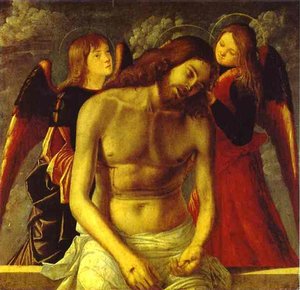
Cristo com os Símbolos da Paixão Cercado por Anjos (1510) de Vittore Carpaccio

Cristo com os Símbolos da Paixão Cercado por Anjos

1510 · Óleo sobre painel · Metropolitan Museum of Art, Nova York

Immerja-se em uma narrativa visual profunda, capturando o sofrimento e o sacrifício de Jesus Cristo. Esta obra-prima, datada por volta de 1510, é mais do que um simples retrato; é um convite à contemplação, um testemunho da Paixão e da ressurreição. Criada no coração de Veneza durante a transição entre o medieval e o renascentista, a pintura nos transporta para um momento crucial da história cristã: a crucificação. Vittore Carpaccio,…

2
The Ten Thousand Martyrs on the Mount Ararat (1515) de Vittore Carpaccio

The Ten Thousand Martyrs on the Mount Ararat

1515 · Oil On Panel · Gallerie dell'Accademia di Venezia, Veneza

To stand before this monumental canvas is to be enveloped by a wave of profound spiritual energy. Vittore Carpaccio’s depiction, The Ten Thousand Martyrs on the Mount Ararat, is not merely a painting; it is an overwhelming testament to faith, endurance, and the ultimate promise of resurrection. The sheer scale of the work—a dramatic expanse measuring 307 by 205 centimeters—demands attention, drawing the viewer into its complex narrative heart. It…

3
Meeting of the Betrothed Couple (detail) (1495) de Vittore Carpaccio

Meeting of the Betrothed Couple (detail)

1495 · Oil · Gallerie dell'Accademia di Venezia, Veneza

Vittore Carpaccio's “Meeting of the Betrothed Couple” is not merely a depiction of a historical event; it’s a meticulously crafted window into the vibrant, complex world of 15th-century Venice. This particular detail, focusing on the central figures amidst a throng of nobility and civic officials, offers an intimate invitation to explore the artist's unique approach to narrative painting – a style that eschewed the prevailing humanist trends of his time…

4
The Lion of St Mark (detail) (1516) de Vittore Carpaccio

The Lion of St Mark (detail)

1516 · Tempera · Palácio Ducal, Veneza

In this detail from 1516, a winged lion occupies the foreground, its physical presence defined by a heavy, stone-like texture. The creature is positioned with its hind legs submerged in water while its forelegs rest upon dry land. Its wings are spread wide across the upper portion of the frame. In its paws, the lion holds an open book. The pages contain Latin text that reads "PAX TIBI MARCE EVANGELISTA…

5
The Lion of St Mark (detail) (1516) de Vittore Carpaccio

The Lion of St Mark (detail)

1516 · Tempera On Panel · Palácio Ducal, Veneza

In the heart of the Palazzo Ducale, where the echoes of history still resonate through the marble halls of Venice, resides one of the most profound symbols of a vanished republic. Vittore Carpaccio’s "The Lion of St Mark," completed in 1516, is far more than a mere depiction of a mythical creature; it is a breathtaking window into the soul of the Venetian Renaissance. To gaze upon this work is…

6
Lamentation of Christ (1510) de Vittore Carpaccio

Lamentation of Christ

1510 · Oil

In the heavy stillness that follows the Crucifixion, Vittore Carpaccio’s Lamentation of Christ captures a moment of profound theological and human tragedy. Painted around 1510, the scene unfolds with a somber atmosphere, inviting a slow, meditative gaze. At the center of this spiritual drama, the figure of Jesus hangs from the cross, his body a silent witness to sacrifice. The composition is meticulously detailed, creating a stage where the divine…

7
The Dead Christ (1520) de Vittore Carpaccio

The Dead Christ

1520 · Oil On Canvas · Staatliche Museen zu Berlin, Berlim

A Somber Reflection on Mortality: Vittore Carpaccio’s “The Dead Christ” Vittore Carpaccio's "The Dead Christ," painted circa 1520, stands as a poignant testament to the artistic sensibilities of Venice during the High Renaissance. More than just a depiction of religious iconography—the lifeless body of Jesus cradled by grieving figures—it embodies a profound meditation on death and mourning, reflecting the anxieties prevalent in a period grappling with theological upheaval and humanist…

8
St George and the Dragon (detail) (1502) de Vittore Carpaccio

St George and the Dragon (detail)

1502 · Tempera On Panel · Scuola di San Giorgio degli Schiavoni, Venice

In the heart of Venice, within the hallowed halls of the Scuola di San Giorgio degli Schiavoni, lies a fragment of a much larger epic. The detail from Vittore Carpaccio’s St George and the Dragon serves as a breathtaking window into the height of the Italian Renaissance. Painted in 1502, this tempera on wood panel is not merely a depiction of a myth, but a visceral experience of movement and…

9
St George and the Dragon (1516) de Vittore Carpaccio

St George and the Dragon

1516 · Tempera On Panel · San Giorgio Maggiore, Veneza

In the heart of the Venetian Renaissance, where the shimmering reflections of the canals met the burgeoning spirit of humanism, Vittore Carpaccio captured a moment of eternal struggle. St George and the Dragon is not merely a depiction of a legendary battle; it is a breathtaking narrative tapestry that weaves together the chivalric ideals of the sixteenth century with a profound spiritual allegory. As the viewer’s eye meets the canvas,…

10
Meeting of the Betrothed Couple (detail) (1495) de Vittore Carpaccio

Meeting of the Betrothed Couple (detail)

1495 · Acrylic On Canvas · Gallerie dell'Accademia di Venezia, Veneza

Vittore Carpaccio’s “Meeting of the Betrothed Couple,” a meticulously rendered detail from his monumental cycle depicting scenes from Dante Alighieri's *Divine Comedy*, offers a captivating glimpse into the vibrant, complex world of 15th-century Venice. Far more than a simple illustration, this panel—a fragment of a larger narrative—is a masterclass in observation and storytelling, revealing Carpaccio’s unique approach to Renaissance painting. It’s a scene brimming with social nuance, legal formality, and…

A seleção de Vittore Carpaccio continua, de 11 a 100

11Martyrdom of the Pilgrims and the Funeral of St Ursula (detail) (1493) de Vittore CarpaccioMartyrdom of the Pilgrims and the Funeral of St Ursula (detail)1493 · Gallerie dell'Accademia di Venezia 12The Healing of the Madman (detail) (1496) de Vittore CarpaccioThe Healing of the Madman (detail)1496 · Gallerie dell'Accademia di Venezia 13Portrait of a Knight (1510) de Vittore CarpaccioPortrait of a Knight1510 · Museu Thyssen-Bornemisza 14The Miracle of the Relic of the True Cross on the Rialto Bridge (1494) de Vittore CarpaccioThe Miracle of the Relic of the True Cross on the Rialto Bridge1494 · Gallerie dell'Accademia di Venezia 15The Healing of the Madman (detail) (1496) de Vittore CarpaccioThe Healing of the Madman (detail)1496 · Gallerie dell'Accademia di Venezia 16The Arrival of the Pilgrims in Cologne (1490) de Vittore CarpaccioThe Arrival of the Pilgrims in Cologne1490 · Gallerie dell'Accademia di Venezia 17St Stephen is Consecrated Deacon (detail) de Vittore CarpaccioSt Stephen is Consecrated Deacon (detail)Staatliche Museen zu Berlin 18São Pedro Martir (1505) de Vittore CarpaccioSão Pedro Martir1505 · Philbrook Museum of Art 19The Ambassadors Return to the English Court (detail) (1495) de Vittore CarpaccioThe Ambassadors Return to the English Court (detail)1495 · Gallerie dell'Accademia di Venezia 20The Dream of St Ursula (1495) de Vittore CarpaccioThe Dream of St Ursula1495 · Gallerie dell'Accademia di Venezia 21The Meditation on the Passion (1510) de Vittore CarpaccioThe Meditation on the Passion1510 · Metropolitan Museum of Art 22Portrait of a lady (1495) de Vittore CarpaccioPortrait of a lady1495 · Museu de Belas Artes de Boston 23Vision of St. Augustine (1507) de Vittore CarpaccioVision of St. Augustine1507 24Departure of the Pilgrims (detail) (1495) de Vittore CarpaccioDeparture of the Pilgrims (detail)1495 · Gallerie dell'Accademia di Venezia 25Martyrdom of the Pilgrims and the Funeral of St Ursula (detail) (1493) de Vittore CarpaccioMartyrdom of the Pilgrims and the Funeral of St Ursula (detail)1493 · Gallerie dell'Accademia di Venezia 26St Catherine of Alexandria and St Veneranda (1500) de Vittore CarpaccioSt Catherine of Alexandria and St Veneranda1500 · Museu Castelvecchio 27Madonna and Child with two Saints (1490) de Vittore CarpaccioMadonna and Child with two Saints1490 · Gemäldegalerie 28The Lion of St Mark de Vittore CarpaccioThe Lion of St Mark 29Portrait of a Man (1510) de Vittore CarpaccioPortrait of a Man1510 · Museu de Belas Artes de Boston 30Madonna and Child Enthroned with Saints and Donor (1507) de Vittore CarpaccioMadonna and Child Enthroned with Saints and Donor1507 · Walters Art Museum 31A Gondolier (1517) de Vittore CarpaccioA Gondolier1517 · Isabella Stewart Gardner Museum 32St George and the Dragon (1516) de Vittore CarpaccioSt George and the Dragon1516 33The Baptism of the Selenites (detail) (1507) de Vittore CarpaccioThe Baptism of the Selenites (detail)1507 · Scuola di San Giorgio degli Schiavoni 34Salvator Mundi (1520) de Vittore CarpaccioSalvator Mundi1520 35Two Court Ladies de Vittore CarpaccioTwo Court Ladies 36The Marriage of the Virgin (1504) de Vittore CarpaccioThe Marriage of the Virgin1504 · Pinacoteca di Brera 37A Bishop Saint Blessing (1514) de Vittore CarpaccioA Bishop Saint Blessing1514 · Philbrook Museum of Art 38Mary with the Child and Saints Catherine and Jerome (1508) de Vittore CarpaccioMary with the Child and Saints Catherine and Jerome1508 · Staatliche Kunsthalle Karlsruhe 39Crucifixion and Apotheosis of the Ten Thousand Martyrs (1515) de Vittore CarpaccioCrucifixion and Apotheosis of the Ten Thousand Martyrs1515 · Gallerie dell'Accademia di Venezia 40Disputation of St Stephen (detail) (1514) de Vittore CarpaccioDisputation of St Stephen (detail)1514 · Pinacoteca di Brera 41Apotheosis of St Ursula (1491) de Vittore CarpaccioApotheosis of St Ursula1491 · Gallerie dell'Accademia di Venezia 42The Lion of St Mark (detail) (1516) de Vittore CarpaccioThe Lion of St Mark (detail)1516 · Palácio Ducal 43The Ambassadors Depart (detail) (1495) de Vittore CarpaccioThe Ambassadors Depart (detail)1495 · Gallerie dell'Accademia di Venezia 44The Healing of the Madman (1496) de Vittore CarpaccioThe Healing of the Madman1496 · Gallerie dell'Accademia di Venezia 45Death of the Virgin by Carpaccio (1508) de Vittore CarpaccioDeath of the Virgin by Carpaccio1508 · Pinacoteca Nazionale 46The Ambassadors Return to the English Court (detail) (1495) de Vittore CarpaccioThe Ambassadors Return to the English Court (detail)1495 · Gallerie dell'Accademia di Venezia 47Disputation of St Stephen (detail) (1514) de Vittore CarpaccioDisputation of St Stephen (detail)1514 · Pinacoteca di Brera 48Arrival of the English Ambassadors (detail) (13) (1495) de Vittore CarpaccioArrival of the English Ambassadors (detail) (13)1495 · Gallerie dell'Accademia di Venezia 49Arrival of the English Ambassadors (detail) (1495) de Vittore CarpaccioArrival of the English Ambassadors (detail)1495 · Gallerie dell'Accademia di Venezia 50Presentation of Jesus in the Temple (detail) (1510) de Vittore CarpaccioPresentation of Jesus in the Temple (detail)1510 · Gallerie dell'Accademia di Venezia 51Arrival of the English Ambassadors (detail) (9) (1495) de Vittore CarpaccioArrival of the English Ambassadors (detail) (9)1495 · Gallerie dell'Accademia di Venezia 52Funeral of St Jerome (1502) de Vittore CarpaccioFuneral of St Jerome1502 · Scuola di San Giorgio degli Schiavoni 53Portrait of a lady (1485) de Vittore CarpaccioPortrait of a lady1485 54The Departure of the English Ambassadors (1498) de Vittore CarpaccioThe Departure of the English Ambassadors1498 55Glorification of St. Ursula and her Companions (1491) de Vittore CarpaccioGlorification of St. Ursula and her Companions1491 56the ambassadors depart - 280x253 - (1494) de Vittore Carpacciothe ambassadors depart - 280x253 -1494 57Hunting on the Lagoon (1490) de Vittore CarpaccioHunting on the Lagoon1490 58Meeting of the Betrothed Couple (detail) (1495) de Vittore CarpaccioMeeting of the Betrothed Couple (detail)1495 · Gallerie dell'Accademia di Venezia 59Agony in the Garden (1502) de Vittore CarpaccioAgony in the Garden1502 · Scuola di San Giorgio degli Schiavoni 60The Crucifixion and the Glorification the Ten Thousand Martyrs on Mount Ararat (1515) de Vittore CarpaccioThe Crucifixion and the Glorification the Ten Thousand Martyrs on Mount Ararat1515 61Portrait of a Venetian Nobleman (1510) de Vittore CarpaccioPortrait of a Venetian Nobleman1510 62The Baptism of the Selenites (1502) de Vittore CarpaccioThe Baptism of the Selenites1502 63The Triumph of St. George (1507) de Vittore CarpaccioThe Triumph of St. George1507 64Young Knight in a Landscape (1510) de Vittore CarpaccioYoung Knight in a Landscape1510 65Holy Conversation (detail) (1505) de Vittore CarpaccioHoly Conversation (detail)1505 · Musée du Petit Palais 66Baptism of the Selenites (detail) (1502) de Vittore CarpaccioBaptism of the Selenites (detail)1502 · Scuola di San Giorgio degli Schiavoni 67St. George Killing the Dragon (1507) de Vittore CarpaccioSt. George Killing the Dragon1507 68St. George Baptising the Gentile (1507) de Vittore CarpaccioSt. George Baptising the Gentile1507 69The Glory of St. Vidal (1514) de Vittore CarpaccioThe Glory of St. Vidal1514 70The Annunciation (1504) de Vittore CarpaccioThe Annunciation1504 · Ca' d'Oro 71The Dead Christ Supported by Angels. (1502) de Vittore CarpaccioThe Dead Christ Supported by Angels.1502 72Presentation in the Temple (1510) de Vittore CarpaccioPresentation in the Temple1510 73St. Stephen is Consecrated Deacon (1514) de Vittore CarpaccioSt. Stephen is Consecrated Deacon1514 74St. Jerome and Lion in the Monastery (1509) de Vittore CarpaccioSt. Jerome and Lion in the Monastery1509 75Salvator Mundi (1520) de Vittore CarpaccioSalvator Mundi1520 76The Annunciation (1504) de Vittore CarpaccioThe Annunciation1504 77Saint John the Baptist (1505) de Vittore CarpaccioSaint John the Baptist1505 · Philbrook Museum of Art 78Dream of St.Ursula (1495) de Vittore CarpaccioDream of St.Ursula1495 79St Jerome and the Lion (1502) de Vittore CarpaccioSt Jerome and the Lion1502 · Scuola di San Giorgio degli Schiavoni 80Vision of St Augustin (1502) de Vittore CarpaccioVision of St Augustin1502 · Scuola di San Giorgio degli Schiavoni 81The Stoning of St Stephen (1520) de Vittore CarpaccioThe Stoning of St Stephen1520 · Staatsgalerie 82Debate of St. Stephen (1514) de Vittore CarpaccioDebate of St. Stephen1514 83Portrait of a Woman de Vittore CarpaccioPortrait of a WomanRijksmuseum 84St George and the Dragon (detail) (1502) de Vittore CarpaccioSt George and the Dragon (detail)1502 · Scuola di San Giorgio degli Schiavoni 85Apotheosis of St Ursula (detail) (1491) de Vittore CarpaccioApotheosis of St Ursula (detail)1491 · Gallerie dell'Accademia di Venezia 86St. Stephen Preaching (1514) de Vittore CarpaccioSt. Stephen Preaching1514 87The Birth of the Virgin (1508) de Vittore CarpaccioThe Birth of the Virgin1508 88The Virgin Reading to the Infant Christ/The Virgin Adoring the Infant Christ with Saint John\n\nThe Virgin Reading to the Infant Christ (recto) (1490) de Vittore CarpaccioThe Virgin Reading to the Infant Christ/The Virgin Adoring the Infant Christ with Saint John\n\nThe Virgin Reading to the Infant Christ (recto)1490 · Courtauld Gallery 89Birth of the Virgin (1504) de Vittore CarpaccioBirth of the Virgin1504 · Accademia Carrara 90The Ten Thousand Martyrs on the Mount Ararat (detail) (1515) de Vittore CarpaccioThe Ten Thousand Martyrs on the Mount Ararat (detail)1515 · Gallerie dell'Accademia di Venezia 91Two Venetian Ladies (1510) de Vittore CarpaccioTwo Venetian Ladies1510 · Museo Correr 92Allegorical Figure of a Woman in a Landscape Holding a Spear and a Cornucopia de Vittore CarpaccioAllegorical Figure of a Woman in a Landscape Holding a Spear and a Cornucopia 93portrait ? of a standing young man de Vittore Carpaccioportrait ? of a standing young man 94Madonna and Child de Vittore CarpaccioMadonna and ChildCollection Bemberg 95Resurrection of Christ de Vittore CarpaccioResurrection of ChristGemäldegalerie 96Coronation of Mary de Vittore CarpaccioCoronation of MaryGemäldegalerie 97Arrival of the English Ambassadors (detail - ) de Vittore CarpaccioArrival of the English Ambassadors (detail - ) 98The Madonna Reading de Vittore CarpaccioThe Madonna Reading 99Sacra Conversazione de Vittore CarpaccioSacra Conversazione 100Annunciation de Vittore CarpaccioAnnunciation

Pinturas famosas de Vittore Carpaccio, período por período

Os temas que cativaram o olhar de Vittore Carpaccio

Os quatro temas que mais se repetem nestas obras originais, cada um com o seu melhor exemplo.

Os museus que guardam os originais de Vittore Carpaccio

Os 8 museus que detêm a maioria das pinturas desta página.

Museu Cidade Obras de Vittore Carpaccio Pinturas desta lista
Gallerie dell'Accademia di Venezia, VenezaGallerie dell'Accademia di Venezia Veneza 37 The Ten Thousand Martyrs on the Mount Ararat, Meeting of the Betrothed Couple (detail), Meeting of the Betrothed Couple (detail)
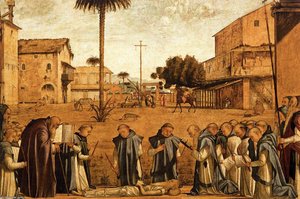
Scuola di San Giorgio degli Schiavoni, VeniceScuola di San Giorgio degli Schiavoni Venice 17 St George and the Dragon (detail), The Baptism of the Selenites (detail), Funeral of St Jerome
Pinacoteca di Brera, MilãoPinacoteca di Brera Milão 6 The Marriage of the Virgin, Disputation of St Stephen (detail), Disputation of St Stephen (detail)
Palácio Ducal, VenezaPalácio Ducal Veneza 4 The Lion of St Mark (detail), The Lion of St Mark (detail), The Lion of St Mark (detail)
Gemäldegalerie, BerlimGemäldegalerie Berlim 4 Madonna and Child with two Saints, Resurrection of Christ, Coronation of Mary
Philbrook Museum of Art, TulsaPhilbrook Museum of Art Tulsa 3 São Pedro Martir, A Bishop Saint Blessing, Saint John the Baptist
Metropolitan Museum of Art, Nova YorkMetropolitan Museum of Art Nova York 3 Cristo com os Símbolos da Paixão Cercado por Anjos, The Meditation on the Passion
Staatliche Museen zu Berlin, BerlimStaatliche Museen zu Berlin Berlim 3 The Dead Christ, St Stephen is Consecrated Deacon (detail)

Vittore Carpaccio década a década: a obra original que define cada uma

Obras por década

Escolha uma década para ver a obra original que a define.

Perguntas de colecionadores sobre as pinturas de Vittore Carpaccio

Por qual obra Vittore Carpaccio é mais conhecido(a)?Revelar a resposta

Cristo com os Símbolos da Paixão Cercado por Anjos (1510), Metropolitan Museum of Art, Nova York. The Ten Thousand Martyrs on the Mount Ararat (1515) e Meeting of the Betrothed Couple (detail) (1495) vêm a seguir.

Qual era a idade de Vittore Carpaccio quando Cristo com os Símbolos da Paixão Cercado por Anjos foi feita?Revelar a resposta

45 anos: Cristo com os Símbolos da Paixão Cercado por Anjos data de 1510, e Vittore Carpaccio nasceu em 1465.

Quais são as dez pinturas mais famosas de Vittore Carpaccio?Revelar a resposta

Cristo com os Símbolos da Paixão Cercado por Anjos, The Ten Thousand Martyrs on the Mount Ararat, Meeting of the Betrothed Couple (detail), The Lion of St Mark (detail), The Lion of St Mark (detail), Lamentation of Christ, The Dead Christ, St George and the Dragon (detail), St George and the Dragon e Meeting of the Betrothed Couple (detail). O ranking acima apresenta o ano e o museu de cada uma.

Quantas pinturas Vittore Carpaccio deixou?Revelar a resposta

Nosso catálogo contém 201 obras de Vittore Carpaccio, datadas de 1485 a 1520.

Em quais museus estão expostas as obras-primas de Vittore Carpaccio?Revelar a resposta

Principalmente em Gallerie dell'Accademia di Venezia (Veneza), Scuola di San Giorgio degli Schiavoni (Venice) e Pinacoteca di Brera (Milão). A tabela de museus acima lista todos eles.

Em que anos Vittore Carpaccio pintou as suas obras mais famosas?Revelar a resposta

Em 1490s: 28 das 100 obras nesta página foram feitas então, sendo Meeting of the Betrothed Couple (detail) delas.

Quais são as primeiras e as últimas obras originais famosas de Vittore Carpaccio?Revelar a resposta

Nesta página, a mais antiga é Portrait of a lady (1485) e a mais recente é The Dead Christ (1520).

Quais temas Vittore Carpaccio escolheu com mais frequência?Revelar a resposta

Renaissance (21), Religious (17) e Narrative painting (13), entre as 100 obras nesta página.

Qual técnica Vittore Carpaccio mais utilizou?Revelar a resposta

Oil, para 18 das 100 obras nesta página.

A qual movimento artístico pertence Vittore Carpaccio?Revelar a resposta

Renascimento veneziano, a julgar pelos originais nesta página.

Quais obras de Vittore Carpaccio estão expostas no Gallerie dell'Accademia di Venezia?Revelar a resposta

The Ten Thousand Martyrs on the Mount Ararat, Meeting of the Betrothed Couple (detail) e Meeting of the Betrothed Couple (detail): o Gallerie dell'Accademia di Venezia, Veneza detém 24 das obras desta página.

Posso encomendar uma reprodução de uma pintura de Vittore Carpaccio?Revelar a resposta

Sim, como uma reprodução: a obra original permanece no seu museu, mas qualquer pintura desta página pode ser pintada à mão para você, feita sob encomenda uma a uma, a partir da própria página da pintura.

Vittore Carpaccio: vida e obra

Juventude e Formação Artística

Nascido em Veneza por volta de 1465, Vittore Carpaccio cresceu em uma cidade definida pelo seu comércio marítimo e por uma luz única e mutável. Como um jovem inserido na escola veneziana, ele buscou a orientação de Gentile Bellini. Este período de aprendizado foi uma fase formativa crucial, que moldou sua abordagem técnica e forneceu o alicerce necessário para o seu sucesso futuro como pintor.

A formação que Carpaccio recebeu sob a tutela de Bellini permitiu-lhe desenvolver um traço firme e um olhar atento aos detalhes específicos da vida veneziana. Ele aprendeu a navegar pelas complexidades da composição e da cor, elementos que eram essenciais para a época. Esta educação precoce ajudou-o a estabelecer-se dentro do competitivo cenário artístico da República, preparando o terreno para uma carreira dedicada a documentar tanto histórias sagradas quanto as realidades cotidianas de sua cidade natal.

Estilo Artístico e Influências

A abordagem de Carpaccio em relação à pintura permaneceu notavelmente conservadora, mesmo enquanto o mundo ao seu redor se transformava. Enquanto muitos de seus contemporâneos abraçavam as vastas tendências humanistas que redefiniram a arte do Renascimento italiano, ele frequentemente olhava em uma direção distinta. Sua obra carrega um senso de fantasia, recorrendo frequentemente ao espírito do romance medieval em vez dos ideais pastorais favorecidos pela geração seguinte de pintores. Essa preferência conferiu às suas cenas uma atmosfera única, algo que se sentia distinto dos gostos em evolução do continente veneziano.

Sua linguagem visual foi moldada por uma mistura específica de influências. Ele bebeu profundamente do estilo de Antonello da Messina e das tradições meticulosas da arte flamenga primitiva. Essa combinação permitiu-lhe desenvolver um domínio da perspectiva e uma precisão no detalhe arquitetônico que o diferenciava de outros artistas de sua época. Ele possuía uma maneira singular de situar seus temas dentro de ambientes altamente específicos e estruturados, utilizando a luz e a sombra para construir uma sensação de profundidade que parecia, ao mesmo tempo, terradamente real e de outro mundo.

Essa atenção ao detalhe é particularmente evidente em suas obras narrativas de grande escala, onde ele conseguia tecer histórias complexas na própria trama do cenário. Sua habilidade em renderizar as texturas dos tecidos e a geometria exata de um edifício ajudou a criar um senso de realismo que sustentava sua narrativa mais imaginativa. Ao focar nesses elementos precisos, ele construiu um mundo que parecia habitado, mesmo quando o tema da obra inclinava-se para o lendário ou o sagrado.

Obras Notáveis e Ciclos Narrativos

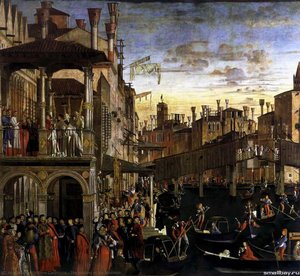
Vittore Carpaccio encontrou a sua mais sublime expressão através da arte de contar histórias em grande escala. O seu empreendimento mais célebre foi o ciclo de nove pinturas conhecido como A Lenda de Santa Úrsula, um projeto que iniciou em 1490. Estas obras permitiram-lhe construir mundos complexos, transportando o espectador para o âmago dos detalhes minuciosos da vida da santa. O artista possuía também um talento singular para capturar a alma da sua cidade natal; em O Milagre da Relíquia da Cruz na Ponte de Rialto, ele ilustrou Veneza no auge do seu poder, utilizando a paisagem urbana para ancorar as suas narrativas religiosas numa realidade tangível e reconhecível.

A sua versatilidade ao abordar temas distintos é evidente na diversidade dos seus encargos artísticos. Produziu o Retrato do Doge Leonardo Loredan, uma obra que reflete o seu prestígio como uma figura de relevo no Renascimento veneziano. Pintou também São Jorge e o Dragão, uma têmpera sobre painel de madeira que se encontra atualmente na Scuola di San Giorgio degli Schiavoni, em Veneza. Esta peça captura uma profunda sensação de drama através da sua composição magistral e da interação dinâmica entre as suas figuras.

Entre os seus legados mais significativos, destacam-se:

  • A Lenda de Santa Úrsula (iniciada em 1490)
  • O Milagre da Relíquia da Cruz na Ponte de Rialto
  • São Jorge e o Dragão
  • Retrato do Doge Leonardo Loredan

Carreira e Grandes Comissões

Os anos mais produtivos de Vittore Carpaccio desenrolaram-se entre 1490 e 1519, um período em que o artista se tornou uma presença constante na vibrante vida religiosa de Veneza. Através de diversas comissões eclesiásticas, ele encontrou o palco ideal para explorar narrativas complexas e envolventes. A sua arte parecia ganhar vida nas próprias ruas da cidade, capturando a essência e o espírito da República em vastas e detalhadas cenas urbanas. Um exemplo sublime desta mestria é o Milagre da Relíquia da Cruz na Ponte di Rialto, uma obra que ilustra Veneza no auge do seu orgulho cívico, fundindo o sagrado com a realidade palpável do quotidiano veneziano.

Com o desenrolar da sua carreira, a natureza do seu mecenato começou a transformar-se de forma subtil. Se os seus primeiros anos foram marcados por ciclos religiosos de grande escala e obras de caráter público, a sua produção após 1510 começou a inclinar-se para a esfera privada. Vittore Carpaccio passou a dedicar-se primordialmente a patronos venezianos individuais, criando peças que espelhavam os gostos pessoais da crescente classe mercantil da cidade. Esta transição marcou a sua evolução de um narrador épico e público, típico da sua juventude, para um artista de interações mais íntimas e sofisticadas com os seus colecionadores.

A sua produção de temática religiosa manteve-se constante durante a primeira década do século XVI, consolidando o seu legado através de encomendas notáveis, tais como:

  • São Tomás de Aquino Entronizado (1507)
  • A Apresentação de Cristo no Templo (1510)

Legado e Relevância Histórica

Vittore Carpaccio ocupa um lugar de destaque entre os primeiros mestres do Renascimento veneziano, um período de transformações profundas na arte italiana. Enquanto os seus contemporâneos se lançavam em direção às novas tendências humanistas, Carpaccio manteve-se, muitas vezes, ancorado a uma forma de ver mais tradicional. Por volta de 1510, aqueles que viviam e trabalhavam ao seu lado começaram a perceber o seu estilo como excessivamente conservador. Ele não perseguiu as correntes mutáveis da sua era, preferindo um método que olhava para trás, resgatando as ricas tradições narrativas e detalhadas do passado.

Essa firmeza de propósito fez com que o seu nome fosse, por vezes, eclipsado pela sombra de figuras monumentais como Giovanni Bellini ou Giorgione. Enquanto outros artistas evoluíam para uma linguagem visual distinta, Carpaccio continuou a construir os seus mundos através de um detalhe arquitetónico preciso e de um fascínio constante pelo exótico. A sua obra permanece como uma janela para um momento específico de Veneza, capturando o orgulho cívico da cidade e a sua ligação profunda com o Levante, através de uma lente que parecia cada vez mais antiquada para os seus pares. Ao falecer em 1526, deixou um legado que reflete uma devoção única, ainda que algo obstinada, ao seu ofício.

Entre as suas obras mais emblemáticas, destacam-se:

  • A Lenda de Santa Úrsula
  • O Milagre da Relíquia da Vera Cruz na Ponte di Rialto
  • São Jorge e o Dragão

Todas as 201 obras de Vittore Carpaccio →