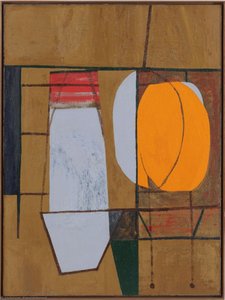
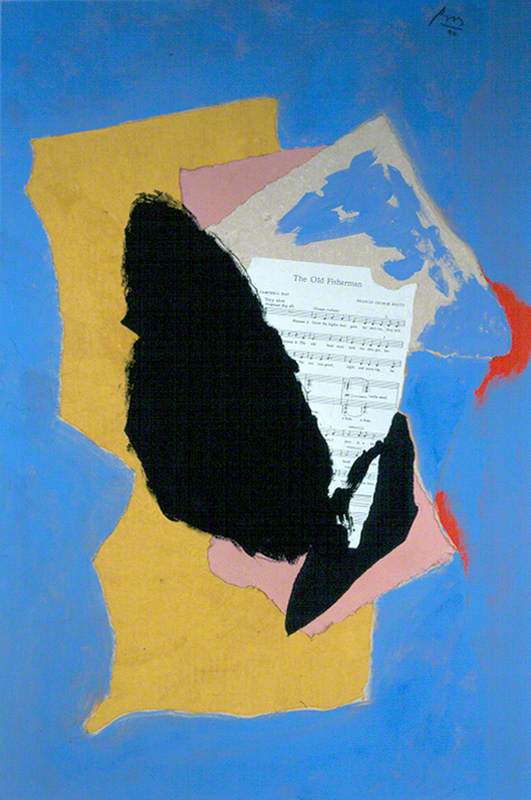
Retrato de Robert Motherwell

As 66 Pinturas Mais Famosas de Robert Motherwell, Cada Uma Única

Atualizado em Novembro 2026 · classificado pela nossa pontuação de popularidade (pesquisas, visitas e pedidos de cada obra) · 75 obras de Robert Motherwell em nosso catálogo

Em resumo

Iberia (1958) é a pintura de Robert Motherwell que mais atrai olhares; a obra original pertence ao Museu Guggenheim Bilbao, Bilbao. Depois disso, o olhar recai sobre Elegy to the Spanish Republic No. 110 (1971) e Mallarme's Swan (1944). Entre as 75 obras de Robert Motherwell em nosso catálogo, estas 66 são as mais famosas, cada uma uma original única apresentada com o seu ano, o seu museu e a razão pela qual perdura.

1915 – 1991, Aberdeen Abstract expressionism Mais obras: Bavarian State Painting Collections

As 10 principais pinturas de Robert Motherwell, sob o olhar da galeria

1
Iberia (1958) de Robert Motherwell

Iberia

1958 · Acrylic On Canvas · Museu Guggenheim Bilbao, Bilbao

Robert Motherwell's "Iberia," painted in 1958, isn’t merely a depiction of a landscape; it’s a visceral embodiment of sorrow, memory, and the enduring weight of history. Born from a pivotal journey to Spain during a period of profound political turmoil – the aftermath of the Spanish Civil War and the rise of Franco's dictatorship – the painting transcends simple representation, becoming instead a deeply personal meditation on loss and resilience.…

2
Elegy to the Spanish Republic No. 110 (1971) de Robert Motherwell

Elegy to the Spanish Republic No. 110

1971 · Oil On Canvas · Solomon R. Guggenheim Museum, Nova York

Robert Motherwell's “Elegy to the Spanish Republic No. 110,” painted in 1971, isn’t merely a visual experience; it’s an immersion into grief, memory, and the enduring weight of political trauma. This monumental work, rendered in stark black acrylic on canvas, transcends simple representation, becoming instead a potent symbol of loss and resilience—a testament to the artist's profound engagement with the Spanish Civil War and its aftermath. More than just a…

3
Mallarme's Swan (1944) de Robert Motherwell

Mallarme's Swan

1944 · Acrylic On Canvas · Cleveland Museum of Art, Cleveland

Robert Motherwell’s “Mallarme's Swan,” painted in 1944, isn’t merely a visual composition; it’s an embodiment of profound emotion rendered through the deliberate chaos of Abstract Expressionism. This large-scale work, currently residing within the esteemed collection of The Cleveland Museum of Art, offers a glimpse into the artist’s deeply personal engagement with literature and his exploration of themes surrounding loss, memory, and the ephemeral nature of existence. The painting immediately commands…

4
In Black and White No. - (2) de Robert Motherwell

In Black and White No. - (2)

Oil On Canvas

In Black and White No. - (2) is an abstract composition created by the artist Robert Motherwell. Born in Aberdeen, United States, in 1915, Motherwell developed a visual language centered on the interaction of form and void. This specific work utilizes a restricted palette of black and white to establish its presence on the canvas. The artist's approach focuses on the physical application of pigment to create a non-representational image.

6
O Ouro Fiel de Robert Motherwell

O Ouro Fiel

Acrílico sobre tela · Chrysler Museum of Art, Norfolk

Robert Motherwell e O Cálice Dourado: Uma Jornada pela Filosofia da Dor e da Beleza O pintor americano Robert Motherwell (1915-1991) permanece como uma figura essencial na história da arte moderna, especialmente no movimento Expressionismo Abstrato. Sua obra transcende a mera estética visual, oferecendo uma profunda reflexão sobre temas existenciais que continuam relevantes até hoje. Este artigo explora o significado de "O Cálice Dourado" (The Golden Fleece), uma pintura monumental…

Pinturas famosas de Robert Motherwell, números 11 a 66

11A la Pintura No. 15 (1976) de Robert MotherwellA la Pintura No. 151976 · Bavarian State Painting Collections 12Study for 'Reconciliation Elegy' (1977) de Robert MotherwellStudy for 'Reconciliation Elegy'1977 13Blue Elegy (1987) de Robert MotherwellBlue Elegy1987 · National Gallery of Australia 14Open No. 122 in Scarlet and Blue (1969) de Robert MotherwellOpen No. 122 in Scarlet and Blue1969 · Tate Modern 15The Homely Protestant (1948) de Robert MotherwellThe Homely Protestant1948 16The Mexican Sketchbook (1941) de Robert MotherwellThe Mexican Sketchbook1941 17Pancho Villa, Dead and Alive (1943) de Robert MotherwellPancho Villa, Dead and Alive1943 18The Red Skirt (1947) de Robert MotherwellThe Red Skirt1947 · Whitney Museum of American Art 19The Homely Protestant (1948) de Robert MotherwellThe Homely Protestant1948 · Metropolitan Museum of Art 20Collage No. 2 (1945) de Robert MotherwellCollage No. 21945 21Ulysses (1947) de Robert MotherwellUlysses1947 22Figure in Black (Girl with Stripes) (1947) de Robert MotherwellFigure in Black (Girl with Stripes)1947 23At Five in the Afternoon (1950) de Robert MotherwellAt Five in the Afternoon1950 · Fine Arts Museums of San Francisco 24La Danse II (1952) de Robert MotherwellLa Danse II1952 25Iberia No. 20 (1958) de Robert MotherwellIberia No. 201958 · Bavarian State Painting Collections 26Greek Collage (1959) de Robert MotherwellGreek Collage1959 · Bavarian State Painting Collections 27Mail Figure (1959) de Robert MotherwellMail Figure1959 · The Phillips Collection 28The Figure 4 on an Elegy (1960) de Robert MotherwellThe Figure 4 on an Elegy1960 29Monster (for Charles Ives) (1959) de Robert MotherwellMonster (for Charles Ives)1959 30In Black and White, No. 1 (1966) de Robert MotherwellIn Black and White, No. 11966 · Dallas Museum of Art 31From the Lyric Suite (1965) de Robert MotherwellFrom the Lyric Suite1965 32Beside the Sea No. 64 (1963) de Robert MotherwellBeside the Sea No. 641963 33The Scarlet Ring (1963) de Robert MotherwellThe Scarlet Ring1963 34Open No. 121 (Bolton Landing Elegy) (1969) de Robert MotherwellOpen No. 121 (Bolton Landing Elegy)1969 35Beside the Sea No. 45 (1967) de Robert MotherwellBeside the Sea No. 451967 · Musée national des beaux-arts du Québec 36Open No. 19: In Cerulean Blue with Charcoal Line (1968) de Robert MotherwellOpen No. 19: In Cerulean Blue with Charcoal Line1968 37Open No. 37: In Orange with Charcoal Line (1968) de Robert MotherwellOpen No. 37: In Orange with Charcoal Line1968 38Preparatory drawing from In Memory of My Feelings (1967) de Robert MotherwellPreparatory drawing from In Memory of My Feelings1967 39Open No. 35: In Raw Umber on Sized Canvas (1968) de Robert MotherwellOpen No. 35: In Raw Umber on Sized Canvas1968 40In Plato's Cave No. 1 (1972) de Robert MotherwellIn Plato's Cave No. 11972 41In Plato's Cave VI (1974) de Robert MotherwellIn Plato's Cave VI1974 · Bavarian State Painting Collections 42Black in Hiding (1976) de Robert MotherwellBlack in Hiding1976 · Pennsylvania Academy of Fine Arts 43Medusa 7 (1977) de Robert MotherwellMedusa 71977 44Medusa 4 (1977) de Robert MotherwellMedusa 41977 45Elegy to the Spanish Republic 132 (1975) de Robert MotherwellElegy to the Spanish Republic 1321975 46Spanish Wall 1 (1979) de Robert MotherwellSpanish Wall 11979 47Night Flight (1981) de Robert MotherwellNight Flight1981 · Bavarian State Painting Collections 48Stephen's Gate (1981) de Robert MotherwellStephen's Gate1981 · Bavarian State Painting Collections 49Yellow Music (1984) de Robert MotherwellYellow Music1984 50Scottish Ballad (1990) de Robert MotherwellScottish Ballad1990 51Composition (1950) de Robert MotherwellComposition1950 · Museu de Arte Moderna do Rio de Janeiro 52The Voyage: Ten Years After (1961) de Robert MotherwellThe Voyage: Ten Years After1961 · Museu Guggenheim Bilbao 53Elegy to the Spanish Republic No. 70 (1961) de Robert MotherwellElegy to the Spanish Republic No. 701961 54Reconciliation Elegy (1978) de Robert MotherwellReconciliation Elegy1978 55OCHRE WITH BLACK WINDOW de Robert MotherwellOCHRE WITH BLACK WINDOWCincinnati Art Museum 56Untitled from Madrid Suite de Robert MotherwellUntitled from Madrid Suite 57New england elegy de Robert MotherwellNew england elegy 58Open number - (17) de Robert MotherwellOpen number - (17) 59Western air de Robert MotherwellWestern air 60Elegy to the Spanish Republic, - (108) de Robert MotherwellElegy to the Spanish Republic, - (108) 61Elegy to the Spanish Republic, - (54) de Robert MotherwellElegy to the Spanish Republic, - (54) 62Untitled de Robert MotherwellUntitled 63The little spanish prison de Robert MotherwellThe little spanish prison 64Personage, with Yellow Ochre and White de Robert MotherwellPersonage, with Yellow Ochre and White 65Open Number 24 in Variations of Orange de Robert MotherwellOpen Number 24 in Variations of Orange 66Je t'aime No. IV (1956) de Robert MotherwellJe t'aime No. IV1956 · Bavarian State Painting Collections

Os temas que cativaram o olhar de Robert Motherwell

Os quatro temas que mais se repetem nestas obras originais, cada um com o seu melhor exemplo.

Os museus que guardam os originais de Robert Motherwell

Os 8 museus que detêm a maioria das pinturas desta página.

Museus Cidade Obras de Robert Motherwell Pinturas desta lista
Bavarian State Painting Collections, MuniqueBavarian State Painting Collections Munique 9 Bullseye, The Juley Collage, A la Pintura No. 15
Museu Guggenheim Bilbao, BilbaoMuseu Guggenheim Bilbao Bilbao 2 Iberia, The Voyage: Ten Years After
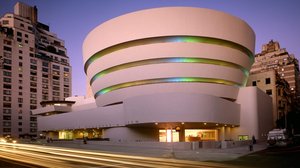
Solomon R. Guggenheim Museum, Nova YorkSolomon R. Guggenheim Museum Nova York 1 Elegy to the Spanish Republic No. 110
Cleveland Museum of Art, ClevelandCleveland Museum of Art Cleveland 1 Mallarme's Swan
Chrysler Museum of Art, NorfolkChrysler Museum of Art Norfolk 1 O Ouro Fiel
Museu de Israel, JerusalémMuseu de Israel Jerusalém 1 Guillotine
National Gallery of Australia, CanberraNational Gallery of Australia Canberra 1 Blue Elegy
Tate Modern, LondresTate Modern Londres 1 Open No. 122 in Scarlet and Blue

Robert Motherwell ao longo das décadas: uma obra original única para cada uma

Obras por década

Escolha uma década para ver a obra original que a define.

Pinturas de Robert Motherwell: perguntas para a galeria

Qual é a obra mais famosa de Robert Motherwell?Revelar a resposta

Iberia (1958), Museu Guggenheim Bilbao, Bilbao. Elegy to the Spanish Republic No. 110 (1971) e Mallarme's Swan (1944) vêm a seguir.

Com que idade Robert Motherwell criou Iberia?Revelar a resposta

43 anos: Iberia data de 1958, e Robert Motherwell nasceu em 1915.

Quais são as dez pinturas mais famosas de Robert Motherwell?Revelar a resposta

Iberia, Elegy to the Spanish Republic No. 110, Mallarme's Swan, In Black and White No. - (2), Wall Painting III, O Ouro Fiel, Personnage, Guillotine, Bullseye e The Juley Collage. O ranking acima apresenta o ano e o museu de cada uma.

Quantas obras de Robert Motherwell são conhecidas?Revelar a resposta

Nosso catálogo contém 75 obras de Robert Motherwell, datadas de 1941 a 1990.

Onde se pode ver os originais mais famosos de Robert Motherwell?Revelar a resposta

Principalmente em Bavarian State Painting Collections (Munique), Museu Guggenheim Bilbao (Bilbao) e Solomon R. Guggenheim Museum (Nova York). A tabela de museus acima lista todos eles.

Em que período Robert Motherwell criou as suas pinturas mais conhecidas?Revelar a resposta

Em 1960s: 15 das 66 obras nesta página foram feitas então, sendo Guillotine delas.

Qual pintura famosa de Robert Motherwell é a mais antiga e qual é a mais recente?Revelar a resposta

Nesta página, a mais antiga é The Mexican Sketchbook (1941) e a mais recente é Scottish Ballad (1990).

Quais temas Robert Motherwell preferia?Revelar a resposta

Grief (4), Black and white (3) e Figures (3), entre as 66 obras nesta página.

Com quais materiais Robert Motherwell mais pintou?Revelar a resposta

Acrylic On Canvas, para 4 das 66 obras nesta página.

A qual movimento pertence a obra de Robert Motherwell?Revelar a resposta

Abstract expressionism, a julgar pelos originais nesta página.

Quais originais de Robert Motherwell posso ver no Bavarian State Painting Collections?Revelar a resposta

Bullseye, The Juley Collage e A la Pintura No. 15: o Bavarian State Painting Collections, Munique detém 9 das obras desta página.

Robert Motherwell: um retrato do artista

Robert Motherwell: Um Legado de Luto e Visão Audaz

Robert Motherwell (24 de janeiro de 1915 – 16 de julho de 1991) posiciona-se como uma das figuras mais influentes do Expressionismo Abstrato americano, um movimento que alterou irrevogavelmente o curso da arte do século XX. Nascido em Aberdeen, Washington — uma cidade imersa na herança escocesa — a vida precoce de Motherwell foi marcada pela asma e por uma conexão profunda com a paisagem do Noroeste do Pacífico, moldando sua sensibilidade artística desde o seu início. Seu pai, Robert Burns Motherlos II, um banqueiro com aspirações na Califórnia, instilou nele uma determinação que o impulsionaria através de suas buscas acadêmicas e, por fim, definiria sua trajetória criativa.
  • Educação Inicial e Influências: Os anos formativos de Motherwell foram passados na Universidade Stanford, onde ele mergulhou na filosofia ao lado dos colegas modernistas Arthur Oncken Lovejoy e David Wite Prall. Essa base intelectual impactou profundamente sua visão artística, fomentando uma fascinação pela literatura — particularmente Mallarmé, Joyce, Poe e Paz — que permearia toda a sua obra.
  • O Encontro Surrealista: Um momento crucial ocorreu em 1940, quando Motherwell mudou-se para a cidade de Nova York e matriculou-se na Universidade Columbia sob a orientação de Meyer Shapiro. Shapiro o introduziu ao vibrante mundo dos surrealistas parisienses – Max Ernst, André Breton, Wolfgang Paalen – e, crucialmente, o encorajou a abraçar o desenho “automático” como um método para acessar o subconsciente.

A Série Elegias e a Inovação Formal

O grande salto artístico de Motherwell ocorreu em 1949, com o início de sua icônica série Elegias à República Espanhola — um empreendimento monumental que compreende mais de cem pinturas a óleo e inúmeros esboços. Esta série, nascida de um profundo engajamento com a turbulência política que cercava a Espanha franquista, representa a contribuição mais duradoura de Motherwell para a história da arte. As Elegias são caracterizadas por sua simplicidade austera: manchas densas de tinta preta sobre papel branco, meticulosamente elaboradas para transmitir uma profunda ressonância emocional. Estas telas encarnam seu domínio da inovação formal — uma rejeição deliberada da perspectiva tradicional e um compromisso em explorar o potencial expressivo do gesto e da textura.
  • Técnica e Composição: A técnica de Motherwell envolvia a sobreposição de manchas de tinta no papel, criando superfícies texturizadas que pareciam pulsar com uma energia latente. As composições resultantes são deliberadamente ambíguas, convidando os espectadores a contemplar temas de perda, luto e contemplação existencial.
  • Influência sobre Contemporâneos: Seu trabalho exerceu uma influência considerável sobre outros expressionistas abstratos, como Helen Frankenthaler e Jackson Pollock, fomentando um diálogo sobre o papel da emoção na expressão artística.

Além das Elegias: Explorando a Paisagem e a Colagem

Embora a série Elegias tenha consolidado a reputação de Motherwell como um mestre da abstração emotiva, sua exploração artística estendeu-se para além deste projeto singular. Ele revisitou consistentemente temas de paisagem — particularmente as colinas californianas — buscando inspiração nas vistas expansivas que nutriram sua imaginação infantil. Além disso, experimentou técnicas de colagem, incorporando materiais encontrados em suas telas para criar texturas em camadas e narrativas visuais. Seu caderno de esboços do México — um esforço colaborativo com Roberto Matta — demonstra uma mudança em direção a cadências gráficas mais espontâneas, refletindo a influência de Paalen em seu processo artístico.
  • Caderno de Esboços Mexicano: O caderno captura a essência do ambiente de estúdio de Paalen e reflete a abordagem evolutiva de Motherwell em relação ao desenho, afastando-se da observação analítica em direção ao gesto intuitivo.
  • Colaborações e Diálogo Artístico: Suas colaborações com artistas como Matta e Paalen promoveram um diálogo artístico dinâmico que enriqueceu sua obra e ampliou o escopo do Expressionismo Abstrato.

Legado e Significância Histórica

O legado de Robert Motherwell transcende a mera inovação estilística; ele articulou uma postura filosófica profunda sobre a capacidade da arte de confrontar a mortalidade e lidar com realidades emocionais complexas. Sua dedicação inabalável à exploração desses temas — aliada ao seu domínio magistral da linguagem formal — estabeleceu-o como uma das vozes mais proeminentes de sua geração, garantindo seu lugar entre os titãs da arte do século XX. Ele faleceu em Provincetown, Massachusetts, em 1991, deixando para trás um corpo de trabalho que continua a inspirar artistas e estudiosos, assegurando sua influência duradoura na história da arte moderna.