Retrato de Richard Gerstl

As 68 Pinturas Mais Famosas de Richard Gerstl, Cada Uma Única

Atualizado em Novembro 2026 · classificado pela nossa pontuação de popularidade (pesquisas, visitas e pedidos de cada obra) · 68 obras de Richard Gerstl em nosso catálogo

Em resumo

Self-Portrait Laughing (1907) é a pintura de Richard Gerstl que mais atrai olhares. Depois disso, o olhar recai sobre Grinzing (1906) e Mathilde Schoenberg in Garden (1908). Entre as 68 obras de Richard Gerstl em nosso catálogo, estas 68 são as mais famosas, cada uma uma original única apresentada com o seu ano, o seu museu e a razão pela qual perdura.

1883 – 1908, Viena Expressionism Mais obras: Leopold Museum

As 10 principais pinturas de Richard Gerstl, sob o olhar da galeria

1
Self-Portrait Laughing (1907) de Richard Gerstl

Self-Portrait Laughing

1907 · Oil On Canvas

The canvas holds a moment of intense, unbridled emotion in Richard Gerstl's 1907 work, Self-Portrait Laughing. This oil on canvas captures the artist himself, presenting a face that seems to break free from the constraints of traditional likeness. It is a piece that belongs firmly to the Expressionism movement, where the internal state of the individual takes precedence over the mere imitation of the physical world. The man stares out,…

2
Grinzing (1906) de Richard Gerstl

Grinzing

1906 · Oil

The painting presents a rural landscape characterized by rolling hills covered in dense green vegetation. In the foreground, trees bearing white blossoms suggest a springtime setting. A dirt road winds through the lower portion of the composition, leading the eye toward a small village situated in a valley. This settlement contains several structures, including a building with a prominent steeple. The color palette is dominated by various shades of green…

3
Mathilde Schoenberg in Garden (1908) de Richard Gerstl

Mathilde Schoenberg in Garden

1908 · Oil On Canvas

The scene unfolds in Mathilde Schoenberg in Garden, a work that captures a fleeting moment of presence within a lush, sun-drenched setting. Painted by Richard Gerstl, the image places Mathilde Schoenberg at the center of a quiet, outdoor world. She exists here in a moment of stillness, her figure turned away from the viewer as she stands near a bright yellow wall. The air feels heavy with the weight of…

4
Small Self-Portrait (1906) de Richard Gerstl

Small Self-Portrait

1906 · Oil On Canvas · Kunsthaus Zug, Zug

Small Self-Portrait by Richard Gerstl, created about 1906, presents a close-up study of a single male figure. The subject is positioned slightly off-center, focusing the viewer's attention on the head and upper shoulders. He looks directly toward the viewer, his gaze meeting the observer with a melancholic and introspective expression.

5
Self-Portrait with Palette (1907) de Richard Gerstl

Self-Portrait with Palette

1907 · Oil On Canvas

Created in 1907, this portrait emerged during a period of significant shift in Austrian art. The artist, Richard Gerstl, moved away from the academic traditions of the Vienna Academy of Fine Arts, opting instead for a raw and psychological approach to portraiture. The composition conveys a somber and melancholic tone. The combination of the dark, muted tones and the heavy, agitated texture of the paint contributes to an introspective atmosphere.…

6
Self-Portrait (1907) de Richard Gerstl

Self-Portrait

1907 · Charcoal

The artwork titled Self-Portrait is a work by the artist Richard Gerstl. Created in 1907, this piece presents a close-up view of the artist's own face. The subject matter is a self-portrait, focusing on the head and shoulders of the man. The composition is cropped tightly, centering the gaze of the subject within the frame.

7
Self-Portrait (1908) de Richard Gerstl

Self-Portrait

1908 · Charcoal

Self-Portrait is a work by the Austrian artist Richard Gerstl. Created in 1908, this piece represents a moment in the final year of the artist's life. Gerstl was born in Vienna, Austria, in 1883 and remained in Vienna until his death in 1908.

8
Self-Portrait (1907) de Richard Gerstl

Self-Portrait

1907 · Charcoal

In this 1907 self-portrait, we are invited into a space of profound psychological immediacy. The work is a monochromatic study, rendered in what appears to be charcoal or graphite on paper, where the artist confronts the viewer through a tightly cropped, intense gaze. There is a certain agitation in the way the face is constructed; rather than smooth transitions of light and shadow, we see a dense, chaotic layering of…

9
Self-Portrait (1908) de Richard Gerstl

Self-Portrait

1908 · Charcoal

The Self-Portrait by Richard Gerstl captures a moment of intense, singular focus. This work, dated about 1908, presents a close-up study of the artist's own features. The subject's gaze is fixed and heavy, pressing against the surface of the paper. It is a quiet confrontation between the creator and the charcoal.

10
Self-Portrait (1907) de Richard Gerstl

Self-Portrait

1907 · Charcoal

is a work by the Austrian painter Richard Gerstl. Created in 1907, the piece captures the artist during a period of intense stylistic development in Vienna, Austria. Gerstl, born in Vienna in 1883, was a central figure in the early development of Expressionism, a movement that prioritized the subjective experience of the individual over traditional representation.

Pinturas famosas de Richard Gerstl, números 11 a 68

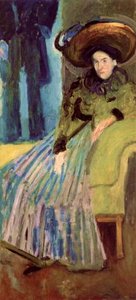
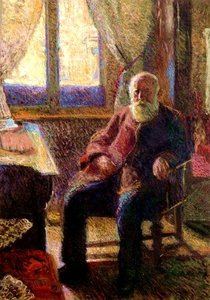
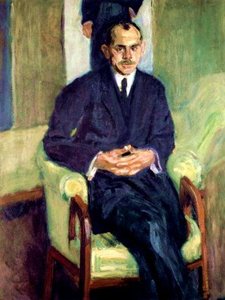
11Fragment of a Self-Portrait (1908) de Richard GerstlFragment of a Self-Portrait1908 12Self-Portrait (1908) de Richard GerstlSelf-Portrait1908 13Alexander von Zemlinsky (1908) de Richard GerstlAlexander von Zemlinsky1908 · Kunsthaus Zug 14Self-Portrait with Palette (1907) de Richard GerstlSelf-Portrait with Palette1907 15Seated Woman in green dress (1908) de Richard GerstlSeated Woman in green dress1908 16Portrait of a Gentleman (1907) de Richard GerstlPortrait of a Gentleman1907 17Portrait of Mother, Maria Gerstl, unfinished (1908) de Richard GerstlPortrait of Mother, Maria Gerstl, unfinished1908 · Kunsthaus Zug 18Small street (Nußdorferstraße) (1908) de Richard GerstlSmall street (Nußdorferstraße)1908 19Anna Baumer (1902) de Richard GerstlAnna Baumer1902 20Fragment of a smiling self-portrait at full length (1904) de Richard GerstlFragment of a smiling self-portrait at full length1904 21The Fey Sisters (Karoline ^ Pauline) (1905) de Richard GerstlThe Fey Sisters (Karoline ^ Pauline)1905 22Waldemar Unger I (1903) de Richard GerstlWaldemar Unger I1903 23Fragment of a smiling self-portrait at full length, detail (1904) de Richard GerstlFragment of a smiling self-portrait at full length, detail1904 24Self-portrait in front of blue background (1905) de Richard GerstlSelf-portrait in front of blue background1905 · Leopold Museum 25Waldemar Unger II (1903) de Richard GerstlWaldemar Unger II1903 26Carl Zentzytzki (1902) de Richard GerstlCarl Zentzytzki1902 27Lakeside Road near Gmunden (1907) de Richard GerstlLakeside Road near Gmunden1907 · Leopold Museum 28Flower Meadow with Trees (1907) de Richard GerstlFlower Meadow with Trees1907 · Kunsthaus Zug 29Room (1908) de Richard GerstlRoom1908 30Mathilde in the studio (1908) de Richard GerstlMathilde in the studio1908 31Liechtenstein Palace (1907) de Richard GerstlLiechtenstein Palace1907 32Ernst Diez I (1906) de Richard GerstlErnst Diez I1906 33Tree on Lake Traun (1907) de Richard GerstlTree on Lake Traun1907 · Kunsthaus Zug 34Seated Female Nude (1908) de Richard GerstlSeated Female Nude1908 35View of the park (1908) de Richard GerstlView of the park1908 · Leopold Museum 36Portrait of Arnold Schonberg (1906) de Richard GerstlPortrait of Arnold Schonberg1906 37Tree with Ladder (1907) de Richard GerstlTree with Ladder1907 · Kunsthaus Zug 38Smaragda Berg (1907) de Richard GerstlSmaragda Berg1907 39Portrait of Henryka Cohn (1908) de Richard GerstlPortrait of Henryka Cohn1908 · Leopold Museum 40Fruit Tree (1907) de Richard GerstlFruit Tree1907 41Portrait of a Young Woman with Feather Hat (1906) de Richard GerstlPortrait of a Young Woman with Feather Hat1906 42Mathilde Schoenberg II (1907) de Richard GerstlMathilde Schoenberg II1907 43The road (theme from Nussdorf) (1907) de Richard GerstlThe road (theme from Nussdorf)1907 44Small Traunsee Landscape (1907) de Richard GerstlSmall Traunsee Landscape1907 45Meadow with Houses in Background (1907) de Richard GerstlMeadow with Houses in Background1907 46Half-length portrait of Mathilde Schoenberg (1908) de Richard GerstlHalf-length portrait of Mathilde Schoenberg1908 47Woman with Feathered Hat (1907) de Richard GerstlWoman with Feathered Hat1907 48Emile Gerstl (father) (1906) de Richard GerstlEmile Gerstl (father)1906 · Leopold Museum 49Self-portrait with Blue Spotted Background (1907) de Richard GerstlSelf-portrait with Blue Spotted Background1907 50Tree in the garden (1907) de Richard GerstlTree in the garden1907 51Mother and Daughter (1906) de Richard GerstlMother and Daughter1906 52On the Danube Canal (1907) de Richard GerstlOn the Danube Canal1907 · Leopold Museum 53Portrait of a seated man (1908) de Richard GerstlPortrait of a seated man1908 54Study of tree (1907) de Richard GerstlStudy of tree1907 · Leopold Museum 55Orchard (1907) de Richard GerstlOrchard1907 56Double Portrait (green background) (1908) de Richard GerstlDouble Portrait (green background)1908 57Portrait of a Lieutenant (Alois Gerstl) (1906) de Richard GerstlPortrait of a Lieutenant (Alois Gerstl)1906 · Leopold Museum 58Double portrait of Matilda and Gertrude Schonberg (1906) de Richard GerstlDouble portrait of Matilda and Gertrude Schonberg1906 59Nude in Garden (1908) de Richard GerstlNude in Garden1908 60Railway to the Kahlenberg (1907) de Richard GerstlRailway to the Kahlenberg1907 61Portrait of a gentleman (green background) (1908) de Richard GerstlPortrait of a gentleman (green background)1908 62Landscape study (1907) de Richard GerstlLandscape study1907 63Group portrait with Schönberg (1908) de Richard GerstlGroup portrait with Schönberg1908 · Kunsthaus Zug 64Flowering Meadow with Trees (1907) de Richard GerstlFlowering Meadow with Trees1907 65Sunny meadow with fruit trees (1908) de Richard GerstlSunny meadow with fruit trees1908 · Leopold Museum 66Lake Traunsee with the Schlafende Griechin mountain (1907) de Richard GerstlLake Traunsee with the Schlafende Griechin mountain1907 · Leopold Museum 67Self Portrait (Nude in a full figure) de Richard GerstlSelf Portrait (Nude in a full figure)Leopold Museum 68Schonberg Family (1908) de Richard GerstlSchonberg Family1908

Pinturas famosas de Richard Gerstl, período por período

Os temas que cativaram o olhar de Richard Gerstl

Os quatro temas que mais se repetem nestas obras originais, cada um com o seu melhor exemplo.

Os museus que guardam os originais de Richard Gerstl

Os 2 museus que detêm a maioria das pinturas desta página.

Museus Cidade Obras de Richard Gerstl Pinturas desta lista
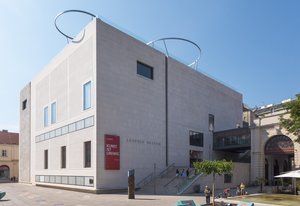
Leopold Museum, VienaLeopold Museum Viena 11 Self-portrait in front of blue background, Lakeside Road near Gmunden, View of the park
Kunsthaus Zug, ZugKunsthaus Zug Zug 7 Small Self-Portrait, Alexander von Zemlinsky, Portrait of Mother, Maria Gerstl, unfinished

Richard Gerstl ao longo dos anos: os originais únicos de cada um

Entre 1902 e 1908, totalizando 7 anos, Richard Gerstl criou cada original datado aqui exibido: um curto período, ano após ano.

Obras por ano

Escolha um ano para ver as obras originais.

Pinturas de Richard Gerstl: perguntas para a galeria

Qual é a obra mais famosa de Richard Gerstl?Revelar a resposta

Self-Portrait Laughing (1907). Grinzing (1906) e Mathilde Schoenberg in Garden (1908) vêm a seguir.

Com que idade Richard Gerstl criou Self-Portrait Laughing?Revelar a resposta

24 anos: Self-Portrait Laughing data de 1907, e Richard Gerstl nasceu em 1883.

Quais são as dez pinturas mais famosas de Richard Gerstl?Revelar a resposta

Self-Portrait Laughing, Grinzing, Mathilde Schoenberg in Garden, Small Self-Portrait, Self-Portrait with Palette, Self-Portrait, Self-Portrait, Self-Portrait, Self-Portrait e Self-Portrait. O ranking acima apresenta o ano e o museu de cada uma.

Quantas obras de Richard Gerstl são conhecidas?Revelar a resposta

Nosso catálogo contém 68 obras de Richard Gerstl, datadas de 1902 a 1908.

Onde se pode ver os originais mais famosos de Richard Gerstl?Revelar a resposta

Principalmente em Leopold Museum (Viena) e Kunsthaus Zug (Zug). A tabela de museus acima lista todos eles.

Em que período Richard Gerstl criou as suas pinturas mais conhecidas?Revelar a resposta

Em 1907: 28 das 68 obras nesta página foram feitas então, sendo Self-Portrait Laughing delas.

Qual pintura famosa de Richard Gerstl é a mais antiga e qual é a mais recente?Revelar a resposta

Nesta página, a mais antiga é Anna Baumer (1902) e a mais recente é Mathilde Schoenberg in Garden (1908).

Quais temas Richard Gerstl preferia?Revelar a resposta

Portraits (14), Man (11) e Forests (9), entre as 68 obras nesta página.

Com quais materiais Richard Gerstl mais pintou?Revelar a resposta

Oil On Canvas, para 10 das 68 obras nesta página.

A qual movimento pertence a obra de Richard Gerstl?Revelar a resposta

Expressionism, a julgar pelos originais nesta página.

Quais originais de Richard Gerstl posso ver no Leopold Museum?Revelar a resposta

Self-portrait in front of blue background, Lakeside Road near Gmunden e View of the park: o Leopold Museum, Viena detém 11 das obras desta página.

Richard Gerstl: um retrato do artista

Richard Gerstl: Um Pioneiro Trágico do Expressionismo

  • Nascimento: Viena, Áustria (1883)
  • Falecimento: Viena, Áustria (1908)

Richard Gerstl foi um pintor e desenhista austríaco cuja carreira, embora breve e intensa, colocou-o na vanguarda do início do Expressionismo. Apesar de ter alcançado pouco reconhecimento durante a sua vida, é hoje considerado uma figura fundamental na arte moderna vienense, reconhecido pelos seus retratos psicologicamente profundos e por paisagens que anteciparam os desenvolvimentos posteriores do Expressionismo Alemão. A sua vida foi tragicamente interrompida pelo suicídio após um caso escandaloso, um evento que impactou profundamente o seu contemporâneo Arnold Schoenberg.

Juventude e Desenvolvimento Artístico

Nascido no seio de uma próspera família de mercadores judeus, a vida de Gerstl tomou um rumo inesperado quando declarou a sua intenção de se tornar artista. Esta decisão foi recebida com desaprovação pelo seu pai, gerando uma certa tensão familiar. Após enfrentar dificuldades no tradicional Piaristengymnasium de Viena e ser expulso por questões disciplinares, Gerstl recorreu a tutores particulares enquanto perseguia as suas ambições artísticas. Em 1898, aos quinze anos, ingressou na Academia de Belas Artes de Viena sob a tutela do exigente Christian Griepenkerl. Rapidamente, Gerstl sentiu-se desiludido com o estilo académico e com as tendências predominantes da Secessão Vienense, provocando, de forma célebre, uma dura repreensão por parte de Griepenkerl.

Influências Artísticas e Estilo

Após a sua saída da Academia, Gerstl embarcou num período de estudo autodidata. Os verões passados sob a orientação de Simon Hollósy em Nagybánya expuseram-no a abordagens artísticas mais liberais. No entanto, novos confrontos com a autoridade, incluindo a recusa em participar numa procissão imperial, levaram também à sua expulsão do estúdio de Hollósy. O estilo de Gerstl caracterizava-se por uma intensidade crua e uma profundidade psicológica que o diferenciavam dos seus pares. Ele rejeitou a estética decorativa da Secessão, optando, em vez disso, por cores audazes, formas distorcidas e pinceladas expressivas. Os seus retratos, em particular, revelam uma compreensão aguçada da psicologia humana, capturando não apenas a semelhança física, mas também os estados emocionais subjacentes. Embora se possam ver influências de mestres anteriores, Gerstl desenvolveu um estilo unicamente pessoal que prefigurou o foco do Expressionismo na experiência subjetiva.

Relações com Schoenberg e o Fim Trágico

Por volta de 1907, Gerstl aproximou-se dos compositores Arnold Schoenberg e Alexander von Zemlinsky, que viviam no mesmo edifício. Desenvolveu-se uma amizade próxima entre Gerstl e Schoenberg, havendo relatos de que Gerstl instruía o compositor em arte. Este período viu Gerstl produzir uma série de retratos de Schoenberg, da sua família e de amigos, incluindo várias representações marcantes da esposa de Schoenberg, Mathilde. Um caso apaixonado sucedeu-se entre Gerlest e Mathilde, culminando na partida dela de Schoenberg no verão de 1908. Devastado por esta perda e enfrentando o isolamento e a falta de reconhecimento artístico, Gerstl destruiu a maioria dos seus documentos pessoais e obras de arte num ato de desespero. Posteriormente, enforcou-se diante de um espelho, infligindo também uma ferida de arma branca em si mesmo.

Legado e Significado Histórico

O suicídio de Gerstl teve um impacto profundo em Schoenberg, inspirando o seu “drama musical”, Die glückliche Hand (A Mão Feliz). Durante muitos anos após a sua morte, a obra de Gerstl permaneceu amplamente desconhecida. Foi apenas entre 1930 e 1931 que o marchand de arte Otto Kallir organizou uma exposição póstuma das suas pinturas na Neue Galerie, em Viena. Apesar dos desafios impostos pela crescente presença Nazi na Áustria, a reputação de Gerstl cresceu gradualmente, e a sua importância como precursor do Expressionismo tornou-se cada vez mais reconhecida. Hoje, aproximadamente sessenta e seis pinturas e oito desenhos são atribuídos a ele. A sua obra é agora celebrada pela abordagem inovadora ao retrato e à pintura de paisagem, e a sua vida trágica continua a fascinar historiadores de arte e entusiastas. O legado de Gerstl reside no seu espírito pioneiro e na sua contribuição para o desenvolvimento de uma nova linguagem artística que priorizou a expressão emocional sobre as convenções estéticas tradicionais.