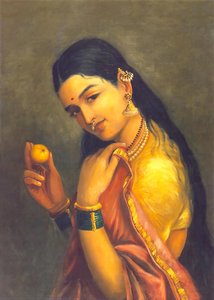
Retrato de Ravi Varma

Pinturas de Ravi Varma: As 100 mais famosas, sob o olhar de uma galeria

Atualizado em Outubro 2026 · classificado pela nossa pontuação de popularidade (pesquisas, visitas e pedidos de cada obra) · 136 obras de Ravi Varma em nosso catálogo

Em resumo

Aos olhos da galeria, a pintura mais famosa de Ravi Varma é Damayanti And Hamsam (1899), cuja obra original está exposta no Sandeep - Gitanjali Maini Foundation, em Bengaluru. Maharani Chimnabai II (1889) e Music Hath Charms (Kadambari) (1890) completam o trio que todos reconhecem. Dos 136 trabalhos de Ravi Varma em nosso catálogo, a galeria apresenta abaixo as 100 obras mais famosas, cada uma original, com seu ano, seu museu e o que a torna única.

1848 – 1906, Kilimanjaro Academic & indian fusion Mais obras: The Raja Ravi Varma Heritage Foundation

As 10 principais pinturas de Ravi Varma na galeria

1
Damayanti And Hamsam (1899) de Ravi Varma

Damayanti And Hamsam

1899 · Oil On Canvas · Sandeep - Gitanjali Maini Foundation, Bengaluru

In the quietude of a sun-drenched afternoon, Raja Ravi Varma captures a scene that transcends time, inviting the viewer into a realm where myth and reality softly intertwine. Damayanti And Hamsam is not merely a painting; it is a window into the soul of Indian classical storytelling. The artwork presents a serene encounter between the beautiful Damayanti, daughter of King Bhima, and a graceful white swan, or hamsa. As she…

2
Maharani Chimnabai II (1889) de Ravi Varma

Maharani Chimnabai II

1889 · Painting · The Raja Ravi Varma Heritage Foundation, Bangalore

To stand before Maharani Chimnabai II is to be enveloped in an atmosphere of opulent grace and quiet power. Painted by the masterful hand of Raja Ravi Varma in 1889, this portrait transcends a mere depiction; it is a window into the zenith of late 19th-century Indian aristocracy, filtered through the sophisticated lens of European academic painting techniques. The subject herself commands attention—a vision of regal poise seated upon an…

3
Music Hath Charms (Kadambari) (1890) de Ravi Varma

Music Hath Charms (Kadambari)

1890 · Oil On Canvas · The Raja Ravi Varma Heritage Foundation, Bangalore

A woman sits upon a bench, her fingers poised near the strings of a sitar. She wears a traditional sari and a bindi rests upon her forehead. Around her, the world is quieted by the presence of greenery and two birds resting in the background. A clock hangs on the wall above her head, marking the passage of time in this indoor space. The scene captures a moment of focused…

4
Nair Lady With A Mirror (1894) de Ravi Varma

Nair Lady With A Mirror

1894 · Oil On Canvas · Sandeep - Gitanjali Maini Foundation, Bengaluru

This exquisite portrait, titled Nair Lady With A Mirror, invites the viewer into an intimate, almost whispered moment of personal contemplation. It captures a lady caught in the gentle ritual of grooming—the act of brushing her hair while gazing into the reflective surface before her. Raja Ravi Varma, master chronicler of everyday Indian life imbued with classical grace, has gifted us more than just a likeness; he offers a window…

5
Woman Holding a Fan (1895) de Ravi Varma

Woman Holding a Fan

1895 · Oil On Canvas · Victoria and Albert Museum, Londres

A woman leans against a stone balustrade, her silhouette softened by the fading light of a sunset. She wears a sari of shimmering light blue and silver, the fabric catching the glow like water under a summer moon. Her dark hair falls in fluid lines down her back, a deep contrast to the warm pinks and oranges of the sky behind her. In her hand, she holds a red fan,…

6
Shakuntala writing a love letter on a lotus leaf (1880) de Ravi Varma

Shakuntala writing a love letter on a lotus leaf

1880 · Oil On Canvas · Ashmolean Museum, Oxford

In the secluded shade of a forest hermitage, a woman pauses to compose her thoughts. This oil on canvas, dated between 1880 and 1885, captures Shakuntala in a moment of profound intimacy. She sits amidst lush, dark foliage, focused on a lotus leaf that serves as her parchment. Her companions observe from the periphery, their presence grounding the scene in a shared, silent experience. The composition utilizes a triangular arrangement…

7
Draupadi at the Court of Virat (1897) de Ravi Varma

Draupadi at the Court of Virat

1897 · Oil On Canvas · The Ganesh Shivaswamy Foundation, Bangalore

In the grand tapestry of Indian mythological storytelling, few moments resonate with as much profound tension and moral complexity as the scene captured in Raja Ravi Varma’s 1897 masterpiece, Draupadi at the Court of Virat. This painting serves as a breathtaking window into a pivotal moment of the Mahabharata, where the sanctity of a queen is challenged within the very halls meant to protect her. The composition centers on Draupadi,…

8
Radha in the Moonlight (1890) de Ravi Varma

Radha in the Moonlight

1890 · Acrylic On Canvas · The Ganesh Shivaswamy Foundation, Bangalore

Raja Ravi Varma's *Radha in the Moonlight*, painted in 1890, stands as a pinnacle of Indian Romanticism and a testament to his unparalleled skill in synthesizing Western academic training with deeply rooted Hindu iconography. This captivating portrait transcends mere representation; it embodies the essence of the ‘uttama nayika,’ the ideal woman figure from classical Sanskrit literature – a being of profound beauty, intelligence, and spiritual grace. The painting’s enduring appeal…

9
A Maharani de Travancore (1887) de Ravi Varma

A Maharani de Travancore

1887 · Óleo sobre tela · Royal Collection, Londres

“A Maharani de Travancore” é mais do que uma simples pintura; é um portal para a rica tapeçaria cultural e artística do século XIX na Índia. Criada por Raja Ravi Varma, um dos artistas mais inovadores de sua época, esta obra captura a essência de uma figura real – uma rainha da região de Travancore, no sul da Índia – em um momento de dignidade e poder. A imagem, com…

10
His Highness Chamarajendra Wadiyar X (1885) de Ravi Varma

His Highness Chamarajendra Wadiyar X

1885 · Oil On Canvas · The Raja Ravi Varma Heritage Foundation, Bangalore

To stand before this portrait is to step directly into the opulent drawing rooms and grand processions of late 19th-century Indian royalty. Depicting His Highness Chamarajendra Wadiyar X, the painting radiates an aura of inherited power and refined dignity. The subject himself is rendered with a commanding presence; his attire speaks volumes of his station, particularly the magnificent gold crown that crowns his noble brow. Every element—from the meticulously painted…

Pinturas de Ravi Varma, classificadas de 11 a 100

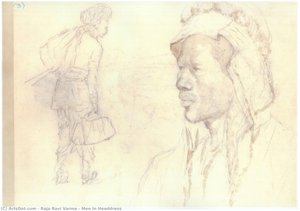
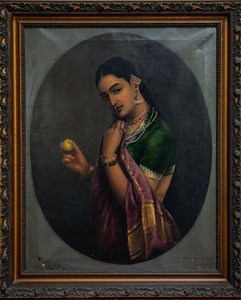
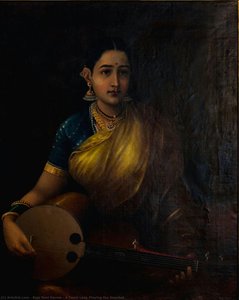
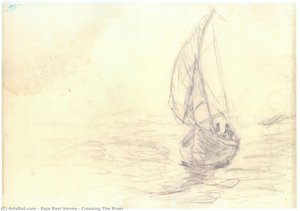
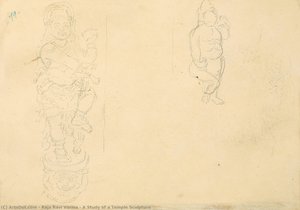
11Keechaka and Sairandhri (1891) de Ravi VarmaKeechaka and Sairandhri1891 · The Raja Ravi Varma Heritage Foundation 12Sketch Of An Unconscious Woman (1897) de Ravi VarmaSketch Of An Unconscious Woman1897 · The Raja Ravi Varma Heritage Foundation 13Bandi Balaiah Naidu (1904) de Ravi VarmaBandi Balaiah Naidu1904 · Sandeep - Gitanjali Maini Foundation 14War scene mural by C Raja Raja Varma (2018) de Ravi VarmaWar scene mural by C Raja Raja Varma2018 · The Raja Ravi Varma Heritage Foundation 15Men In Headdress (1885) de Ravi VarmaMen In Headdress1885 · The Raja Ravi Varma Heritage Foundation 16Untitled (Tilottama) (1896) de Ravi VarmaUntitled (Tilottama)1896 · The Raja Ravi Varma Heritage Foundation 17Shakuntala Patra Lekhan of Shakuntala Writing a Love Letter de Ravi VarmaShakuntala Patra Lekhan of Shakuntala Writing a Love LetterThe Ganesh Shivaswamy Foundation 18Bombay Singer (Bombay Songstress) (1893) de Ravi VarmaBombay Singer (Bombay Songstress)1893 · The Raja Ravi Varma Heritage Foundation 19The Coquette (1893) de Ravi VarmaThe Coquette1893 · The Raja Ravi Varma Heritage Foundation 20Lady Making A Garland (1895) de Ravi VarmaLady Making A Garland1895 · The Raja Ravi Varma Heritage Foundation 21Sita in Ashoka Grove (1894) de Ravi VarmaSita in Ashoka Grove1894 · The Raja Ravi Varma Heritage Foundation 22The Coquette (1893) de Ravi VarmaThe Coquette1893 · The Raja Ravi Varma Heritage Foundation 23Krishna (1905) de Ravi VarmaKrishna1905 · The Raja Ravi Varma Heritage Foundation 24Shakuntala And Her Companion (1880) de Ravi VarmaShakuntala And Her Companion1880 · The Raja Ravi Varma Heritage Foundation 25Damayanti Abandoned In The Forest (1894) de Ravi VarmaDamayanti Abandoned In The Forest1894 · Sandeep - Gitanjali Maini Foundation 26Woman Holding a Fruit (1800) de Ravi VarmaWoman Holding a Fruit1800 · National Gallery of Modern Art 27A Tamil Lady Playing the Swarbat de Ravi VarmaA Tamil Lady Playing the SwarbatThe Ganesh Shivaswamy Foundation 28A Study of a Woman- possibly for Madalasa and Rutudwaja de Ravi VarmaA Study of a Woman- possibly for Madalasa and RutudwajaThe Ganesh Shivaswamy Foundation 29Toddy Tapper (1895) de Ravi VarmaToddy Tapper1895 · The Raja Ravi Varma Heritage Foundation 30Letter Written by Raja Ravi Varma (1906) de Ravi VarmaLetter Written by Raja Ravi Varma1906 · The Raja Ravi Varma Heritage Foundation 31Sita Bhumipravesh (1880) de Ravi VarmaSita Bhumipravesh1880 · The Raja Ravi Varma Heritage Foundation 32Judith (1889) de Ravi VarmaJudith1889 · The Raja Ravi Varma Heritage Foundation 33Woman Reclining On The Waterfront (1898) de Ravi VarmaWoman Reclining On The Waterfront1898 · The Raja Ravi Varma Heritage Foundation 34Maharani Lakshmi Bayi (1883) de Ravi VarmaMaharani Lakshmi Bayi1883 · Sree Chitra Art Gallery 35Laxman Shakti (1880) de Ravi VarmaLaxman Shakti1880 36Sketch Of A Lady (1890) de Ravi VarmaSketch Of A Lady1890 · The Raja Ravi Varma Heritage Foundation 37Woman At The Tap (1890) de Ravi VarmaWoman At The Tap1890 · The Raja Ravi Varma Heritage Foundation 38Bharani Thirunal Mahaprabha Amma Thampuran (1880) de Ravi VarmaBharani Thirunal Mahaprabha Amma Thampuran1880 · The Raja Ravi Varma Heritage Foundation 39Vishvamitra (1897) de Ravi VarmaVishvamitra1897 40Preparatory Sketch for Gangavatran de Ravi VarmaPreparatory Sketch for GangavatranThe Ganesh Shivaswamy Foundation 41Crossing The River (1895) de Ravi VarmaCrossing The River1895 · The Raja Ravi Varma Heritage Foundation 42Shakuntala and Sakhis (1930) de Ravi VarmaShakuntala and Sakhis1930 43Hesitation (1880) de Ravi VarmaHesitation1880 · The Raja Ravi Varma Heritage Foundation 44Waiting For The Train (1891) de Ravi VarmaWaiting For The Train1891 · The Raja Ravi Varma Heritage Foundation 45Yuvaraj Kanterava Narasimharaja Wadiyar In A Hunting Dress (1902) de Ravi VarmaYuvaraj Kanterava Narasimharaja Wadiyar In A Hunting Dress1902 · The Raja Ravi Varma Heritage Foundation 46Reverie (1900) de Ravi VarmaReverie1900 · Kerala Museum 47A Lady Holding A Fruit de Ravi VarmaA Lady Holding A Fruit 48Hanuman (1870) de Ravi VarmaHanuman1870 · The Raja Ravi Varma Heritage Foundation 49An Adaptation of the poem (1898) de Ravi VarmaAn Adaptation of the poem1898 · The Ganesh Shivaswamy Foundation 50Baby & Princess (1877) de Ravi VarmaBaby & Princess1877 · Sandeep - Gitanjali Maini Foundation 51Lady with Violin (1880) de Ravi VarmaLady with Violin1880 · The Raja Ravi Varma Heritage Foundation 52Matriarch of Harippad (1885) de Ravi VarmaMatriarch of Harippad1885 · The Raja Ravi Varma Heritage Foundation 53The Fakir (1890) de Ravi VarmaThe Fakir1890 · The Raja Ravi Varma Heritage Foundation 54A Musician (1890) de Ravi VarmaA Musician1890 · The Raja Ravi Varma Heritage Foundation 55In Conversation (1890) de Ravi VarmaIn Conversation1890 · The Raja Ravi Varma Heritage Foundation 56Muslim Men Praying (1890) de Ravi VarmaMuslim Men Praying1890 · The Raja Ravi Varma Heritage Foundation 57Woman Washing Clothes (1890) de Ravi VarmaWoman Washing Clothes1890 · The Raja Ravi Varma Heritage Foundation 58A Young Scholar (1893) de Ravi VarmaA Young Scholar1893 · The Raja Ravi Varma Heritage Foundation 59Sketch Of A Young Girl (1896) de Ravi VarmaSketch Of A Young Girl1896 · The Raja Ravi Varma Heritage Foundation 60Woman With Musical Instrument (1880) de Ravi VarmaWoman With Musical Instrument1880 · The Raja Ravi Varma Heritage Foundation 61The Gypsies Of South India (1893) de Ravi VarmaThe Gypsies Of South India1893 · The Raja Ravi Varma Heritage Foundation 62Ornate mural by C Raja Raja Varma (2018) de Ravi VarmaOrnate mural by C Raja Raja Varma2018 · The Raja Ravi Varma Heritage Foundation 63Ikkavu Thampuran (1900) de Ravi VarmaIkkavu Thampuran1900 · The Raja Ravi Varma Heritage Foundation 64Charity de Ravi VarmaCharitySree Chitra Art Gallery 65Nala And Damayanti de Ravi VarmaNala And Damayanti 66Simhika And Sairandri de Ravi VarmaSimhika And Sairandri 67Maliyali Beauty de Ravi VarmaMaliyali Beauty 68The Milkmaid de Ravi VarmaThe MilkmaidSree Chitra Art Gallery 69Maharani With Prince de Ravi VarmaMaharani With Prince 70Two figures Under an Arch de Ravi VarmaTwo figures Under an ArchThe Ganesh Shivaswamy Foundation 71Ravana Carrying Off Sita And Opposed By Jatayu de Ravi VarmaRavana Carrying Off Sita And Opposed By JatayuThe Raja Ravi Varma Heritage Foundation 72Yashoda and Krishna de Ravi VarmaYashoda and KrishnaThe Ganesh Shivaswamy Foundation 73Gangawataran Sketch (1890) de Ravi VarmaGangawataran Sketch1890 · The Raja Ravi Varma Heritage Foundation 74Initial Sketch Of Gangawataran (1893) de Ravi VarmaInitial Sketch Of Gangawataran1893 · The Raja Ravi Varma Heritage Foundation 75Untitled (Damayanti) (1890) de Ravi VarmaUntitled (Damayanti)1890 · The Raja Ravi Varma Heritage Foundation 76Malabar Lady with Veena - Raja Ravi Varma (2026) de Ravi VarmaMalabar Lady with Veena - Raja Ravi Varma2026 77Gypsies of South India- Preliminary Study (1893) de Ravi VarmaGypsies of South India- Preliminary Study1893 · The Ganesh Shivaswamy Foundation 78Gypsies of South India- Preliminary Study (1893) de Ravi VarmaGypsies of South India- Preliminary Study1893 · The Ganesh Shivaswamy Foundation 79A Study for Yogi Gopichand de Ravi VarmaA Study for Yogi GopichandThe Ganesh Shivaswamy Foundation 80The Maharaja of Travancore welcoming the Duke of Buckingham and Chandos (1881) de Ravi VarmaThe Maharaja of Travancore welcoming the Duke of Buckingham and Chandos1881 · The Ganesh Shivaswamy Foundation 81A Tamil Lady (1900) de Ravi VarmaA Tamil Lady1900 · The Raja Ravi Varma Heritage Foundation 82A Study of a Temple Sculpture de Ravi VarmaA Study of a Temple SculptureThe Ganesh Shivaswamy Foundation 83Mural of Horse by C Raja Raja Varma (2018) de Ravi VarmaMural of Horse by C Raja Raja Varma2018 · The Raja Ravi Varma Heritage Foundation 84Her Highness Janaki Subamma Bai Sahib of Pudukkottai (1879) de Ravi VarmaHer Highness Janaki Subamma Bai Sahib of Pudukkottai1879 · The Raja Ravi Varma Heritage Foundation 85A Parsi Couple de Ravi VarmaA Parsi CoupleThe Ganesh Shivaswamy Foundation 86Ravana Carrying Off Sita and Opposed by Jatayu (1906) de Ravi VarmaRavana Carrying Off Sita and Opposed by Jatayu1906 · The Raja Ravi Varma Heritage Foundation 87Portrait Of Gentleman de Ravi VarmaPortrait Of Gentleman 88Kerala Varma Valiya Koil Thampuran (1880) de Ravi VarmaKerala Varma Valiya Koil Thampuran1880 · The Ganesh Shivaswamy Foundation 89Reclining Nair Lady (1902) de Ravi VarmaReclining Nair Lady1902 · The Raja Ravi Varma Heritage Foundation 90A Sketch of an Elephant carrying the Travancore State Emblem de Ravi VarmaA Sketch of an Elephant carrying the Travancore State EmblemThe Ganesh Shivaswamy Foundation 91Shakuntala - de Ravi VarmaShakuntala - 92Pleasing de Ravi VarmaPleasing 93Portrait Of Woman de Ravi VarmaPortrait Of Woman 94Press, 20th Century de Ravi VarmaPress, 20th Century 95Malabar Lady de Ravi VarmaMalabar Lady 96Lady In Moonlight de Ravi VarmaLady In Moonlight 97Woman With Veena de Ravi VarmaWoman With Veena 98A Study of a Man de Ravi VarmaA Study of a ManThe Ganesh Shivaswamy Foundation 99Maharana prathap singh de Ravi VarmaMaharana prathap singh 100Draupati At The Court Of Virata de Ravi VarmaDraupati At The Court Of Virata

Pinturas famosas de Ravi Varma, período por período

Os temas que cativaram o olhar de Ravi Varma

Os quatro temas que mais se repetem nestas obras originais, cada um com o seu melhor exemplo.

Os museus que guardam os originais de Ravi Varma

Os 8 museus que detêm a maioria das pinturas desta página.

Museu Cidade Obras de Ravi Varma Pinturas desta lista
The Raja Ravi Varma Heritage Foundation, BangaloreThe Raja Ravi Varma Heritage Foundation Bangalore 52 Maharani Chimnabai II, Music Hath Charms (Kadambari), His Highness Chamarajendra Wadiyar X
The Ganesh Shivaswamy Foundation, BangaloreThe Ganesh Shivaswamy Foundation Bangalore 28 Draupadi at the Court of Virat, Radha in the Moonlight, Shakuntala Patra Lekhan of Shakuntala Writing a Love Letter
Sandeep - Gitanjali Maini Foundation, BengaluruSandeep - Gitanjali Maini Foundation Bengaluru 5 Damayanti And Hamsam, Nair Lady With A Mirror, Bandi Balaiah Naidu
Sree Chitra Art Gallery 3 Maharani Lakshmi Bayi, Charity, The Milkmaid
National Gallery of Modern Art, Nova DeliNational Gallery of Modern Art Nova Deli 2 Woman Holding a Fruit
Victoria and Albert Museum, LondresVictoria and Albert Museum Londres 1 Woman Holding a Fan
Ashmolean Museum, OxfordAshmolean Museum Oxford 1 Shakuntala writing a love letter on a lotus leaf
Royal Collection, LondresRoyal Collection Londres 1 A Maharani de Travancore

Ravi Varma, uma pintura emblemática por década

Obras por década

Escolha uma década para ver a obra original que a define.

Pinturas de Ravi Varma: a galeria responde

Qual pintura de Ravi Varma é a mais famosa de todas?Revelar a resposta

Damayanti And Hamsam (1899), Sandeep - Gitanjali Maini Foundation, Bengaluru. Maharani Chimnabai II (1889) e Music Hath Charms (Kadambari) (1890) vêm a seguir.

Qual era a idade de Ravi Varma ao concluir Damayanti And Hamsam?Revelar a resposta

51 anos: Damayanti And Hamsam data de 1899, e Ravi Varma nasceu em 1848.

Quais são as 10 principais pinturas de Ravi Varma?Revelar a resposta

Damayanti And Hamsam, Maharani Chimnabai II, Music Hath Charms (Kadambari), Nair Lady With A Mirror, Woman Holding a Fan, Shakuntala writing a love letter on a lotus leaf, Draupadi at the Court of Virat, Radha in the Moonlight, A Maharani de Travancore e His Highness Chamarajendra Wadiyar X. O ranking acima apresenta o ano e o museu de cada uma.

Quantas obras Ravi Varma criou?Revelar a resposta

Nosso catálogo contém 136 obras de Ravi Varma, datadas de 1870 a 1906.

Onde estão expostos os originais mais famosos de Ravi Varma?Revelar a resposta

Principalmente em The Raja Ravi Varma Heritage Foundation (Bangalore), The Ganesh Shivaswamy Foundation (Bangalore) e Sandeep - Gitanjali Maini Foundation (Bengaluru). A tabela de museus acima lista todos eles.

Quando é que Ravi Varma criou as suas pinturas mais famosas?Revelar a resposta

Em 1890s: 36 das 100 obras nesta página foram feitas então, sendo Damayanti And Hamsam delas.

Quais são as obras mais famosas de Ravi Varma no início e no fim de sua carreira?Revelar a resposta

Nesta página, a mais antiga é Hanuman (1870) e a mais recente é Letter Written by Raja Ravi Varma (1906).

Quais temas Ravi Varma mais explorou?Revelar a resposta

Portrait (16), Woman (15) e Portraiture (12), entre as 100 obras nesta página.

Em qual técnica Ravi Varma mais trabalhou?Revelar a resposta

Oil On Canvas, para 28 das 100 obras nesta página.

Com qual movimento Ravi Varma está associado(a)?Revelar a resposta

Academic & indian fusion, a julgar pelos originais nesta página.

Quais obras originais de Ravi Varma o The Raja Ravi Varma Heritage Foundation possui?Revelar a resposta

Maharani Chimnabai II, Music Hath Charms (Kadambari) e His Highness Chamarajendra Wadiyar X: o The Raja Ravi Varma Heritage Foundation, Bangalore detém 50 das obras desta página.

Posso ter uma pintura de Ravi Varma reproduzida à mão?Revelar a resposta

Sim, como uma reprodução: a obra original permanece no seu museu, mas qualquer pintura desta página pode ser pintada à mão para você, feita sob encomenda uma a uma, a partir da própria página da pintura.

Ravi Varma: o artista

The Princely Brush: Raja Ravi Varma and the Dawn of Modern Indian Painting

Raja Ravi Varma, a name that echoes through the halls of Indian art history, emerged from the opulent world of the Kilimanoor Palace in Kerala during the mid-19th century. More than simply a painter, he was a cultural architect, skillfully weaving together European academic techniques with the vibrant threads of Indian mythology and tradition. His lineage, tracing back to the royal family of Travancore – two of his daughters later becoming adopted members of that very house – provided him not only with privilege but also an intimate understanding of Indian courtly life, profoundly shaping his artistic vision. From a young age, Ravi Varma displayed an extraordinary aptitude for art, nurtured by his uncle, Raja Raja Varma, who introduced him to the world of drawing and painting, primarily within the established framework of the Tanjore School. Yet, Ravi Varma’s ambition stretched far beyond mere imitation; he yearned to master techniques that would allow him to capture not just likeness but also the very essence of emotion and narrative depth – a desire that set him apart from his contemporaries.

A Fusion of Worlds: Technique and Inspiration

Ravi Varma's artistic journey took an extraordinary turn when he encountered the works of European masters, particularly during his travels and through interactions with British officials stationed in India. He was utterly captivated by the realism and technical precision of academic painting – the meticulous study of perspective, anatomy, light, and shadow. However, unlike many artists who simply adopted these styles wholesale, Varma ingeniously adapted them to serve distinctly Indian subjects. His canvases transformed into vibrant stages for scenes from the Ramayana, the Mahabharata, and the Puranas, populated by gods and goddesses rendered with a newfound naturalism that was both startlingly familiar and profoundly moving. He didn’t merely illustrate these ancient stories; he imbued them with human emotion, psychological complexity, and an almost palpable sense of drama. This revolutionary approach – blending European technical mastery with Indian mythological themes – marked a pivotal moment in the history of Indian art. Before Varma, depictions of deities often adhered to rigid, stylized conventions, prioritizing symbolic representation over emotional resonance. Ravi Varma dared to portray them as relatable figures—beautiful, powerful, and deeply human—capturing their essence with unprecedented sensitivity. His mastery of oil painting – a relatively new medium in India at the time – allowed him to achieve an astonishing level of detail and luminosity, further enhancing the emotional impact of his work. Consider, for example, *Hansa Damayanthi*, where the heroine’s longing gaze and delicate posture convey a depth of feeling previously unseen in Indian art. Similarly, *The Maharani of Travancore* exemplifies Varma's ability to capture not just outward appearance but also the inner character and regal bearing of his subject.

Democratizing Art: Lithographs and Public Appeal

Recognizing that original paintings were largely inaccessible to the vast majority of Indians, Raja Ravi Varma took a bold step – establishing the Raja Ravi Varma Fine Arts Lithographic Press in 1894. This groundbreaking venture was more than just a business; it was an act of democratization, making art accessible to a wider audience than ever before. Through this press, he produced affordable lithographs based on his iconic paintings, transforming them into objects of widespread admiration and reverence. These weren’t simply reproductions; they were carefully crafted interpretations that captured the essence of Varma's originals – each detail meticulously rendered to convey the same sense of beauty, emotion, and spiritual depth. Suddenly, images of Hindu deities and mythological scenes adorned homes across India, becoming cherished symbols of cultural identity and religious devotion. The lithographs played a crucial role in fostering a greater appreciation for visual culture among all segments of Indian society, transcending social and economic barriers. This act of democratizing art not only expanded the reach of his work but also solidified his position as a truly public figure—his images becoming ubiquitous symbols of Indian identity and artistic achievement.

Royal Patronage and Artistic Development

Ravi Varma’s early career was significantly shaped by royal patronage, beginning with his uncle, Raja Raja Varma, who recognized his exceptional talent and provided him with formal training in painting. He later served as a court artist for various princely states – Mewar, Baroda, and Mysore – gaining invaluable experience and exposure to diverse artistic traditions. His time at the Travancore court was particularly formative, allowing him to hone his skills and develop his unique style. The Governor’s Gold Medal at the Madras Fine Art Exhibition in 1873 for *Nair Lady Adorning Her Hair* marked a significant milestone, establishing him as a rising star in the Indian art world. His travels across India with his brother, Raja Varma, between 1888 and 1889, provided him with an unparalleled opportunity to study diverse cultures, gather models for his paintings, and broaden his artistic horizons. This period of extensive travel profoundly influenced his work, enriching its visual vocabulary and deepening its understanding of Indian society.

Legacy and Enduring Influence

Raja Ravi Varma passed away in 1906, leaving behind a legacy that continues to inspire artists and shape the cultural landscape of India. His pioneering work not only transformed the course of Indian painting but also laid the foundation for modern Indian art. He challenged conventional norms, embraced innovation, and skillfully blended tradition with modernity—a testament to his artistic vision and enduring influence. Museums like The Raja Ravi Varma Heritage Foundation in Bangalore and The Ganesh Shivaswamy Foundation preserve and celebrate his legacy, ensuring that his profound contribution to Indian art remains accessible to future generations. His paintings – masterpieces of beauty, spirituality, and cultural richness – stand as powerful reminders of his genius and the transformative power of art.

Exploring Varma’s World Today

For those seeking to delve deeper into the world of Raja Ravi Varma, numerous resources are available:
  • Explore artworks: Discover masterpieces like “Portrait of a Gentleman,” “Hansa Damayanthi,” and “The Maharani of Travancore” through online databases.
  • Visit museums: Immerse yourself in Varma’s legacy at The Raja Ravi Varma Heritage Foundation, The Ganesh Shivaswamy Foundation, and the Kiran Nadar Museum of Art.
  • Further research: Consult Wikipedia and Google Arts & Culture for detailed biographical information and scholarly insights.
Raja Ravi Varma's story is a testament to the power of art to transcend cultural boundaries, inspire generations, and shape national identity—a legacy that continues to resonate powerfully today.

Todas as 136 obras de Ravi Varma →