Retrato de Quentin Matsys

As 100 Pinturas Mais Famosas de Quentin Matsys, uma Seleção da Galeria

Atualizado em Novembro 2026 · classificado pela nossa pontuação de popularidade (pesquisas, visitas e pedidos de cada obra) · 147 obras de Quentin Matsys em nosso catálogo

Em resumo

De todas as obras originais que Quentin Matsys deixou, a mais famosa é O Cambista e sua Esposa (1514). Logo atrás vêm Portrait of Erasmus of Rotterdam (1517) e The Virgin Enthroned (1525). Nosso catálogo contém 147 obras de Quentin Matsys; a galeria preservou as 100 que o mundo mais admira, cada uma exibida com sua data, seu museu e sua história.

1466 – 1530, Lovaina Renascimento nórdico Mais obras: Gemäldegalerie

As 10 principais pinturas de Quentin Matsys: a escolha da galeria

1
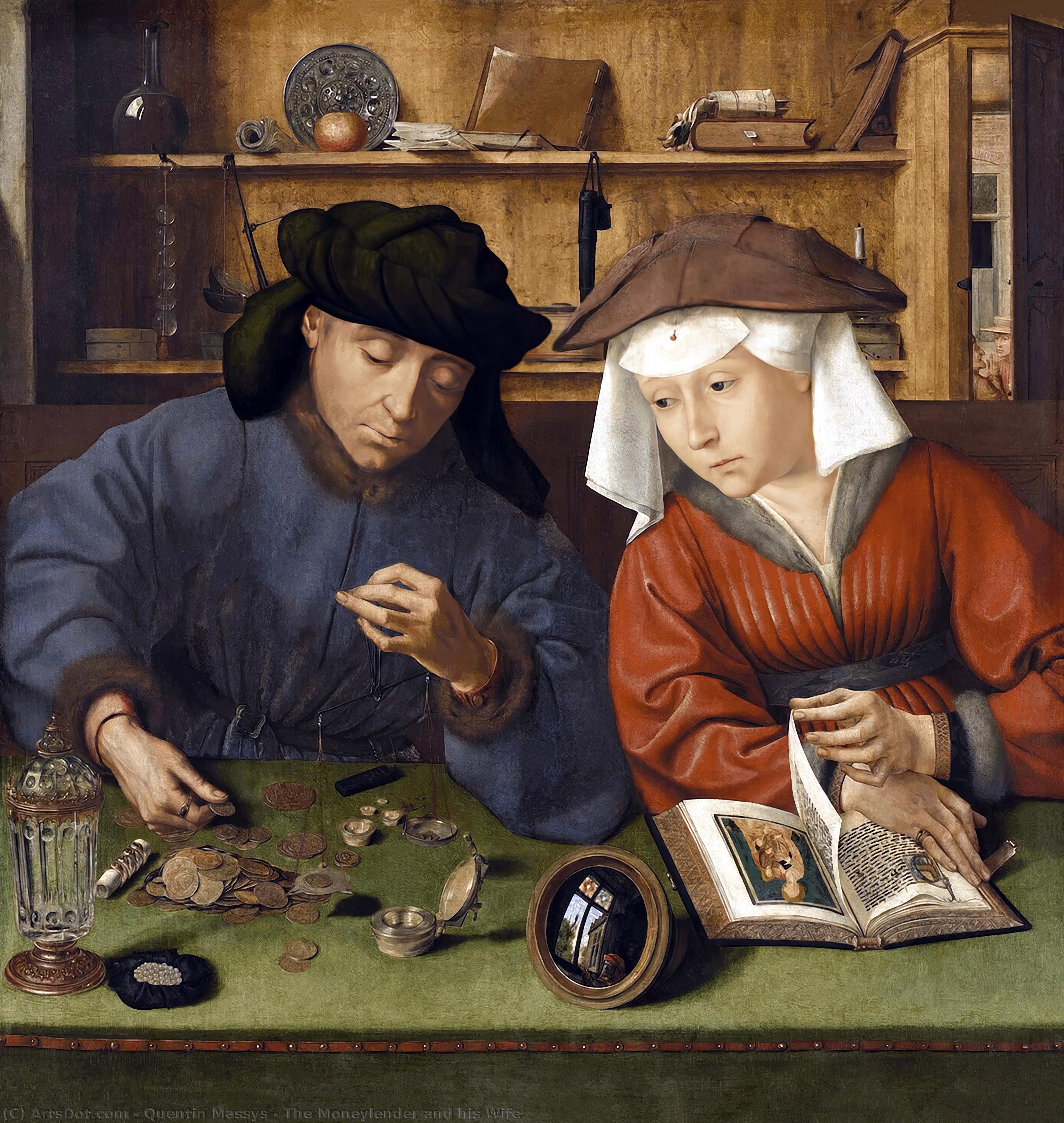
O Cambista e sua Esposa (1514) de Quentin Matsys

O Cambista e sua Esposa

1514 · Óleo sobre painel

In the quiet intimacy of Quentin Massys’s 1514 masterpiece, The Moneylender and his Wife, we are invited to step across the threshold of time and into a world of profound domesticity and silent narrative. This oil on panel work, currently preserved in the hallowed halls of the Musée du Sobornik in the Louvre, serves as a breathtaking exemplar of the Antwerp School’s mastery. At first glance, the scene presents a…

2
Portrait of Erasmus of Rotterdam (1517) de Quentin Matsys

Portrait of Erasmus of Rotterdam

1517 · Oil On Canvas · Galleria Nazionale d'Arte Antica, Roma

To stand before this portrait is to step directly into the vibrant intellectual currents of the early sixteenth century. Quentin Massys has captured not merely a likeness, but an entire state of being—the profound concentration of a Renaissance mind at work. The subject, Erasmus of Rotterdam, radiates the quiet authority of scholarship. Dressed in the somber black attire typical of learned men of his era, he is seated amidst the…

3
The Virgin Enthroned (1525) de Quentin Matsys

The Virgin Enthroned

1525 · Oil On Panel · Staatliche Museen zu Berlin, Berlim

In the quiet, hallowed atmosphere of the Staatliche Museen Berlin, there exists a window into the spiritual heart of the sixteenth century. Quentin Massys’ “The Virgin Enthroned,” completed around 1525, is far more than a mere religious portrait; it is a profound meditation on grace and the intersection of the earthly and the divine. As a cornerstone of the Antwerp School, this masterpiece captures a pivotal moment in art history…

4
Christ as Salvator Mundi (1505) de Quentin Matsys

Christ as Salvator Mundi

1505 · Oil · Royal Museum of Fine Arts Antwerp, Antuérpia

The portrait presents a frontal, bust-length view of Christ, positioned centrally against a dark, undifferentiated background. The subject's face is illuminated by a soft, diffused light that defines the contours of the nose, the jawline, and the orbital sockets. A golden halo, composed of fine, radiating lines, emanates from behind the head, creating a sharp contrast with the deep tones of the backdrop. The hair is rendered in long, wavy…

5
The Moneylender and his Wife (detail) (1514) de Quentin Matsys

The Moneylender and his Wife (detail)

1514 · Oil On Panel · Museu do Louvre, Paris

To gaze upon this exquisite detail from Quentin Massys’s 1514 masterpiece, The Moneylender and His Wife, is to be invited across the threshold of a meticulously preserved moment in time. It is not merely a fragment of paint on panel; it is a concentrated jewel box of Northern Renaissance life, rich with unspoken narratives and dazzling technical mastery. The scene, captured from the legendary work housed at the Musée du…

6
The Moneylender and his Wife (detail) (1514) de Quentin Matsys

The Moneylender and his Wife (detail)

1514 · Oil On Canvas · Museu do Louvre, Paris

To gaze upon this detail from Quentin Massys's The Moneylender and his Wife is to be invited across the threshold of a meticulously preserved moment in time. It is not merely a fragment of paint on panel; it is a concentrated jewel box of Northern Renaissance life, rich with unspoken narratives and dazzling technical mastery. The scene, captured from the masterpiece housed in the Musée du Louvre, draws the eye…

7
The Adoration of the Magi (1526) de Quentin Matsys

The Adoration of the Magi

1526 · Tempera On Panel · Metropolitan Museum of Art, Nova York

To gaze upon this depiction of The Adoration of the Magi is to step directly into a moment suspended in time—a tableau vivant brimming with piety, wonder, and profound human connection. Quentin Massys has masterfully captured not merely an event from sacred scripture, but the very essence of devotion itself. Mary cradles the divine infant Jesus, the focal point around which all gazes converge. The composition is richly populated; a…

8
St Anne Altarpiece (detail) (1507) de Quentin Matsys

St Anne Altarpiece (detail)

1507 · Oil On Panel · Musées Royaux des Beaux-Arts, Bruxelas

The St Anne Altarpiece (detail) is a fragment of a larger narrative painted by Quinten Metsys. This specific section emerged from a work created in 1507. It captures a quiet moment within a sacred lineage, rendered with the precision of a hand accustomed to the weight of iron and the glint of metal.

9
St Anne Altarpiece (left wing) (1507) de Quentin Matsys

St Anne Altarpiece (left wing)

1507 · Oil On Panel · Musées Royaux des Beaux-Arts, Bruxelas

In the quiet, contemplative corner of the St Anne Altarpiece, specifically its left wing, we encounter a moment of profound spiritual intimacy that has captivated viewers for over five centuries. Painted in 1507 by the Flemish master Quentin Massys, this work serves as a breathtaking window into the soul of the Northern Renaissance. The scene is anchored by the figure of St Anne, depicted with a poignant realism that eschews…

10
The Moneylender and his Wife (detail) (1514) de Quentin Matsys

The Moneylender and his Wife (detail)

1514 · Oil On Panel · Museu do Louvre, Paris

To gaze upon this exquisite detail from Quentin Massys's 1514 masterpiece, The Moneylender and his Wife, is to be invited across the threshold of a meticulously preserved moment in time. It is not merely a fragment of paint on panel; it is a concentrated jewel box of Northern Renaissance life, rich with unspoken narratives and dazzling technical mastery. In this intimate glimpse, we find ourselves seated at a table laden…

A seleção de Quentin Matsys continua, de 11 a 100

11St Anne Altarpiece (1507) de Quentin MatsysSt Anne Altarpiece1507 · Musées Royaux des Beaux-Arts 12St Anne Altarpiece (central panel) (1507) de Quentin MatsysSt Anne Altarpiece (central panel)1507 · Musées Royaux des Beaux-Arts 13Diptych - Christ and the Virgin de Quentin MatsysDiptych - Christ and the Virgin 14Saint Mary Magdalene (1515) de Quentin MatsysSaint Mary Magdalene1515 · Philadelphia Museum of Art 15Saint John the Baptist (1511) de Quentin MatsysSaint John the Baptist1511 · Royal Museum of Fine Arts Antwerp 16Christ (1529) de Quentin MatsysChrist1529 · Metropolitan Museum of Art 17The Deathbed of Saint Anne (1509) de Quentin MatsysThe Deathbed of Saint Anne1509 · Museus Reais de Belas Artes da Bélgica 18Saint Mary of Egypt (1515) de Quentin MatsysSaint Mary of Egypt1515 · Philadelphia Museum of Art 19Jacob Obrecht (1496) de Quentin MatsysJacob Obrecht1496 · Kimbell Art Museum 20A Bagpiper (1513) de Quentin MatsysA Bagpiper1513 · Yale University Art Gallery 21Christ the Saviour (1529) de Quentin MatsysChrist the Saviour1529 · Museu do Prado 22Madonna and Child (1530) de Quentin MatsysMadonna and Child1530 · Mauritshuis 23Virgin with the Child de Quentin MatsysVirgin with the ChildRockox House 24Mary with Child (Copy after a lost original) (1512) de Quentin MatsysMary with Child (Copy after a lost original)1512 · Bavarian State Painting Collections 25The Refusal of the Offering of Joachim (1509) de Quentin MatsysThe Refusal of the Offering of Joachim1509 · Museus Reais de Belas Artes da Bélgica 26Jesus Among the Doctors (1509) de Quentin MatsysJesus Among the Doctors1509 · Museu Nacional de Arte Antiga 27Portrait of a man (1517) de Quentin MatsysPortrait of a man1517 · Staatliche Kunsthalle Karlsruhe 28Saint John and the Women at the Tomb of Christ (1509) de Quentin MatsysSaint John and the Women at the Tomb of Christ1509 · Museu Nacional de Arte Antiga 29Virgin and Child (1520) de Quentin MatsysVirgin and Child1520 · Museum Boijmans Van Beuningen 30Madonna and Child (1490) de Quentin MatsysMadonna and Child1490 · Museu Nacional de Varsóvia 31Portrait of Pieter Gillis (1517) de Quentin MatsysPortrait of Pieter Gillis1517 · Galleria Nazionale d'Arte Antica 32Lamentation of Christ (1501) de Quentin MatsysLamentation of Christ1501 · Museu Nacional de Varsóvia 33Saint Jerome (1512) de Quentin MatsysSaint Jerome1512 · Philadelphia Museum of Art 34The Virgin in prayer (1529) de Quentin MatsysThe Virgin in prayer1529 · Museu do Prado 35Saint John (1511) de Quentin MatsysSaint John1511 · Royal Museum of Fine Arts Antwerp 36Head of a Mourning Woman (1500) de Quentin MatsysHead of a Mourning Woman1500 · Gemäldegalerie 37Head of a Mourning Woman (1500) de Quentin MatsysHead of a Mourning Woman1500 · Gemäldegalerie 38Man of Sorrows (1500) de Quentin MatsysMan of Sorrows1500 · Bavarian State Painting Collections 39Virgin and Child Enthroned (1490) de Quentin MatsysVirgin and Child Enthroned1490 · Kunsthandel P. de Boer 40Salome is given the head of John the Baptist (1511) de Quentin MatsysSalome is given the head of John the Baptist1511 · Royal Museum of Fine Arts Antwerp 41The Seven Sorrows of the Virgin (1500) de Quentin MatsysThe Seven Sorrows of the Virgin1500 · Museus Reais de Belas Artes da Bélgica 42Rem Altar: Saint Roch with the Angel (Reverse: Saint Anne Selbdritt) (1518) de Quentin MatsysRem Altar: Saint Roch with the Angel (Reverse: Saint Anne Selbdritt)1518 · Bavarian State Painting Collections 43Rem Altar: Holy Trinity ("Throne of Grace") (1518) de Quentin MatsysRem Altar: Holy Trinity ("Throne of Grace")1518 · Bavarian State Painting Collections 44Rem Altarpiece: Martyrdom of Saint Sebastian (Reverse: Saint Luke) (1518) de Quentin MatsysRem Altarpiece: Martyrdom of Saint Sebastian (Reverse: Saint Luke)1518 · Bavarian State Painting Collections 45Two Old Men in Prayer (1515) de Quentin MatsysTwo Old Men in Prayer1515 46Presentation at the Temple (1509) de Quentin MatsysPresentation at the Temple1509 · Museu Nacional de Arte Antiga 47The Lamentation (1510) de Quentin MatsysThe Lamentation1510 · Galeria Nacional do Canadá 48Salvator Mundi (Christ Blessing) (1512) de Quentin MatsysSalvator Mundi (Christ Blessing)1512 · Szépművészeti Múzeum 49Dead Christ (1530) de Quentin MatsysDead Christ1530 · Yale University Art Gallery 50The Rest on the Flight into Egypt (1513) de Quentin MatsysThe Rest on the Flight into Egypt1513 · Worcester Art Museum 51Desiderius Erasmus (1466-1536) (1517) de Quentin MatsysDesiderius Erasmus (1466-1536)1517 · Royal Collection 52The Virgin and Child (1512) de Quentin MatsysThe Virgin and Child1512 · Museum of Fine Arts Ghent (MSK) 53Christ Salvator Mundi and Mary at Prayer (1505) de Quentin MatsysChrist Salvator Mundi and Mary at Prayer1505 · Royal Museum of Fine Arts Antwerp 54Portrait of an old woman (1510) de Quentin MatsysPortrait of an old woman1510 55Portrait of Petrus Aegidius (1486-1533) (1514) de Quentin MatsysPortrait of Petrus Aegidius (1486-1533)1514 56The Lamentation (1512) de Quentin MatsysThe Lamentation1512 · Catedral de Nossa Senhora (Onze-Lieve Vrouwekathedraal) 57Portrait of a man (1508) de Quentin MatsysPortrait of a man1508 · Kunsthandel P. de Boer 58St Anne Altarpiece (1507) de Quentin MatsysSt Anne Altarpiece1507 · Museus Reais de Belas Artes da Bélgica 59The purchase agreement (1510) de Quentin MatsysThe purchase agreement1510 · Gemäldegalerie 60Madonna and Child with the lamb. (1513) de Quentin MatsysMadonna and Child with the lamb.1513 · The National Museum in Poznań 61Portrait of a Humanist (1512) de Quentin MatsysPortrait of a Humanist1512 · Musée des Beaux-Arts de Strasbourg 62Saint Elizabeth of Portugal (1524) de Quentin MatsysSaint Elizabeth of Portugal1524 · Gemäldegalerie 63Portrait of Don Manuel de Menens (1530) de Quentin MatsysPortrait of Don Manuel de Menens1530 64Saint Jerome in his cell (1524) de Quentin MatsysSaint Jerome in his cell1524 · Kunsthistorisches Museum 65Christ Driving the Money-changers from the Temple (1520) de Quentin MatsysChrist Driving the Money-changers from the Temple1520 · Royal Museum of Fine Arts Antwerp 66Portrait of een geestelijke (twijfelachtig geïdentificeerd als Jean Carondelet) (1525) de Quentin MatsysPortrait of een geestelijke (twijfelachtig geïdentificeerd als Jean Carondelet)1525 · Barber Institute of Fine Arts 67An Allegory of Folly (1528) de Quentin MatsysAn Allegory of Folly1528 68The Two Tax Collectors (1530) de Quentin MatsysThe Two Tax Collectors1530 · Gemäldegalerie 69Mourning Woman from a Lamentation (1520) de Quentin MatsysMourning Woman from a Lamentation1520 · Gemäldegalerie 70Portrait of a man with a letter in his hand (1520) de Quentin MatsysPortrait of a man with a letter in his hand1520 · Gemäldegalerie 71Virgin and Child with Saints Elizabeth and John the Baptist (1522) de Quentin MatsysVirgin and Child with Saints Elizabeth and John the Baptist1522 72Portrait of An Old Man (1524) de Quentin MatsysPortrait of An Old Man1524 73Crucifixion (1520) de Quentin MatsysCrucifixion1520 · Galeria Nacional do Canadá 74Christ carrying the cross (1505) de Quentin MatsysChrist carrying the cross1505 · Museu Nacional de Arte Antiga 75Calvary (1505) de Quentin MatsysCalvary1505 · Museu Nacional de Arte Antiga 76Madonna and Child (1520) de Quentin MatsysMadonna and Child1520 · Detroit Institute of Arts 77Portrait of a Canon (1510) de Quentin MatsysPortrait of a Canon1510 · Liechtenstein Museum 78Man with Glasses (1523) de Quentin MatsysMan with Glasses1523 · Städelsche Kunstinstitut Und Städtische Galerie 79Anne and Joachim Present Their Goods to the Temple (1509) de Quentin MatsysAnne and Joachim Present Their Goods to the Temple1509 · Museus Reais de Belas Artes da Bélgica 80Mary Magdalene (1505) de Quentin MatsysMary Magdalene1505 · Detroit Institute of Arts 81John the Baptist and St Agnes (1520) de Quentin MatsysJohn the Baptist and St Agnes1520 · Wallraf-Richartz-Museum 82Ecce Homo (detail) (1526) de Quentin MatsysEcce Homo (detail)1526 · Palácio Ducal 83The Crucifixion (1515) de Quentin MatsysThe Crucifixion1515 · National Gallery 84Ecce Homo (detail) (1526) de Quentin MatsysEcce Homo (detail)1526 · Palácio Ducal 85Ecce Homo (1526) de Quentin MatsysEcce Homo1526 · Palácio Ducal 86Workshop of ) (1500) de Quentin MatsysWorkshop of )1500 87Our Lady of Sorrows (1500) de Quentin MatsysOur Lady of Sorrows1500 · Museu Nacional de Arte Antiga 88St John Altarpiece (detail) (1507) de Quentin MatsysSt John Altarpiece (detail)1507 · Koninklijk Museum voor Schone Kunsten 89St John Altarpiece (right wing) (1507) de Quentin MatsysSt John Altarpiece (right wing)1507 · Koninklijk Museum voor Schone Kunsten 90St John Altarpiece (left wing) (1507) de Quentin MatsysSt John Altarpiece (left wing)1507 · Koninklijk Museum voor Schone Kunsten 91Portrait of Cornelia Sandrin (1514) de Quentin MatsysPortrait of Cornelia Sandrin1514 · Oldenburg State Museum for Art and Cultural History 92Christ on the Cross with Donors (detail) (1520) de Quentin MatsysChrist on the Cross with Donors (detail)1520 · Museum Mayer van den Bergh 93Portrait of a Woman (1520) de Quentin MatsysPortrait of a Woman1520 · Metropolitan Museum of Art 94Portrait Medal of Erasmus (1519) de Quentin MatsysPortrait Medal of Erasmus1519 · Museu Fitzwilliam 95Madonna of the Cherries (1525) de Quentin MatsysMadonna of the Cherries1525 96St Anne Altarpiece (closed) (1507) de Quentin MatsysSt Anne Altarpiece (closed)1507 · Musées Royaux des Beaux-Arts 97Triptych of the Passion of Christ (1500) de Quentin MatsysTriptych of the Passion of Christ1500 · Museu Nacional de Machado de Castro 98Desiderius Erasmus de Quentin MatsysDesiderius Erasmus 99St Anne Altarpiece (right wing, detail) (1507) de Quentin MatsysSt Anne Altarpiece (right wing, detail)1507 · Musées Royaux des Beaux-Arts 100Christ on the Cross with Donors (1520) de Quentin MatsysChrist on the Cross with Donors1520 · Museum Mayer van den Bergh

Pinturas famosas de Quentin Matsys, período por período

Os temas que cativaram o olhar de Quentin Matsys

Os quatro temas que mais se repetem nestas obras originais, cada um com o seu melhor exemplo.

Os museus que guardam os originais de Quentin Matsys

Os 8 museus que detêm a maioria das pinturas desta página.

Museus Cidade Obras de Quentin Matsys Pinturas desta lista
Gemäldegalerie, BerlimGemäldegalerie Berlim 8 Head of a Mourning Woman, Head of a Mourning Woman, The purchase agreement
Royal Museum of Fine Arts Antwerp, AntuérpiaRoyal Museum of Fine Arts Antwerp Antuérpia 7 Christ as Salvator Mundi, Saint John the Baptist, Saint John
Musées Royaux des Beaux-Arts, BruxelasMusées Royaux des Beaux-Arts Bruxelas 6 St Anne Altarpiece (detail), St Anne Altarpiece (left wing), St Anne Altarpiece
Museu Nacional de Arte Antiga, LisboaMuseu Nacional de Arte Antiga Lisboa 6 Jesus Among the Doctors, Saint John and the Women at the Tomb of Christ, Presentation at the Temple
Museus Reais de Belas Artes da Bélgica, BruxelasMuseus Reais de Belas Artes da Bélgica Bruxelas 6 The Deathbed of Saint Anne, The Refusal of the Offering of Joachim, The Seven Sorrows of the Virgin
Bavarian State Painting Collections, MuniqueBavarian State Painting Collections Munique 6 Mary with Child (Copy after a lost original), Man of Sorrows, Rem Altar: Saint Roch with the Angel (Reverse: Saint Anne Selbdritt)
Koninklijk Museum voor Schone Kunsten, AntuérpiaKoninklijk Museum voor Schone Kunsten Antuérpia 7 St John Altarpiece (detail), St John Altarpiece (right wing), St John Altarpiece (left wing)
Museu do Louvre, ParisMuseu do Louvre Paris 4 The Moneylender and his Wife (detail), The Moneylender and his Wife (detail), The Moneylender and his Wife (detail)

Quentin Matsys década a década: a obra original que define cada uma

Obras por década

Escolha uma década para ver a obra original que a define.

Perguntas de colecionadores sobre as pinturas de Quentin Matsys

Por qual obra Quentin Matsys é mais conhecido(a)?Revelar a resposta

O Cambista e sua Esposa (1514). Portrait of Erasmus of Rotterdam (1517) e The Virgin Enthroned (1525) vêm a seguir.

Qual era a idade de Quentin Matsys quando O Cambista e sua Esposa foi feita?Revelar a resposta

48 anos: O Cambista e sua Esposa data de 1514, e Quentin Matsys nasceu em 1466.

Quais são as dez pinturas mais famosas de Quentin Matsys?Revelar a resposta

O Cambista e sua Esposa, Portrait of Erasmus of Rotterdam, The Virgin Enthroned, Christ as Salvator Mundi, The Moneylender and his Wife (detail), The Moneylender and his Wife (detail), The Adoration of the Magi, St Anne Altarpiece (detail), St Anne Altarpiece (left wing) e The Moneylender and his Wife (detail). O ranking acima apresenta o ano e o museu de cada uma.

Quantas pinturas Quentin Matsys deixou?Revelar a resposta

Nosso catálogo contém 147 obras de Quentin Matsys, datadas de 1490 a 1530.

Em quais museus estão expostas as obras-primas de Quentin Matsys?Revelar a resposta

Principalmente em Gemäldegalerie (Berlim), Royal Museum of Fine Arts Antwerp (Antuérpia) e Musées Royaux des Beaux-Arts (Bruxelas). A tabela de museus acima lista todos eles.

Em que anos Quentin Matsys pintou as suas obras mais famosas?Revelar a resposta

Em 1510s: 34 das 100 obras nesta página foram feitas então, sendo O Cambista e sua Esposa delas.

Quais são as primeiras e as últimas obras originais famosas de Quentin Matsys?Revelar a resposta

Nesta página, a mais antiga é Madonna and Child (1490) e a mais recente é Madonna and Child (1530).

Quais temas Quentin Matsys escolheu com mais frequência?Revelar a resposta

Man (38), Woman (37) e Child (16), entre as 100 obras nesta página.

Qual técnica Quentin Matsys mais utilizou?Revelar a resposta

Oil On Panel, para 57 das 100 obras nesta página.

A qual movimento artístico pertence Quentin Matsys?Revelar a resposta

Renascimento nórdico, a julgar pelos originais nesta página.

Quais obras de Quentin Matsys estão expostas no Gemäldegalerie?Revelar a resposta

Head of a Mourning Woman, Head of a Mourning Woman e The purchase agreement: o Gemäldegalerie, Berlim detém 7 das obras desta página.

Quentin Matsys: vida e obra

O Arquiteto da Escola de Antuérpia

Na paisagem vibrante e florescente dos Países Baixos do século XVI, poucos nomes ressoam com tanta importância fundamental quanto Quentin Massys. Frequentemente aclamado como o pioneiro da Escola de Antuérpia, Massys foi um pintor que construiu uma ponte entre a devoção espiritual e meticulosa da tradição flamenga primitiva e o humanismo emergente do Renascimento Nórdico. Nascido por volta de 1466 em Leuven, na Bélgica, sua vida inicial permanece como uma tapeçaria de lendas e fragmentos históricos. Sussurra-se amplamente na história da arte que, antes de empunhar um pincel fino, ele foi treinado como ferreiro — um detalhe que confere um peso profundo e tátil ao seu domínio posterior sobre a textura e o material. Esse histórico na metalurgia provavelmente instilou nele uma reverência única pelo mundo físico, permitindo-lhe render o brilho da seda, o reflexo frio da moeda e a pele desgastada da humanidade com uma precisão inigualável.

Ao transitar da atmosfera acadêmica de Leuven para o movimentado centro comercial de Antuérpia por volta de 1490, Massys começou a tecer seu próprio fio distinto na trama da arte flamenga. Sua formação inicial, potencialmente sob a orientação de Dirk Bouts, conectou-o à linhagem de mestres como Hans Memling e Rogier van der Weyden. Desses predecessores, ele herdou uma devoção ao verossimilhança — a busca pela verdade na representação. No entanto, Massys estava longe de ser um mero imitador. Embora mantivesse o detalhe requintado característico de seus antepassados, ele infundiu sua obra com uma vitalidade nova e crescente, e uma disposição para explorar as complexidades da condição humana tanto através da solenidade religiosa quanto do mordaz comentário social.

Um Domínio entre a Devoção e a Sátira

O brilho de Massys reside em sua notável capacidade de navegar por dois mundos aparentemente díspares: o sagrado e o profano. Por um lado, suas composições religiosas servem como profundas meditações sobre a fé. Em obras como Cristo na Cruz com Doadores, ele captura a gravidade emocional e crua da crucificação, utilizando uma sensibilidade do Alto Renascimento para apresentar uma cena que é ao mesmo tempo profundamente comovente e tecnicamente impecável. Sua habilidade de retratar o divino através da lente do sofrimento humano permitiu que seus temas religiosos ressoassem com uma intimidade visceral, tornando o espiritual palpável para o espectador.

Inversamente, Massys era um mestre do gênero satírico, usando seu pincel para segurar um espelho diante dos mutáveis costumes sociais de sua era. Ele possuía um olhar aguçado para as fragilidades da humanidade, criando frequentemente cenas que misturavam o realismo com uma sagacidade sutil e irônica. Essa dualidade é talvez mais evidente em sua abordagem ao retrato e à pintura de gênero, onde ele podia alternar da beleza serena de uma Virgem e o Menino para as representações mais complexas e moralmente estratificadas da vida contemporânea. Seu trabalho frequentemente explorava temas como a ganância, a vaidade e a tensão entre a riqueza material e a pureza espiritual, tornando-o um precursor dos grandes pintores de gênero que viriam nos séculos seguintes.

Legado e Significância Artística

A importância histórica de Quentin Massys não pode ser subestimada; ele foi o catalisador de uma revolução artística em Antuérpia. Ao introduzir novos motivos e técnicas, permanecendo ancorado nas ricas tradições de sua terra natal, ele forneceu o modelo para uma escola de pintura que dominaria a Flandres durante todo o século XVI. Sua influência pode ser rastreada através da evolução da arte do Norte da Europa, pois ele pavimentou o caminho para um estilo mais expressivo e observacional, que abraçou as complexidades do mundo em modernização.

Hoje, lembramos Massys não apenas como um artesão, mas como um contador de histórias que capturou a alma de uma era. Seu legado é preservado no poder duradouro de sua imagética:

  • Inovação Técnica: A integração perfeita da precisão inspirada na metalurgia com a graça fluida da pintura a óleo renascentista.
  • A Escola de Antuérpia: O estabelecimento de um movimento artístico duradouro que priorizava tanto o realismo quanto a narrativa moral.
  • Perspectiva Humanista: Uma habilidade única de fundir a profunda santidade dos ícones religiosos com a sagacidade observacional e afiada da sátira social.
Através de suas mãos, o espiritual e o terreno foram trazidos para um diálogo singular e arrebatador, garantindo seu lugar como um dos verdadeiros mestres do Renascimento Nórdico.