Portrait of Pierre Bonnard

The 100 Most Famous Pierre Bonnard Paintings, Each One of a Kind

Updated Outubro 2026 · ranked by our popularity score (searches, visits and orders for each work) · 612 works by Pierre Bonnard in our catalogue

In short

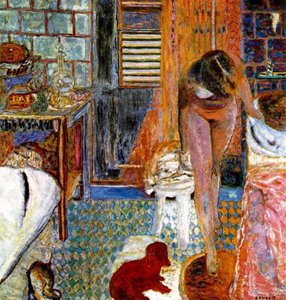
Nude (1920) is the Pierre Bonnard painting that draws the most eyes. After it, the eye goes to La toilette, ca Private (1932) and The almond tree in blossom. Among the 612 works of Pierre Bonnard in our catalog, these 100 are the most famous, each a unique original presented with its year, its museum and the reason it endures.

1867 – 1947, Fontenay-aux-Roses Post-impressionism expressionism Most works: Metropolitan Museum of Art

Top 10 paintings by Pierre Bonnard, through the gallery's eye

1
Nude (1920) by Pierre Bonnard

Nude

1920 · Óleo sobre tela

Assunto e Composição Esta obra cativante apresenta um retrato íntimo de uma figura feminina nua, renderizada com um delicado equilíbrio entre realismo e estilização. A postura relaxada, porém equilibrada, da figura convida os espectadores a um momento de introspecção silenciosa, enfatizando temas de vulnerabilidade, força interior e reflexão pessoal. A composição centraliza a figura, sutilmente emoldurada por um fundo ricamente texturizado que realça sua presença e convida a uma exploração…

2
La toilette, ca Private (1932) by Pierre Bonnard

La toilette, ca Private

1932 · Oil On Canvas

Pierre Bonnard’s La toilette, ca Private transports us into a moment suspended in time—a private ritual unfolding within the soft embrace of a sunlit bedroom. The scene is less a mere depiction and more an immersion into memory itself. We find ourselves observing a woman near a window, her lower form anchoring the composition while the surrounding elements whisper tales of domestic life. Bonnard masterfully captures the interplay between the…

3
The almond tree in blossom by Pierre Bonnard

The almond tree in blossom

Oil On Canvas

The painting features a tree with branches and leaves in the foreground. This tree is in blossom, with many flowers appearing on its branches. Several birds are perched on the branches. In the background, there are two smaller trees: one is located towards the left side of the painting, and another is positioned further back on the right side. The composition is balanced, with the foreground tree occupying a significant…

4
Le placard rouge (The Red Cupboard), (1939) by Pierre Bonnard

Le placard rouge (The Red Cupboard),

1939 · Oil On Canvas

To gaze upon Pierre Bonnard's Le placard rouge (The Red Cupboard) is to step directly into a moment suspended in time—a warm, intimate glimpse into the heart of a French kitchen from the early decades of the twentieth century. This painting transcends a mere depiction of household objects; it is an immersion into color, light, and the quiet poetry of domestic life. The overwhelming presence of the red walls and…

5
Summer in Normandy (1912) by Pierre Bonnard

Summer in Normandy

1912 · Oil On Canvas · Museu Estatal Pushkin de Artes Visuais, Moscovo

Pierre Bonnard’s “Summer in Normandy,” painted in 1912, isn't merely a depiction of a landscape; it’s an embodiment of Impressionism’s lingering influence and Bonnard’s distinctive approach to capturing the essence of domestic serenity. Currently residing at the Pushkin State Museum in Moscow, Russia, this oil on panel masterpiece transcends its physical dimensions, inviting viewers into a realm of muted hues and subtle textures that speak volumes about the artist's vision.

6
Woman with a Parrot by Pierre Bonnard

Woman with a Parrot

Oil On Canvas

The canvas invites the viewer into a quiet domestic tableau, where a woman stands before a tree, her gaze drifting beyond the frame as she cradles a bright parrot on her shoulder. Two other figures linger in the background—one near the left edge, another further back to the right—adding depth and narrative intrigue. Scattered objects—a bowl in the lower‑right corner, a chair toward the top‑left, a banana near the center,…

7
Young Girl Sitting with a Rabbit (1891) by Pierre Bonnard

Young Girl Sitting with a Rabbit

1891 · Oil On Canvas · Museu Nacional de Arte Ocidental, Tóquio

In this 1891 composition, we find a young girl nestled within a dense, organic environment. She sits with a quiet stillness, her form integrated into a lush landscape of deep greens and earthy ochres. A rabbit rests near her, adding to the sense of a private, undisturbed moment. The scene is not one of grand drama, but of a soft, intimate connection between a child and the natural world. There…

8
The Palm (1926) by Pierre Bonnard

The Palm

1926 · Acrylic On Canvas · The Phillips Collection, Washington, D.C.

The painting depicts a cityscape viewed from an elevated perspective, featuring a woman standing in the foreground. She is positioned toward the center of the composition, looking out over the urban landscape. The scene is characterized by a large building in the background and several smaller buildings scattered throughout the area. Spindly palm fronds encircle the view, and the landscape includes coral-tiled roofs. The color palette includes a sea of…

9
Bunch of Mimosa (1945) by Pierre Bonnard

Bunch of Mimosa

1945 · Oil On Canvas

Subject and Composition The painting presents a radiant bouquet of mimosa flowers, their golden petals spilling from a humble bowl onto a wooden table. The arrangement is centered, drawing the eye into a warm, almost tactile space that feels both intimate and inviting. Two chairs flank the scene, one on the right, one on the left, suggesting a quiet domestic moment paused in time. A potted plant in the background…

10
Woman with Dog (1922) by Pierre Bonnard

Woman with Dog

1922 · Oil On Canvas · The Phillips Collection, Washington, D.C.

The room feels still, held in a soft, suspended moment of domestic life. A woman sits at a table, her presence anchoring the composition with a gentle, steady weight. She wears a striped shirt of deep reds and oranges, a sudden pulse of warmth against the cooler, muted tones of the surrounding space. On her lap, a small dark dog rests, its form blending into the intimate shadows of the…

Pierre Bonnard's famous paintings, numbers 11 to 100

11Carafe, Marthe Bonnard with Her Dog (1915) by Pierre BonnardCarafe, Marthe Bonnard with Her Dog1915 · Villa Flora 12Almond Tree in Blossom by Pierre BonnardAlmond Tree in BlossomMusée d'Orsay 13The Windows (1925) by Pierre BonnardThe Windows1925 14L'escalier du jardin (the garden steps) private (1940) by Pierre BonnardL'escalier du jardin (the garden steps) private1940 · Pola Museum of Art 15The Cherry Pie by Pierre BonnardThe Cherry Pie 16Interior: The Terrasse Children (1899) by Pierre BonnardInterior: The Terrasse Children1899 · Dallas Museum of Art 17The Family of Claude Terrasse (1899) by Pierre BonnardThe Family of Claude Terrasse1899 · Metropolitan Museum of Art 18The Dressing Room (1914) by Pierre BonnardThe Dressing Room1914 · Metropolitan Museum of Art 19After the Shower (1914) by Pierre BonnardAfter the Shower1914 · Philadelphia Museum of Art 20La revue blanche by Pierre BonnardLa revue blancheDetroit Institute of Arts 21Afternoon bourgeois by Pierre BonnardAfternoon bourgeois 22Afternoon in París by Pierre BonnardAfternoon in ParísMuseu Hermitage 23Woman with Mimosa (1924) by Pierre BonnardWoman with Mimosa1924 · Metropolitan Museum of Art 24The Children's Meal (1895) by Pierre BonnardThe Children's Meal1895 · Metropolitan Museum of Art 25Nude by the Bath Tub (1931) by Pierre BonnardNude by the Bath Tub1931 26Portrait of Doctor Maurice Girardin (1917) by Pierre BonnardPortrait of Doctor Maurice Girardin1917 · Petit Palais 27Morning in the Garden at Vernonnet (1917) by Pierre BonnardMorning in the Garden at Vernonnet1917 · Metropolitan Museum of Art 28Grandmother with a Child (1894) by Pierre BonnardGrandmother with a Child1894 · Szépművészeti Múzeum 29The Lodge (1908) by Pierre BonnardThe Lodge1908 30The Letter (1906) by Pierre BonnardThe Letter1906 · National Gallery of Art 31The Little Laundress by Pierre BonnardThe Little Laundress 32Nude at the Fireplace (1913) by Pierre BonnardNude at the Fireplace1913 · Centre Pompidou 33The Artist's Studio (1900) by Pierre BonnardThe Artist's Studio1900 · National Gallery of Art 34Village Scene, Grasse (1912) by Pierre BonnardVillage Scene, Grasse1912 · Metropolitan Museum of Art 35View of Le Cannet, Roofs (1942) by Pierre BonnardView of Le Cannet, Roofs1942 36Madame Reine Thadée Natanson with the pearl necklace (1921) by Pierre BonnardMadame Reine Thadée Natanson with the pearl necklace1921 · Musée d'Orsay 37Lady Before the Mirror (1905) by Pierre BonnardLady Before the Mirror1905 · Bavarian State Painting Collections 38Children and Cat (1909) by Pierre BonnardChildren and Cat1909 · The Phillips Collection 39Woman with ducks (1892) by Pierre BonnardWoman with ducks1892 · Clemens Sels Museum Neuss 40The Dining Room in the countryside by Pierre BonnardThe Dining Room in the countryside 41Cannet landscape, view of the roofs by Pierre BonnardCannet landscape, view of the roofs 42Flowers on a Red Carpet (1928) by Pierre BonnardFlowers on a Red Carpet1928 43Woman Putting on Her Stockings (1893) by Pierre BonnardWoman Putting on Her Stockings1893 · Cleveland Museum of Art 44Café Terrace (1898) by Pierre BonnardCafé Terrace1898 · Cleveland Museum of Art 45Reclining Nude (1897) by Pierre BonnardReclining Nude1897 · MoMA - Museu de Arte Moderna 46The Claude Terrace Family in the garden (1896) by Pierre BonnardThe Claude Terrace Family in the garden1896 · Alte Nationalgalerie 47La Chanson du Grand-pere (1893) by Pierre BonnardLa Chanson du Grand-pere1893 48The Cab Horse (1895) by Pierre BonnardThe Cab Horse1895 · National Gallery of Art 49Nannies' promenade, frieze of carriages (1896) by Pierre BonnardNannies' promenade, frieze of carriages1896 50By the Sea, Under the Pines (1921) by Pierre BonnardBy the Sea, Under the Pines1921 51Nude Facing Forward (1905) by Pierre BonnardNude Facing Forward1905 · Petit Palais 52Misia Sert on Edward's boat (1905) by Pierre BonnardMisia Sert on Edward's boat1905 · Collection Bemberg 53Nu debout, de profil (1905) by Pierre BonnardNu debout, de profil1905 54Woman at Her Toilet (1905) by Pierre BonnardWoman at Her Toilet1905 · Foundation E.G. Bührle Collection 55Interior Scene (1905) by Pierre BonnardInterior Scene1905 · Foundation E.G. Bührle Collection 56The Painter's Studio (1905) by Pierre BonnardThe Painter's Studio1905 · Museum of Fine Arts 57Nude (1903) by Pierre BonnardNude1903 · Gothenburg Museum of Art 58Model in Armchair (1903) by Pierre BonnardModel in Armchair1903 · Gothenburg Museum of Art 59Nude, Red Chair (1905) by Pierre BonnardNude, Red Chair1905 60Untitled (Woman on balcony) (1900) by Pierre BonnardUntitled (Woman on balcony)1900 61The Luncheon (1899) by Pierre BonnardThe Luncheon1899 · Foundation E.G. Bührle Collection 62Man and Woman (1900) by Pierre BonnardMan and Woman1900 · Musée d'Orsay 63IN A BOAT (1907) by Pierre BonnardIN A BOAT1907 64The Woman with the Dog (1906) by Pierre BonnardThe Woman with the Dog1906 · Musée des Beaux-Arts 65Nude (1906) by Pierre BonnardNude1906 66Fishermen in a Boat, Brittany (1907) by Pierre BonnardFishermen in a Boat, Brittany1907 · Galerie Rosengart 67Reclining Nude against a White and Blue Plaid (1909) by Pierre BonnardReclining Nude against a White and Blue Plaid1909 · Städel Museum 68Nu assis, jambe pliée (1909) by Pierre BonnardNu assis, jambe pliée1909 69Movement of the Street (1907) by Pierre BonnardMovement of the Street1907 · The Phillips Collection 70In a boat (1907) by Pierre BonnardIn a boat1907 · Musée d'Orsay 71Le Café (1907) by Pierre BonnardLe Café1907 72Nude sitting, Flowers in hair (1907) by Pierre BonnardNude sitting, Flowers in hair1907 73After the Bath (1910) by Pierre BonnardAfter the Bath1910 · Metropolitan Museum of Art 74Young Girls with the Seagull (1917) by Pierre BonnardYoung Girls with the Seagull1917 · Petit Palais 75Indoor (By lamp light) (1912) by Pierre BonnardIndoor (By lamp light)1912 76Woman Picking Flowers (1916) by Pierre BonnardWoman Picking Flowers1916 · Dixon Gallery and Gardens 77Woman in a Landscape (1914) by Pierre BonnardWoman in a Landscape1914 · National Museum of Art, Architecture and Design 78Painting (1917) by Pierre BonnardPainting1917 · National Museum of Art, Architecture and Design 79Woman leaning on her Elbow with a Dog and a Still Life (1917) by Pierre BonnardWoman leaning on her Elbow with a Dog and a Still Life1917 80Portrait of woman in large hat (1917) by Pierre BonnardPortrait of woman in large hat1917 81Pont de la Concorde (1913) by Pierre BonnardPont de la Concorde1913 82Girl in blue, with rose (1916) by Pierre BonnardGirl in blue, with rose1916 83Cats on the Railing (1909) by Pierre BonnardCats on the Railing1909 · Ohara Museum of Art 84Lignite Mine (1919) by Pierre BonnardLignite Mine1919 · Bavarian State Painting Collections 85The Abduction of Europa (1919) by Pierre BonnardThe Abduction of Europa1919 · Toledo Museum of Art 86Torso of woman, profile (1918) by Pierre BonnardTorso of woman, profile1918 · Chapelle des pénitents blancs 87Interior with a Woman in a Wicker Chair (1920) by Pierre BonnardInterior with a Woman in a Wicker Chair1920 · Nationalmuseum 88A Woman with a White Corsage (1922) by Pierre BonnardA Woman with a White Corsage1922 89The Striped Blouse (1922) by Pierre BonnardThe Striped Blouse1922 90Interior at antibes (1920) by Pierre BonnardInterior at antibes1920 91IN A BOAT. THE PROMENADE AT SEA (1924) by Pierre BonnardIN A BOAT. THE PROMENADE AT SEA1924 92Le Déjeuner (1923) by Pierre BonnardLe Déjeuner1923 · National Gallery of Ireland 93Sleeping woman (1928) by Pierre BonnardSleeping woman1928 94The terrace of Vernon (1928) by Pierre BonnardThe terrace of Vernon1928 · Kunstsammlung Nordrhein-Westfalen 95Young Girl with Umbrella (1894) by Pierre BonnardYoung Girl with Umbrella1894 96Boat Ride (En bateau) (1930) by Pierre BonnardBoat Ride (En bateau)1930 · Collection Bemberg 97Blond Nude Seated (1931) by Pierre BonnardBlond Nude Seated1931 98Portrait of Madame Henri Jean Arthur Fontaine (1930) by Pierre BonnardPortrait of Madame Henri Jean Arthur Fontaine1930 · Musée d'Orsay 99Landing Stage (1939) by Pierre BonnardLanding Stage1939 100The Dessert (1921) by Pierre BonnardThe Dessert1921 · Cleveland Museum of Art

Pierre Bonnard's famous paintings, period by period

The subjects that held Pierre Bonnard's eye

The four subjects that come back most often in these originals, each with its finest example.

The museums that keep Pierre Bonnard's originals

The 8 museums that hold the most of the paintings on this page.

Museum City Works by Pierre Bonnard Paintings from this list
Metropolitan Museum of Art, Nova YorkMetropolitan Museum of Art Nova York 23 The Family of Claude Terrasse, The Dressing Room, Woman with Mimosa
Musée d'Orsay, ParisMusée d'Orsay Paris 17 Almond Tree in Blossom, Madame Reine Thadée Natanson with the pearl necklace, Man and Woman
The Phillips Collection, Washington, D.C.The Phillips Collection Washington, D.C. 15 The Palm, Woman with Dog, Children and Cat
National Gallery of Art, WashingtonNational Gallery of Art Washington 12 The Letter, The Artist's Studio, The Cab Horse
Petit Palais, ParisPetit Palais Paris 6 Portrait of Doctor Maurice Girardin, Nude Facing Forward, Young Girls with the Seagull
Cleveland Museum of Art, ClevelandCleveland Museum of Art Cleveland 5 Woman Putting on Her Stockings, Café Terrace, The Dessert
Foundation E.G. Bührle Collection, ZuriqueFoundation E.G. Bührle Collection Zurique 4 Woman at Her Toilet, Interior Scene, The Luncheon
Collection Bemberg, ToulouseCollection Bemberg Toulouse 11 Misia Sert on Edward's boat, Boat Ride (En bateau)

Pierre Bonnard across the decades: one unique original for each

Works per decade

Pick a decade to see the original that defines it.

Pierre Bonnard's paintings: questions for the gallery

What is the single most famous work of Pierre Bonnard?Reveal the answer

Nude (1920). La toilette, ca Private (1932) and The almond tree in blossom come next.

At what age did Pierre Bonnard create Nude?Reveal the answer

53 years old: Nude dates from 1920, and Pierre Bonnard was born in 1867.

Which ten paintings by Pierre Bonnard are the most famous?Reveal the answer

Nude, La toilette, ca Private, The almond tree in blossom, Le placard rouge (The Red Cupboard),, Summer in Normandy, Woman with a Parrot, Young Girl Sitting with a Rabbit, The Palm, Bunch of Mimosa and Woman with Dog. The ranking above gives each one's year and museum.

How many works by Pierre Bonnard are known?Reveal the answer

Our catalog holds 612 works by Pierre Bonnard, dated from 1891 to 1945.

Where can the most famous Pierre Bonnard originals be seen?Reveal the answer

Mostly in Metropolitan Museum of Art (Nova York), Musée d'Orsay (Paris) and The Phillips Collection (Washington, D.C.). The museum table above lists them all.

During which period did Pierre Bonnard create the best-known paintings?Reveal the answer

In 1900s: 27 of the 100 works on this page were made then, The Lodge among them.

Which famous Pierre Bonnard painting is the earliest, and which the latest?Reveal the answer

On this page, the earliest is Young Girl Sitting with a Rabbit (1891) and the latest Bunch of Mimosa (1945).

What subjects did Pierre Bonnard favour?Reveal the answer

Domestic scene (11), Woman (11) and Flowers (7), across the 100 works on this page.

What materials did Pierre Bonnard paint with most?Reveal the answer

Oil On Canvas, for 27 of the 100 works on this page.

Which movement does the work of Pierre Bonnard belong to?Reveal the answer

Post-impressionism expressionism, judging by the originals on this page.

What Pierre Bonnard originals can I see at the Metropolitan Museum of Art?Reveal the answer

The Family of Claude Terrasse, The Dressing Room and Woman with Mimosa: the Metropolitan Museum of Art, Nova York holds 7 of the works on this page.

Where can I order a hand-painted Pierre Bonnard reproduction?Reveal the answer

Yes, as a reproduction: the original stays in its museum, but any painting on this page can be painted by hand for you, made to order one at a time, from the painting's own page.

Pierre Bonnard: a portrait of the artist

Vida Inicial, Família e Formação

Pierre Bonnard chegou ao mundo em 3 de outubro de 1867, em Fontenay-aux-Roses, Hauts-de-Seine, França. Ele nasceu em uma família de expectativas estruturadas; seu pai, Eugène Bonnard, ocupava um cargo de alto escalão no Ministério da Guerra francês. Enquanto sua linhagem estava enraizada na estabilidade administrativa do Estado, a esfera doméstica de Pierre foi moldada por sua mãe, Élisabeth Mertzdorff, originária da Alsácia. Ele cresceu ao lado de seu irmão, Charles, e de sua irmã, Andrée, em um lar que veria sua irmã casar-se, eventualmente, com o compositor Claude Terrasse.

Sua educação formal seguiu os caminhos tradicionais da época, mas suas inclinações pendiam para o visual em vez do burocrático. Ele buscou instrução na Ecole des Beaux-Arts e, mais tarde, na Academie Julian. Essas instituições forneceram a base técnica para um homem que, eventualmente, se afastaria da rigidez acadêmica. Seus primeiros anos foram marcados por uma sensibilidade em desenvolvimento sobre como a luz e a forma poderiam ser capturadas, uma habilidade que mais tarde definiria sua abordagem aos aspectos mais mundanos da existência.

Os Nabis e o Desenvolvimento Artístico

Os primeiros anos de Pierre Bonnard foram marcados por um afastamento silencioso do caminho jurídico que seu pai havia vislumbrado. Após aperfeiçoar suas habilidades de observação através da caricatura, ele encontrou sua verdadeira vocação nos círculos de vanguarda de Paris. Tornou-se um membro fundador dos Nabis, um grupo de artistas que buscava transcender a mera representação. Este período foi definido por uma transição em direção ao decorativo e ao simbólico, à medida que ele começava a se distanciar das restrições da tradição acadêmica. Ele foi uma figura de destaque na transição do Impressionismo para o Modernismo, navegando no espaço entre a luz fugaz da geração anterior e as explorações mais estruturadas e subjetivas do novo século.

Sua visão em desenvolvimento foi moldada por um profundo interesse pelas obras de Paul Gauguin, cuja influência o ajudou a seguir em direção a uma abordagem mais estilizada da forma e da cor. Esse percurso foi ainda mais enriquecido pela influência da arte japonesa. As gravuras de Hokusai e de outros mestres japoneses ofereceram-lhe uma nova maneira de organizar o espaço e a linha. Em vez de focar em grandes narrativas históricas, Pierre Bonnard voltou sua atenção para a quietude da vida doméstica. Ele buscava capturar a atmosfera de um momento, trabalhando frequentemente a partir da memória para traduzir impressões pessoais na tela. Este método permitiu-lhe priorizar a ressonância emocional de uma cena em detrimento de uma representação literal e fotográfica da realidade.

Técnica e Estilo Artístico Único

A abordagem de Pierre Bonnard em relação à tela era definida por uma preferência pela lógica interna da cor em detrimento das restrições da representação literal. Ele frequentemente se afastava da observação direta, optando, em vez disso, por pintar a partir da memória. Essa dependência da recordação permitia-lhe destilar uma cena em seus componentes emocionais essenciais, resultando frequentemente em obras onde as qualidades decorativas e a intensidade cromática prevaleciam sobre o próprio tema. Em suas mãos, um interior doméstico tornava-se menos o registro de um cômodo e mais uma exploração de como a luz e o matiz interagem dentro de um espaço privado.

Sua relação física com o meio era igualmente não convencional. Ele frequentemente descolava suas telas da moldura, fixando-as diretamente na parede. Esse método permitia-lhe trabalhar nas bordas do quadro, utilizando ocasionalmente o efeito de corte para achatar ainda mais o espaço pictórico. Tais técnicas contribuíam para a qualidade estilizada, quase gráfica, de suas composições. As superfícies resultantes pareciam muitas vezes respirar com uma sensação de movimento, alcançada através de uma aplicação variada da cor a óleo, que podia variar de lavagens finas e translúcidas a marcas espessas e texturizadas.

Esse foco na atmosfera do cotidiano significava que até as arrumações mais mundanas — uma fruteira ou uma mulher em um quarto silencioso — eram transformadas através de seu uso específico da luz. Ele possuía uma habilidade singular de capturar tanto o brilho intenso do sol do meio-dia quanto o brilho suave e artificial de uma lâmpada de interior. Ao priorizar a experiência subjetiva da cor, ele moveu sua obra em direção a uma sensibilidade moderna que favorecia a sensação de um momento em vez de sua mera documentação.

Vida com Marthe de Méligny

Em 1893, uma mulher chamada Maria Boursin entrou na vida de Pierre Bonnard, uma presença que viria a definir toda a paisagem doméstica de seus anos tardios. Conhecida por ele como Marthe, ela era mais do que uma companheira; tornou-se a lente primordial através da qual ele contemplava o mundo privado. A relação entre ambos foi marcada por uma intimidade de longo prazo e por um espaço compartilhado, evoluindo de uma conexão profunda para uma união formal quando se casaram, em 1925. Essa parceria proporcionou o ritmo constante e sereno que sustentou sua produção criativa por décadas.

Marthe era uma presença constante em seu ateliê, servindo frequentemente como sua modelo mais fiel. Ela surgia em suas obras em uma variedade de papéis, desde a participante casual em uma cena familiar até o tema de muitos nus. Devido ao fato de precisar tomar banho todos os dias para tratar uma condição tuberculosa, Pierre Bonnard frequentemente a capturava nos momentos privados e vulneráveis de seus rituais de banho. Essas representações não eram meros estudos de anatomia, mas sim reflexos de sua vida cotidiana a dois, muitas vezes caracterizados pela luz suave de seu ambiente compartilhado.

A vida que levaram juntos foi marcada por uma certa quietude, uma sensação de estar capturada em um momento fugaz de domesticidade. Mesmo com o passar dos anos, a imagem dela permaneceu central em sua visão artística, aparecendo em diversas formas conforme atravessavam suas vidas. Ela permaneceu ao seu lado até sua morte, em 1942, deixando para trás um registro visual de uma vida vivida em uma proximidade íntima e observadora.

Obras-Chave e Pinturas Notáveis

A produção inicial de Pierre Bonnard revela os alicerces de sua visão em constante evolução. Em 1891, Panneaux décoratifs - Femmes au jardin demonstrou as qualidades decorativas estilizadas que viriam a definir sua carreira. Já em 1892, The Dressing Gown revelou um interesse crescente pela quietude da vida doméstica. Estes primeiros anos foram marcados por uma transição das influências estruturadas de sua formação em direção a uma forma de ver o mundo mais pessoal e subjetiva.

À medida que seu estilo amadurecia, o tema central tornava-se frequentemente secundário à maneira como a luz e a cor ocupavam o espaço. Girl in Straw Hat (Femme au chapeau rouge, pintada em 1903, exemplifica essa mudança, onde a figura é muitas vezes absorvida por uma composição complexa de cores. Mais tarde, em 1925, The Window capturou a sensação de observar através de uma moldura para um mundo de luz mutável. Sua obra tardia continuou essa exploração até o fim; The Almond Tree in Blossom, pintada por volta de 1946, permanece como um exemplo significativo de sua preocupação com o jogo entre a luz e a natureza.

  • Panneaux décoratifs - Femmes au jardin (1891)
  • The Dressing Gown (1892)
  • Girl in Straw Hat (Femme au chapeau rouge) (1903)
  • The Window (1925)
  • The Almond Tree in Blossom (c. 1946)

Legado e Influência Duradoura

A contribuição de Pierre Bonnard para o modernismo reside na sua recusa em ser facilmente categorizado. Embora os seus primeiros anos tenham sido definidos pela sua pertença aos Nabis, ao lado de Edouard Vuillard e Paul Serusier, a sua obra acabou por transcender os limites específicos do grupo. Ele transitou das preocupações estruturadas do Impressionismo em direção a um modernismo mais complexo e subjetivo. As suas pinturas são visualmente extremas em sua complexidade, frequentemente desvanecendo as fronteiras entre o sujeito e o seu entorno. Esta complexidade foi alcançada através de uma abordagem inquieta e tátil do meio pictórico, utilizando uma gama notável de pinceladas espessas ou finas, densas ou diluídas, aplicadas com pincel ou espalmadas.

A influência do artista é sentida na forma como ele tratava a superfície da tela. Ao fixar frequentemente telas sem moldura diretamente na parede, ele conferiu uma qualidade háptica única que influenciou a forma como as gerações subsequentes abordaram a presença física de uma pintura. A sua capacidade de manipular a cor e a luz permitiu-lhe capturar o fluxo de um momento, tratando muitas vezes a cena como um fragmento de uma experiência maior e mutável. Ele não se limitava a registar uma vista; ele reconstruía-a através de uma lógica pessoal e interna que priorizava a sensação do olhar sobre a mera precisão do objeto.

  • La Vielle Femme, l’Enfant, et la Bassett (1927)
  • Méditerranée (1909 e 1911)
  • The White Interior (1932)
  • The French Window (1932)

Onde Ver Suas Obras Hoje

A presença física da visão de Pierre Bonnard permanece espalhada por diversas instituições de renome, permitindo que sua abordagem singular da luz e da domesticidade seja estudada em variados contextos. Nos Estados Unidos, sua influência é sentida através de coleções em Nova York, onde o Museum of Modern Art abriga suas pinturas. O Metropolitan Museum of Art também mantém obras que refletem sua transição para uma sensibilidade mais moderna. Para aqueles que buscam sua presença no Meio-Oeste americano, o Art Institute of Chicago preserva peças que destacam seu manejo único da cor.

Atravessando o Atlântico, seu alcance estende-se pelas proeminentes galerias da Europa. A Tate Modern, em Londres, abriga suas obras, oferecendo uma perspectiva sobre seu desenvolvimento dentro dos movimentos mais amplos da época. Essas coleções proporcionam uma oportunidade de encontrar as cenas silenciosas e, muitas vezes, fragmentadas que ele compôs a partir da memória, afastando-se das grandes narrativas de seus predecessores em direção à intimidade do cotidiano.

  • Woman in Checkered Dress (1890)
  • The Dining Room (1913)
  • The Window (1925)
  • The Almond Tree in Blossom (1947)

All 612 works by Pierre Bonnard →