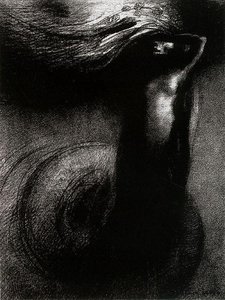
Portrait of Odilon Redon

The 100 Most Famous Odilon Redon Paintings, Each One of a Kind

Updated Outubro 2026 · ranked by our popularity score (searches, visits and orders for each work) · 804 works by Odilon Redon in our catalogue

In short

The cyclops (1914) is the Odilon Redon painting that draws the most eyes; the original belongs to the Kröller-Müller Museum, Otterlo. After it, the eye goes to The Black Pegasus and Woman and Centaur (1900). Among the 804 works of Odilon Redon in our catalog, these 100 are the most famous, each a unique original presented with its year, its museum and the reason it endures.

1840 – 1916, Bordéus Symbolism Most works: Musée d'Orsay

Top 10 paintings by Odilon Redon, through the gallery's eye

1
The cyclops (1914) by Odilon Redon

The cyclops

1914 · Kröller-Müller Museum, Otterlo

Odilon Redon's "The Cyclops," painted around 1914, isn’t merely a depiction of the Greek myth; it’s an immersion into a profoundly personal and unsettling dream world. This arresting work, now housed in the Kröller-Müller Museum in Otterlo, Netherlands, transcends simple illustration, offering instead a glimpse into the artist's subconscious – a realm populated by shadowy figures, potent symbols, and a palpable sense of yearning.

2
The Black Pegasus by Odilon Redon

The Black Pegasus

Oil On Canvas

To gaze upon Odilon Redon's The Black Pegasus is not merely to look at a painting; it is to step through a veil into the shimmering, melancholic landscape of the subconscious mind. This captivating oil on canvas transports the viewer beyond the mundane realities of the visible world, inviting an intimate communion with the realm of dreams and myth. The central figure—the magnificent black pegasus—is breathtaking in its impossible grace.…

3
Woman and Centaur (1900) by Odilon Redon

Woman and Centaur

1900 · Drawing

To stand before Odilon Redon’s Woman and Centaur is to step across the threshold into a dreamscape, a place where the boundaries between myth, instinct, and profound human emotion dissolve. Created in the year 1900, this work is not merely a depiction of two figures; it is a visual poem rendered in ink and shadow, embodying the very spirit of Symbolism. Redon, an artist forever drawn to the unseen realms…

4
Saint Sebastian (1900) by Odilon Redon

Saint Sebastian

1900 · Oil On Canvas · Musée d'Orsay, Paris

A nude male figure, Saint Sebastian, occupies the center of this Symbolist composition, his pale skin illuminated against a dark, atmospheric backdrop. He is pierced by arrows, a physical manifestation of martyrdom and spiritual endurance. Large, vertical forms resembling ancient trees or rocky outcroppings loom over him, creating a sense of enclosure. The background features patches of ochre, gold, and cool blues that suggest a nebulous, dreamlike space.

5
The Martyrdom of Saint Sebastian (1910) by Odilon Redon

The Martyrdom of Saint Sebastian

1910 · Oil On Canvas · Kunstmuseum Basel, Basileia

To stand before Odilon Redon's depiction of The Martyrdom of Saint Sebastian is to step across a threshold into the deep, resonant chambers of the Symbolist imagination. This 1910 oil on canvas does not merely record an event; it excavates a profound state of being—one caught between agonizing vulnerability and transcendent spiritual endurance. The composition immediately arrests the viewer with its intense chromatic drama. Saint Sebastian, bound to the base…

6
The Death of Ophelia (1905) by Odilon Redon

The Death of Ophelia

1905 · Oil On Canvas

The Death of Ophelia is a captivating painting by the French artist Odilon Redon, created in 1905. This oil on canvas piece is a representation of the tragic death of Ophelia from Shakespeare's play Hamlet. The painting is a prime example of the Symbolist art movement, which sought to represent absolute truths symbolically through language and metaphorical images. Symbols and Metaphors The painting features a woman sitting on a rock…

7
The Birth of Venus (1910) by Odilon Redon

The Birth of Venus

1910 · Oil On Canvas

The sea breathes with a quiet, rhythmic pulse as a figure begins to take shape upon the water. Venus lies reclined within a red boat, her form emerging from the depths of the ocean in a moment caught between sleep and awakening. The surface of the water reflects soft shades of blue and yellow, casting a warmth that settles over the scene like a gentle afternoon sun. There is a…

8
White Pegasus (1908) by Odilon Redon

White Pegasus

1908 · Oil On Canvas

To gaze upon Odilon Redon's White Pegasus is to step across a threshold into a realm where myth breathes and the spirit takes flight. This captivating oil on canvas, dating from 1908, is far more than a mere depiction of a winged horse; it is a profound meditation on freedom, purity, and the sublime mystery that underpins our visible reality. The composition centers around the magnificent white Pegasus, poised atop…

9
Breton Village (1890) by Odilon Redon

Breton Village

1890 · Oil On Canvas · National Gallery of Art, Washington

To gaze upon Odilon Redon's Breton Village is not merely to observe a scene; it is to step through a veil into a meticulously crafted dream. Painted in 1890, this work stands as a profound testament to the Post-Impressionist spirit—a movement that dared to look beyond the fleeting shimmer of natural light and instead plumb the depths of human emotion and subjective experience. Redon eschews the purely objective record of…

10
Sacred Heart (1910) by Odilon Redon

Sacred Heart

1910 · Painting

To gaze upon Odilon Redon’s Sacred Heart is to step through a veil into a realm where the spiritual meets the exquisitely tangible. Painted in 1910, this masterpiece transcends mere portraiture; it is a profound meditation on divine love and boundless compassion. The composition immediately draws the eye to the central figures—a woman, perhaps evoking the timeless grace of Mary, cradling a child whose form, rendered in striking black and…

Odilon Redon's famous paintings, numbers 11 to 100

11La Barque Mystique by Odilon RedonLa Barque Mystique 12Flower of Blood (1895) by Odilon RedonFlower of Blood1895 13The Green Horseman (1904) by Odilon RedonThe Green Horseman1904 14The Flame (Goddess of Fire) (1896) by Odilon RedonThe Flame (Goddess of Fire)1896 15Reflection by Odilon RedonReflection 16Portrait of Madame Redon with Ari (1902) by Odilon RedonPortrait of Madame Redon with Ari1902 17The Black Sun by Odilon RedonThe Black Sun 18The Cyclops (1914) by Odilon RedonThe Cyclops1914 · Kröller-Müller Museum 19Underwater Flora by Odilon RedonUnderwater Flora 20Death: My irony surpasses all others! (1889) by Odilon RedonDeath: My irony surpasses all others!1889 21Arbre sur fond jaune (1901) by Odilon RedonArbre sur fond jaune1901 22Prayer, Face, Flowers (1893) by Odilon RedonPrayer, Face, Flowers1893 · Musée d'Orsay 23Mystical Conversation (1896) by Odilon RedonMystical Conversation1896 · Museum of Fine Arts 24Siren (1900) by Odilon RedonSiren1900 · Kunstmuseum Basel 25On the Horizon, the Angel of Certitude, and in the Dark Sky, A Questioning Glance (1882) by Odilon RedonOn the Horizon, the Angel of Certitude, and in the Dark Sky, A Questioning Glance1882 · Museu de Arte do Condado de Los Angeles 26Head with Flowers (1907) by Odilon RedonHead with Flowers1907 27Le Bouddha (The Buddha) by Odilon RedonLe Bouddha (The Buddha) 28The Road to Peyrelebade by Odilon RedonThe Road to Peyrelebade 29A Janela (1907) by Odilon RedonA Janela1907 · Neue Pinakothek 30Lenor appears in front of the black sun of melancholy (1882) by Odilon RedonLenor appears in front of the black sun of melancholy1882 31Vision (1883) by Odilon RedonVision1883 32The Prisoner (Boulet) (1879) by Odilon RedonThe Prisoner (Boulet)1879 33Sita (1893) by Odilon RedonSita1893 34Portrait of Mademoiselle Jeanne Roberte de Domecy (1905) by Odilon RedonPortrait of Mademoiselle Jeanne Roberte de Domecy1905 35Screen for Olivier Sainsère (1903) by Odilon RedonScreen for Olivier Sainsère1903 36Les Origines — Plate 2 (1883) by Odilon RedonLes Origines — Plate 21883 37The Departure (1906) by Odilon RedonThe Departure1906 38A Mulher Velada (1895) by Odilon RedonA Mulher Velada1895 · Kröller-Müller Museum 39Woman in Red by Odilon RedonWoman in RedMusée d'Orsay 40The Gambler (1879) by Odilon RedonThe Gambler1879 41The Mask of the Red Death (1883) by Odilon RedonThe Mask of the Red Death1883 42Everywhere eyeballs are aflame (1888) by Odilon RedonEverywhere eyeballs are aflame1888 43Flowers (1909) by Odilon RedonFlowers1909 44I am still the great Isis! None has yet lifted my veil! My fruit is the Sun! (plate 16) (1896) by Odilon RedonI am still the great Isis! None has yet lifted my veil! My fruit is the Sun! (plate 16)1896 · MoMA - Museu de Arte Moderna 45untitled (5561) by Odilon Redonuntitled (5561) 46Saint George and the Dragon (Saint Georges et le dragon) (1909) by Odilon RedonSaint George and the Dragon (Saint Georges et le dragon)1909 · Barnes Foundation 47Cup of cognition (The Children's Cup) (1894) by Odilon RedonCup of cognition (The Children's Cup)1894 48The Dream (also known as Thought) (1908) by Odilon RedonThe Dream (also known as Thought)1908 49Hantise (Obsession) (1894) by Odilon RedonHantise (Obsession)1894 · British Museum 50The Mysterious Boat (1890) by Odilon RedonThe Mysterious Boat1890 51Yellow Tree (1900) by Odilon RedonYellow Tree1900 · Musée d'Orsay 52Woman and the mountain landscape (1865) by Odilon RedonWoman and the mountain landscape1865 53The Mystical Knight (Oedipus and the Sphinx) (1869) by Odilon RedonThe Mystical Knight (Oedipus and the Sphinx)1869 54Two trees (1875) by Odilon RedonTwo trees1875 55The Smiling Spider (1881) by Odilon RedonThe Smiling Spider1881 56Les Origines — Plate 1 (1883) by Odilon RedonLes Origines — Plate 11883 57Les Origines — Cover (1883) by Odilon RedonLes Origines — Cover1883 58Christ and the Samaritan Woman (The White Flower Bouquet) (1895) by Odilon RedonChrist and the Samaritan Woman (The White Flower Bouquet)1895 · Städel Museum 59Madness (1882) by Odilon RedonMadness1882 60There were also embryonic beings (1885) by Odilon RedonThere were also embryonic beings1885 61The Egg (1885) by Odilon RedonThe Egg1885 62A madman in a dismal landscape (1885) by Odilon RedonA madman in a dismal landscape1885 63In the balance (1880) by Odilon RedonIn the balance1880 64Flower of the swamp, a head human and sad (1885) by Odilon RedonFlower of the swamp, a head human and sad1885 65Upon awakening I saw the Goddess of the Intelligible with her severe and hard profile (1885) by Odilon RedonUpon awakening I saw the Goddess of the Intelligible with her severe and hard profile1885 66Profile of Light (1886) by Odilon RedonProfile of Light1886 · Scottish National Gallery 67Cauldron of the Sorceress (1879) by Odilon RedonCauldron of the Sorceress1879 68Red Boat with Blue Sails (1907) by Odilon RedonRed Boat with Blue Sails1907 69Anthony: Help me, O my God! (plate 2) (1896) by Odilon RedonAnthony: Help me, O my God! (plate 2)1896 70Immediately three goddesses arise (plate 11) (1896) by Odilon RedonImmediately three goddesses arise (plate 11)1896 71Helena (Ennoia) (plate 10) (1896) by Odilon RedonHelena (Ennoia) (plate 10)1896 72And the eyes without heads were floating like molluscs (plate 13) (1896) by Odilon RedonAnd the eyes without heads were floating like molluscs (plate 13)1896 73She draws from her bosom a sponge, perfectly black, and covers it with kisses (plate 8) (1896) by Odilon RedonShe draws from her bosom a sponge, perfectly black, and covers it with kisses (plate 8)1896 74The Old Woman: What are you afraid of? A wide black hole! Perhaps it is a void? (plate 19) (1896) by Odilon RedonThe Old Woman: What are you afraid of? A wide black hole! Perhaps it is a void? (plate 19)1896 75Here is the Good Goddess, the Idaean mother of the mountains (plate 15) (1896) by Odilon RedonHere is the Good Goddess, the Idaean mother of the mountains (plate 15)1896 76Oannès: I, the first consciousness of chaos, arose from the abyss that I might harden matter, and give law unto forms (plate 14) (1896) by Odilon RedonOannès: I, the first consciousness of chaos, arose from the abyss that I might harden matter, and give law unto forms (plate 14)1896 77My kisses have the taste of fruit which would melt in your heart! ... You distain me! Farewell! (plate 4) (1896) by Odilon RedonMy kisses have the taste of fruit which would melt in your heart! ... You distain me! Farewell! (plate 4)1896 78Different peoples inhabit the countries of the Ocean (plate 23) (1896) by Odilon RedonDifferent peoples inhabit the countries of the Ocean (plate 23)1896 79Portrait of Ari Redon (1898) by Odilon RedonPortrait of Ari Redon1898 80Auricular Cell (1894) by Odilon RedonAuricular Cell1894 81The Two Graces (1900) by Odilon RedonThe Two Graces1900 · Columbus Museum of Art 82Centaur (1900) by Odilon RedonCentaur1900 83Woman in a gothic arcade- woman with flowers (1905) by Odilon RedonWoman in a gothic arcade- woman with flowers1905 · Van Gogh Museum 84Profile of a Woman with a Vase of Flowers (1900) by Odilon RedonProfile of a Woman with a Vase of Flowers1900 85The Gothic Window (1900) by Odilon RedonThe Gothic Window1900 · Indianapolis Museum of Art 86The Chariot of Apollo (1907) by Odilon RedonThe Chariot of Apollo1907 · Pola Museum of Art 87Flowers in a Japanese Vase (1908) by Odilon RedonFlowers in a Japanese Vase1908 · Pola Museum of Art 88The Muse on Pegasus (1908) by Odilon RedonThe Muse on Pegasus1908 · The Museum of Modern Art, Gunma 89Stained Glass Window by Odilon RedonStained Glass Window 90The Captive (1914) by Odilon RedonThe Captive1914 · Museu Wallraf-Richartz 91Evocation of Roussel (1912) by Odilon RedonEvocation of Roussel1912 · National Gallery of Art 92Jacob's Struggle with the Angel (1910) by Odilon RedonJacob's Struggle with the Angel1910 · Musée d'Orsay 93Dante's Vision (1914) by Odilon RedonDante's Vision1914 94Venetian Landscape (1908) by Odilon RedonVenetian Landscape1908 95Concern for the Absolute… Philosopher (1880) by Odilon RedonConcern for the Absolute… Philosopher1880 96Les yeux clos (Closed Eyes) by Odilon RedonLes yeux clos (Closed Eyes) 97Virgin of the Dawn (1890) by Odilon RedonVirgin of the Dawn1890 98Vase of Flowers (1904) by Odilon RedonVase of Flowers1904 · Museu de Belas Artes da Virgínia 99cyclops (1898) by Odilon Redoncyclops1898 100Landscape with Eve (1900) by Odilon RedonLandscape with Eve1900

Odilon Redon's famous paintings, period by period

The subjects that held Odilon Redon's eye

The four subjects that come back most often in these originals, each with its finest example.

The museums that keep Odilon Redon's originals

The 8 museums that hold the most of the paintings on this page.

Museum City Works by Odilon Redon Paintings from this list
Musée d'Orsay, ParisMusée d'Orsay Paris 29 Saint Sebastian, Prayer, Face, Flowers, Woman in Red
Kröller-Müller Museum, OtterloKröller-Müller Museum Otterlo 7 The cyclops, The Cyclops, A Mulher Velada
National Gallery of Art, WashingtonNational Gallery of Art Washington 7 Breton Village, Evocation of Roussel
Pola Museum of Art, HakonePola Museum of Art Hakone 5 The Chariot of Apollo, Flowers in a Japanese Vase
Kunstmuseum Basel, BasileiaKunstmuseum Basel Basileia 2 The Martyrdom of Saint Sebastian, Siren
MoMA - Museu de Arte Moderna, Nova YorkMoMA - Museu de Arte Moderna Nova York 9 I am still the great Isis! None has yet lifted my veil! My fruit is the Sun! (plate 16)
Van Gogh Museum, AmsterdãVan Gogh Museum Amsterdã 5 Woman in a gothic arcade- woman with flowers
British Museum, LondresBritish Museum Londres 2 Hantise (Obsession)

Odilon Redon across the decades: one unique original for each

Works per decade

Pick a decade to see the original that defines it.

Odilon Redon's paintings: questions for the gallery

What is the single most famous work of Odilon Redon?Reveal the answer

The cyclops (1914), Kröller-Müller Museum, Otterlo. The Black Pegasus and Woman and Centaur (1900) come next.

At what age did Odilon Redon create The cyclops?Reveal the answer

74 years old: The cyclops dates from 1914, and Odilon Redon was born in 1840.

Which ten paintings by Odilon Redon are the most famous?Reveal the answer

The cyclops, The Black Pegasus, Woman and Centaur, Saint Sebastian, The Martyrdom of Saint Sebastian, The Death of Ophelia, The Birth of Venus, White Pegasus, Breton Village and Sacred Heart. The ranking above gives each one's year and museum.

How many works by Odilon Redon are known?Reveal the answer

Our catalog holds 804 works by Odilon Redon, dated from 1865 to 1914.

Where can the most famous Odilon Redon originals be seen?Reveal the answer

Mostly in Musée d'Orsay (Paris), Kröller-Müller Museum (Otterlo) and National Gallery of Art (Washington). The museum table above lists them all.

During which period did Odilon Redon create the best-known paintings?Reveal the answer

In 1900s: 29 of the 100 works on this page were made then, Woman and Centaur among them.

Which famous Odilon Redon painting is the earliest, and which the latest?Reveal the answer

On this page, the earliest is Woman and the mountain landscape (1865) and the latest The cyclops (1914).

What subjects did Odilon Redon favour?Reveal the answer

Dreamlike (10), Woman (8) and Flowers (8), across the 100 works on this page.

What materials did Odilon Redon paint with most?Reveal the answer

Oil On Canvas, for 18 of the 100 works on this page.

Which movement does the work of Odilon Redon belong to?Reveal the answer

Symbolism, judging by the originals on this page.

What Odilon Redon originals can I see at the Musée d'Orsay?Reveal the answer

Saint Sebastian, Prayer, Face, Flowers and Woman in Red: the Musée d'Orsay, Paris holds 5 of the works on this page.

Where can I order a hand-painted Odilon Redon reproduction?Reveal the answer

Yes, as a reproduction: the original stays in its museum, but any painting on this page can be painted by hand for you, made to order one at a time, from the painting's own page.

Odilon Redon: a portrait of the artist

Infância, Família e Formação

Nascido Bertrand-Jean Redon em 20 de abril de 1840, em Bordeaux, Aquitânia, França, o menino que viria a ser conhecido como Odilon Redon entrou em um mundo moldado pelas origens de sua família. Sua mãe, Marie Guérin, era uma crioula francesa da Île Bourbon, e foi a partir do nome dela que ele eventualmente adquiriu o seu pseudônimo escolhido. Mesmo em sua juventude, uma certa aptidão visual já era evidente; aos dez anos, ele foi premiado com um prêmio de desenho na escola, um pequeno triunfo que prenunciava a sensibilidade que ele aplicaria mais tarde ao seu ofício.

O caminho em direção a uma vida artística não foi linear. Embora tenha iniciado os estudos formais de desenho aos quinze anos, os desejos de seu pai inicialmente o atraíram para o mundo estruturado da arquitetura. Essa busca o levou a Paris, onde, em 1864, estudou brevemente pintura com Jean-Léon Gérôme. No entanto, as exigências rígidas do treinamento arquitetônico não se ajustavam ao seu temperamento. Após não ser aprovado nos exames de admissão para a École des Beaux-Arts, ele retornou à sua Bordeaux natal para buscar uma forma diferente de enxergar.

Na quietude de sua região de origem, suas mãos encontraram novas texturas. Ele dedicou-se à escultura e começou a dominar as intrincadas e sombrias artes da gravura em metal e da litografia. Foi sob a orientação de Rodolphe Bresdin que essas habilidades técnicas criaram raízes, proporcionando-lhe as ferramentas para explorar os domínios mais obscuros e ambíguos da psique humana. Esses primeiros anos de experimentação com a linha e a pedra lançaram as bases para tudo o que viria a seguir.

O Período Monocromático dos Noirs

O curso da vida de Redon tomou um rumo inesperado em 1870, quando a Guerra Franco-Prussiana o convocou para servir no exército. Este período de dever militar interrompeu o seu caminho artístico em desenvolvimento, mas não foi capaz de extinguir as visões que fervilhavam em seu interior. Ao retornar, ele voltou seu foco para as sombras, trabalhando quase exclusivamente em preto e branco até chegar aos seus cinquenta anos. Ele passou a chamar essas obras visionárias de seus noirs, um termo que capturava a natureza intensa e sombria de suas explorações. Através desses estudos monocromáticos, ele buscou dar forma ao invisível, afastando-se do mundo literal para encontrar uma linguagem de pura luz e escuridão.

Seu método era tão variado quanto as criaturas que ele conjurava. Ele dominou a arte da litografia e utilizou o carvão para construir suas composições, frequentemente sobrepondo diferentes materiais para alcançar uma profundidade específica. Ele combinava carvão vegetal e carvão oleoso com toques de carvão comprimido e giz preto para criar seus efeitos. Essas ferramentas permitiam-lhe renderizar cenas noturnas e criaturas estranhas e fantásticas que pareciam emergir de uma névoa turbulenta. Suas mãos trabalhavam com uma intensidade deliberada, utilizando a dureza do giz preto para delinear formas contra as passagens mais suaves e atmosféricas do carvão. Os resultados não eram meros desenhos, mas janelas para um reino privado e sombrio.

Evolução para a Cor e o Simbolismo

Com a chegada da década de 1890, uma nova luz começou a tocar o ateliê de Odilon Redon. As sombras densas e monocromáticas de seus anos anteriores deram lugar a um súbito abraço à cor. Ele voltou-se para os pastéis e óleos, encontrando nesses meios uma forma de expressar as mutáveis nuances da alma. Esta não foi uma mera mudança de técnica, mas uma expansão profunda de sua visão. Ele afastou-se do rigor de seus estudos em carvão em direção a uma abstração onírica, onde as formas pareciam dissolver-se em luz e matiz. Essa transição marcou seu lugar no coração do movimento Simbolista, à medida que buscava dar forma ao intangível através da linguagem da cor.

Essa nova luminosidade foi profundamente influenciada pela chegada da arte japonesa na França. Odilon Redon sentiu-se atraído pela estética das gravuras japonesas, encontrando muito o que admirar em sua perspectiva achatada e na audácia de suas cores. Esse fascínio permitiu-lhe avançar ainda mais em direção a um reino de sugestão, em vez de uma representação literal. Suas composições começaram a refletir essa influência oriental, fundindo um senso de mistério com uma qualidade mais decorativa e etérea. O mundo que ele pintava já não era um lugar de objetos sólidos, mas um espaço de ressonância espiritual e emocional.

Obras-Chave e Encomendas Notáveis

À medida que Odilon Redon se afastava das sombras de seus anos iniciais, seu pincel encontrou um novo propósito através do patrocínio daqueles que compartilhavam sua fascinação pelo invisível. O Barão Robert de Domecy tornou-se uma figura significativa neste período, encomendando ao artista o registro dos semblantes de sua família. Estes retratos da Baronesa e de sua filha, Jeanne, permitiram que Redon aplicasse seu sentido evolutivo de luz à forma humana, buscando revelar uma vida interior sob a superfície da pele.

Sua imaginação frequentemente se voltava para os mitos da antiguidade, reimaginando-os através de uma lente de abstração onírica. Em uma notável pintura a óleo, ele retratou o mito de Polifemo e a ninfa Galateia, conhecida como O Ciclope. Esta obra captura o gigante enquanto ele volta um único olho para a donzela adormecida, uma composição que reflete sua habilidade de fundir temas clássicos com um senso de mistério psicológico. De forma semelhante, sua obra em pastel de 1900, Retrato de Marie Botkine, convida a um olhar atento sobre as profundezas quietas e introspectivas do sujeito, renderizadas com um toque suave e luminoso que define seu estilo tardio.

Em seus últimos anos, a influência da estética oriental tornou-se ainda mais pronunciada, conduzindo a obras que abraçavam uma perspectiva mais decorativa e achatada. Perto do fim de sua vida, por volta de 1916, ele produziu Grande Buquê em um Vaso Japonês, uma peça que demonstra como os princípios da arte japonesa haviam se entrelaçado profundamente em sua linguagem visual. Este trabalho tardio revela um artista que havia abraçado plenamente o poder da cor para expressar o intangível.

Técnica e Estilo Artístico

Odilon Redon transitou pelo mundo da arte como desenhista, gravador e pintor, buscando sempre colocar a lógica do visível a serviço do invisível. Em seus primeiros anos, ele encontrou uma linguagem profunda nas sombras, trabalhando primordialmente em preto e branco. Ele dominou a arte da litografia, utilizando o meio para alcançar gradações tonais sutis que permitiam à luz emergir de uma escuridão profunda. Para alcançar maior precisão, ele frequentemente aplicava giz preto fabricado para delinear elementos composicionais específicos sobre passagens amplas e suaves de carvão. Essas obras eram frequentemente descritas como uma síntese de pesadelos e sonhos, onde as fronteiras entre o físico e o imaginado tornavam-se turvas.

À medida que sua mão se tornava mais confiante, sua abordagem em relação à textura e à luz sofreu uma transformação. Ele afastou-se das profundezas pesadas e monocromáticas de seus primeiros estudos em carvão em direção ao uso de pastéis e óleos. Essa transição permitiu-lhe explorar um tipo diferente de luminosidade, embora nunca tenha perdido sua preocupação com o subconsciente. Mesmo ao trabalhar com a cor, suas composições frequentemente retinham um senso de mistério, como se os temas estivessem emergindo de um sonho, e não de uma paisagem física. Sua habilidade em manipular diferentes meios permitiu-lhe traduzir as partes mais elusivas da psique humana em formas tangíveis.

Legado e Influência na Arte Moderna

As ondas da visão de Odilon Redon estenderam-se muito além das salas silenciosas do círculo simbolista, tocando os próprios alicerces do século que se aproximava. Ao voltar o seu olhar para o interior, mapeando os territórios estranhos e irracionais do subconsciente, ele preparou o terreno para os Surrealistas. A sua capacidade de dar forma à lógica dos sonhos forneceu um modelo para artistas posteriores como Marcel Duchamp e Max Ernst, que procuraram libertar a mente das amarras da razão. Ele não se limitou a pintar cenas; ele visualizou as correntes invisíveis do pensamento humano, criando uma ponte entre o mundo visível e a psique interna.

Esta preocupação com a experiência subjetiva e o peso emocional do que não é visto também encontrou uma ressonância profunda nos pintores Expressionistas. A sua obra sugeria que a verdadeira essência de um sujeito residia na forma como era sentido, e não em como era medido pelo olho. Para além das suas telas e pastéis, a sua arte gráfica permanece como uma conquista profunda. As suas litografias e desenhos a carvão, aquelas explorações sombrias do escuro e do misterioso, são consideradas algumas das realizações mais inovadoras na gravura do século XIX. Ele dominou as gradações subtis de tom para sugerir mundos que pareciam simultaneamente ancestrais e inteiramente novos.

  • O Ciclope, por volta de 1914
  • A Morte de Ofélia, 1905
  • O Nascimento de Vénus, 1910

Onde Ver Suas Obras Hoje

Para encontrar os vestígios de sua imaginação, é necessário viajar até os grandes repositórios da arte europeia. Em Paris, o Musée d'Orsay abriga diversas de suas obras, oferecendo um vislumbre da evolução de sua visão artística. Aqueles que buscam suas explorações mais coloridas e tardias podem se encontrar na cidade de Nova York, onde o Museum of Modern Art preserva várias peças que refletem sua transição para uma estética mais luminosa.

O alcance de sua influência estende-se além das fronteiras, encontrando morada em coleções diversas. Na Holanda, o Kröller-Müller Museum abriga O Ciclope, uma obra que captura as qualidades mitológicas e oníricas de sua carreira de maturidade. Enquanto isso, do outro lado do Atlântico, o J. Paul Getty Museum, em Los Angeles, mantém o retrato da Baronne de Domecy, uma peça que remete às conexões pessoais e aos encargos que moldaram sua vida.

  • O Ciclope, Kröller-Müller Museum, Otterlo
  • Retrato da Baronne de Domecy, J. Paul Getty Museum, Los Angeles

All 804 works by Odilon Redon →