Retrato de Nikolay Ge

As 95 Pinturas Mais Famosas de Nikolay Ge, uma Seleção da Galeria

Atualizado em Novembro 2026 · classificado pela nossa pontuação de popularidade (pesquisas, visitas e pedidos de cada obra) · 95 obras de Nikolay Ge em nosso catálogo

Em resumo

De todas as obras originais deixadas por Nikolay Ge, a mais famosa é Pedro, o Grande, Interrogando o Tsarevich Alexei Petrovich em Peterhof (1871), da coleção do Galeria Tretyakov, em Moscovo. Logo atrás vêm Christ and his disciples entered the Garden of Gethsemane (1888) e Harbingers of the Resurrection (1867). Nosso catálogo contém 95 obras de Nikolay Ge; a galeria preservou as 95 que o mundo mais admira, cada uma exibida com sua data, seu museu e sua história.

1831 – 1894, Voronej Realism Mais obras: Galeria Tretyakov

As 10 principais pinturas de Nikolay Ge: a escolha da galeria

1
Pedro, o Grande, Interrogando o Tsarevich Alexei Petrovich em Peterhof (1871) de Nikolay Ge

Pedro, o Grande, Interrogando o Tsarevich Alexei Petrovich em Peterhof

1871 · Óleo sobre tela · Galeria Tretyakov, Moscovo

Esta pintura a óleo retrata uma sombria cena histórica ambientada no interior do Palácio Monplaisir, em Peterhof. A composição concentra-se em duas figuras posicionadas em lados opostos de uma grande e ornamentada mesa. À direita, Pedro I está sentado em uma cadeira estofada com acabamentos em veludo vermelho, inclinando-se ligeiramente para a frente com um olhar autoritário. À esquerda, o Tsarevich Alexei Petrovich permanece de pé, com a cabeça baixa…

2
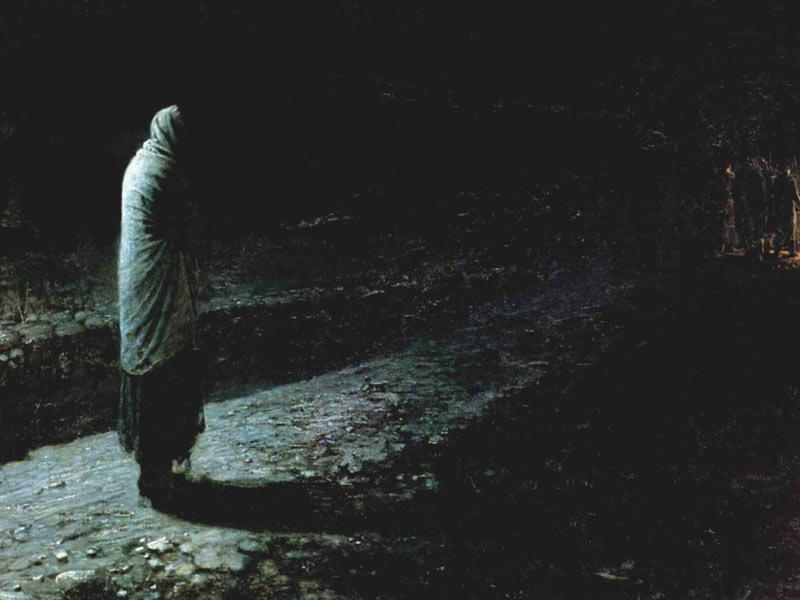
Christ and his disciples entered the Garden of Gethsemane (1888) de Nikolay Ge

Christ and his disciples entered the Garden of Gethsemane

1888 · Oil On Canvas

Nikolai Ge’s Christ and his disciples entered the Garden of Gethsemane, painted about 1888, captures a pivotal moment from the New Testament. The religious subject matter focuses on the group of figures gathered in the garden. Christ stands prominently with outstretched arms, a gesture suggesting sacrifice and the acceptance of fate. Around him, the disciples are clustered in a solemn assembly. Their somber expressions convey a sense of anxiety and…

3
Harbingers of the Resurrection (1867) de Nikolay Ge

Harbingers of the Resurrection

1867 · Oil

In the painting Harbingers of the Resurrection, created by Nikolai Ge about 1867, the central figure is Jesus Christ. He is positioned in the middle of the composition, flanked by two men. These two figures on either side of Christ appear to be angels or messengers. Each of these men holds a staff, an object that may symbolize their functions as protectors or guides. The presence of these figures establishes…

4
Portrait of Nikolai Nekrasov (1872) de Nikolay Ge

Portrait of Nikolai Nekrasov

1872 · Oil On Canvas · Museu Hermitage, São Petersburgo

An elderly man sits within the heavy embrace of a patterned armchair. The fabric of his suit carries a palpable weight, rendered in deep blacks and muted earth tones that seem to absorb the surrounding light. His face, pale against the dark void of the background, holds a quiet melancholy. Light falls sharply across his forehead and eyes, catching the texture of skin and the silvered strands of facial hair.…

5
Leila and Khaji-Abrek (1852) de Nikolay Ge

Leila and Khaji-Abrek

1852 · Oil

In the painting Leila and Khaji-Abrek by Nikolai Ge, two figures occupy the central space of the composition. Created about 1852, the work depicts a woman and a man in a specific physical arrangement. The woman is positioned kneeling on the ground, facing the man. He is situated before her, appearing as a soldier or a leader in stature and presence. Both individuals are dressed in traditional clothing that covers…

6
Bridge in Viko (1858) de Nikolay Ge

Bridge in Viko

1858 · Oil On Paper

We are looking at Bridge in Viko, a work from 1858 by the Russian artist Nikolai Ge. This piece belongs to the Realism movement, a period where the focus shifted toward a more direct and unadorned representation of the world. It is a quiet study of landscape and structure, captured during a formative time in the artist's career.

7
Returning from the burial of Christ (1859) de Nikolay Ge

Returning from the burial of Christ

1859 · Oil

In this quiet composition titled Returning from the burial of Christ, we encounter a profound moment of transition. The work is attributed to the Russian artist Nikolai Ge and dates to 1859. It captures a solemn procession of figures moving through a natural landscape, their presence marked by the heavy folds of their long robes. There is a stillness here that invites a closer look at the gravity of the…

8
Portrait of Leo Tolstoy (1884) de Nikolay Ge

Portrait of Leo Tolstoy

1884 · Oil On Canvas · Galeria Tretyakov, Moscovo

In the quiet, amber-hued atmosphere of a Moscow study, time seems to suspend itself within Nikolai Ge’s 1884 masterpiece, Portrait of Leo Tolstoy. This is not merely a depiction of a man at work; it is an intimate window into the very soul of Russian literature. The painting captures the legendary author seated at his desk, enveloped by the weight of his own profound thoughts. As he leans over his…

9
Portrait of Alexander Herzen (1867) de Nikolay Ge

Portrait of Alexander Herzen

1867 · Oil On Canvas · Museu Hermitage, São Petersburgo

This oil painting is a somber and intense psychological portrait of an older man, presented as an oval-shaped bust-length figure. Set against a dark, indistinct background, the subject is illuminated by directional lighting coming from the upper left, which casts one side of his face and much of his clothing into deep shadow. This technique creates a sense of depth and three-dimensionality through dramatic chiaroscuro. The color palette is dominated…

10
Catherine II at the Coffin of Empress Elizabeth (1709) de Nikolay Ge

Catherine II at the Coffin of Empress Elizabeth

1709 · Oil

In Catherine II at the Coffin of Empress Elizabeth, Nikolai Ge constructs a grand hall where history feels heavy and crowded. The composition is a dense gathering of figures, a chaotic assembly of dignitaries and attendants that fills the space with ceremonial weight. Amidst this throng, the eye is drawn to Catherine II, positioned slightly off-center. She exists within a shallow perspective that pushes the solemnity of the court toward…

A seleção de Nikolay Ge continua, de 11 a 95

11Achilles and the body of Patroclus de Nikolay GeAchilles and the body of PatroclusNational Art Museum of The Republic of Belarus 12Mary, sister of Lazarus, Greets Jesus (1863) de Nikolay GeMary, sister of Lazarus, Greets Jesus1863 13Portrait of Russian baritone opera singer Gennady Kondratiev (1863) de Nikolay GePortrait of Russian baritone opera singer Gennady Kondratiev1863 14Portrait of V.N.Rostovtseva (1861) de Nikolay GePortrait of V.N.Rostovtseva1861 15Portrait of Joseph Daumang (1868) de Nikolay GePortrait of Joseph Daumang1868 16Portrait of Princess Olga Volkonskaya (nee Kleinmichel) (1882) de Nikolay GePortrait of Princess Olga Volkonskaya (nee Kleinmichel)1882 · Museu Hermitage 17Conscience, Judas (1891) de Nikolay GeConscience, Judas1891 18Portrait of P.A. Kostichev (1892) de Nikolay GePortrait of P.A. Kostichev1892 19Portrait of Yelena Likhachova (1892) de Nikolay GePortrait of Yelena Likhachova1892 20Portrait of Yekaterina Ge, the Artist's Daughter-in-Law (1880) de Nikolay GePortrait of Yekaterina Ge, the Artist's Daughter-in-Law1880 · Museu Hermitage 21Crucifixion de Nikolay GeCrucifixion 22Portrait of Evdokiya Nikolaevna Kostycheva (1845) de Nikolay GePortrait of Evdokiya Nikolaevna Kostycheva1845 23Portrait of Yakov Merkulov (1855) de Nikolay GePortrait of Yakov Merkulov1855 24Portrait of Nikolay O.Ge, Artist's Father (1854) de Nikolay GePortrait of Nikolay O.Ge, Artist's Father1854 25Frascati Clouds (1859) de Nikolay GeFrascati Clouds1859 26The view from Santo Terenzo at Lerici by night (1862) de Nikolay GeThe view from Santo Terenzo at Lerici by night1862 27Portrait of Piotr Zabela (1856) de Nikolay GePortrait of Piotr Zabela1856 28Bay in Livorno. sunset (1862) de Nikolay GeBay in Livorno. sunset1862 29Death of Imelda Lambertatstsi (1860) de Nikolay GeDeath of Imelda Lambertatstsi1860 30Death of Virginia, Study (1857) de Nikolay GeDeath of Virginia, Study1857 31Witch of Endor (1857) de Nikolay GeWitch of Endor1857 32The destruction of the Temple in Jerusalem (1859) de Nikolay GeThe destruction of the Temple in Jerusalem1859 33love of Vestal (1857) de Nikolay Gelove of Vestal1857 34Portrait of the Artist's Wife Anna Ge (1858) de Nikolay GePortrait of the Artist's Wife Anna Ge1858 · Kiev National Picture Gallery 35Portrait of Shestova with daughter (1859) de Nikolay GePortrait of Shestova with daughter1859 36Death of Virginia, Study (1857) de Nikolay GeDeath of Virginia, Study1857 37Vineyard at Vico (1858) de Nikolay GeVineyard at Vico1858 38Death of Virginia, Study (1857) de Nikolay GeDeath of Virginia, Study1857 39Livorno. Road to the Sea at Antiniano near Livorno (1862) de Nikolay GeLivorno. Road to the Sea at Antiniano near Livorno1862 40Sorrento (1869) de Nikolay GeSorrento1869 41Oaks in the mountains of Carrara (1868) de Nikolay GeOaks in the mountains of Carrara1868 42Marble Saw in Carrara (1868) de Nikolay GeMarble Saw in Carrara1868 43Loading marble (1868) de Nikolay GeLoading marble1868 44Portrait of the Author Alexander Herzen (1867) de Nikolay GePortrait of the Author Alexander Herzen1867 45The Transportation of Marble at Carrara (1868) de Nikolay GeThe Transportation of Marble at Carrara1868 46Christ in front of Annas (1868) de Nikolay GeChrist in front of Annas1868 47Portrait of an Unknown Woman in a blue blouse (1868) de Nikolay GePortrait of an Unknown Woman in a blue blouse1868 48Christ in the synagogue (1868) de Nikolay GeChrist in the synagogue1868 49Portrait of A.N.Pypin (1871) de Nikolay GePortrait of A.N.Pypin1871 50Florence. The Cascina Park (1868) de Nikolay GeFlorence. The Cascina Park1868 51Portrait of the Poet Nikolay Nekrasov (1872) de Nikolay GePortrait of the Poet Nikolay Nekrasov1872 52Tsar Boris and the Queen Martha (1874) de Nikolay GeTsar Boris and the Queen Martha1874 53Portrait of Alexei Antipowitsch Potechin (1876) de Nikolay GePortrait of Alexei Antipowitsch Potechin1876 54Portrait of Anna Olsufyeva (1881) de Nikolay GePortrait of Anna Olsufyeva1881 55An Old Peasant (1880) de Nikolay GeAn Old Peasant1880 56Portrait of Adam Olsufyev (1881) de Nikolay GePortrait of Adam Olsufyev1881 57On the Mount of Olives (1880) de Nikolay GeOn the Mount of Olives1880 58Portrait of Natalia Petrunkevich (1892) de Nikolay GePortrait of Natalia Petrunkevich1892 59Self-Portrait (1892) de Nikolay GeSelf-Portrait1892 · Kiev National Picture Gallery 60Sophia Tolstaya (1886) de Nikolay GeSophia Tolstaya1886 61Portrait of Maria Gabayeva (1886) de Nikolay GePortrait of Maria Gabayeva1886 62Portrait of Tatyana Tolstaya, Leo Tolstoy's Daughter (1887) de Nikolay GePortrait of Tatyana Tolstaya, Leo Tolstoy's Daughter1887 63Portrait of Nikolay Ge, the Artist's Grandson (1889) de Nikolay GePortrait of Nikolay Ge, the Artist's Grandson1889 64Old Park (1893) de Nikolay GeOld Park1893 65Crusifixion de Nikolay GeCrusifixion 66Mother at the funeral of her child de Nikolay GeMother at the funeral of her child 67Portrait of Barbara Kochubey de Nikolay GePortrait of Barbara Kochubey 68Portrait of Olga Kostycheva de Nikolay GePortrait of Olga Kostycheva 69Return of Tobias de Nikolay GeReturn of Tobias 70Carrara de Nikolay GeCarrara 71Judah de Nikolay GeJudah 72The Temptation of Christ de Nikolay GeThe Temptation of Christ 73Pushkin in the village Mihaylovskoye de Nikolay GePushkin in the village Mihaylovskoye 74Ruslan and Lyudmila de Nikolay GeRuslan and Lyudmila 75The road into the forest de Nikolay GeThe road into the forest 76Bay in Livorno de Nikolay GeBay in Livorno 77Boys at the beach. Study de Nikolay GeBoys at the beach. Study 78Bay. Vyko de Nikolay GeBay. Vyko 79Portrait of Historian M.Kostomarov de Nikolay GePortrait of Historian M.Kostomarov 80Gorge in the mountains of Carrara de Nikolay GeGorge in the mountains of Carrara 81Portrait of M.P.Svet de Nikolay GePortrait of M.P.Svet 82Portrait of the Author Mikhail Saltykov-Shchedrin de Nikolay GePortrait of the Author Mikhail Saltykov-Shchedrin 83Christ Head de Nikolay GeChrist HeadKiev National Picture Gallery 84Portrait of the Ukrainian boy de Nikolay GePortrait of the Ukrainian boy 85The head of John the Apostle de Nikolay GeThe head of John the Apostle 86Katerina Ivanovna Zabello de Nikolay GeKaterina Ivanovna Zabello 87Portrait of Maria Tolstaya, Leo Tolstoy's Daughter de Nikolay GePortrait of Maria Tolstaya, Leo Tolstoy's Daughter 88Portrait of M.V. Alekhin de Nikolay GePortrait of M.V. Alekhin 89Christand Robber de Nikolay GeChristand Robber 90Peter I interrogates Tsarevich Alexei de Nikolay GePeter I interrogates Tsarevich Alexei 91The Judgment of King Solomon de Nikolay GeThe Judgment of King Solomon 92Last Supper (1863) de Nikolay GeLast Supper1863 · Museu Estatal Russo 93What is Truth. Christ and Pilate (1890) de Nikolay GeWhat is Truth. Christ and Pilate1890 · Galeria Tretyakov 94Golgotha (1893) de Nikolay GeGolgotha1893 · Galeria Tretyakov 95The Judgment of the Sanhedrin (1892) de Nikolay GeThe Judgment of the Sanhedrin1892 · Galeria Tretyakov

Pinturas famosas de Nikolay Ge, período por período

Os temas que cativaram o olhar de Nikolay Ge

Os quatro temas que mais se repetem nestas obras originais, cada um com o seu melhor exemplo.

Os museus que guardam os originais de Nikolay Ge

Os 5 museus que detêm a maioria das pinturas desta página.

Museus Cidade Obras de Nikolay Ge Pinturas desta lista
Galeria Tretyakov, MoscovoGaleria Tretyakov Moscovo 5 Pedro, o Grande, Interrogando o Tsarevich Alexei Petrovich em Peterhof, Portrait of Leo Tolstoy, What is Truth. Christ and Pilate
Museu Hermitage, São PetersburgoMuseu Hermitage São Petersburgo 4 Portrait of Nikolai Nekrasov, Portrait of Alexander Herzen, Portrait of Princess Olga Volkonskaya (nee Kleinmichel)
Kiev National Picture Gallery, KyivKiev National Picture Gallery Kyiv 3 Portrait of the Artist's Wife Anna Ge, Self-Portrait, Christ Head
National Art Museum of The Republic of Belarus, MinskNational Art Museum of The Republic of Belarus Minsk 1 Achilles and the body of Patroclus
Museu Estatal Russo, São PetersburgoMuseu Estatal Russo São Petersburgo 1 Last Supper

Nikolay Ge década a década: a obra original que define cada uma

Obras por década

Escolha uma década para ver a obra original que a define.

Perguntas de colecionadores sobre as pinturas de Nikolay Ge

Por qual obra Nikolay Ge é mais conhecido(a)?Revelar a resposta

Pedro, o Grande, Interrogando o Tsarevich Alexei Petrovich em Peterhof (1871), Galeria Tretyakov, Moscovo. Christ and his disciples entered the Garden of Gethsemane (1888) e Harbingers of the Resurrection (1867) vêm a seguir.

Qual era a idade de Nikolay Ge quando Pedro, o Grande, Interrogando o Tsarevich Alexei Petrovich em Peterhof foi feita?Revelar a resposta

40 anos: Pedro, o Grande, Interrogando o Tsarevich Alexei Petrovich em Peterhof data de 1871, e Nikolay Ge nasceu em 1831.

Quais são as dez pinturas mais famosas de Nikolay Ge?Revelar a resposta

Pedro, o Grande, Interrogando o Tsarevich Alexei Petrovich em Peterhof, Christ and his disciples entered the Garden of Gethsemane, Harbingers of the Resurrection, Portrait of Nikolai Nekrasov, Leila and Khaji-Abrek, Bridge in Viko, Returning from the burial of Christ, Portrait of Leo Tolstoy, Portrait of Alexander Herzen e Catherine II at the Coffin of Empress Elizabeth. O ranking acima apresenta o ano e o museu de cada uma.

Quantas pinturas Nikolay Ge deixou?Revelar a resposta

Nosso catálogo contém 95 obras de Nikolay Ge, datadas de 1845 a 1893.

Em quais museus estão expostas as obras-primas de Nikolay Ge?Revelar a resposta

Principalmente em Galeria Tretyakov (Moscovo), Museu Hermitage (São Petersburgo) e Kiev National Picture Gallery (Kyiv). A tabela de museus acima lista todos eles.

Em que anos Nikolay Ge pintou as suas obras mais famosas?Revelar a resposta

Em 1860s: 21 das 95 obras nesta página foram feitas então, sendo Harbingers of the Resurrection delas.

Quais são as primeiras e as últimas obras originais famosas de Nikolay Ge?Revelar a resposta

Nesta página, a mais antiga é Portrait of Evdokiya Nikolaevna Kostycheva (1845) e a mais recente é Old Park (1893).

Quais temas Nikolay Ge escolheu com mais frequência?Revelar a resposta

Portraits (22), Men (16) e Events (11), entre as 95 obras nesta página.

Qual técnica Nikolay Ge mais utilizou?Revelar a resposta

Oil On Canvas, para 12 das 95 obras nesta página.

A qual movimento artístico pertence Nikolay Ge?Revelar a resposta

Realism, a julgar pelos originais nesta página.

Quais obras de Nikolay Ge estão expostas no Galeria Tretyakov?Revelar a resposta

Pedro, o Grande, Interrogando o Tsarevich Alexei Petrovich em Peterhof, Portrait of Leo Tolstoy e What is Truth. Christ and Pilate: o Galeria Tretyakov, Moscovo detém 5 das obras desta página.

Nikolay Ge: vida e obra

Nikolai Ge: Um Pintor Entre a Realidade e a Filosofia

Nikolai Nikolaevich Ge (1831-1894) emerge como uma figura fundamental na história da arte russa, um artista cuja trajetória foi marcada por uma busca incessante pela compreensão do mundo e da condição humana. Nascido em Voronezh, numa família de origem francesa nobre, sua vida se entrelaçou com os domínios da ciência, da filosofia e, acima de tudo, da pintura. Inicialmente destinado a uma carreira científica, estudando física e matemática nas universidades de Kiev e São Petersburgo, Ge tomou uma decisão audaciosa em 1850: dedicar-se à arte, um caminho que transformaria não apenas sua própria vida, mas também o curso da arte russa.

Formação Acadêmica e Influências

Ge ingressou na Academia de Artes Imperial em São Petersburgo, onde foi instruído por Peter Basin, um mestre renomado. Sua formação inicial refletiu a rigidez das academias da época, mas logo ele começou a demonstrar uma sensibilidade que ia além do mero domínio técnico. A influência de Karl Bryullov, um dos pintores acadêmicos mais importantes da Rússia, foi particularmente marcante, moldando sua visão e seu estilo. No entanto, a experiência em Roma, onde conheceu Alexander Andreyevich Ivanov, foi ainda mais transformadora. O trabalho de Ivanov, com sua intensidade dramática e sua busca por expressar ideias complexas através da imagem, despertou em Ge um desejo de ir além do realismo superficial e explorar as profundezas da alma humana.

Inovação e Controvérsia: A Última Ceia

A carreira de Ge foi marcada por uma ousadia que desafiou as convenções da época. Em 1861, ele pintou "A Última Ceia", uma obra que geraria grande polêmica. Para retratar Cristo, Ge utilizou uma fotografia de Aleksandr Ivanovich Herzen, um intelectual e filósofo radical, um gesto que chocou a crítica conservadora e foi interpretado como uma declaração de princípios materialistas e niilistas. A pintura, apesar da controvérsia, atraiu a atenção do público e abriu caminho para novas formas de expressão artística. A decisão de Ge de incorporar a fotografia em sua obra prenunciava o futuro da arte moderna, questionando os limites entre realidade e representação.

Temas Históricos, Religiosos e a Influência de Tolstoy

Após o sucesso inicial com "A Última Ceia", Ge continuou a explorar temas históricos e religiosos, alcançando reconhecimento com obras como “Peter the Great Interrogates Tsarevich Alexei at Peterhof” (1871). Sua obra refletia um interesse crescente pela história russa e pelos seus personagens mais importantes. No final do século XIX, Ge desenvolveu uma amizade com Leo Tolstoy, o renomado escritor e filósofo russo, que influenciou profundamente sua visão de mundo. A filosofia de Tolstoy, com sua ênfase na simplicidade, na justiça social e na busca pela verdade interior, se refletiu em suas obras posteriores, especialmente em pinturas religiosas que buscavam transmitir uma mensagem espiritual mais profunda do que a mera representação literal dos textos sagrados.

Legado e Redescoberta

Por décadas, as obras de Ge permaneceram relativamente desconhecidas, muitas delas encontradas no cofre da benemérita Beatrice de Vattville. A redescoberta dessas obras em 1974 marcou um ponto de virada na história da arte russa, revelando a importância e a originalidade do artista. Em 2011, uma coleção significativa de suas pinturas foi adquirida pela Galeria Tretyakov e retornou à Rússia, permitindo que o público tivesse acesso a este importante capítulo da história da arte russa. Nikolai Ge continua a ser um artista relevante, cuja ousadia, sua capacidade de questionar as convenções e sua busca por expressar a complexidade da experiência humana o tornam uma figura fundamental na história da arte russa do século XIX.