Retrato de Michael Pacher

As 44 Pinturas Mais Famosas de Michael Pacher, uma Seleção da Galeria

Atualizado em Outubro 2026 · classificado pela nossa pontuação de popularidade (pesquisas, visitas e pedidos de cada obra) · 44 obras de Michael Pacher em nosso catálogo

Em resumo

De todas as obras originais deixadas por Michael Pacher, a mais famosa é Altarpiece of the Church Fathers: St Jerome (1483), da coleção do Alte Pinakothek, em Munique. Logo atrás vêm Altarpiece of the Church Fathers: St Augustine and St Gregory (1483) e St Wolfgang Altarpiece: Resurrection of Lazarus (1479). Nosso catálogo contém 44 obras de Michael Pacher; a galeria preservou as 44 que o mundo mais admira, cada uma exibida com sua data, seu museu e sua história.

1435 – 1498, Falzes Northern renaissance Mais obras: Parish Church

As 10 principais pinturas de Michael Pacher: a escolha da galeria

1
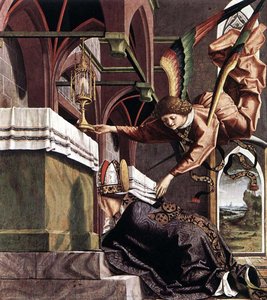
Altarpiece of the Church Fathers: St Jerome (1483) de Michael Pacher

Altarpiece of the Church Fathers: St Jerome

1483 · Acrylic On Canvas · Alte Pinakothek, Munique

Michael Pacher’s Altarpiece of the Church Fathers: St. Jerome, completed in 1483, isn't merely a painting; it’s an immersive theatrical experience rendered in oil on wood panel. Created during a pivotal moment in European art – bridging the Gothic and burgeoning Renaissance – this altarpiece transcends its religious function to become a profound meditation on faith, suffering, and the very nature of divine inspiration. Pacher, a Tyrolean artist born amidst…

2
Altarpiece of the Church Fathers: St Augustine and St Gregory (1483) de Michael Pacher

Altarpiece of the Church Fathers: St Augustine and St Gregory

1483 · Oil On Panel · Alte Pinakothek, Munique

The Altarpiece of the Church Fathers: A Synthesis of Gothic Tradition and Renaissance Innovation Michael Pacher’s “Altarpiece of the Church Fathers,” completed in 1483 for the Neustift Monastery near Brixen, South Tyrol, stands as a testament to the transformative artistic currents sweeping across Central Europe during the late fifteenth century. More than just a devotional image, it represents a pivotal moment in art history—a harmonious blend of Gothic sensibilities and…

3
St Wolfgang Altarpiece: Resurrection of Lazarus (1479) de Michael Pacher

St Wolfgang Altarpiece: Resurrection of Lazarus

1479 · Oil On Panel · Parish Church, St. Wolfgang

The air in the scene feels heavy with the scent of damp earth and ancient stone. At the center, a figure of divine authority reaches into the darkness of a tomb to pull a man back from the silence of death. Lazarus emerges, his body a pale contrast against the muted tones of the surrounding architecture. Around him, a crowd of thirteen souls gathers, their faces etched with the sudden,…

4
Mary of Burgundy (1490) de Michael Pacher

Mary of Burgundy

1490 · Oil On Panel · Heinz Kisters Collection, Kreuzlingen

A woman gazes directly at the viewer, her presence defined by a stark, monochromatic palette. She wears a dark dress that absorbs the light, contrasted by a gold necklace that catches a subtle glint. Her long hair falls around a face marked by a steady, unblinking stare. Behind her, a clock hangs upon the wall, a quiet marker of time within the composition. The work utilizes a black and white…

5
Saint Ambrose from Milan (1480) de Michael Pacher

Saint Ambrose from Milan

1480 · Tempera On Panel · Bavarian State Painting Collections, Munique

The panel known as Saint Ambrose from Milan emerges from the intricate layers of the Altarpiece of the Church Fathers. Painted by Michael Pacher, this work captures a moment of profound spiritual connection. It exists as one of the four sections of a larger, complex structure designed to honor the great Doctors of the Western Church. The saint appears caught in a state of divine inspiration, a scene that breathes…

7
Laurentius Altar: The Death of Mary (1462) de Michael Pacher

Laurentius Altar: The Death of Mary

1462 · Tempera On Panel · Bavarian State Painting Collections, Munique

The Laurentius Altar: The Death of Mary by Michael Pacher captures a moment of heavy stillness. Created about 1462, the work centers on the Dormition of the Virgin. She lies at the heart of the scene, a figure of quiet transition. Around her, the apostles gather in a dense, crowded assembly. Their presence forms a ring of mourning, each face etched with the weight of the passing. The air in…

A seleção de Michael Pacher continua, de 11 a 44

11Church Fathers Altar, Outer Wing: Disputation of Saint Augustine with the Heretics (1480) de Michael PacherChurch Fathers Altar, Outer Wing: Disputation of Saint Augustine with the Heretics1480 · Bavarian State Painting Collections 12Church Fathers Altar: Saint Augustine (1480) de Michael PacherChurch Fathers Altar: Saint Augustine1480 · Bavarian State Painting Collections 13Scene on the right: Saint Gregory (1471) de Michael PacherScene on the right: Saint Gregory1471 · Bavarian State Painting Collections 14St. Barbara (1485) de Michael PacherSt. Barbara1485 15Joseph is trown into a well (1474) de Michael PacherJoseph is trown into a well1474 16Coronation of the Virgin (1471) de Michael PacherCoronation of the Virgin1471 · Parish Church 17The Engagement of Virgin (1495) de Michael PacherThe Engagement of Virgin1495 · Österreichische Galerie Belvedere 18Annunciation (1465) de Michael PacherAnnunciation1465 · Alte Pinakothek 19St Catherine (1465) de Michael PacherSt Catherine1465 · Tiroler Landesmuseum Ferdinandeum 20Altarpiece of the Church Fathers: St Augustine Liberating a Prisoner (1483) de Michael PacherAltarpiece of the Church Fathers: St Augustine Liberating a Prisoner1483 · Alte Pinakothek 21St Wolfgang Altarpiece: Circumcision (1479) de Michael PacherSt Wolfgang Altarpiece: Circumcision1479 · Parish Church 22Altarpiece of the Church Fathers: Vision of St Sigisbert (1483) de Michael PacherAltarpiece of the Church Fathers: Vision of St Sigisbert1483 · Alte Pinakothek 23Follower of ) (1400) de Michael PacherFollower of )1400 24Altarpiece of the Church Fathers (1483) de Michael PacherAltarpiece of the Church Fathers1483 · Alte Pinakothek 25St Wolfgang Altarpiece: The Miracle of the Bread (1479) de Michael PacherSt Wolfgang Altarpiece: The Miracle of the Bread1479 · Parish Church 26Coronation of the Virgin between St Wolfgang and St Benedict (1479) de Michael PacherCoronation of the Virgin between St Wolfgang and St Benedict1479 · Parish Church 27St Wolfgang Altarpiece: Temptation of Christ (1479) de Michael PacherSt Wolfgang Altarpiece: Temptation of Christ1479 · Parish Church 28St Wolfgang Altarpiece: The Attempt to Stone Christ (1479) de Michael PacherSt Wolfgang Altarpiece: The Attempt to Stone Christ1479 · Parish Church 29St Wolfgang Altarpiece: Nativity (1479) de Michael PacherSt Wolfgang Altarpiece: Nativity1479 · Parish Church 30St Wolfgang Altarpiece: Purification of the Temple (1479) de Michael PacherSt Wolfgang Altarpiece: Purification of the Temple1479 · Parish Church 31St Wolfgang Altarpiece: Scenes from the Life of Christ (1479) de Michael PacherSt Wolfgang Altarpiece: Scenes from the Life of Christ1479 · Parish Church 32Flagellation (1495) de Michael PacherFlagellation1495 · Österreichische Galerie Belvedere 33St Lawrence Distributing the Alms (1465) de Michael PacherSt Lawrence Distributing the Alms1465 · Alte Pinakothek 34St. Barbara de Michael PacherSt. Barbara 35st wolfgang altarpiece de Michael Pacherst wolfgang altarpiece 36Temptation of Christ de Michael PacherTemptation of Christ 37Marriage at Cana de Michael PacherMarriage at Cana 38Baptism of Christ de Michael PacherBaptism of Christ 39Christ and the Adulteress de Michael PacherChrist and the Adulteress 40St Augustine and St Gregory de Michael PacherSt Augustine and St GregoryBavarian State Painting Collections 41St augustine freeing a prisoner de Michael PacherSt augustine freeing a prisoner 42Resurrection of Lazar de Michael PacherResurrection of Lazar 43Scenes from the Life of Christ de Michael PacherScenes from the Life of Christ 44The Virgin and Child Enthroned with Angels and Saints de Michael PacherThe Virgin and Child Enthroned with Angels and SaintsNational Gallery

Os temas que cativaram o olhar de Michael Pacher

Os quatro temas que mais se repetem nestas obras originais, cada um com o seu melhor exemplo.

Os museus que guardam os originais de Michael Pacher

Os 7 museus que detêm a maioria das pinturas desta página.

Museu Cidade Obras de Michael Pacher Pinturas desta lista
Parish Church, St. WolfgangParish Church St. Wolfgang 10 St Wolfgang Altarpiece: Resurrection of Lazarus, Coronation of the Virgin, St Wolfgang Altarpiece: Circumcision
Alte Pinakothek, MuniqueAlte Pinakothek Munique 7 Altarpiece of the Church Fathers: St Jerome, Altarpiece of the Church Fathers: St Augustine and St Gregory, Annunciation
Bavarian State Painting Collections, MuniqueBavarian State Painting Collections Munique 6 Saint Ambrose from Milan, Laurentius Altar: The Death of Mary, Church Fathers Altar, Outer Wing: Disputation of Saint Augustine with the Heretics
Österreichische Galerie Belvedere, VienaÖsterreichische Galerie Belvedere Viena 2 The Engagement of Virgin, Flagellation
Heinz Kisters Collection, KreuzlingenHeinz Kisters Collection Kreuzlingen 1 Mary of Burgundy
Tiroler Landesmuseum Ferdinandeum, InnsbruckTiroler Landesmuseum Ferdinandeum Innsbruck 1 St Catherine
National Gallery, LondresNational Gallery Londres 1 The Virgin and Child Enthroned with Angels and Saints

Michael Pacher década a década: a obra original que define cada uma

Obras por década

Escolha uma década para ver a obra original que a define.

Perguntas de colecionadores sobre as pinturas de Michael Pacher

Por qual obra Michael Pacher é mais conhecido(a)?Revelar a resposta

Altarpiece of the Church Fathers: St Jerome (1483), Alte Pinakothek, Munique. Altarpiece of the Church Fathers: St Augustine and St Gregory (1483) e St Wolfgang Altarpiece: Resurrection of Lazarus (1479) vêm a seguir.

Qual era a idade de Michael Pacher quando Altarpiece of the Church Fathers: St Jerome foi feita?Revelar a resposta

48 anos: Altarpiece of the Church Fathers: St Jerome data de 1483, e Michael Pacher nasceu em 1435.

Quais são as dez pinturas mais famosas de Michael Pacher?Revelar a resposta

Altarpiece of the Church Fathers: St Jerome, Altarpiece of the Church Fathers: St Augustine and St Gregory, St Wolfgang Altarpiece: Resurrection of Lazarus, Mary of Burgundy, Saint Ambrose from Milan, Saint Lawrence before Emperor Decius, Laurentius Altar: The Death of Mary, St. Peter, Pope Sixtus II. bids farewell to St. Lawrence e St. Paul. O ranking acima apresenta o ano e o museu de cada uma.

Quantas pinturas Michael Pacher deixou?Revelar a resposta

Nosso catálogo contém 44 obras de Michael Pacher, datadas de 1462 a 1495.

Em quais museus estão expostas as obras-primas de Michael Pacher?Revelar a resposta

Principalmente em Parish Church (St. Wolfgang), Alte Pinakothek (Munique) e Bavarian State Painting Collections (Munique). A tabela de museus acima lista todos eles.

Em que anos Michael Pacher pintou as suas obras mais famosas?Revelar a resposta

Em 1470s: 12 das 44 obras nesta página foram feitas então, sendo St Wolfgang Altarpiece: Resurrection of Lazarus delas.

Quais são as primeiras e as últimas obras originais famosas de Michael Pacher?Revelar a resposta

Nesta página, a mais antiga é Laurentius Altar: The Death of Mary (1462) e a mais recente é The Engagement of Virgin (1495).

Quais temas Michael Pacher escolheu com mais frequência?Revelar a resposta

Altarpiece (9), Saints (7) e Religious scene (7), entre as 44 obras nesta página.

Qual técnica Michael Pacher mais utilizou?Revelar a resposta

Oil On Panel, para 7 das 44 obras nesta página.

A qual movimento artístico pertence Michael Pacher?Revelar a resposta

Northern renaissance, a julgar pelos originais nesta página.

Quais obras de Michael Pacher estão expostas no Parish Church?Revelar a resposta

St Wolfgang Altarpiece: Resurrection of Lazarus, Coronation of the Virgin e St Wolfgang Altarpiece: Circumcision: o Parish Church, St. Wolfgang detém 10 das obras desta página.

Posso encomendar uma reprodução de uma pintura de Michael Pacher?Revelar a resposta

Sim, como uma reprodução: a obra original permanece no seu museu, mas qualquer pintura desta página pode ser pintada à mão para você, feita sob encomenda uma a uma, a partir da própria página da pintura.

Michael Pacher: vida e obra

Uma Ponte Tirolesa Entre Mundos

Michael Pacher, nascido por volta de 1435 nas paisagens alpinas de Bolzano, ergue-se como uma figura fundamental na transição da arte gótica para o espírito florescente do Renascimento nas terras de língua alemã. Ele não era meramente um artista; era um mestre artesão que fundia perfeitamente a pintura e a escultura, a arquitetura e o detalhe intrincado, criando retábulos que eram menos objetos religiosos e mais mundos imersivos de fé e narrativa. Embora sua vida inicial permaneça envolta em mistério — com detalhes escassos sobre seu treinamento inicial — é evidente que Pacher possuía um talento inato, nutrido pelas correntes artísticas que fluíam pelo Tirol durante meados do século XV. Sua jornada tomou um rumo decisivo com uma visita a Pádua, na Itália, onde encontrou os revolucionários afrescos de Andrea Mantegna. Essa exposição revelou-se transformadora, imbuindo sua obra com uma nova compreensão da perspectiva e da composição espacial — elementos que o distinguiriam de muitos de seus contemporâneos.

O Retábulo de São Wolfgang: Uma Obra-Prima Revelada

A reputação de Pacher repousa mais firmemente sobre o magnífico Retábulo de São Wolfgang, criado entre 1471 e 1481 para a igreja de peregrinação na Áustria. Esta não é simplesmente uma pintura; trata-se de um políptico elaborado, uma obra-prima de múltiplos painéis projetada para se desdobrar como uma narrativa sagrada. O design engenhoso do retábulo permite três exibições distintas: uma para o culto cotidiano, outra mais ornamentada para os domingos e uma versão totalmente expandida reservada para dias santos especiais. Cada configuração revela diferentes cenas das vidas de Jesus e da Virgem Maria, culminando no deslumbrante painel central que retrata a Coroação da Virgem como Rainha do Céu — uma cena esculpida que irradia majestade divina. As alas externas retratam episódios da própria vida de São Wolfgang, padroeiro dos peregrinos e artesãos. Estudiosos sugerem que seu irmão, Friedrich Pacher, pode ter contribuído para a pintura de alguns dos painéis externos, destacando um espírito colaborativo dentro do atelier. O que verdadeiramente diferencia este trabalho é sua escala monumental, complexidade e o nível surpreendente de detalhe tanto nos elementos pintados quanto nas figuras intrincadamente esculpidas. É um testemunho da capacidade de Pacher de comandar múltiplas disciplinas artísticas simultaneamente.

A Fusão de Disciplinas: Pintura, Escultura e Visão Arquitetônica

Além do Retábulo de São Wolfgang, Pacher demonstrou sua síntese única de formas de arte em obras como o Retábulo dos Padres da Igreja, concluído por volta de 1483 para o Mosteiro de Neustift. Aqui, ele borrou magistralmente as fronteiras entre a pintura e a escultura, criando uma experiência artística unificada. As figuras monumentais dos Padres da Igreja parecem emergir de seus nichos, imbuídas de um sentido palpável de presença. A habilidade de Pacher em manipular luz e sombra intensifica ainda mais esse efeito, conferindo profundidade e realismo à composição. Ele não apenas retratava o espaço; ele o criava dentro dos limites da estrutura do retábulo. Essa abordagem inovadora influenciou significativamente as gerações subsequentes de artistas no Norte da Europa, que buscaram emular sua capacidade de integrar diversas técnicas artísticas em um todo coeso.

Legado e Influência Duradoura

Por volta de 1467, Pacher já havia estabelecido um próspero atelier em Bruneck, tornando-se uma figura proeminente na cena artística do Tirol. Ele recebeu encomendas de várias ordens religiosas, incluindo os franciscanos em Salzburgo por volta de 1484. Infelizmente, muitas de suas obras foram perdidas ou danificadas ao longo do tempo devido a conflitos e desastres naturais — um lembrete pungente da fragilidade do patrimônio artístico. Apesar dessas perdas, as obras-primas sobreviventes permanecem como testemunhos duradouros do talento excepcional e do espírito inovador de Pacher. Ele foi um verdadeiro pioneiro, unindo com sucesso o hiato entre as formas expressivas da arte gótica do Norte e os princípios emergentes da pintura renascentista italiana. Seu legado reside não apenas na beleza e no brilho técnico de suas criações, mas também em sua capacidade de forjar um estilo pessoal único que continua a cativar e inspirar espectadores séculos depois. A obra de Pacher representa um momento crucial na história da arte — uma época em que tradição e inovação convergiram, dando origem a novas possibilidades artísticas.

Todas as 44 obras de Michael Pacher →