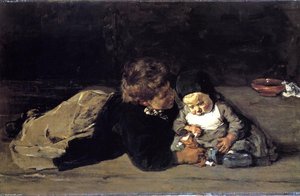
Retrato de Max Liebermann

As 100 Pinturas Mais Famosas de Max Liebermann, uma Seleção da Galeria

Atualizado em Outubro 2026 · classificado pela nossa pontuação de popularidade (pesquisas, visitas e pedidos de cada obra) · 280 obras de Max Liebermann em nosso catálogo

Em resumo

De todas as obras originais que Max Liebermann deixou, a mais famosa é Hora livre no orfanato de Amsterdã (1876). Logo atrás vêm Self Portrait with Kitchen Still LIfe (1873) e Corner of a Dutch Village with Washing Hung up to Dry (1890). Nosso catálogo contém 280 obras de Max Liebermann; a galeria preservou as 100 que o mundo mais admira, cada uma exibida com sua data, seu museu e sua história.

1847 – 1935, Berlim Impressionist realism Mais obras: Alte Nationalgalerie

As 10 principais pinturas de Max Liebermann: a escolha da galeria

2
Self Portrait with Kitchen Still LIfe (1873) de Max Liebermann

Self Portrait with Kitchen Still LIfe

1873 · Oil On Canvas · Stadtisches Museum, Gelsenkirchen

To stand before Max Liebermann’s Self Portrait with Kitchen Still Life is not merely to observe a painting; it is to step directly into the vibrant, sun-drenched moments of late nineteenth-century Berlin. Created in 1873, this oil on canvas captures more than just a likeness; it encapsulates the artist's profound belief that true beauty resides within the quotidian—the humble objects and simple acts of daily life. Liebermann, a master whose…

3
Corner of a Dutch Village with Washing Hung up to Dry (1890) de Max Liebermann

Corner of a Dutch Village with Washing Hung up to Dry

1890 · Oil On Panel · Harvard Art Museums, Cambridge

The air feels heavy with the scent of damp fabric and the salt of a nearby coast. In this corner of a Dutch village, time seems to pause, caught in the soft, overcast light of 1890. A white building dominates the immediate view, its red door and blue shutters providing the only sharp interruptions to the muted, earthy tones of the village. Above the doorway, laundry hangs from a line,…

4
Portrait of Richard Strauss (1918) de Max Liebermann

Portrait of Richard Strauss

1918 · Oil · Alte Nationalgalerie, Berlim

This 1918 impressionist painting by Max Liebermann presents a black and white portrait of Richard Strauss. The subject is depicted sitting in a chair with his hands clasped together, wearing a suit and tie. He is shown with a mustache and appears to be looking directly at the viewer. To provide depth to the scene, the background features a curtain behind the seated man.

5
Restaurant De oude Vink (1905) de Max Liebermann

Restaurant De oude Vink

1905 · Oil

There is a certain quietude found in the middle of a crowd, a feeling captured here in 1905. In Restaurant De oude Vink, we find ourselves seated among patrons enjoying a meal under the dappled shade of trees. The scene is one of casual, unhurried leisure. Green chairs are scattered around tables, some occupied by figures lost in conversation, others left empty as if the guests have only just stepped…

6
Self-portrait (1916) de Max Liebermann

Self-portrait

1916 · Oil On Canvas · Kunsthalle Bremen, Bremen

An older man sits in a moment of quiet creation, his presence filling the space with a heavy, contemplative dignity. He faces the viewer directly, his gaze steady and unblinking, even as his hands remain occupied with the tools of his trade. In his right hand, he holds a palette, while his left hand brings a brush toward an easel, capturing a fragment of life in real-time. The light enters…

7
The Preserve Makers (1879) de Max Liebermann

The Preserve Makers

1879 · Oil On Canvas · Museum der bildenden Künste, Leipzig

The Preserve Makers is a somber and intimate realist painting that captures a group of women gathered within a dimly lit, rustic interior. The composition is dense and crowded, utilizing a shallow depth of field that brings the figures into the immediate foreground to create a sense of enclosure and shared labor. These women are engaged in the communal task of preparing vegetables, their presence evoking a sense of quiet…

A seleção de Max Liebermann continua, de 11 a 100

11The farrier (1874) de Max LiebermannThe farrier1874 · Staatliche Kunsthalle Karlsruhe 12Young Boys Bathing at Zandvoort (1896) de Max LiebermannYoung Boys Bathing at Zandvoort1896 13Albert Einstein (1879–1955) (1922) de Max LiebermannAlbert Einstein (1879–1955)1922 · Royal Society 14Portrait Study of Emil Rathenau (1908) de Max LiebermannPortrait Study of Emil Rathenau1908 · Alte Nationalgalerie 15Portrait Dr. Wilhelm Bode (1909) de Max LiebermannPortrait Dr. Wilhelm Bode1909 · Alte Nationalgalerie 16The Siblings (1876) de Max LiebermannThe Siblings1876 · Staatliche Kunstsammlungen 17Swimmers (1875) de Max LiebermannSwimmers1875 · Dallas Museum of Art 18The Basketweavers (Die Korbflechter) (1872) de Max LiebermannThe Basketweavers (Die Korbflechter)1872 · Staatliche Kunsthalle Karlsruhe 19Infant school in Amsterdam (1880) de Max LiebermannInfant school in Amsterdam1880 · Alte Nationalgalerie 20Road in Dutch Village (1885) de Max LiebermannRoad in Dutch Village1885 21Girl from Laren Peeling Potatoes with Sleeping Child in a Basket (1887) de Max LiebermannGirl from Laren Peeling Potatoes with Sleeping Child in a Basket1887 · Museum Kunst der Westküste 22The Net Menders (1888) de Max LiebermannThe Net Menders1888 · Hamburger Kunsthalle 23Dr. Max Linde (1897) de Max LiebermannDr. Max Linde1897 · National Gallery Prague 24Going to School in Laren - Composition Study (1898) de Max LiebermannGoing to School in Laren - Composition Study1898 25Rider by the Sea Facing Left (1900) de Max LiebermannRider by the Sea Facing Left1900 26Samson and Delilah (1902) de Max LiebermannSamson and Delilah1902 · Städel Museum 27Painting of the artist's mother (1900) de Max LiebermannPainting of the artist's mother1900 · Slovak National Gallery 28Two Riders on the Beach to the left (1901) de Max LiebermannTwo Riders on the Beach to the left1901 29Copy of the Bohémienne after Frans Hals (Young woman) (1870) de Max LiebermannCopy of the Bohémienne after Frans Hals (Young woman)1870 · Staatliche Kunsthalle Karlsruhe 30The Terrace at the Hotel Louis C. Jacob in Nienstedten on the Elbe (1902) de Max LiebermannThe Terrace at the Hotel Louis C. Jacob in Nienstedten on the Elbe1902 · Hamburger Kunsthalle 31Two riders on the beach (1903) de Max LiebermannTwo riders on the beach1903 · Museu Wallraf-Richartz 32Man with parrots (1900) de Max LiebermannMan with parrots1900 33Dutch Farmhouse with Woman (1882) de Max LiebermannDutch Farmhouse with Woman1882 · Frye Art Museum 34Rider on the Beach (1904) de Max LiebermannRider on the Beach1904 35On the Alster in Hamburg (1910) de Max LiebermannOn the Alster in Hamburg1910 · Staatliche Kunstsammlungen Dresden 36The Lifeguard's cart (1908) de Max LiebermannThe Lifeguard's cart1908 37Self-portrait (1908) de Max LiebermannSelf-portrait1908 · Museu Wallraf-Richartz 38Self-Portrait with Panama Hat (1911) de Max LiebermannSelf-Portrait with Panama Hat1911 39Self-Portrait with Straw Hat (1914) de Max LiebermannSelf-Portrait with Straw Hat1914 · Dordrechts Museum 40Self-portrait, standing in three-quarter figure, both hands in trouser pockets (Selbstbildnis, stehend in Dreiviertelfigur, beide Hände in den Hosentaschen) (1915) de Max LiebermannSelf-portrait, standing in three-quarter figure, both hands in trouser pockets (Selbstbildnis, stehend in Dreiviertelfigur, beide Hände in den Hosentaschen)1915 · Alte Nationalgalerie 41Self-Portrait with Palette to the Left (1912) de Max LiebermannSelf-Portrait with Palette to the Left1912 · Berlinische Galerie 42Käthe Liebermann – The Artist's Daughter (1916) de Max LiebermannKäthe Liebermann – The Artist's Daughter1916 43The artist's daughter riding (1913) de Max LiebermannThe artist's daughter riding1913 · Museu Wallraf-Richartz 44Study: Bust of a Man / Bust of a Woman – Two-sided Painting (1875) de Max LiebermannStudy: Bust of a Man / Bust of a Woman – Two-sided Painting1875 · Museu Nacional de Cracóvia 45Ulrich von Wilamowitz Moellendorff (1915) de Max LiebermannUlrich von Wilamowitz Moellendorff1915 46Sketches of Jozef Israëls (1912) de Max LiebermannSketches of Jozef Israëls1912 · Ben Uri Gallery and Museum 47Portrait of the Berlin Garden Director Albert Brodersen (1920) de Max LiebermannPortrait of the Berlin Garden Director Albert Brodersen1920 48Self portrait in painting smock (Selbstbildnis im Malkittel) (1922) de Max LiebermannSelf portrait in painting smock (Selbstbildnis im Malkittel)1922 · Bavarian State Painting Collections 49Portrait of Jeanette Cornelia A. Onnes van Nijenrode-Cockuijt (1883-1936) (1918) de Max LiebermannPortrait of Jeanette Cornelia A. Onnes van Nijenrode-Cockuijt (1883-1936)1918 · Centraal Museum 50Portrait August Batschari (1918) de Max LiebermannPortrait August Batschari1918 · Westfälisches Landesmuseum 51Self-Portrait (1922) de Max LiebermannSelf-Portrait1922 52The Liebermann Family (1926) de Max LiebermannThe Liebermann Family1926 · Stiftung Stadtmuseum 53Self-Portrait with sports cap at the easel (1925) de Max LiebermannSelf-Portrait with sports cap at the easel1925 · Alte Nationalgalerie 54The Fisherman (1926) de Max LiebermannThe Fisherman1926 55A Dutch lacemaker (1881) de Max LiebermannA Dutch lacemaker1881 · Hamburger Kunsthalle 56Gerhart Hauptmann (1912) de Max LiebermannGerhart Hauptmann1912 · Hamburger Kunsthalle 57The Surgeon Dr. Ferdinand Sauerbruch (1932) de Max LiebermannThe Surgeon Dr. Ferdinand Sauerbruch1932 · Hamburger Kunsthalle 58Digging for Potatoes in the Dunes at Zandvoort (1895) de Max LiebermannDigging for Potatoes in the Dunes at Zandvoort1895 · Germanisches Nationalmuseum 59Bust Selfportrait in Paiting Overall (1922) de Max LiebermannBust Selfportrait in Paiting Overall1922 · Stiftung Brandenburger Tor 60Study for Flax Barn in Laren (1886) de Max LiebermannStudy for Flax Barn in Laren1886 · Grohmann Museum 61On the Beach at Noordwijk (1908) de Max LiebermannOn the Beach at Noordwijk1908 62Children Bathing in the Sea (1899) de Max LiebermannChildren Bathing in the Sea1899 · Bavarian State Painting Collections 63Landschaft mit schafherde de Max LiebermannLandschaft mit schafherde 64Albert einstein de Max LiebermannAlbert einstein 65Arbeiterin im rübenfeld de Max LiebermannArbeiterin im rübenfeld 66Flower Terrace in the Wannsee Garden, Facing East (1924) de Max LiebermannFlower Terrace in the Wannsee Garden, Facing East1924 67Recess in the Amsterdam Orphanage - View of the Inner Courtyard, Study (1876) de Max LiebermannRecess in the Amsterdam Orphanage - View of the Inner Courtyard, Study1876 · Alte Nationalgalerie 68Terrace in the Garden near the Wannsee toward Southwest (1919) de Max LiebermannTerrace in the Garden near the Wannsee toward Southwest1919 69Flowers at the Gardener's House toward the Northwest (sketch) (1921) de Max LiebermannFlowers at the Gardener's House toward the Northwest (sketch)1921 70The Flower Terrace in the Wannsee Garden, Facing Northwest (1923) de Max LiebermannThe Flower Terrace in the Wannsee Garden, Facing Northwest1923 · Stadtisches Museum 71Old Men's Home in Amsterdam, Study (1880) de Max LiebermannOld Men's Home in Amsterdam, Study1880 72Study Head of a Man (also known as Sephardic Jew with a Prayer Shawl, Facing Left) (1878) de Max LiebermannStudy Head of a Man (also known as Sephardic Jew with a Prayer Shawl, Facing Left)1878 · Kunsthaus Zürich 73View of the Wannsee with sailing boats (1924) de Max LiebermannView of the Wannsee with sailing boats1924 · Alte Nationalgalerie 74View over the Tall Linden Hedge into the Cutting Garden toward the West (1929) de Max LiebermannView over the Tall Linden Hedge into the Cutting Garden toward the West1929 75The Terrace in the Wannsee Garden toward the Northwest (1926) de Max LiebermannThe Terrace in the Wannsee Garden toward the Northwest1926 76Parrot Avenue (1902) de Max LiebermannParrot Avenue1902 · Kunsthalle Bremen 77Table with Pieces of Meat (1877) de Max LiebermannTable with Pieces of Meat1877 · Neue Pinakothek 78Birch grow de Max LiebermannBirch grow 79A rider on the beach de Max LiebermannA rider on the beach 80Amsterdam Orphans in the Garden (1885) de Max LiebermannAmsterdam Orphans in the Garden1885 81The Surgeon, Ferdinand Sauerbruch (1932) de Max LiebermannThe Surgeon, Ferdinand Sauerbruch1932 82Outdoor Garden on the Havel, Nikolskoe (1916) de Max LiebermannOutdoor Garden on the Havel, Nikolskoe1916 83The Cutting Garden in Wannsee toward the West, with a Woman Gardener on the Path (1924) de Max LiebermannThe Cutting Garden in Wannsee toward the West, with a Woman Gardener on the Path1924 84Flowers at the Gardener's House (1927) de Max LiebermannFlowers at the Gardener's House1927 85Terrace in the Garden near the Wannsee toward Northwest (1916) de Max LiebermannTerrace in the Garden near the Wannsee toward Northwest1916 · Museum of Fine Arts 86The Circular Bed in the Hedge Garden with a Woman Watering Flowers (1925) de Max LiebermannThe Circular Bed in the Hedge Garden with a Woman Watering Flowers1925 87Portrait of Felix Liebermann (1865) de Max LiebermannPortrait of Felix Liebermann1865 88Jewish Street in Amsterdam (1908) de Max LiebermannJewish Street in Amsterdam1908 · Städel Museum 89Still life of meat (Fleischstillleben) (1878) de Max LiebermannStill life of meat (Fleischstillleben)1878 · Bavarian State Painting Collections 90Hand of an officer of the Haarlem Guard (1876) de Max LiebermannHand of an officer of the Haarlem Guard1876 91Grain Harvest (1874) de Max LiebermannGrain Harvest1874 · Westfälisches Landesmuseum 92Amsterdam Orphanage (1876) de Max LiebermannAmsterdam Orphanage1876 · Arp Museum Bahnhof Rolandseck 93Terrace in the Garden near the Wannsee towards Northwest (1916) de Max LiebermannTerrace in the Garden near the Wannsee towards Northwest1916 · Museum of Fine Arts 94Nets and Sails Spread over a Meadow: Study for the Net Menders (1884) de Max LiebermannNets and Sails Spread over a Meadow: Study for the Net Menders1884 · Museu de Israel 95Shoemaker (1881) de Max LiebermannShoemaker1881 · Alte Nationalgalerie 96Girl Sewing with Cat - Dutch Interior (1884) de Max LiebermannGirl Sewing with Cat - Dutch Interior1884 97Village Pond in Etzenhauser - Village Idyll (1879) de Max LiebermannVillage Pond in Etzenhauser - Village Idyll1879 98Village Street in MIlitsh - Landscape with Pond (1883) de Max LiebermannVillage Street in MIlitsh - Landscape with Pond1883 99Children's playground in Tiergarten park in Berlin (1885) de Max LiebermannChildren's playground in Tiergarten park in Berlin1885 100Privy Councilor Benjamin Liebermann (1887) de Max LiebermannPrivy Councilor Benjamin Liebermann1887

Pinturas famosas de Max Liebermann, período por período

Os temas que cativaram o olhar de Max Liebermann

Os quatro temas que mais se repetem nestas obras originais, cada um com o seu melhor exemplo.

Os museus que guardam os originais de Max Liebermann

Os 8 museus que detêm a maioria das pinturas desta página.

Museu Cidade Obras de Max Liebermann Pinturas desta lista
Alte Nationalgalerie, BerlimAlte Nationalgalerie Berlim 17 Portrait of Richard Strauss, Portrait Study of Emil Rathenau, Portrait Dr. Wilhelm Bode
Hamburger Kunsthalle, HamburgoHamburger Kunsthalle Hamburgo 8 The Net Menders, The Terrace at the Hotel Louis C. Jacob in Nienstedten on the Elbe, A Dutch lacemaker
Bavarian State Painting Collections, MuniqueBavarian State Painting Collections Munique 7 Self portrait in painting smock (Selbstbildnis im Malkittel), Children Bathing in the Sea, Still life of meat (Fleischstillleben)
Museu Wallraf-Richartz, ColôniaMuseu Wallraf-Richartz Colônia 6 Two riders on the beach, Self-portrait, The artist's daughter riding
Staatliche Kunsthalle Karlsruhe, KarlsruheStaatliche Kunsthalle Karlsruhe Karlsruhe 5 The farrier, The Basketweavers (Die Korbflechter), Copy of the Bohémienne after Frans Hals (Young woman)
Stadtisches Museum, GelsenkirchenStadtisches Museum Gelsenkirchen 3 Self Portrait with Kitchen Still LIfe, The Flower Terrace in the Wannsee Garden, Facing Northwest
Kunsthalle Bremen, BremenKunsthalle Bremen Bremen 3 Self-portrait, Parrot Avenue
Staatliche Kunstsammlungen Dresden, DresdenStaatliche Kunstsammlungen Dresden Dresden 3 Alfred von Berger, On the Alster in Hamburg

Max Liebermann década a década: a obra original que define cada uma

Obras por década

Escolha uma década para ver a obra original que a define.

Perguntas de colecionadores sobre as pinturas de Max Liebermann

Por qual obra Max Liebermann é mais conhecido(a)?Revelar a resposta

Hora livre no orfanato de Amsterdã (1876). Self Portrait with Kitchen Still LIfe (1873) e Corner of a Dutch Village with Washing Hung up to Dry (1890) vêm a seguir.

Qual era a idade de Max Liebermann quando Hora livre no orfanato de Amsterdã foi feita?Revelar a resposta

29 anos: Hora livre no orfanato de Amsterdã data de 1876, e Max Liebermann nasceu em 1847.

Quais são as dez pinturas mais famosas de Max Liebermann?Revelar a resposta

Hora livre no orfanato de Amsterdã, Self Portrait with Kitchen Still LIfe, Corner of a Dutch Village with Washing Hung up to Dry, Portrait of Richard Strauss, Restaurant De oude Vink, Self-portrait, The Preserve Makers, Schreitender Bauer, KIRCHGANG IN Laren e Alfred von Berger. O ranking acima apresenta o ano e o museu de cada uma.

Quantas pinturas Max Liebermann deixou?Revelar a resposta

Nosso catálogo contém 280 obras de Max Liebermann, datadas de 1865 a 1932.

Em quais museus estão expostas as obras-primas de Max Liebermann?Revelar a resposta

Principalmente em Alte Nationalgalerie (Berlim), Hamburger Kunsthalle (Hamburgo) e Bavarian State Painting Collections (Munique). A tabela de museus acima lista todos eles.

Em que anos Max Liebermann pintou as suas obras mais famosas?Revelar a resposta

Em 1910s: 18 das 100 obras nesta página foram feitas então, sendo Portrait of Richard Strauss delas.

Quais são as primeiras e as últimas obras originais famosas de Max Liebermann?Revelar a resposta

Nesta página, a mais antiga é Portrait of Felix Liebermann (1865) e a mais recente é The Surgeon Dr. Ferdinand Sauerbruch (1932).

Quais temas Max Liebermann escolheu com mais frequência?Revelar a resposta

Man (10), Portrait (6) e Garden scene (6), entre as 100 obras nesta página.

Qual técnica Max Liebermann mais utilizou?Revelar a resposta

Oil On Canvas, para 29 das 100 obras nesta página.

A qual movimento artístico pertence Max Liebermann?Revelar a resposta

Impressionist realism, a julgar pelos originais nesta página.

Quais obras de Max Liebermann estão expostas no Alte Nationalgalerie?Revelar a resposta

Portrait of Richard Strauss, Portrait Study of Emil Rathenau e Portrait Dr. Wilhelm Bode: o Alte Nationalgalerie, Berlim detém 9 das obras desta página.

Posso encomendar uma reprodução de uma pintura de Max Liebermann?Revelar a resposta

Sim, como uma reprodução: a obra original permanece no seu museu, mas qualquer pintura desta página pode ser pintada à mão para você, feita sob encomenda uma a uma, a partir da própria página da pintura.

Max Liebermann: vida e obra

A Life Immersed in Light: The World of Max Liebermann

Born into a prosperous Jewish family in 1847 Berlin, Max Liebermann’s path to becoming one of Germany's foremost Impressionist painters wasn’t preordained. Initially steered towards the respectable professions of law and philosophy at the University of Berlin, his true calling resonated far more powerfully from the canvas than the courtroom. This early period of intellectual exploration, however, undoubtedly shaped his observant eye and thoughtful approach to depicting the world around him. It was a deliberate shift – studies in Weimar, Paris, and the Netherlands – that truly ignited his artistic passion, exposing him to diverse styles and laying the foundation for a career defined by capturing fleeting moments with an exquisite sensitivity to light and color. He wasn’t merely painting what he saw; he was translating the very essence of experience onto the canvas. Liebermann's early works often depicted scenes of everyday life, particularly those of the working class, rendered with a naturalism that challenged the prevailing romanticized aesthetic of the time. These paintings weren’t intended as social commentary, but rather as honest portrayals of human existence, imbued with dignity and respect.

Embracing Impressionism in a German Context

Liebermann's artistic development was profoundly influenced by his exposure to French Realism and, crucially, the burgeoning Impressionist movement. The spirit of Édouard Manet – his boldness, his rejection of academic convention, his focus on contemporary life – resonated deeply with Liebermann. However, he didn’t simply replicate what he saw in Paris; instead, he adapted these principles to a German sensibility, creating an Impressionism uniquely his own. His palette became brighter, his brushstrokes looser and more spontaneous, and his subjects shifted towards scenes of bourgeois leisure and the tranquil beauty of his garden near Lake Wannsee. This garden, in particular, became a recurring motif throughout his career, offering a sanctuary from the rapidly changing world outside and providing endless inspiration for his explorations of light and atmosphere. He wasn’t just painting flowers and foliage; he was capturing the very feeling of summer, the warmth of the sun, the gentle breeze rustling through the leaves. Liebermann's early works often featured vibrant colors and a focus on capturing the effects of light, reflecting the influence of artists like Claude Monet and Pierre-Auguste Renoir. He sought to translate the fleeting impressions of nature onto his canvases, prioritizing atmosphere and color over precise detail.

A Champion of Artistic Freedom

Liebermann wasn't content to simply paint; he actively championed artistic innovation and independence. Recognizing the stifling constraints imposed by the traditional art establishment, he became a driving force behind the Berlin Secession in 1898, leading this avant-garde group for over a decade. The Secession challenged conventional norms, providing a platform for artists working outside the confines of academic tradition. This commitment to artistic freedom extended beyond his own work; Liebermann believed passionately that artists should be free to explore their vision without interference from political or ideological pressures. His election to the Prussian Academy of Arts in 1909 and subsequent presidency in 1920 were testaments to his growing influence within the German art world, but these positions also brought him face-to-face with the rising tide of anti-Semitism and nationalism that would ultimately threaten his life’s work. The Secession fostered a spirit of experimentation and collaboration, encouraging artists to push boundaries and challenge established artistic conventions. Liebermann's leadership was instrumental in shaping the movement's identity and promoting its ideals.

Shadows of a Changing World: Legacy and Resilience

The rise of Nazism cast a dark shadow over Liebermann’s later years. His principled stance against discrimination led to his resignation from the Prussian Academy in 1933, a courageous act that signaled his refusal to compromise his values. Despite facing increasing persecution, he continued to paint, finding solace and purpose in his art. He passed away in Berlin in 1935, leaving behind a rich legacy of paintings, prints, and a profound commitment to artistic freedom. His wife, Martha, tragically took her own life in 1943 to avoid deportation, a heartbreaking testament to the horrors of the Holocaust. For years after the war, Liebermann’s work was somewhat overlooked, but in recent decades there has been a renewed appreciation for his contributions to German Impressionism and modern art history. Today, he is remembered not only as a brilliant painter but also as a courageous advocate for artistic expression and a symbol of resistance against tyranny. His paintings continue to captivate viewers with their luminous beauty, insightful observations, and enduring humanity.

Key Achievements & Lasting Influence

  • “The Twelve-Year-Old Jesus in the Temple”: This early work sparked considerable debate due to its unconventional depiction of a Semitic-looking Jesus, challenging traditional religious iconography.
  • Leadership of the Berlin Secession: His pivotal role in leading this avant-garde movement challenged artistic norms and paved the way for modern art in Germany.
  • Presidency of the Prussian Academy of Arts: A significant recognition of his artistic merit, though ultimately compromised by the rise of Nazism.
  • Masterful Portraiture: His ability to capture the essence of his subjects in over 200 commissioned portraits cemented his reputation as a leading portrait painter.
  • Influence on German Impressionism: Liebermann successfully translated the principles of Impressionism into a uniquely German context, inspiring generations of artists.

Todas as 280 obras de Max Liebermann →