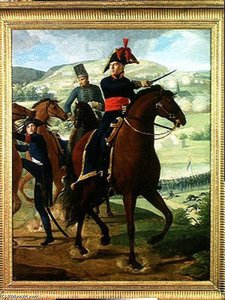
Retrato de Louis Hersent

As 37 Pinturas Mais Famosas de Louis Hersent, uma Seleção da Galeria

Atualizado em Outubro 2026 · classificado pela nossa pontuação de popularidade (pesquisas, visitas e pedidos de cada obra) · 37 obras de Louis Hersent em nosso catálogo

Em resumo

De todas as obras originais deixadas por Louis Hersent, a mais famosa é Sophie Crouzet (1801), da coleção do Cleveland Museum of Art, em Cleveland. Logo atrás vêm Henri-Charles-Ferdinand of Artois Duke of Bordeaux and his Sister Louise-Marie-Therese of (1820) e Portrait of Madame Le Doyen (1825). Nosso catálogo contém 37 obras de Louis Hersent; a galeria preservou as 37 que o mundo mais admira, cada uma exibida com sua data, seu museu e sua história.

1777 – 1860, Paris Neoclassicism Mais obras: Musée Carnavalet

As 10 principais pinturas de Louis Hersent: a escolha da galeria

A seleção de Louis Hersent continua, de 11 a 37

Os temas que cativaram o olhar de Louis Hersent

Os quatro temas que mais se repetem nestas obras originais, cada um com o seu melhor exemplo.

Os museus que guardam os originais de Louis Hersent

Os 8 museus que detêm a maioria das pinturas desta página.

Museus Cidade Obras de Louis Hersent Pinturas desta lista
Musée Carnavalet, ParisMusée Carnavalet Paris 3 Portrait of Madame Arachequesne, Portrait of Romain de Bourge, General Louis Marie Turreau De Garambouville At The Gravieres Affair
Opera House, VersaillesOpera House Versailles 3 Louise-Adélaïde Desnos, Queen Maria Amalia Of The French, Delphine De Girardin
Cleveland Museum of Art, ClevelandCleveland Museum of Art Cleveland 1 Sophie Crouzet
Musée de la Vie Romantique, ParisMusée de la Vie Romantique Paris 1 Portrait of Madame Le Doyen
Château de Versailles, VersalhesChâteau de Versailles Versalhes 1 Portrait of Sophie Gay
Museum of the French Revolution, VizilleMuseum of the French Revolution Vizille 1 The Battle Of Landschut, 21st April
Musée Condé, ChantillyMusée Condé Chantilly 1 Marie-amelie De Bourbon -
Nationalmuseum, EstocolmoNationalmuseum Estocolmo 1 Fénélon Returns A Stolen Cow To A Peasant

Louis Hersent década a década: a obra original que define cada uma

Obras por década

Escolha uma década para ver a obra original que a define.

Perguntas de colecionadores sobre as pinturas de Louis Hersent

Por qual obra Louis Hersent é mais conhecido(a)?Revelar a resposta

Sophie Crouzet (1801), Cleveland Museum of Art, Cleveland. Henri-Charles-Ferdinand of Artois Duke of Bordeaux and his Sister Louise-Marie-Therese of (1820) e Portrait of Madame Le Doyen (1825) vêm a seguir.

Qual era a idade de Louis Hersent quando Sophie Crouzet foi feita?Revelar a resposta

24 anos: Sophie Crouzet data de 1801, e Louis Hersent nasceu em 1777.

Quais são as dez pinturas mais famosas de Louis Hersent?Revelar a resposta

Sophie Crouzet, Henri-Charles-Ferdinand of Artois Duke of Bordeaux and his Sister Louise-Marie-Therese of, Portrait of Madame Le Doyen, Portrait of Madame Arachequesne, Portrait of Sophie Gay, Portrait of Madame Demetz in a red sofa, Religieux de l'hospice du mont Saint Gothard, Portrait of Sophie Legrand, comtesse Walsh de Serrant, and her children, Self-portrait e Louise-Adélaïde Desnos. O ranking acima apresenta o ano e o museu de cada uma.

Quantas pinturas Louis Hersent deixou?Revelar a resposta

Nosso catálogo contém 37 obras de Louis Hersent, datadas de 1801 a 1854.

Em quais museus estão expostas as obras-primas de Louis Hersent?Revelar a resposta

Principalmente em Musée Carnavalet (Paris), Opera House (Versailles) e Cleveland Museum of Art (Cleveland). A tabela de museus acima lista todos eles.

Em que anos Louis Hersent pintou as suas obras mais famosas?Revelar a resposta

Em 1820s: 5 das 37 obras nesta página foram feitas então, sendo Henri-Charles-Ferdinand of Artois Duke of Bordeaux and his Sister Louise-Marie-Therese of delas.

Quais são as primeiras e as últimas obras originais famosas de Louis Hersent?Revelar a resposta

Nesta página, a mais antiga é Sophie Crouzet (1801) e a mais recente é Self-portrait (1854).

Quais temas Louis Hersent escolheu com mais frequência?Revelar a resposta

Portraiture (4), Royalty (3) e Neoclassical style (2), entre as 37 obras nesta página.

A qual movimento artístico pertence Louis Hersent?Revelar a resposta

Neoclassicism, a julgar pelos originais nesta página.

Quais obras de Louis Hersent estão expostas no Musée Carnavalet?Revelar a resposta

Portrait of Madame Arachequesne, Portrait of Romain de Bourge e General Louis Marie Turreau De Garambouville At The Gravieres Affair: o Musée Carnavalet, Paris detém 3 das obras desta página.

Louis Hersent: vida e obra

A Legacy in Portraiture: The Life and Art of Louis Hersent

Louis Hersent, a name resonating with the elegance of the French Restoration era, was more than just a painter; he was a chronicler of his time. Born in Paris in 1777, Hersent’s artistic journey unfolded against a backdrop of revolutionary upheaval and imperial grandeur, ultimately solidifying his place as a master of Neoclassical portraiture and historical painting. His canvases offer not merely likenesses but insightful glimpses into the personalities and societal currents of early 19th-century France. From an early age, Hersent demonstrated a keen aptitude for art, leading him to the studio of Jacques-Louis David – a pivotal moment that would indelibly shape his aesthetic sensibilities. David, the preeminent Neoclassical painter and official artist of Napoleon Bonaparte, instilled in Hersent a rigorous approach to draftsmanship, composition, and form. This foundational training emphasized clarity, balance, and a restrained palette—hallmarks that would define Hersent’s mature style. Winning the prestigious Prix de Rome in 1797 further cemented his commitment to classical ideals, providing him with invaluable exposure to the artistic heritage of Italy.

The Embrace of Neoclassicism and Artistic Development

Hersent's work embodies the core tenets of Neoclassicism: a reverence for antiquity, an emphasis on order and reason, and a commitment to technical precision. However, while deeply rooted in this tradition, Hersent wasn’t merely imitative. He infused his paintings with a subtle psychological depth, capturing not just the outward appearance but also the inner character of his subjects. His portraits are characterized by dignified poses, meticulous attention to detail—particularly in fabrics and textures—and a restrained emotionality that speaks volumes. He excelled at portraying members of the French aristocracy and military leaders, figures who sought to project an image of stability and authority in the wake of revolutionary turmoil. Paintings like The Duc D'Orléans, Duke Of Chartres And Nemours, exemplify this approach, presenting a commanding figure radiating both power and refinement. Hersent’s skill in draftsmanship—a cornerstone of David’s teachings—allowed him to render figures with remarkable accuracy and anatomical correctness. This dedication to realism was tempered by an understanding of ideal proportions and harmonious composition, resulting in canvases that possessed both visual beauty and intellectual substance. The influence of David extended beyond technique; Hersent absorbed the artist's philosophical convictions regarding virtue, duty, and the role of art in shaping moral character.

Winning Recognition: Prix de Rome and Artistic Influence

The awarding of the Prix de Rome in 1797 represented a watershed moment for Hersent’s artistic career. This prestigious scholarship enabled him to spend three years studying in Rome—the epicenter of Neoclassical art and intellectual life—where he honed his skills and absorbed the inspiration of ancient sculptures and architectural monuments. The Roman experience profoundly shaped Hersent's aesthetic sensibilities, fostering a lifelong fascination with classical ideals and informing his artistic vision. He diligently studied the works of Michelangelo Buonarroti and Raffaello Sanzio Urbino, mastering techniques of disegno (drawing) and chiaroscuro (light and shadow)—essential elements of Neoclassical painting. His tutors encouraged him to explore themes of heroism and moral virtue—values that resonated deeply with the spirit of the Restoration era following Napoleon’s defeat. Hersent's commitment to classical principles distinguished him from many of his contemporaries, who embraced Romanticism’s emphasis on emotion and imagination. Yet, he skillfully blended these influences, creating paintings that retained a sense of grandeur and dignity while conveying nuanced psychological insights.

Notable Achievements: Portraits of Power and Historical Narratives

Hersent achieved considerable renown during his lifetime through his prolific output of portraits and historical paintings. He produced numerous commissions for prominent families and dignitaries—including members of the royal family—demonstrating his ability to capture the likenesses of influential figures with exceptional precision. His portraits are celebrated for their dignified poses, subtle expressions, and meticulous attention to detail—particularly in fabrics and textures—reflecting a deep understanding of human psychology. Among his most acclaimed works are depictions of Marshal André Masséna, Duke Of Rivoli, capturing the military leader’s commanding presence and unwavering resolve; and Louis XVI relieving the Afflicted, portraying the monarch with compassion and solemnity—a testament to Hersent's artistic sensitivity. Furthermore, Hersent tackled ambitious historical narratives, illustrating pivotal moments in French history with dramatic flair and intellectual rigor. His painting Peter I Of Russia And Louis XV Of France exemplifies this ambition, presenting a monumental depiction of two monarchs engaged in diplomatic negotiations—a scene imbued with symbolic significance and rendered with masterful composition.

A Family Committed to Artistic Tradition

Louis Hersent’s personal life mirrored his artistic vocation. In 1821, he married Louise Marie Jeanne Hersent-Mauduit, a talented painter herself—a woman who shared his passion for art and upheld the values of intellectual curiosity and creative expression. Together, they fostered an environment that nurtured artistic talent within their family, encouraging their daughter to pursue her own artistic endeavors. This dedication to artistic education underscores the enduring legacy of Hersent’s influence on subsequent generations of artists—a testament to his belief in the transformative power of art and its role in shaping human understanding. Louis Hersent passed away peacefully in 1860, leaving behind a substantial body of work that continues to captivate audiences today. His paintings stand as enduring symbols of Neoclassicism’s pursuit of beauty, truth, and moral virtue—a legacy secured through meticulous technique, profound psychological insight, and unwavering devotion to the artistic heritage of antiquity.