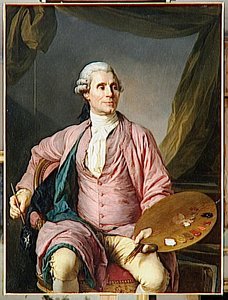
Retrato de Joseph Duplessis

Pinturas de Joseph Duplessis: As 60 mais famosas, sob o olhar de uma galeria

Atualizado em Novembro 2026 · classificado pela nossa pontuação de popularidade (pesquisas, visitas e pedidos de cada obra) · 60 obras de Joseph Duplessis em nosso catálogo

Em resumo

Aos olhos da galeria, a pintura mais famosa de Joseph Duplessis é Benjamin Franklin (1706-1790) (1778), cuja obra original está exposta no Harvard Art Museums, em Cambridge. Portrait of Louis XVI, King of France (1783) e Portrait of Louis XVI, King of France and Navarre completam o trio que todos reconhecem. Dos 60 trabalhos de Joseph Duplessis em nosso catálogo, a galeria apresenta abaixo as 60 obras mais famosas, cada uma original, com seu ano, seu museu e o que a torna única.

1725 – 1802, Carpentras Neoclassicism Mais obras: Musée Condé

As 10 principais pinturas de Joseph Duplessis na galeria

1
Benjamin Franklin (1706-1790) (1778) de Joseph Duplessis

Benjamin Franklin (1706-1790)

1778 · Oil On Canvas · Harvard Art Museums, Cambridge

The air in the room feels heavy with the weight of intellect and quiet authority. Benjamin Franklin sits before us, his gaze meeting ours with a calm, knowing intelligence that seems to bridge the gap between centuries. He is captured in an oval-shaped bust-length portrait, his body angled slightly away while his eyes remain fixed upon the viewer. A soft, directional light spills from the upper left, catching the sheen…

2
Portrait of Louis XVI, King of France (1783) de Joseph Duplessis

Portrait of Louis XVI, King of France

1783 · Oil On Canvas · Rijksmuseum, Amsterdã

The Portrait of Louis XVI, King of France is a formal oil on canvas rendered by the artist Joseph Siffred Duplessis. Painted in 1783, the work captures the sovereign Louis XVI, King of France and Navarre. The subject is presented with a quiet, heavy dignity that anchors the composition within the traditions of 18th-century court painting.

3
Portrait of Louis XVI, King of France and Navarre de Joseph Duplessis

Portrait of Louis XVI, King of France and Navarre

Oil On Canvas · Opera de Versalhes, Versalhes

The Portrait of Louis XVI, King of France and Navarre by Joseph Siffred Duplessis captures a monarch at a moment of profound historical weight. The subject, Louis XVI, who succeeded to the throne in 1774, meets the viewer's gaze from within the frame. Joseph Siffred Duplessis renders the king not merely as a figure of state, but as a man held within the stillness of his own station. The portrait…

4
Louis XVI of France (1754-1793) de Joseph Duplessis

Louis XVI of France (1754-1793)

The light catches a forehead of pale ochre, pulling the face from a heavy, dark void. Louis XVI does not look at the viewer. Instead, his eyes are fixed on a point somewhere beyond the frame, a quiet, visionary contemplation that feels both noble and distant. He is a man caught in the stillness before a storm. The shadows on the right side of his face provide a soft, three-dimensional…

5
Portrait of Louis XVIII, when comte de Provence ? (1771) de Joseph Duplessis

Portrait of Louis XVIII, when comte de Provence ?

1771 · Oil On Canvas · Statens Museum For Kunst, Copenhague

A young man is presented in a bust-length portrait, his gaze directed toward the viewer with a calm, poised expression. The composition is set at a slight angle, creating a sense of three-dimensional depth through subtle lighting that originates from the upper left. This light casts gentle shadows across the right side of the face, defining the contours of the features and the structure of the neckcloth. The subject's powdered…

6
Madame de Saint-Maurice (1776) de Joseph Duplessis

Madame de Saint-Maurice

1776 · Oil On Canvas · Metropolitan Museum of Art, Nova York

In this 1776 portrait, we find ourselves in the presence of Madame de Saint-Maurice, captured in a moment of quiet, dignified poise. The subject is presented in a three-quarter length view, her figure slightly offset to create a sense of natural, unforced elegance. There is a softness to her presence, a gentle serenity in her expression that suggests a woman of significant social standing and calm temperament. The lighting, descending…

7
Portrait of a Gentleman (Jean-Baptiste-Francois Dupre?) (1780) de Joseph Duplessis

Portrait of a Gentleman (Jean-Baptiste-Francois Dupre?)

1780 · Oil On Canvas · Fine Arts Museums of San Francisco, São Francisco

In "Portrait of a Gentleman (Jean-Baptiste-Francois Dupre?)" by Joseph Siffred Duplessis, a sense of poised stillness fills the room. The subject sits in a three-quarter length view, resting within an ornate chair that anchors the composition. He is positioned slightly off-center, a choice that lends a certain dynamic poise to his seated form. An eye-level perspective draws the viewer into his immediate space, fostering an intimate connection that feels direct…

9
Portrait of a Woman (1760) de Joseph Duplessis

Portrait of a Woman

1760 · Oil On Canvas · Musée Carnavalet, Paris

This 1760 oil portrait presents an elegant, intimate bust-length depiction of a woman, rendered in an oval-shaped composition. The subject is positioned against a dark, muted, and indistinct background that creates a sense of shallow depth. Her face and upper torso are illuminated by directional lighting coming from the upper left, which casts gentle shadows across the right side of her face and neck, enhancing the three-dimensional modeling of her…

10
Jean-Baptiste François, Comte de la Michodière, Provost of the Merchants from 1772 to 1778 (1771) de Joseph Duplessis

Jean-Baptiste François, Comte de la Michodière, Provost of the Merchants from 1772 to 1778

1771 · Oil On Canvas · Musée Carnavalet, Paris

The sitter gazes out from a realm of deep shadows, his presence commanding the space through a quiet, dignified stillness. He sits in a three-quarter view, his body angled slightly away while his eyes meet the viewer with a gaze of seasoned wisdom. A heavy silk robe in a shade of midnight blue catches the light, its lustrous sheen revealing the weight and luxury of the fabric. Around his neck,…

Pinturas de Joseph Duplessis, classificadas de 11 a 60

11Portrait of Madame Fréret d’Héricourt (1769) de Joseph DuplessisPortrait of Madame Fréret d’Héricourt1769 · The Nelson-Atkins Museum of Art 12Portrait of Madame Denis, niece of Voltaire (1778) de Joseph DuplessisPortrait of Madame Denis, niece of Voltaire1778 · Musée Condé 13Louis XVI (1754-1793), King of France. Full-length portrait, in royal costume. (1777) de Joseph DuplessisLouis XVI (1754-1793), King of France. Full-length portrait, in royal costume.1777 14Louis XVI (1754-1793), King of France. Full-length portrait, in royal costume. (1777) de Joseph DuplessisLouis XVI (1754-1793), King of France. Full-length portrait, in royal costume.1777 15Benjamin Franklin (1706-1790) (1778) de Joseph DuplessisBenjamin Franklin (1706-1790)1778 · Petit Palais 16Portrait of Charles-Claude Flahaut de la Billarderie comte d'Angiviller (1730-1809) (1784) de Joseph DuplessisPortrait of Charles-Claude Flahaut de la Billarderie comte d'Angiviller (1730-1809)1784 · Statens Museum For Kunst 17Portrait of Abraham Fontanel (1779) de Joseph DuplessisPortrait of Abraham Fontanel1779 · Musée Fabre 18Landscape in Blue Monochrome (1780) de Joseph DuplessisLandscape in Blue Monochrome1780 · Pharmacy of Hôtel-Dieu Hospital 19Portrait of Benjamin Franklin (1790) de Joseph DuplessisPortrait of Benjamin Franklin1790 · Musée des Beaux-Arts de Brest 20Portrait of a Lady (1787) de Joseph DuplessisPortrait of a Lady1787 · Art Institute of Chicago 21Benjamin Franklin (1785) de Joseph DuplessisBenjamin Franklin1785 · National Portrait Gallery 22Portrait of Benjamin Franklin (1778) de Joseph DuplessisPortrait of Benjamin Franklin1778 · New York Historical Society 23Portrait of Jacques Necker (1781) de Joseph DuplessisPortrait of Jacques Necker1781 · Musée Nissim de Camondo 24Halte de cavaliers (1800) de Joseph DuplessisHalte de cavaliers1800 · Musée Massey 25Portrait of the Comte d'Angiviller (1779) de Joseph DuplessisPortrait of the Comte d'Angiviller1779 · Château de Versailles 26Bust Portrait of King Louis XVI of France de Joseph DuplessisBust Portrait of King Louis XVI of FranceStaatliche Kunsthalle Karlsruhe 27Joseph-Marie Vien with Palette de Joseph DuplessisJoseph-Marie Vien with PaletteMuseu de Belas Artes de Boston 28Pierre Chrysostème de Bonnac d'Usson, 1724-1782, greve de Joseph DuplessisPierre Chrysostème de Bonnac d'Usson, 1724-1782, greveNational Portrait Gallery of Sweden 29Herders and their Cows Resting before Classical Ruins de Joseph DuplessisHerders and their Cows Resting before Classical Ruins 30Portrait de femme de Joseph DuplessisPortrait de femme 31Marie Antoinette de Lorraine Habsbourg alors Dauphine, en 1772 de Joseph DuplessisMarie Antoinette de Lorraine Habsbourg alors Dauphine, en 1772 32Portrait of Suzanne Curchod de Joseph DuplessisPortrait of Suzanne Curchod 33MADAME NECKER (1739 1794) de Joseph DuplessisMADAME NECKER (1739 1794) 34JACQUES NECKER (1732 1804) de Joseph DuplessisJACQUES NECKER (1732 1804)Opera de Versalhes 35Untitled (D2WVS2) de Joseph DuplessisUntitled (D2WVS2)Metropolitan Museum of Art 36PORTRAIT D'HOMME EN BUSTE de Joseph DuplessisPORTRAIT D'HOMME EN BUSTE 37Portrait d'Antoine Léonard Thomas de Joseph DuplessisPortrait d'Antoine Léonard ThomasMusée D'art Roger-quilliot 38LOUIS XVI, ROI DE FRANCE ET DE NAVARRE (1754 1793) de Joseph DuplessisLOUIS XVI, ROI DE FRANCE ET DE NAVARRE (1754 1793) 39Louis XVI of France de Joseph DuplessisLouis XVI of France 40LOUIS XVI, ROI DE FRANCE ET DE NAVARRE (1764 1793) de Joseph DuplessisLOUIS XVI, ROI DE FRANCE ET DE NAVARRE (1764 1793) 41Unidentified Papal Ceremony de Joseph DuplessisUnidentified Papal CeremonyBirmingham Museum and Art Gallery 42MICHEL PAUL GUY DE CHABANON (1730 1792) de Joseph DuplessisMICHEL PAUL GUY DE CHABANON (1730 1792) 43PORTRAIT DU COMTE DE PROVENCE de Joseph DuplessisPORTRAIT DU COMTE DE PROVENCEMusée Condé 44PORTRAIT DE LOUIS XVI de Joseph DuplessisPORTRAIT DE LOUIS XVI 45PORTRAIT DU COMTE D'ANGIVILLER de Joseph DuplessisPORTRAIT DU COMTE D'ANGIVILLERMusée Condé 46JEAN MARIE VIEN de Joseph DuplessisJEAN MARIE VIENMuseu do Louvre 47CHRISTOPHE GABRIEL ALLEGRAIN de Joseph DuplessisCHRISTOPHE GABRIEL ALLEGRAINMuseu do Louvre 48MADAME LENOIR de Joseph DuplessisMADAME LENOIRMuseu do Louvre 49Christophe Gabriel Allegrain, Sculptor (1774) de Joseph DuplessisChristophe Gabriel Allegrain, Sculptor1774 · Museu do Louvre 50Portrait of Louis XIV, King of France de Joseph DuplessisPortrait of Louis XIV, King of FranceJohn and Mable Ringling Museum of Art 51Portrait of Louis XV, King of France (wearing breastplate and the Order of the Golden Fleece) de Joseph DuplessisPortrait of Louis XV, King of France (wearing breastplate and the Order of the Golden Fleece)John and Mable Ringling Museum of Art 52Portrait of Louis XVI, King of France (wearing a velvet coat with no armor and the Order of the Golden Fleece) de Joseph DuplessisPortrait of Louis XVI, King of France (wearing a velvet coat with no armor and the Order of the Golden Fleece)John and Mable Ringling Museum of Art 53Portrait of Henri IV, King of France de Joseph DuplessisPortrait of Henri IV, King of FranceJohn and Mable Ringling Museum of Art 54Ludvig XVI (1754-1793), konung av Frankrike de Joseph DuplessisLudvig XVI (1754-1793), konung av FrankrikeNationalmuseum 55Portrait of Comte de Provence, brother of the King de Joseph DuplessisPortrait of Comte de Provence, brother of the King 56Mr. buissy de Joseph DuplessisMr. buissyGaleria Nacional do Canadá 57Self portrait de Joseph DuplessisSelf portraitOpera de Versalhes 58LA DUCHESSE DE CHARTRES EN PRESENCE DU VAISSEAU LE SAINT ESPRIT QUI EMPORTE LE DUC DE CHARTRES AU COMBAT D'OUESSANT de Joseph DuplessisLA DUCHESSE DE CHARTRES EN PRESENCE DU VAISSEAU LE SAINT ESPRIT QUI EMPORTE LE DUC DE CHARTRES AU COMBAT D'OUESSANTMusée Condé 59Louis XVI in Coronation Robes (1777) de Joseph DuplessisLouis XVI in Coronation Robes1777 · Musée Ingres Bourdelle 60Cristoph Wilibald von Gluck at the Spinet (1775) de Joseph DuplessisCristoph Wilibald von Gluck at the Spinet1775 · Kunsthistorisches Museum

Os temas que cativaram o olhar de Joseph Duplessis

Os quatro temas que mais se repetem nestas obras originais, cada um com o seu melhor exemplo.

Os museus que guardam os originais de Joseph Duplessis

Os 8 museus que detêm a maioria das pinturas desta página.

Museus Cidade Obras de Joseph Duplessis Pinturas desta lista
Musée Condé, ChantillyMusée Condé Chantilly 5 Portrait of Louis XVI, Portrait of Madame Denis, niece of Voltaire, PORTRAIT DU COMTE DE PROVENCE
Museu do Louvre, ParisMuseu do Louvre Paris 4 JEAN MARIE VIEN, CHRISTOPHE GABRIEL ALLEGRAIN, MADAME LENOIR
John and Mable Ringling Museum of Art, SarasotaJohn and Mable Ringling Museum of Art Sarasota 4 Portrait of Louis XIV, King of France, Portrait of Louis XV, King of France (wearing breastplate and the Order of the Golden Fleece), Portrait of Louis XVI, King of France (wearing a velvet coat with no armor and the Order of the Golden Fleece)
Opera de Versalhes, VersalhesOpera de Versalhes Versalhes 3 Portrait of Louis XVI, King of France and Navarre, JACQUES NECKER (1732 1804), Self portrait
Statens Museum For Kunst, CopenhagueStatens Museum For Kunst Copenhague 2 Portrait of Louis XVIII, when comte de Provence ?, Portrait of Charles-Claude Flahaut de la Billarderie comte d'Angiviller (1730-1809)
Metropolitan Museum of Art, Nova YorkMetropolitan Museum of Art Nova York 2 Madame de Saint-Maurice, Untitled (D2WVS2)
Musée Carnavalet, ParisMusée Carnavalet Paris 2 Portrait of a Woman, Jean-Baptiste François, Comte de la Michodière, Provost of the Merchants from 1772 to 1778
Harvard Art Museums, CambridgeHarvard Art Museums Cambridge 1 Benjamin Franklin (1706-1790)

Joseph Duplessis, uma pintura emblemática por década

Obras por década

Escolha uma década para ver a obra original que a define.

Pinturas de Joseph Duplessis: a galeria responde

Qual pintura de Joseph Duplessis é a mais famosa de todas?Revelar a resposta

Benjamin Franklin (1706-1790) (1778), Harvard Art Museums, Cambridge. Portrait of Louis XVI, King of France (1783) e Portrait of Louis XVI, King of France and Navarre vêm a seguir.

Qual era a idade de Joseph Duplessis ao concluir Benjamin Franklin (1706-1790)?Revelar a resposta

53 anos: Benjamin Franklin (1706-1790) data de 1778, e Joseph Duplessis nasceu em 1725.

Quais são as 10 principais pinturas de Joseph Duplessis?Revelar a resposta

Benjamin Franklin (1706-1790), Portrait of Louis XVI, King of France, Portrait of Louis XVI, King of France and Navarre, Louis XVI of France (1754-1793), Portrait of Louis XVIII, when comte de Provence ?, Madame de Saint-Maurice, Portrait of a Gentleman (Jean-Baptiste-Francois Dupre?), Portrait of Louis XVI, Portrait of a Woman e Jean-Baptiste François, Comte de la Michodière, Provost of the Merchants from 1772 to 1778. O ranking acima apresenta o ano e o museu de cada uma.

Quantas obras Joseph Duplessis criou?Revelar a resposta

Nosso catálogo contém 60 obras de Joseph Duplessis, datadas de 1750 a 1800.

Onde estão expostos os originais mais famosos de Joseph Duplessis?Revelar a resposta

Principalmente em Musée Condé (Chantilly), Museu do Louvre (Paris) e John and Mable Ringling Museum of Art (Sarasota). A tabela de museus acima lista todos eles.

Quando é que Joseph Duplessis criou as suas pinturas mais famosas?Revelar a resposta

Em 1770s: 14 das 60 obras nesta página foram feitas então, sendo Benjamin Franklin (1706-1790) delas.

Quais são as obras mais famosas de Joseph Duplessis no início e no fim de sua carreira?Revelar a resposta

Nesta página, a mais antiga é Portrait of Louis XVI (1750) e a mais recente é Halte de cavaliers (1800).

Quais temas Joseph Duplessis mais explorou?Revelar a resposta

Man (16), Portrait (10) e Portraits (9), entre as 60 obras nesta página.

Em qual técnica Joseph Duplessis mais trabalhou?Revelar a resposta

Oil On Canvas, para 22 das 60 obras nesta página.

Com qual movimento Joseph Duplessis está associado(a)?Revelar a resposta

Neoclassicism, a julgar pelos originais nesta página.

Quais obras originais de Joseph Duplessis o Musée Condé possui?Revelar a resposta

Portrait of Louis XVI, Portrait of Madame Denis, niece of Voltaire e PORTRAIT DU COMTE DE PROVENCE: o Musée Condé, Chantilly detém 5 das obras desta página.

Joseph Duplessis: o artista

Joseph Siffred Duplessis - Master of 18thC French Portraiture, Famé for Realistic Depictions of Aristocracy & Iconic Portraits Like Benjamin Franklin

Joseph-Siffred Duplessis (1725–1802) stands as a cornerstone in the annals of 18th-century French art, specifically within the realm of portraiture. Unlike many artists of his time born into established artistic lineages, Duplessis emerged from a family where creativity possessed a quiet tenacity; his father, a surgeon, nurtured an ardent fascination with painting—a passion that instilled in young Joseph the foundational principles of meticulous observation – a skill honed by his medical illustrations and destined to propel him toward remarkable success. This early grounding wouldn’t merely equip him with technical proficiency but would cultivate an aesthetic sensibility rooted in profound understanding, shaping the distinctive clarity and immediacy that characterize his artistic vision. He pursued formal training under Joseph Gabriel Imbert, a pupil of Charles Le Brun—absorbing the established academic conventions before embarking on a transformative journey to Rome between 1744 and 1747. It was within Pierre Subleyras’ atelier that Duplessis truly blossomed, immersing himself in the vibrant artistic heritage of Italy and forging enduring friendships with fellow artists like Joseph Vernet – a kindred spirit hailing from Provence—who shared his dedication to capturing the essence of their surroundings. This formative period transcended mere technique; it constituted an essential stage in shaping his artistic sensibilities, cementing the hallmark qualities of his oeuvre.

Early Life and Artistic Foundations

Born in Carpentras, nestled within the Comtat Venaissin, Duplessis’s upbringing fostered a connection to art that extended beyond familial interest. His father's profession—surgery—provided him with an invaluable perspective on precision and detail – skills directly transferable to his artistic endeavors. He commenced his artistic education under Joseph Gabriel Imbert, who had been profoundly influenced by Charles Le Brun—the dominant figure of the Académie Royale de Peinture et de Sculpture during Le Brun’s lifetime—absorbing the rigorously structured techniques that defined the academic tradition. This grounding in classical aesthetics proved crucial to Duplessis's subsequent stylistic development. Recognizing the importance of observation, he diligently studied anatomy and perspective – disciplines considered paramount for achieving realistic representation. Furthermore, his exposure to medical illustration instilled a meticulous attention to detail—a characteristic that would permeate his portraits throughout his career. The influence of Imbert’s teachings solidified Duplessis’s commitment to mastering the fundamentals of artistic craft.

Rome: Embracing Innovation and Artistic Dialogue

Between 1744 and 1747, Duplessis undertook a pivotal journey to Rome—a pilgrimage to the epicenter of European artistic innovation. Seeking inspiration and honing his skills amidst the intellectual fervor of the papal court, he enrolled in Pierre Subleyras’ atelier—a bastion of Neoclassical style and a hub for artistic exchange. Subleyras, himself a protégé of Le Brun, championed a return to classical ideals—emphasizing balance, harmony, and idealized beauty—influencing Duplessis's stylistic trajectory. During his Roman sojourn, he cultivated friendships with prominent artists like Joseph Vernet – another Provençal painter who shared his passion for capturing the grandeur of nature – fostering dialogues that broadened his artistic horizons. This immersion in Italian art profoundly impacted Duplessis’s aesthetic sensibilities, shaping his distinctive approach to composition and color—elements that would become hallmarks of his portraits. The atelier environment encouraged experimentation while upholding standards of excellence, nurturing Duplessis's talent and solidifying his commitment to mastering the techniques of his time.

The Salon Breakthrough: Recognition and Artistic Ascent

Returning to France around 1752, Duplessis initially established himself in Lyon before relocating to Paris—a move that propelled him into the orbit of the Académie de Saint-Luc and marked the commencement of his artistic ascent. Despite initial struggles for acceptance—the Académie’s patronage system was notoriously selective—Duplessis persevered with unwavering determination. His breakthrough arrived at the Salon of 1769—an annual exhibition showcasing the finest artworks of the era—where he presented ten portraits that captivated the discerning eye of Denis Diderot—a celebrated philosopher and champion of Enlightenment ideals. Diderot’s fervent endorsement catapulted Duplessis into artistic prominence, securing him membership in the Académie Royale de Peinture et de Sculpture—a prestigious honor reflecting his mastery of portraiture and acknowledging his contribution to French art history. This recognition validated his artistic vision and fueled his continued creative output—establishing him as a leading figure within the Parisian artistic landscape. The Salon’s influence extended beyond mere prestige; it served as a crucible for artistic debate and propelled Duplessis's work into the spotlight of public opinion.

A Portraitist Royal: Defining Style and Achieving Artistic Success

Duplessis’s career gained further momentum with his appointment as *peintre du Roi*—painter to Louis XVI—in 1771—a position that afforded him unparalleled access to royal patronage and solidified his reputation as one of the era's foremost portraitists. This commission demanded meticulous attention to detail and unwavering adherence to stylistic conventions—reflecting Duplessis’s commitment to upholding standards of excellence while capturing the essence of his subjects. He skillfully adapted his artistic approach to suit the tastes of the monarchy, producing portraits that conveyed dignity, grace, and intellectual refinement—works that exemplify the ideals of Neoclassicism. Throughout his prolific output—spanning from 1776 to 1802—Duplessis consistently demonstrated an uncanny ability to convey psychological depth alongside physical likeness—a characteristic that distinguishes his oeuvre from many contemporaries. His portraits stand as enduring testaments to his artistic genius—capturing not merely appearances but also the inner lives of individuals who shaped the course of French history. The patronage of Louis XVI ensured Duplessis’s financial stability and provided him with opportunities to hone his craft—further cementing his legacy as a master portraitist whose work continues to inspire admiration and scholarly study. ## Notable Works: Capturing Essence Through Observation Duplessis's artistic output encompasses a diverse range of subjects—spanning portraits of royalty, aristocrats, intellectuals, and artists—each rendered with remarkable precision and imbued with psychological insight. Among his most celebrated achievements are the portraits of Benjamin Franklin—created around 1785—which exemplify Duplessis’s mastery of realism and his ability to convey character through subtle nuances—a portrait that has achieved iconic status and graced the obverse of a U.S. hundred-dollar bill. Other noteworthy commissions include depictions of Louis XVI—demonstrating Duplessis's skill in conveying regal dignity—and portraits of Christoph Willibald Gluck—capturing the composer’s creative spirit with palpable energy—works that underscore his versatility as an artist. His meticulous attention to detail—evident in every brushstroke—reflects his unwavering commitment to upholding artistic standards while capturing the essence of his subjects. Duplessis's oeuvre constitutes a rich tapestry of French cultural history—illuminating the lives and perspectives of individuals who shaped the intellectual and social landscape of the Enlightenment era. He skillfully blended Rococo elegance with Neoclassical restraint—creating portraits that transcend mere likeness to embody the spirit of their time. His enduring legacy rests upon his ability to transform observation into art—producing masterpieces that continue to captivate audiences worldwide.