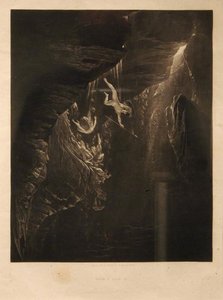
Retrato de John Martin

As 88 Pinturas Mais Famosas de John Martin, uma Seleção da Galeria

Atualizado em Outubro 2026 · classificado pela nossa pontuação de popularidade (pesquisas, visitas e pedidos de cada obra) · 88 obras de John Martin em nosso catálogo

Em resumo

De todas as obras originais deixadas por John Martin, a mais famosa é The Great Day of His Wrath (1851), da coleção do Tate Britain, em Londres. Logo atrás vêm The Destruction of Sodom And Gomorrah (1852) e The Evening of the Deluge (1828). Nosso catálogo contém 88 obras de John Martin; a galeria preservou as 88 que o mundo mais admira, cada uma exibida com sua data, seu museu e sua história.

1789 – 1854, Haydon Bridge Romanticism Mais obras: Yale Center for British Art

As 10 principais pinturas de John Martin: a escolha da galeria

1
The Great Day of His Wrath (1851) de John Martin

The Great Day of His Wrath

1851 · Oil On Canvas · Tate Britain, Londres

In the heart of the nineteenth century, few images could stir the Victorian soul with as much terror and awe as John Martin’s The Great Day of His Wrath. This monumental oil on canvas is not merely a painting; it is a visceral experience of the sublime. As the eye wanders across the vast, turbulent landscape, one is immediately struck by the sheer scale of destruction. The scene captures the…

2
The Destruction of Sodom And Gomorrah (1852) de John Martin

The Destruction of Sodom And Gomorrah

1852 · Oil On Canvas · Laing Art Gallery, Newcastle upon Tyne

The heavens do not merely darken; they fracture. A massive, swirling vortex of fiery clouds dominates the upper reaches of the canvas, a celestial furnace that seems to swallow the very air. Light does not fall from above in a gentle glow but erupts from the center of a cosmic explosion. It is a violent, directional radiance that carves the landscape into jagged silhouettes of deep black and shadowy blue.…

3
The Evening of the Deluge (1828) de John Martin

The Evening of the Deluge

1828 · Engraving · Victoria and Albert Museum, Londres

To stand before John Martin's monumental vision, The Evening of the Deluge, is not merely to observe a painting; it is to be submerged within an epochal moment of divine wrath and human fragility. Created in 1828, this work transcends simple depiction, becoming instead a profound meditation on humanity’s place against the overwhelming power of nature. Martin, a master chronicler of the sublime, utilized his immense scale—a staggering 597 x…

4
Eve (1827) de John Martin

Eve

1827 · Acrílico sobre tela · Te Papa, Wellington

A Tempestuous Vision of Faith: Examining John Martin’s ‘Eve’ John Martin (1789-1854) stands as a titan amongst Romantic painters, his canvases exploding with dramatic fervor and capturing the sublime terror that defined the era. His masterpiece, ‘Eve,’ etched in monochrome printmaking – specifically engraving – transcends mere depiction; it embodies the very spirit of Romantic idealism, presenting a visceral confrontation between divine judgment and human transgression. This print isn’t simply…

6
Destruction of Tyre (1840) de John Martin

Destruction of Tyre

1840 · Oil On Canvas · Toledo Museum of Art, Toledo

John Martin's "Destruction of Tyre," completed in 1840, is not merely a depiction of a historical event; it is a visceral embodiment of Romanticism’s fascination with the sublime – that overwhelming feeling of awe and terror inspired by nature’s power. Measuring an imposing 95 x 838 cm, this oil on canvas transports the viewer directly into the heart of apocalyptic chaos. The scene, based on the biblical account in 2…

7
Satan in Council de John Martin

Satan in Council

Engraving

The scene unfolds through the vision of Satan in Council, a dramatic work by the English romantic painter John Martin. This composition captures a moment of intense celestial and infernal tension, pulling the viewer into a realm of shadow and light. The work is also recognized by the title Satan presiding at the Infernal Council, a name that speaks to the heavy authority commanding the assembly. It exists as a…

8
Pandemonium (1841) de John Martin

Pandemonium

1841 · Oil On Canvas

The Sublime Terror of the Infernal Capital In the annals of Romanticism, few images command the eye with such overwhelming dread and grandeur as John Martin’s Pandemonium. Painted in 1841, this oil on canvas is not merely a depiction of a scene; it is an immersive descent into the heart of cosmic chaos. The viewer is immediately confronted by the sheer, terrifying scale of Hell’s capital, where the architecture of…

9
Fall of Babylon de John Martin

Fall of Babylon

The heavens fracture as the destruction of Babylon unfolds in this dramatic vision by John Martin. The scene captures a terrifying Old Testament biblical narrative, where the once-mighty city faces its ultimate end. Chaos reigns as the landscape is swallowed by upheaval, reflecting a moment of divine judgment that feels immediate and overwhelming. The scale of the catastrophe looms large, turning the sprawling cityscape into a site of profound human…

10
Belshazzar's Feast de John Martin

Belshazzar's Feast

Oil On Canvas · Musée Carnavalet, Paris

The scene unfolds within a vast, architectural interior where a long dining table occupies the central space. Around this table, fourteen figures are positioned in various states of repose and movement. Some individuals sit in chairs, while others kneel or stand near the edges of the gathering. The table is laden with food and drink, set against a backdrop of grand, structural elements. Above the assembly, a clock hangs upon…

A seleção de John Martin continua, de 11 a 88

11The Plains of Heaven de John MartinThe Plains of Heaven 12The Great Day of His Wrath de John MartinThe Great Day of His Wrath 13Satan Arousing the Fallen Angels, Book 1, line 314, from John Milton, Paradise Lost (1824) de John MartinSatan Arousing the Fallen Angels, Book 1, line 314, from John Milton, Paradise Lost1824 14The Last Man (1849) de John MartinThe Last Man1849 · Walker Art Gallery 15Landscape with a Castle (1815) de John MartinLandscape with a Castle1815 · Yale Center for British Art 16Plate from de John MartinPlate fromTate Britain 17Ancestor Worship (1964) de John MartinAncestor Worship1964 · Galeria Nacional do Canadá 18Moonlight - Chepstow Castle (1815) de John MartinMoonlight - Chepstow Castle1815 · Art Gallery of South Australia 19O país dos Iguanodontes (1837) de John MartinO país dos Iguanodontes1837 · Te Papa 20Sadak in Search of the Waters of Oblivion de John MartinSadak in Search of the Waters of OblivionMuseu de Belas Artes de Boston 21Kensington Garden (1815) de John MartinKensington Garden1815 · Yale Center for British Art 22Kensington Garden (1815) de John MartinKensington Garden1815 · Yale Center for British Art 23Kensington Gardens (1815) de John MartinKensington Gardens1815 · Yale Center for British Art 24Landscape, Possibly the Isle of Wight or Richmond Hill (1815) de John MartinLandscape, Possibly the Isle of Wight or Richmond Hill1815 · Yale Center for British Art 25Hyde Park (1815) de John MartinHyde Park1815 · Yale Center for British Art 26The Court of God: Paradise Lost (Book 3, Line 365) (1824) de John MartinThe Court of God: Paradise Lost (Book 3, Line 365)1824 · Galeria Nacional do Canadá 27Diogenes Throwing Away His Cup (1833) de John MartinDiogenes Throwing Away His Cup1833 28Alpheus and Arethusa (1832) de John MartinAlpheus and Arethusa1832 29The Deluge (1834) de John MartinThe Deluge1834 30Joshua Commanding the Sun to Stand Still (1840) de John MartinJoshua Commanding the Sun to Stand Still1840 · Yale Center for British Art 31The Assuaging of the Waters (1840) de John MartinThe Assuaging of the Waters1840 · Fine Arts Museums of San Francisco 32Twilight in the woodlands (1850) de John MartinTwilight in the woodlands1850 · Fitzwilliam Museum 33Landscape: View in Richmond Park (1850) de John MartinLandscape: View in Richmond Park1850 · Fitzwilliam Museum 34The Last Judgement (study) (1851) de John MartinThe Last Judgement (study)1851 · Yale Center for British Art 35Christ Stilleth the Tempest (1852) de John MartinChrist Stilleth the Tempest1852 · York Art Gallery 36F shaw brothers tannery maine de John MartinF shaw brothers tannery maineBavarian State Painting Collections 37Paradise Lost. Adam and Eve Driven out of Paradise de John MartinParadise Lost. Adam and Eve Driven out of Paradise 38Seventh Plague de John MartinSeventh Plague 39Gleaners in the Wheat Field de John MartinGleaners in the Wheat Field 40The Last Judgement de John MartinThe Last JudgementTate Britain 41The Isle of Man de John MartinThe Isle of Man 42The Destruction of Sodom and Gomorrah de John MartinThe Destruction of Sodom and Gomorrah 43The Valley of the Tyne, My Native Country, near Henshaw de John MartinThe Valley of the Tyne, My Native Country, near Henshaw 44Destruction of Pharaoh's Host de John MartinDestruction of Pharaoh's Host 45The Covenant de John MartinThe Covenant 46Figures Seated by a Lake in a Wooded Landscape de John MartinFigures Seated by a Lake in a Wooded Landscape 47Psalm CXXVII (by the Waters of Babylon) de John MartinPsalm CXXVII (by the Waters of Babylon) 48Moses Breaketh the Tables de John MartinMoses Breaketh the Tables 49A Man Playing a Harp with other Figures beside a Lake de John MartinA Man Playing a Harp with other Figures beside a Lake 50Ruins of an Ancient City de John MartinRuins of an Ancient CityCleveland Museum of Art 51Joshua Commanding the Sun to Stand Still upon Gibeon de John MartinJoshua Commanding the Sun to Stand Still upon Gibeon 52Landscape with a Ruined Castle de John MartinLandscape with a Ruined Castle 53Edwin and Angelina (also known as The Hermit) de John MartinEdwin and Angelina (also known as The Hermit) 54The Plains of Heaven (1851) de John MartinThe Plains of Heaven1851 · Tate Britain 55Repentance of Nineveh (1840) de John MartinRepentance of Nineveh1840 · Yale University Art Gallery 56Pandemonium - John Martin (2026) de John MartinPandemonium - John Martin2026 57O país do Iguanodão (1837) de John MartinO país do Iguanodão1837 · Te Papa 58Plate from de John MartinPlate fromTate Britain 59Plate from de John MartinPlate fromTate Britain 60Fall of the Rebel Angels de John MartinFall of the Rebel AngelsHarvard Art Museums 61Paradise Lost. The Creation of Light de John MartinParadise Lost. The Creation of Light 62Flood at night de John MartinFlood at night 63David Spareth Saul at Hachilah de John MartinDavid Spareth Saul at Hachilah 64Fall of the Walls of Jericho de John MartinFall of the Walls of Jericho 65Fantastic Oriental Landscape de John MartinFantastic Oriental Landscape 66Fall of the Rebel Angels de John MartinFall of the Rebel Angels 67Christ's glorious coming de John MartinChrist's glorious coming 68The Assuaging of the Waters de John MartinThe Assuaging of the Waters 69Creation of Light de John MartinCreation of Light 70View on the River Wye, Looking towards Chepstow de John MartinView on the River Wye, Looking towards Chepstow 71Joshua commanding the Sun to stand still de John MartinJoshua commanding the Sun to stand still 72Eve's Dream - Satan aroused de John MartinEve's Dream - Satan aroused 73The Fallen Angels Entering Pandemonium, from Paradise Lost de John MartinThe Fallen Angels Entering Pandemonium, from Paradise LostTate Britain 74View of Dolbadern Castle, North Wales de John MartinView of Dolbadern Castle, North Wales 75A Country Graveyard, Possibly Bunhill Fields, Finsbury, A Wooded Landscape Beyond de John MartinA Country Graveyard, Possibly Bunhill Fields, Finsbury, A Wooded Landscape Beyond 76Belshazzar (1820) de John MartinBelshazzar1820 · Yale Center for British Art 77Manfred and the Alpine Witch (1837) de John MartinManfred and the Alpine Witch1837 · Whitworth Art Gallery 78Sadak in Search of the Waters of Oblivion (1812) de John MartinSadak in Search of the Waters of Oblivion1812 · Saint Louis Art Museum 79Seventh Plague of Egypt de John MartinSeventh Plague of EgyptMuseu de Belas Artes de Boston 80The Destruction of Pompeii and Herculaneum (1822) de John MartinThe Destruction of Pompeii and Herculaneum1822 81Joshua Commanding the Sun to Stand Still upon Gibeon (1816) de John MartinJoshua Commanding the Sun to Stand Still upon Gibeon1816 · National Gallery of Art 82The Eve of the Deluge (1840) de John MartinThe Eve of the Deluge1840 · Royal Collection 83Manfred on the Jungfrau (1837) de John MartinManfred on the Jungfrau1837 · Birmingham Museum and Art Gallery 84The Celestial City and the River of Bliss (1841) de John MartinThe Celestial City and the River of Bliss1841 85Macbeth de John MartinMacbeth 86The Coronation of Queen Victoria de John MartinThe Coronation of Queen VictoriaTate Britain 87O Bard (1817) de John MartinO Bard1817 · Yale Center for British Art 88The Deluge (1834) de John MartinThe Deluge1834 · Yale Center for British Art

Pinturas famosas de John Martin, período por período

Os temas que cativaram o olhar de John Martin

Os quatro temas que mais se repetem nestas obras originais, cada um com o seu melhor exemplo.

Os museus que guardam os originais de John Martin

Os 8 museus que detêm a maioria das pinturas desta página.

Museu Cidade Obras de John Martin Pinturas desta lista
Yale Center for British Art, New HavenYale Center for British Art New Haven 11 Landscape with a Castle, Kensington Garden, Kensington Garden
Tate Britain, LondresTate Britain Londres 8 The Great Day of His Wrath, Plate from, The Last Judgement
Te Papa, WellingtonTe Papa Wellington 3 Eve, O país dos Iguanodontes, O país do Iguanodão
Galeria Nacional do Canadá, OttawaGaleria Nacional do Canadá Ottawa 2 Ancestor Worship, The Court of God: Paradise Lost (Book 3, Line 365)
Museu de Belas Artes de Boston, BostonMuseu de Belas Artes de Boston Boston 2 Sadak in Search of the Waters of Oblivion, Seventh Plague of Egypt
Fitzwilliam MuseumFitzwilliam Museum 2 Twilight in the woodlands, Landscape: View in Richmond Park
Laing Art Gallery, Newcastle upon TyneLaing Art Gallery Newcastle upon Tyne 1 The Destruction of Sodom And Gomorrah
Victoria and Albert Museum, LondresVictoria and Albert Museum Londres 1 The Evening of the Deluge

John Martin década a década: a obra original que define cada uma

Obras por década

Escolha uma década para ver a obra original que a define.

Perguntas de colecionadores sobre as pinturas de John Martin

Por qual obra John Martin é mais conhecido(a)?Revelar a resposta

The Great Day of His Wrath (1851), Tate Britain, Londres. The Destruction of Sodom And Gomorrah (1852) e The Evening of the Deluge (1828) vêm a seguir.

Qual era a idade de John Martin quando The Great Day of His Wrath foi feita?Revelar a resposta

62 anos: The Great Day of His Wrath data de 1851, e John Martin nasceu em 1789.

Quais são as dez pinturas mais famosas de John Martin?Revelar a resposta

The Great Day of His Wrath, The Destruction of Sodom And Gomorrah, The Evening of the Deluge, Eve, Great Day of His Wrath, Destruction of Tyre, Satan in Council, Pandemonium, Fall of Babylon e Belshazzar's Feast. O ranking acima apresenta o ano e o museu de cada uma.

Quantas pinturas John Martin deixou?Revelar a resposta

Nosso catálogo contém 88 obras de John Martin, datadas de 1812 a 1852.

Em quais museus estão expostas as obras-primas de John Martin?Revelar a resposta

Principalmente em Yale Center for British Art (New Haven), Tate Britain (Londres) e Te Papa (Wellington). A tabela de museus acima lista todos eles.

Em que anos John Martin pintou as suas obras mais famosas?Revelar a resposta

Em 1810s: 10 das 88 obras nesta página foram feitas então, sendo Landscape with a Castle delas.

Quais são as primeiras e as últimas obras originais famosas de John Martin?Revelar a resposta

Nesta página, a mais antiga é Sadak in Search of the Waters of Oblivion (1812) e a mais recente é The Destruction of Sodom And Gomorrah (1852).

Quais temas John Martin escolheu com mais frequência?Revelar a resposta

People (13), Landscape (12) e Mountains (8), entre as 88 obras nesta página.

Qual técnica John Martin mais utilizou?Revelar a resposta

Oil On Canvas, para 15 das 88 obras nesta página.

A qual movimento artístico pertence John Martin?Revelar a resposta

Romanticism, a julgar pelos originais nesta página.

Quais obras de John Martin estão expostas no Yale Center for British Art?Revelar a resposta

Landscape with a Castle, Kensington Garden e Kensington Garden: o Yale Center for British Art, New Haven detém 11 das obras desta página.

Posso encomendar uma reprodução de uma pintura de John Martin?Revelar a resposta

Sim, como uma reprodução: a obra original permanece no seu museu, mas qualquer pintura desta página pode ser pintada à mão para você, feita sob encomenda uma a uma, a partir da própria página da pintura.

John Martin: vida e obra

John Martin: Um Mestre do Romantismo Melodramático

John Martin (1789-1854) foi um célebre pintor, gravador e ilustrador romântico inglês, cujas composições dramáticas cativaram o público vitoriano. Nascido em Haydon Bridge, Northumberland, em 19 de julho de 1789, ele ascendeu de origens humildes para se tornar um dos artistas mais populares de sua época, sendo renomado por suas vastas paisagens povoadas por figuras minúsculas e por retratar cenas bíblicas e narrativas fantásticas com um poderoso senso de escala e emoção.

Primeiros Anos e Desenvolvimento Artístico

A juventude de Martin foi marcada por ocupações práticas. Ele foi aprendiz de um construtor de carruagens em Newcastle upon Tyne, onde aprendeu a pintura heráldica – uma habilidade que mais tarde fundamentaria sua meticulosa atenção aos detalhes. Em 1806, mudou-se para Londres, casando-se aos dezenove anos e sustentando-se por meio de aulas de desenho e encomendas de aquarelas e trabalhos decorativos em porcelana e vidro. Este período refinou suas habilidades técnicas ao mesmo tempo que lhe permitiu explorar diversos meios artísticos. Suas obras iniciais revelam um interesse crescente pela iluminação dramática e pela composição, prenunciando o estilo que se tornaria sua marca registrada.

Estilo Artístico e Obras Notáveis

O estilo distinto de Martin é caracterizado por sua escala grandiosa, intensidade melodramática e detalhamento meticuloso. Ele frequentemente retratava temas bíblicos, como The Destruction of Sodom and Gomorrah e Belshazzar’s Feast, com um toque teatral que ressoava profundamente com o público. Suas paisagens, como Harnham Church, near Salisbury, demonstravam sua capacidade de capturar cenas serenas do campo enquanto mantinham um senso de grandeza. Entre as obras fundamentais que exibem sua destreza artística, destacam-se:

  • The Destruction of Sodom and Gomorrah: Uma representação monumental da retribuição divina, demonstrando a habilidade de Martin em retratar o caos e a destruição em uma escala vasta.
  • Belshazzar's Feast: Ilustrando a história bíblica com iluminação dramática e detalhes intrincados, realçando a queda da Babilônia.
  • Manfred and the Alpine Witch: Inspirada no poema de Byron, esta obra exemplifica a capacidade de Martin de traduzir narrativas literárias em composições visualmente deslumbrantes.
  • Satan Arousing the Fallen Angels (de Paradise Lost): Uma interpretação poderosa do poema épico de Milton, exibindo sua maestria ao retratar cenas dramáticas da literatura.
  • Pandemonium: Uma representação fantástica da capital do Inferno, demonstrando o alcance imaginativo e o domínio da perspectiva de Martin.
  • The Country of the Iguanodon: Um exemplo precoce de paleoarte, refletindo o crescente interesse pelas descobertas científicas de sua época.

Reconhecimento e Legado

John Martin alcançou um reconhecimento considerável durante sua vida. Ele foi referido como "o pintor mais popular de seu tempo" por Walter Sickert em 1821 e recebeu uma medalha de ouro do Czar russo Nicolau I. Foi condecorado com a Ordem de Leopoldo pelo Príncipe Leopoldo de Saxe-Coburgo-Gotha, tornando-se o pintor histórico oficial do Príncipe Leopoldo. Suas obras foram exibidas tanto na National Gallery quanto na Tate Gallery, consolidando seu lugar no estabelecimento artístico britânico.

Apesar de um período de relativo obscurantismo após sua morte, em 17 de fevereiro de 1854, a obra de Martin experimentou um ressurgimento em apreciação. Hoje, suas pinturas são reconhecidas por sua mistura única de drama romântico, detalhe meticuloso e amplitude imaginativa. Sua influência pode ser vista nas obras de artistas posteriores, incluindo James Francis Danby, que foi inspirado pelas paisagens dramáticas de Martin. John Martin permanece como uma figura importante na história da arte britânica, celebrado por sua capacidade de transportar os espectadores para mundos épicos, repletos tanto de uma beleza inspiradora quanto de um poder aterrador.

Todas as 88 obras de John Martin →