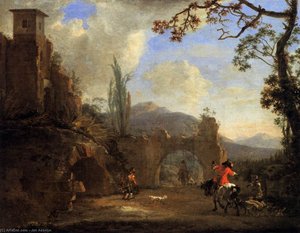
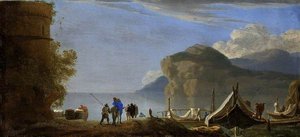
Retrato de Jan Asselijn

Pinturas de Jan Asselijn: As 76 mais famosas, sob o olhar de uma galeria

Atualizado em Novembro 2026 · classificado pela nossa pontuação de popularidade (pesquisas, visitas e pedidos de cada obra) · 84 obras de Jan Asselijn em nosso catálogo

Em resumo

Aos olhos da galeria, a pintura mais famosa de Jan Asselijn é O Cisne Ameaçado (1652), cuja obra original está exposta no Rijksmuseum, em Amsterdã. King Gustav Adolf II of Sweden in the Battle of Lutzen, 1632 (1634) e Landscape with a Bridge in the Italian Countryside (1652) completam o trio que todos reconhecem. Dos 84 trabalhos de Jan Asselijn em nosso catálogo, a galeria apresenta abaixo as 76 obras mais famosas, cada uma original, com seu ano, seu museu e o que a torna única.

1610 – 1652, Dieppe Idade de ouro holandesa Mais obras: Rijksmuseum

As 10 principais pinturas de Jan Asselijn na galeria

1
O Cisne Ameaçado (1652) de Jan Asselijn

O Cisne Ameaçado

1652 · Óleo sobre tela · Rijksmuseum, Amsterdã

é uma pintura a óleo sobre tela do artista Jan Asselijn. Concluída por volta de 1650, a obra captura um cisne-mudo em um momento de defesa feroz. A ave abre as asas e sibilas, protegendo o seu ninho contra a aproximação de um cão. Este embate entre a plumagem branca e a ameaça que se aproxima define a tensão central da imagem.

2
King Gustav Adolf II of Sweden in the Battle of Lutzen, 1632 (1634) de Jan Asselijn

King Gustav Adolf II of Sweden in the Battle of Lutzen, 1632

1634 · Oil On Canvas · Statens Museum For Kunst, Copenhague

Jan Asselijn's “King Gustav Adolf II of Sweden in the Battle of Lutzen, 1632” isn’t merely a painting; it’s a visceral plunge into the heart of a pivotal moment in European history. Completed in 1634, this monumental work captures the chaotic fury and strategic brilliance of the Battle of Lutzen, fought on August 17th of that year, a clash that cemented Gustav Adolf II's reputation as a military genius and…

3
Landscape with a Bridge in the Italian Countryside (1652) de Jan Asselijn

Landscape with a Bridge in the Italian Countryside

1652 · Oil On Canvas · Cannon Hall Museum, Barnsley

A stone bridge with arched spans anchors this serene landscape, crossing a calm body of water that reflects the soft, overcast sky. To the left, a solitary figure sits upon a barrel, watching the quiet movement of the scene. On the right, the composition gathers around a horse and carriage; a person guides the animal toward the water's edge while another observer stands nearby. A dog occupies the foreground, grounding…

4
King Gustav Adolf II in the Battle of Lutzen on November 6,1632 (1632) de Jan Asselijn

King Gustav Adolf II in the Battle of Lutzen on November 6,1632

The air is thick with the scent of wet earth and sulfur. In the center of the chaos, King Gustav Adolf II of Sweden rides a horse through the fray, his sword a flash of cold light against the darkening sky. The Battle of Lutzen is not a quiet affair; it is a collision of muscle and metal. Soldiers on foot and mounted on horseback press against one another in…

5
Four Figures (1615) de Jan Asselijn

Four Figures

1615 · Oil · Groeningemuseum, Bruges

In Four Figures, Jan Asselijn organizes a group of men in period attire within a dimly lit, atmospheric setting. The composition centers on this cluster of figures, who are arranged in a loose, triangular formation. This structural choice draws the viewer's eye toward the middle of the group, where the subjects interact in a moment of quietude. One man is captured drinking from a vessel, while another stands holding a…

6
King Gustav Adolf II of Sweden, Battle near Lutzen 1632 (1635) de Jan Asselijn

King Gustav Adolf II of Sweden, Battle near Lutzen 1632

1635 · Oil On Panel · Gemäldegalerie, Berlim

The artwork titled King Gustav Adolf II of Sweden, Battle near Lutzen 1632 is a work by the artist Jan Asselijn. Dated about 1635, this oil on panel painting belongs to the genre of military history. The subject matter focuses on the Battle of Lützen, a significant conflict from the Thirty Years' War. The scene captures the king amidst the movement of a large-scale military engagement.

7
The Tiber River with the Ponte Molle at Sunset (1650) de Jan Asselijn

The Tiber River with the Ponte Molle at Sunset

1650 · Oil · National Gallery of Art, Washington

The sun hangs low over the horizon, casting a sharp, golden light through the four massive stone arches of the Ponte Molle. This light slices through the atmosphere, painting the sky in a gradient that shifts from a warm, glowing amber on the right to a pale, tranquil aquamarine as the eye moves toward the left. The river below remains placid, reflecting the changing colors of the sky, while the…

8
Ruined Building with Shepherd and Sheep (1646) de Jan Asselijn

Ruined Building with Shepherd and Sheep

1646 · Oil On Panel

Ruined Building with Shepherd and Sheep is an artwork by Jan Asselijn. This piece belongs to the Dutch Golden Age and the Italianate landscape style of the Early Modern period. The subject matter focuses on a pastoral landscape that incorporates ruins and sheep. The composition integrates elements of nature, shepherds, and weathered stone structures within a single scene.

9
Italian Landscape (1638) de Jan Asselijn

Italian Landscape

1638 · Oil On Canvas · Statens Museum For Kunst, Copenhague

The artwork titled Italian Landscape is a painting by the Dutch Golden Age painter Jan Asselijn. Created in 1638, this work represents a specific period in the artist's career. Asselijn was born in Dieppe, France, around 1610, before his family relocated to Amsterdam. His development as a painter was shaped by the artistic environment of the Dutch Golden Age, a time when landscape painting was evolving toward more atmospheric depictions.

10
Fight against Robbers (1638) de Jan Asselijn

Fight against Robbers

1638 · Oil On Panel · Statens Museum For Kunst, Copenhague

A violent skirmish unfolds across a rugged, rocky landscape, captured in a dramatic monochrome palette. The composition relies on a sharp diagonal arrangement, pulling the eye from the foreground into a chaotic center-right where figures engage in combat. Mounted riders and infantrymen clash amidst dense foliage and spindly, skeletal trees. The atmosphere is heavy with mist and swirling smoke, creating a sense of tension and movement. Light filters through an…

Pinturas de Jan Asselijn, classificadas de 11 a 76

11Lion Hunting (1640) de Jan AsselijnLion Hunting1640 · Musée Fabre 12Italianate landscape with travellers by a stream with cattle (1652) de Jan AsselijnItalianate landscape with travellers by a stream with cattle1652 13Italian Landscape with a view from a Grotto (1639) de Jan AsselijnItalian Landscape with a view from a Grotto1639 · Nationalmuseum 14Landscape with Ruins and Hunting Party (1645) de Jan AsselijnLandscape with Ruins and Hunting Party1645 · Academia de Belas Artes de Viena 15PAYSAGE AVEC UN TROUPEAU TRAVERSANT UNE RIVIERE de Jan AsselijnPAYSAGE AVEC UN TROUPEAU TRAVERSANT UNE RIVIEREMuseu do Louvre 16River Bank with Herdsmen (1650) de Jan AsselijnRiver Bank with Herdsmen1650 · Academia de Belas Artes de Viena 17Coastal Scene with Resting Riders (detail) (1652) de Jan AsselijnCoastal Scene with Resting Riders (detail)1652 · Academia de Belas Artes de Viena 18Imaginary Italian Landscape (1652) de Jan AsselijnImaginary Italian Landscape1652 · Mauritshuis Royal Picture Gallery 19Landscape with a Cowherd (1594) de Jan AsselijnLandscape with a Cowherd1594 20Italianate Landscape (1631) de Jan AsselijnItalianate Landscape1631 · Bavarian State Painting Collections 21Cavalry Engagement (1635) de Jan AsselijnCavalry Engagement1635 22Peasants by a River Bank (1639) de Jan AsselijnPeasants by a River Bank1639 · Yale University Art Gallery 23Mountain - landscape (1639) de Jan AsselijnMountain - landscape1639 24Riders Gallopping towards the Gates of the Fortress (1645) de Jan AsselijnRiders Gallopping towards the Gates of the Fortress1645 · Museu Hermitage 25Winter Landscape (1645) de Jan AsselijnWinter Landscape1645 · Museu Hermitage 26Nocturnal Crayfishing (1638) de Jan AsselijnNocturnal Crayfishing1638 · Statens Museum For Kunst 27Vesuvius Erupting at Nightfall (1638) de Jan AsselijnVesuvius Erupting at Nightfall1638 · Statens Museum For Kunst 28Head of an Ox (1647) de Jan AsselijnHead of an Ox1647 · Musée des Beaux-Arts 29Catching Crayfish (1645) de Jan AsselijnCatching Crayfish1645 · Muzeum Palacu Króla Jana Iii w Wilanowie 30Ford between High Cliffs (1644) de Jan AsselijnFord between High Cliffs1644 · National Gallery Prague 31Peasants and Cattle beside a Tower (1646) de Jan AsselijnPeasants and Cattle beside a Tower1646 32Winter landscape with huntsmen on a bridge (1647) de Jan AsselijnWinter landscape with huntsmen on a bridge1647 · Fondation Custodia 33A rocky mountain valley with shepherds and cattle (1645) de Jan AsselijnA rocky mountain valley with shepherds and cattle1645 · Staatliche Kunsthalle Karlsruhe 34Italian Landscape (1640) de Jan AsselijnItalian Landscape1640 · Museu Estatal Pushkin de Artes Visuais 35Frozen Moat outside City Walls (1647) de Jan AsselijnFrozen Moat outside City Walls1647 · Worcester Art Museum 36Italianate Landscape with Drovers, Cattle and Sheep beside Ruins (1647) de Jan AsselijnItalianate Landscape with Drovers, Cattle and Sheep beside Ruins1647 · Fogg Museum of Art 37Italianate Landscape with a River and an Arched Bridge (1648) de Jan AsselijnItalianate Landscape with a River and an Arched Bridge1648 · Staatsgalerie Schleissheim 38Southern Landscape with Cattle near Ruins (1650) de Jan AsselijnSouthern Landscape with Cattle near Ruins1650 · National Museum in Wrocław 39View of the Solario Bridge on the Teverone (1650) de Jan AsselijnView of the Solario Bridge on the Teverone1650 40Head of a lowing Ox (1650) de Jan AsselijnHead of a lowing Ox1650 · Staatliches Museum Schwerin 41Italianate landscape with bridge near Tivoli (1649) de Jan AsselijnItalianate landscape with bridge near Tivoli1649 42River Landscape with the Fort Saint-Jean and the Chateau Pierre-Scize in Lyon (1650) de Jan AsselijnRiver Landscape with the Fort Saint-Jean and the Chateau Pierre-Scize in Lyon1650 · Yale University Art Gallery 43The restoration of the Diemerdijk or Muiderdijk near Amsterdam in 1651 (1651) de Jan AsselijnThe restoration of the Diemerdijk or Muiderdijk near Amsterdam in 16511651 · Gemäldegalerie 44Breach of a Dyke by Storm Surge on March 5 1651 (1651) de Jan AsselijnBreach of a Dyke by Storm Surge on March 5 16511651 · Gemäldegalerie 45The Breach of the Sint Anthonisdijk in 1651 (1652) de Jan AsselijnThe Breach of the Sint Anthonisdijk in 16511652 · Amsterdam Museum 46The Breach of the Saint Anthony’s Dike near Amsterdam, Jan Asselijn, 1651 (1651) de Jan AsselijnThe Breach of the Saint Anthony’s Dike near Amsterdam, Jan Asselijn, 16511651 47Drovers with Cattle under an Arch of the Colosseum in Rome, Jan Asselijn, 1640 - 1652 (1652) de Jan AsselijnDrovers with Cattle under an Arch of the Colosseum in Rome, Jan Asselijn, 1640 - 16521652 · Rijksmuseum 48A Mediterranean Coastal View with Shipping and Mariners by a Fort (1650) de Jan AsselijnA Mediterranean Coastal View with Shipping and Mariners by a Fort1650 49A Mediterranean Coastal View with Shipping and Mariners by a Fort (1650) de Jan AsselijnA Mediterranean Coastal View with Shipping and Mariners by a Fort1650 50River Landscape with the Church of Santi Giovanni e Paolo (1650) de Jan AsselijnRiver Landscape with the Church of Santi Giovanni e Paolo1650 51Landscape with a Drover (1649) de Jan AsselijnLandscape with a Drover1649 · Holburne Museum 52Landscape with a Bridge in the Italian Countryside (1652) de Jan AsselijnLandscape with a Bridge in the Italian Countryside1652 · Cannon Hall Museum 53Coastal Scene with Resting Riders (1652) de Jan AsselijnCoastal Scene with Resting Riders1652 · Academia de Belas Artes de Viena 54PAYSAGE AVEC UNE TOUR de Jan AsselijnPAYSAGE AVEC UNE TOURMuseu do Louvre 55RUINE ET CABANE DE BERGERS de Jan AsselijnRUINE ET CABANE DE BERGERSMuseu do Louvre 56LANDSCAPE WITH A DEPARTURE FOR A HUNT de Jan AsselijnLANDSCAPE WITH A DEPARTURE FOR A HUNT 57Muleteers beside an Italian Ruin (1650) de Jan AsselijnMuleteers beside an Italian Ruin1650 · Rijksmuseum 58Hangout in Italy (1620) de Jan AsselijnHangout in Italy1620 · Rijksmuseum 59Herders with Their Animals under an Arch of the Colosseum in Rome (1652) de Jan AsselijnHerders with Their Animals under an Arch of the Colosseum in Rome1652 · Rijksmuseum 60Hunting Company out of Rome (1652) de Jan AsselijnHunting Company out of Rome1652 · Rijksmuseum 61Beggars em frente a uma limekiln romana (1638) de Jan AsselijnBeggars em frente a uma limekiln romana1638 · Academia de Belas Artes de Viena 62Asselijn - (50Riverbank) de Jan AsselijnAsselijn - (50Riverbank) 63Asselijn ruin de Jan AsselijnAsselijn ruinRijksmuseum 64Italian Coast Scene de Jan AsselijnItalian Coast Scene 65Italian Landscape with Two Horsemen and Figures on a Road de Jan AsselijnItalian Landscape with Two Horsemen and Figures on a Road 66Italian Landscape with the Church of Sts. Giovanni e Paolo in Rome de Jan AsselijnItalian Landscape with the Church of Sts. Giovanni e Paolo in RomeSzépművészeti Múzeum 67Mountainous Landscape de Jan AsselijnMountainous Landscape 68A rocky river landscape with travellers in the foreground and ships beyond de Jan AsselijnA rocky river landscape with travellers in the foreground and ships beyond 69A Landscape with Peasants (also known as Landscape with Herdsmen Fording a River) de Jan AsselijnA Landscape with Peasants (also known as Landscape with Herdsmen Fording a River)Ascott House 70A Cavalier on Horseback Before a Landscape de Jan AsselijnA Cavalier on Horseback Before a Landscape 71Landscape with shepherds and their flock crossing the Ponte Acquoria near Tivoli de Jan AsselijnLandscape with shepherds and their flock crossing the Ponte Acquoria near Tivoli 72an italianate river landscape with herders on a path with their flock and donkeys, classical ruins on a hilltop beyond de Jan Asselijnan italianate river landscape with herders on a path with their flock and donkeys, classical ruins on a hilltop beyondMinneapolis Institute of Art 73Italian Coast Scene de Jan AsselijnItalian Coast SceneMuseu Fitzwilliam 74Italian Landscape de Jan AsselijnItalian LandscapeMuseu Fitzwilliam 75Italian Landscape with the Ruins of a Roman Bridge and Aqueduct de Jan AsselijnItalian Landscape with the Ruins of a Roman Bridge and AqueductRijksmuseum 76Cavalry Attack at Sunset, Jan Asselijn, 1646 (1646) de Jan AsselijnCavalry Attack at Sunset, Jan Asselijn, 16461646 · Rijksmuseum

Pinturas famosas de Jan Asselijn, período por período

Os temas que cativaram o olhar de Jan Asselijn

Os quatro temas que mais se repetem nestas obras originais, cada um com o seu melhor exemplo.

Os museus que guardam os originais de Jan Asselijn

Os 8 museus que detêm a maioria das pinturas desta página.

Museus Cidade Obras de Jan Asselijn Pinturas desta lista
Rijksmuseum, AmsterdãRijksmuseum Amsterdã 9 O Cisne Ameaçado, Drovers with Cattle under an Arch of the Colosseum in Rome, Jan Asselijn, 1640 - 1652, Muleteers beside an Italian Ruin
Statens Museum For Kunst, CopenhagueStatens Museum For Kunst Copenhague 5 King Gustav Adolf II of Sweden in the Battle of Lutzen, 1632, Italian Landscape, Fight against Robbers
Academia de Belas Artes de Viena, VienaAcademia de Belas Artes de Viena Viena 5 Landscape with Ruins and Hunting Party, River Bank with Herdsmen, Coastal Scene with Resting Riders (detail)
Gemäldegalerie, BerlimGemäldegalerie Berlim 3 King Gustav Adolf II of Sweden, Battle near Lutzen 1632, The restoration of the Diemerdijk or Muiderdijk near Amsterdam in 1651, Breach of a Dyke by Storm Surge on March 5 1651
Museu do Louvre, ParisMuseu do Louvre Paris 3 PAYSAGE AVEC UN TROUPEAU TRAVERSANT UNE RIVIERE, PAYSAGE AVEC UNE TOUR, RUINE ET CABANE DE BERGERS
Cannon Hall Museum, BarnsleyCannon Hall Museum Barnsley 2 Landscape with a Bridge in the Italian Countryside, Landscape with a Bridge in the Italian Countryside
Yale University Art Gallery, New HavenYale University Art Gallery New Haven 2 Peasants by a River Bank, River Landscape with the Fort Saint-Jean and the Chateau Pierre-Scize in Lyon
Museu Hermitage, São PetersburgoMuseu Hermitage São Petersburgo 2 Riders Gallopping towards the Gates of the Fortress, Winter Landscape

Jan Asselijn, uma pintura emblemática por década

Obras por década

Escolha uma década para ver a obra original que a define.

Pinturas de Jan Asselijn: a galeria responde

Qual pintura de Jan Asselijn é a mais famosa de todas?Revelar a resposta

O Cisne Ameaçado (1652), Rijksmuseum, Amsterdã. King Gustav Adolf II of Sweden in the Battle of Lutzen, 1632 (1634) e Landscape with a Bridge in the Italian Countryside (1652) vêm a seguir.

Qual era a idade de Jan Asselijn ao concluir O Cisne Ameaçado?Revelar a resposta

42 anos: O Cisne Ameaçado data de 1652, e Jan Asselijn nasceu em 1610.

Quais são as 10 principais pinturas de Jan Asselijn?Revelar a resposta

O Cisne Ameaçado, King Gustav Adolf II of Sweden in the Battle of Lutzen, 1632, Landscape with a Bridge in the Italian Countryside, King Gustav Adolf II in the Battle of Lutzen on November 6,1632, Four Figures, King Gustav Adolf II of Sweden, Battle near Lutzen 1632, The Tiber River with the Ponte Molle at Sunset, Ruined Building with Shepherd and Sheep, Italian Landscape e Fight against Robbers. O ranking acima apresenta o ano e o museu de cada uma.

Quantas obras Jan Asselijn criou?Revelar a resposta

Nosso catálogo contém 84 obras de Jan Asselijn, datadas de 1620 a 1652.

Onde estão expostos os originais mais famosos de Jan Asselijn?Revelar a resposta

Principalmente em Rijksmuseum (Amsterdã), Statens Museum For Kunst (Copenhague) e Academia de Belas Artes de Viena (Viena). A tabela de museus acima lista todos eles.

Quando é que Jan Asselijn criou as suas pinturas mais famosas?Revelar a resposta

Em 1650s: 24 das 76 obras nesta página foram feitas então, sendo O Cisne Ameaçado delas.

Quais são as obras mais famosas de Jan Asselijn no início e no fim de sua carreira?Revelar a resposta

Nesta página, a mais antiga é Hangout in Italy (1620) e a mais recente é O Cisne Ameaçado (1652).

Quais temas Jan Asselijn mais explorou?Revelar a resposta

Landscape (26), Ruins (7) e Figures (6), entre as 76 obras nesta página.

Em qual técnica Jan Asselijn mais trabalhou?Revelar a resposta

Oil On Canvas, para 11 das 76 obras nesta página.

Com qual movimento Jan Asselijn está associado(a)?Revelar a resposta

Idade de ouro holandesa e Baroque, a julgar pelos originais nesta página.

Quais obras originais de Jan Asselijn o Rijksmuseum possui?Revelar a resposta

O Cisne Ameaçado, Drovers with Cattle under an Arch of the Colosseum in Rome, Jan Asselijn, 1640 - 1652 e Muleteers beside an Italian Ruin: o Rijksmuseum, Amsterdã detém 9 das obras desta página.

Jan Asselijn: o artista

A Life Forged in Landscape: The World of Jan Asselijn

Born Jean Asselin in the French port city of Dieppe around 1610, Jan Asselijn’s journey was one shaped by religious upheaval and artistic exploration. His family, Huguenots fleeing persecution, relocated to Amsterdam in 1621, a vibrant hub of commerce and burgeoning artistic talent during the Dutch Golden Age. This relocation proved pivotal, immersing young Jean into a world where landscape painting was rapidly evolving beyond traditional depictions toward more atmospheric and emotionally resonant scenes. He initially trained with Jan Martszen the Younger, honing his skills in battle pieces before discovering his true calling – capturing the beauty and drama of both natural landscapes and animal life. Asselijn’s early exposure to the Dutch light and expansive skies would become a defining characteristic of his work, though it was a sojourn to Italy that truly solidified his artistic vision.

The Italianate Embrace & The Bentvueghels

Like many ambitious Northern European painters of the era, Asselijn sought refinement in Italy, likely arriving sometime after 1635. It was there he fully embraced the *Italianate* style – a genre characterized by sun-drenched vistas, classical ruins, and pastoral scenes imbued with a sense of romanticism. He joined the ranks of the *Bentvueghels*, a colorful society of Dutch and Flemish artists working in Rome. These “Birds of a Feather” were known for their unconventional behavior, satirical nicknames, and dedication to painting directly from life – rejecting the constraints of studio work. Within this boisterous community, Asselijn earned the moniker "Krabbetje" (little crab) due to a physical disability affecting his hand, yet he thrived creatively. He absorbed the influence of artists like Pieter van Laer (Bamboccio), whose depictions of Roman peasant life and landscapes resonated deeply with Asselijn’s own developing style. This period was crucial in shaping his ability to convey atmosphere, light, and a sense of narrative within his compositions. The Bentvueghels fostered an environment of experimentation and debate, pushing artists to challenge conventions and explore new expressive possibilities.

Mastering Light & Symbolism: Key Works

Asselijn returned to Amsterdam with a refined technique and a distinctive voice. His paintings are characterized by a clarity of execution and a masterful handling of light – qualities that quickly gained him recognition. While he produced historical and battle scenes, it was his landscapes and animal paintings that truly set him apart. The Threatened Swan, painted in the 1640s, remains his most celebrated work. More than just a depiction of avian defense, this painting became a powerful symbol of Dutch national resistance against external threats. The fiercely protective swan, aggressively warding off intruders near its nest, resonated with contemporary anxieties and was even interpreted as an allegory for Johan de Witt, a prominent Dutch statesman. Intriguingly, later owners added symbolic inscriptions to the canvas – “Holland” on one of the eggs and “Enemy of the state” beside the menacing dog – further cementing its political undertones. Other notable works include Cavalry Attack at Sunset, showcasing his earlier training in battle scenes with dramatic flair, and depictions of rural life like Drovers with Cattle under an Arch of the Colosseum in Rome, which beautifully blend Italianate landscapes with animal studies. He skillfully utilized *chiaroscuro*, a technique pioneered by Rembrandt, to create depth and emotion within his canvases—a testament to his mastery of light and shadow.

Influence & Legacy: A Lasting Impression

Jan Asselijn's impact extended beyond his own prolific output. He was admired by contemporaries like Rembrandt, who even created etchings of the artist at work – though notably, these etchings obscure Asselijn’s hands, perhaps a sensitive acknowledgement of his physical challenge. He also served as a mentor to Frederik de Moucheron, another prominent Dutch landscape painter who further popularized the Italianate style. Asselijn's innovative approach to light and atmosphere influenced a generation of artists, paving the way for greater naturalism and emotional depth in landscape painting. His works are now held in prestigious collections such as the Rijksmuseum in Amsterdam, ensuring his legacy endures as a significant figure within the Dutch Golden Age. He died relatively young, in 1652, but left behind a body of work that continues to captivate viewers with its beauty, drama, and subtle layers of meaning—a testament to his enduring contribution to art history.