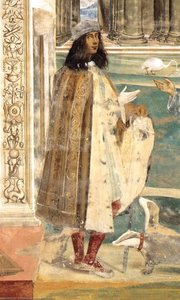
Retrato de Il Sodoma

As 69 Pinturas Mais Famosas de Il Sodoma, uma Seleção da Galeria

Atualizado em Novembro 2026 · classificado pela nossa pontuação de popularidade (pesquisas, visitas e pedidos de cada obra) · 71 obras de Il Sodoma em nosso catálogo

Em resumo

De todas as obras originais deixadas por Il Sodoma, a mais famosa é Rapimento das Sabine (1506), da coleção do Galleria Nazionale d'Arte Antica, em Roma. Logo atrás vêm Head of Christ (1537) e The Holy Family with Saint Elizabeth and the Infant Saint John the Baptist (1527). Nosso catálogo contém 71 obras de Il Sodoma; a galeria preservou as 69 que o mundo mais admira, cada uma exibida com sua data, seu museu e sua história.

1477 – 1549, Vercelli Renascimento Mais obras: National Gallery

As 10 principais pinturas de Il Sodoma: a escolha da galeria

1
Rapimento das Sabine (1506) de Il Sodoma

Rapimento das Sabine

1506 · Óleo sobre painel · Galleria Nazionale d'Arte Antica, Roma

A Abdução das Sabineanas: Uma Sinfonia de Drama e Elegância Renascentista O Gemäldegalerie Alte Meister em Dresden abriga uma obra que transcende o tempo, um testemunho eloquente da arte renascentista italiana e da maestria artística de Giovanni Antonio Bazzi, conhecido como Il Sodoma. Pintado em 1506, "A Abdução das Sabineanas" não é apenas uma representação histórica; é uma profunda exploração emocional que captura a tensão entre poder e vulnerabilidade, ordem…

2
Head of Christ (1537) de Il Sodoma

Head of Christ

1537 · Oil · National Gallery, Londres

In "Head of Christ" by Giovanni Gerolamo Savoldo, the viewer is met with a close-up portrait that focuses tightly on the face and upper shoulders. The subject is framed by long, dark, wavy hair and a full beard. A crown of thorns rests upon the brow, rendered through textured, dark lines that press against the skin. The eyes are cast downward, heavy with a sense of sadness or exhaustion. This…

3
The Holy Family with Saint Elizabeth and the Infant Saint John the Baptist (1527) de Il Sodoma

The Holy Family with Saint Elizabeth and the Infant Saint John the Baptist

1527 · Oil · Walters Art Museum, Baltimore

Within the circular confines of this tondo, a quiet intimacy unfolds. The air feels heavy with the warmth of a Mediterranean afternoon, filtered through a soft, directional light that carves the figures out of the surrounding landscape. We find ourselves watching a tender moment of familial connection, where the boundaries between the divine and the human seem to blur. The Holy Family gathers closely, their forms wrapped in heavy, tactile…

4
The Ecstasy of Saint Catherine of Siena (1532) de Il Sodoma

The Ecstasy of Saint Catherine of Siena

1532 · Oil · Yale University Art Gallery, New Haven

The spiritual intensity of The Ecstasy of Saint Catherine of Siena unfolds before us through the hand of Il Sodoma. This religious art piece captures a profound moment of divine connection, centering entirely on the figure of Catherine of Siena. The scene invites a sense of wonder as the saint experiences a celestial encounter, her presence anchoring the composition amidst a swirling, sacred atmosphere. Every brushstroke seeks to translate the…

5
The Holy Family and St. John (1477) de Il Sodoma

The Holy Family and St. John

1477 · Oil On Panel · Detroit Institute of Arts, Detroit

The Holy Family and St. John is a devotional work by the Italian artist Il Sodoma. This oil on wood panel depicts a sacred grouping of figures, centering on the intimate connection between Mary, Joseph, and the young Saint John the Baptist. The composition focuses on the quiet, tender interactions shared between the holy figures, presented in a manner that invites a sense of spiritual closeness.

6
The Madonna and Child with Saints and a Donor (1530) de Il Sodoma

The Madonna and Child with Saints and a Donor

1530 · Oil On Panel · National Gallery, Londres

Step closer to observe the way the light settles upon these figures. In this composition from around 1530, we find a sense of stability born from a pyramidal arrangement. At the apex sits the Virgin Mary, her presence anchoring the group. She holds the Christ Child with a natural, unforced tenderness that grounds the divine subject in something deeply human. The palette relies on deep ultramarine blue in her mantle…

7
Saint Jerome in Penitence (1540) de Il Sodoma

Saint Jerome in Penitence

1540 · Oil On Canvas · National Gallery, Londres

A muscular, semi-nude figure occupies the center of this 1540 oil painting, captured in a dynamic, crouching pose that cuts a diagonal path across the canvas. The subject, Saint Jerome, is immersed in a moment of intense religious devotion and physical hardship. Deep, earthy tones of brown and dark green dominate the composition, grounded by the heavy textures of a rugged, rocky landscape. A strong directional light source, characteristic of…

8
Death of Lucretia (1515) de Il Sodoma

Death of Lucretia

1515 · Oil On Panel · Galleria Sabauda, Turim

In this work, we find ourselves witnessing the final, harrowing moments of Lucretia, a woman whose life is being extinguished in a flash of steel and sorrow. The scene freezes a moment of profound tragedy, capturing the climactic end of a Roman noblewoman whose life was defined by virtue and ended by violence. The composition is thick with tension; the stillness of her form contrasts sharply with the looming presence…

9
Holy Family with St. John the Baptist as child (1525) de Il Sodoma

Holy Family with St. John the Baptist as child

1525 · Oil · Kunsthistorisches Museum, Viena

This oil painting, dated 1525, is presented within an arched lunette format. The scene focuses on a group of four figures: the Virgin Mary, the Christ Child, Saint Joseph, and a young Saint John the Baptist. Mary is positioned centrally, wearing a red tunic beneath a deep blue mantle. Her pale skin and the skin of the infants are illuminated by a soft, directional light that emerges from the side,…

10
The Madonna and Child (1525) de Il Sodoma

The Madonna and Child

1525 · Oil On Panel · National Gallery, Londres

The composition centers on the Virgin Mary and the infant Jesus, set against an atmospheric landscape of distant hills and trees. A soft, directional light illuminates the faces of the subjects and the child's body, while much of the background remains in shadow. This use of chiaroscuro creates a sense of three-dimensionality, sculpting the figures through subtle gradations of tone.

A seleção de Il Sodoma continua, de 11 a 69

11charity (1504) de Il Sodomacharity1504 · Gemäldegalerie 12Benedict Presents the Olivetan Monks with His Rule (1505) de Il SodomaBenedict Presents the Olivetan Monks with His Rule1505 13Life of St Benedict, Scene 13: Benedict Frees a Monk (1505) de Il SodomaLife of St Benedict, Scene 13: Benedict Frees a Monk1505 14Life of St Benedict, Scene 12: Benedict Receives Maurus and Placidus (1505) de Il SodomaLife of St Benedict, Scene 12: Benedict Receives Maurus and Placidus1505 15Life of St Benedict, Scene 32: Benedict Appears in the Dreams of Two Monks (1505) de Il SodomaLife of St Benedict, Scene 32: Benedict Appears in the Dreams of Two Monks1505 16Holy Family with young Saint John (1525) de Il SodomaHoly Family with young Saint John1525 17Terrestrial Venus with Eros and Celestial Venus with Anteros and Two Cupids (1525) de Il SodomaTerrestrial Venus with Eros and Celestial Venus with Anteros and Two Cupids1525 18St Sebastian (1525) de Il SodomaSt Sebastian1525 · Palazzo Pitti 19Christ Carrying the Cross (1545) de Il SodomaChrist Carrying the Cross1545 · Gemäldegalerie 20The Crucifixion (1549) de Il SodomaThe Crucifixion1549 · Cleveland Museum of Art 21The Presentation of the Virgin in the Temple (1518) de Il SodomaThe Presentation of the Virgin in the Temple1518 · Oratory of San Bernardino 22The Holy Family (1511) de Il SodomaThe Holy Family1511 · Bavarian State Painting Collections 23The Death of Lucretia (1513) de Il SodomaThe Death of Lucretia1513 · Szépművészeti Múzeum 24The Mystic Marriage of St Catherine (1539) de Il SodomaThe Mystic Marriage of St Catherine1539 · Galleria Nazionale d'Arte Antica 25Pietà (1540) de Il SodomaPietà1540 · Galleria Borghese 26Holy Family with the Infant Saint John the Baptist (1530) de Il SodomaHoly Family with the Infant Saint John the Baptist1530 27Ecce Homo (1510) de Il SodomaEcce Homo1510 · Pinacoteca di Brera 28The Confirmation of the Olivetan Order by the Bishop of Arezzo (1503) de Il SodomaThe Confirmation of the Olivetan Order by the Bishop of Arezzo1503 29Man of Sorrow (1505) de Il SodomaMan of Sorrow1505 30Life of St Benedict, Scene 5: The Devil Destroys the Little Bell (1505) de Il SodomaLife of St Benedict, Scene 5: The Devil Destroys the Little Bell1505 31The Road to Calvary (1510) de Il SodomaThe Road to Calvary1510 · Szépművészeti Múzeum 32Life of St Benedict, Scene 6: A Priest Shares His Easter Meal with Benedict (1505) de Il SodomaLife of St Benedict, Scene 6: A Priest Shares His Easter Meal with Benedict1505 33Life of St Benedict, Scene 3: Benedict Repairs a Broken Colander through Prayer (detail) (1505) de Il SodomaLife of St Benedict, Scene 3: Benedict Repairs a Broken Colander through Prayer (detail)1505 34Deposition from the Cross (detail) (1510) de Il SodomaDeposition from the Cross (detail)1510 · Pinacoteca Nazionale 35Life of St Benedict, Scene 8: Benedict is Tempted (detail) (1505) de Il SodomaLife of St Benedict, Scene 8: Benedict is Tempted (detail)1505 36Life of St Benedict, Scene 19: Benedict Sends away the Harlots (1505) de Il SodomaLife of St Benedict, Scene 19: Benedict Sends away the Harlots1505 37Life of St Benedict, Scene 4: The Monk Romanus Dresses Benedict (detail) (1505) de Il SodomaLife of St Benedict, Scene 4: The Monk Romanus Dresses Benedict (detail)1505 38The Women of Darius's Family before Alexander the Great (1517) de Il SodomaThe Women of Darius's Family before Alexander the Great1517 · Villa Farnesina 39Life of St Benedict, Scene 19: Benedict Sends away the Harlots (detail) (1505) de Il SodomaLife of St Benedict, Scene 19: Benedict Sends away the Harlots (detail)1505 40Life of St Benedict, Scene 3: Benedict Repairs a Broken Colander through Prayer (1505) de Il SodomaLife of St Benedict, Scene 3: Benedict Repairs a Broken Colander through Prayer1505 41Life of St Benedict, Scene 15: Benedict Fishes the Pieces of a Broken Ax (detail) (1505) de Il SodomaLife of St Benedict, Scene 15: Benedict Fishes the Pieces of a Broken Ax (detail)1505 42Deposition from the Cross (1510) de Il SodomaDeposition from the Cross1510 · Pinacoteca Nazionale 43Life of St Benedict, Scene 1: Benedict Leaves His Parent's House (1505) de Il SodomaLife of St Benedict, Scene 1: Benedict Leaves His Parent's House1505 44Life of St Benedict, Scene 12: Benedict Receives Maurus and Placidus (detail) (1505) de Il SodomaLife of St Benedict, Scene 12: Benedict Receives Maurus and Placidus (detail)1505 45Life of St Benedict, Scene 11: Benedict Founds Twelve Monasteries (1505) de Il SodomaLife of St Benedict, Scene 11: Benedict Founds Twelve Monasteries1505 46Life of St Benedict, Scene 33: Benedict Gives Posthumous Absolution to Two Nuns (1505) de Il SodomaLife of St Benedict, Scene 33: Benedict Gives Posthumous Absolution to Two Nuns1505 47Life of St Benedict, Scene 31: Benedict Feeds the Monk (1505) de Il SodomaLife of St Benedict, Scene 31: Benedict Feeds the Monk1505 48Life of St Benedict, Scene 30: Benedict Foretells the Destruction of Montecassino (1505) de Il SodomaLife of St Benedict, Scene 30: Benedict Foretells the Destruction of Montecassino1505 49Life of St Benedict, Scene 30: Benedict Foretells the Destruction of Montecassino (detail) (1505) de Il SodomaLife of St Benedict, Scene 30: Benedict Foretells the Destruction of Montecassino (detail)1505 50Life of St Benedict, Scene 7: Benedict Instructs the Peasants (1505) de Il SodomaLife of St Benedict, Scene 7: Benedict Instructs the Peasants1505 51Saint George and the Dragon (1518) de Il SodomaSaint George and the Dragon1518 · National Gallery of Art 52The Beheading of Niccolò di Tuldo (1526) de Il SodomaThe Beheading of Niccolò di Tuldo1526 · San Domenico 53View of the Oratory (1520) de Il SodomaView of the Oratory1520 · Oratory of San Bernardino 54View of the Cappella di Santa Caterina (1526) de Il SodomaView of the Cappella di Santa Caterina1526 · San Domenico 55Wedding of Alexander and Roxane (detail) (1517) de Il SodomaWedding of Alexander and Roxane (detail)1517 · Villa Farnesina 56The Death of Lucretia (1535) de Il SodomaThe Death of Lucretia1535 · Szépművészeti Múzeum 57Cupid in a Landscape (1510) de Il SodomaCupid in a Landscape1510 · Museu Hermitage 58Flagulação de Cristo (1510) de Il SodomaFlagulação de Cristo1510 · Szépművészeti Múzeum 59Mary Magdalene de Il SodomaMary Magdalene 60Christ Carrying the Cross de Il SodomaChrist Carrying the CrossPalazzo d'Arco 61St George and the Dragon de Il SodomaSt George and the DragonNational Gallery of Art 62A Scene from the Vita of Saint Catherine of Siena / The Execution of Niccolò Tuldo de Il SodomaA Scene from the Vita of Saint Catherine of Siena / The Execution of Niccolò TuldoGemäldegalerie 63self-portrait de Il Sodomaself-portrait 64Allegory of Celestial Love de Il SodomaAllegory of Celestial LoveChigi Saracini Collection 65Christ Presented to the People (Ecce Homo) (1544) de Il SodomaChrist Presented to the People (Ecce Homo)1544 · Metropolitan Museum of Art 66Wedding of Alexander and Roxane (1517) de Il SodomaWedding of Alexander and Roxane1517 · Villa Farnesina 67Man of Sorrows (1500) de Il SodomaMan of Sorrows1500 68Holy Family with Saint John the Baptist and an Angel (1530) de Il SodomaHoly Family with Saint John the Baptist and an Angel1530 · Musée des Beaux-Arts de Strasbourg 69Pietà (1533) de Il SodomaPietà1533

Pinturas famosas de Il Sodoma, período por período

Os temas que cativaram o olhar de Il Sodoma

Os quatro temas que mais se repetem nestas obras originais, cada um com o seu melhor exemplo.

Os museus que guardam os originais de Il Sodoma

Os 8 museus que detêm a maioria das pinturas desta página.

Museus Cidade Obras de Il Sodoma Pinturas desta lista
National Gallery, LondresNational Gallery Londres 4 Head of Christ, The Madonna and Child with Saints and a Donor, Saint Jerome in Penitence
Szépművészeti Múzeum, BudapesteSzépművészeti Múzeum Budapeste 4 The Death of Lucretia, The Road to Calvary, The Death of Lucretia
Gemäldegalerie, BerlimGemäldegalerie Berlim 3 charity, Christ Carrying the Cross, A Scene from the Vita of Saint Catherine of Siena / The Execution of Niccolò Tuldo
Villa Farnesina, RomaVilla Farnesina Roma 3 The Women of Darius's Family before Alexander the Great, Wedding of Alexander and Roxane (detail), Wedding of Alexander and Roxane
Galleria Nazionale d'Arte Antica, RomaGalleria Nazionale d'Arte Antica Roma 2 Rapimento das Sabine, The Mystic Marriage of St Catherine
Oratory of San Bernardino, SienaOratory of San Bernardino Siena 2 The Presentation of the Virgin in the Temple, View of the Oratory
Pinacoteca Nazionale, SienaPinacoteca Nazionale Siena 2 Deposition from the Cross (detail), Deposition from the Cross
National Gallery of Art, WashingtonNational Gallery of Art Washington 2 Saint George and the Dragon, St George and the Dragon

Il Sodoma década a década: a obra original que define cada uma

Obras por década

Escolha uma década para ver a obra original que a define.

Perguntas de colecionadores sobre as pinturas de Il Sodoma

Por qual obra Il Sodoma é mais conhecido(a)?Revelar a resposta

Rapimento das Sabine (1506), Galleria Nazionale d'Arte Antica, Roma. Head of Christ (1537) e The Holy Family with Saint Elizabeth and the Infant Saint John the Baptist (1527) vêm a seguir.

Qual era a idade de Il Sodoma quando Rapimento das Sabine foi feita?Revelar a resposta

29 anos: Rapimento das Sabine data de 1506, e Il Sodoma nasceu em 1477.

Quais são as dez pinturas mais famosas de Il Sodoma?Revelar a resposta

Rapimento das Sabine, Head of Christ, The Holy Family with Saint Elizabeth and the Infant Saint John the Baptist, The Ecstasy of Saint Catherine of Siena, The Holy Family and St. John, The Madonna and Child with Saints and a Donor, Saint Jerome in Penitence, Death of Lucretia, Holy Family with St. John the Baptist as child e The Madonna and Child. O ranking acima apresenta o ano e o museu de cada uma.

Quantas pinturas Il Sodoma deixou?Revelar a resposta

Nosso catálogo contém 71 obras de Il Sodoma, datadas de 1500 a 1549.

Em quais museus estão expostas as obras-primas de Il Sodoma?Revelar a resposta

Principalmente em National Gallery (Londres), Szépművészeti Múzeum (Budapeste) e Gemäldegalerie (Berlim). A tabela de museus acima lista todos eles.

Em que anos Il Sodoma pintou as suas obras mais famosas?Revelar a resposta

Em 1500s: 26 das 69 obras nesta página foram feitas então, sendo Rapimento das Sabine delas.

Quais são as primeiras e as últimas obras originais famosas de Il Sodoma?Revelar a resposta

Nesta página, a mais antiga é Man of Sorrows (1500) e a mais recente é The Crucifixion (1549).

Quais temas Il Sodoma escolheu com mais frequência?Revelar a resposta

Man (21), People (21) e Woman (14), entre as 69 obras nesta página.

Qual técnica Il Sodoma mais utilizou?Revelar a resposta

Fresco, para 29 das 69 obras nesta página.

A qual movimento artístico pertence Il Sodoma?Revelar a resposta

Renascimento, a julgar pelos originais nesta página.

Quais obras de Il Sodoma estão expostas no National Gallery?Revelar a resposta

Head of Christ, The Madonna and Child with Saints and a Donor e Saint Jerome in Penitence: o National Gallery, Londres detém 4 das obras desta página.

Il Sodoma: vida e obra

A Alma Enigmática do Renascimento Sienense

Na vibrante tapeçaria do Renascimento italiano, poucas figuras possuem um nome tão provocativo ou um legado tão multifacetado quanto Giovanni Antonio Bazzi, conhecido pela história pelo evocativo apelido de Il Sodoma. Nascido em Vercelli por volta de 1477, Bazzi emergiu não apenas como um pintor, mas como uma força transformadora que preencheu a lacuna entre o idealismo luminoso e equilibrado do Alto Renascimento e o drama emotivo, e muitas vezes inquietante, do Maneirismo. Sua jornada artística foi de uma síntese profunda, onde as tradições disciplinadas da escola sienense encontraram as inovações atmosféricas e abrangentes do estilo lombardo e a sutil profundidade psicológica inspirada por Leonardo da Vinci.

Os primeiros anos da vida de Bazzi foram marcados por um rigoroso aprendizado que lançou as bases para sua maestria técnica. Sob a orientação de mestres como o "arcaico" Martino Spromattti e Giovenone, ele absorveu uma compreensão fundamental de forma e cor. Ao mudar-se para o epicentro cultural de Siena, seu trabalho começou a refletir uma evolução estilística única. Ele possuía uma habilidade rara de sobrepor a graça clássica e sofisticada da Roma do início do século XVI às tradições mais provincianas e decorativas da Toscana. Essa fusão permitiu-lhe criar obras que pareciam tanto enraizadas na herança local quanto parte de uma revolução artística muito maior e pan-italiana.

Um Domínio de Luz, Emoção e Forma

Observar uma obra de Il Sodoma é testemunhar uma dança delicada entre a serenidade e a tensão. Sua técnica era caracterizada por um comando requintado do sfumato e um uso rico e emotivo da cor, que podia transitar do calor terno da face de uma Madona para as sombras dramáticas de uma luta mitológica. Essa versatilidade é talvez mais evidente em sua diversificada gama de temas, que abrangiam o sagrado e o profano com igual fervor.

Suas contribuições para a tradição do afresco são nada menos que monumentais. No Oratório de San Bernardino, em Siena, Bazzi demonstrou sua capacidade de comandar vastos espaços arquitetônicos, tecendo narrativas complexas através de composições equilibradas que, no entanto, pulsavam com emoção humana. Suas obras religiosas, como a Apresentação da Virgem no Templo, exibem uma profunda graça espiritual, enquanto suas peças seculares e mitológicas, como o encantador Cupido em uma Paisagem, revelam um fascínio pelo sensual e pelo idílico. Nessas paisagens, encontra-se uma vista italiana serena que serve de palco para o divino ou o mitológico, renderizada com uma clareza que convida o espectador a um estado onírico.

O Legado de um Mestre de Transição

A importância histórica de Il Sodoma reside em seu papel como um condutor estilístico. Ele não apenas seguiu as tendências de sua era; ele ajudou a moldar a transição da estabilidade harmoniosa do Alto Renascimento para a linguagem mais experimental, distorcida e expressiva do Maneirismo. Ao introduzir gestos exagerados e uma emocionalidade intensificada na estrutura estabelecida de Siena, ele preparou o caminho para que a próxima geração de artistas explorasse as complexidades da psique humana.

Mesmo quando seu nome carregava uma certa notoriedade, sua produção artística permaneceu como um testemunho de brilhantismo técnico e profundidade intelectual. Sua habilidade em navegar por encomendas prestigiadas de papas e patronos poderosos — incluindo conexões com o influente Agostino Chigi — garantiu que sua influência ressoasse muito além das muralhas de Siena. Hoje, Bazzi permanece como uma figura fundamental cuja obra continua a cativar, lembrando-nos de um período em que a arte era uma exploração profunda tanto da beleza terrena quanto dos mistérios espirituais da condição humana.