Retrato de George Catlin

As 100 Pinturas Mais Famosas de George Catlin, Cada Uma Única

Atualizado em Outubro 2026 · classificado pela nossa pontuação de popularidade (pesquisas, visitas e pedidos de cada obra) · 908 obras de George Catlin em nosso catálogo

Em resumo

Say-say-gon, Hail Storm, War Chief (1845) é a pintura de George Catlin que mais atrai olhares; a obra original pertence ao Smithsonian American Art Museum, Washington, D.C.. Depois disso, o olhar recai sobre Sky se ró ka, Second Chief of the Tribe (1834) e Ee mat lá , King Phillip, Second Chief (1838). Entre as 908 obras de George Catlin em nosso catálogo, estas 100 são as mais famosas, cada uma uma original única apresentada com o seu ano, o seu museu e a razão pela qual perdura.

1796 – 1872, Wilkes-Barre Romanticism Mais obras: Smithsonian American Art Museum

As 10 principais pinturas de George Catlin, sob o olhar da galeria

1
Say-say-gon, Hail Storm, War Chief (1845) de George Catlin

Say-say-gon, Hail Storm, War Chief

1845 · Oil On Canvas · Smithsonian American Art Museum, Washington, D.C.

George Catlin’s arresting oil on canvas, "Say-say-gon, Hail Storm, War Chief," is far more than a mere portrait; it is a profound historical document rendered with the immediacy of a living memory. Created in 1845, this work plunges the viewer directly into the dramatic confluence of cultures at the American frontier. The subject—a Native American man adorned with feathers and bearing an air of solemn authority—commands attention through his unwavering,…

2
Sky se ró ka, Second Chief of the Tribe (1834) de George Catlin

Sky se ró ka, Second Chief of the Tribe

1834 · Oil On Canvas · Smithsonian American Art Museum, Washington, D.C.

To stand before this portrait of Sky se ró ka, Second Chief of the Tribe, is to encounter not merely paint on canvas, but a profound echo from a bygone era. George Catlin’s masterful rendering captures more than just a likeness; it arrests a moment in time—a moment steeped in dignity, contemplation, and the quiet weight of history. The subject dominates the composition with an undeniable presence. His gaze, seemingly…

3
Ee mat lá , King Phillip, Second Chief (1838) de George Catlin

Ee mat lá , King Phillip, Second Chief

1838 · Oil On Canvas · Smithsonian American Art Museum, Washington, D.C.

Before us rests a profoundly moving portrait, George Catlin’s evocative depiction of Ee mat lá , King Phillip, Second Chief. This 1838 work transcends mere representation; it is a solemn meditation on culture, resilience, and the passing of time. The subject commands attention with an undeniable dignity that seems to emanate from within the very texture of the paint. Catlin has gifted us not just a likeness, but a window…

4
Eeh nís kim, Crystal Stone, Wife of the Chief (1832) de George Catlin

Eeh nís kim, Crystal Stone, Wife of the Chief

1832 · Oil On Canvas · Smithsonian American Art Museum, Washington, D.C.

To stand before George Catlin’s portrait, Eeh nís kim, Crystal Stone, Wife of the Chief, is to step across the threshold of time itself. This 1832 oil painting is far more than a mere likeness; it is a profound historical document rendered with the delicate touch of an artist obsessed with preservation. Catlin, whose life spanned the collision of two worlds—the burgeoning American frontier and the ancient cultures of Native…

5
Steeh tcha kó me co, Great King (called Ben Perryman), a Chief (1834) de George Catlin

Steeh tcha kó me co, Great King (called Ben Perryman), a Chief

1834 · Oil On Canvas · Smithsonian American Art Museum, Washington, D.C.

To stand before George Catlin’s Steeh tcha kó me co, Great King (called Ben Perryman), a Chief is to step across the threshold of time itself. This arresting portrait, executed in 1834, is far more than a mere likeness; it is a profound historical document rendered with the passionate brushstrokes of Romanticism. Catlin, forever drawn to the edges of civilization, captured here the dignity and complex spirit of an Indigenous…

6
Cáh be múb bee, He Who Sits Everywhere, a Brave (1835) de George Catlin

Cáh be múb bee, He Who Sits Everywhere, a Brave

1835 · Oil On Canvas · Smithsonian American Art Museum, Washington, D.C.

To stand before George Catlin’s depiction of Cáh be múb bee, He Who Sits Everywhere, a Brave is to step across the threshold of time and into a world both vividly real and deeply mythic. Painted in 1835, this work transcends mere portraiture; it is an eloquent testament to a vanishing culture, rendered with the passionate intensity characteristic of Romanticism blended seamlessly with meticulous Realism. The central figure commands attention,…

7
Os ce o lá, The Black Drink, a Warrior of Great Distinction (1838) de George Catlin

Os ce o lá, The Black Drink, a Warrior of Great Distinction

1838 · Oil On Canvas · Smithsonian American Art Museum, Washington, D.C.

To stand before George Catlin’s Os ce o lá, The Black Drink, a Warrior of Great Distinction is not merely to observe a painting; it is to step across the threshold of time. This arresting portrait, executed in 1838, captures more than just the likeness of an Indigenous man, believed to be from the Shawnee tribe—it arrests the viewer with the profound weight of cultural memory. Catlin, forever positioned as…

8
Stán au pat, Bloody Hand, Chief of the Tribe (1832) de George Catlin

Stán au pat, Bloody Hand, Chief of the Tribe

1832 · Oil On Canvas · Smithsonian American Art Museum, Washington, D.C.

To stand before George Catlin’s portrait, Stán au pat, Bloody Hand, Chief of the Tribe, is to step across the threshold of time itself. Painted in 1832, this work transcends mere depiction; it is a profound act of witnessing. Catlin, whose life spanned the tumultuous collision between burgeoning American civilization and the ancient ways of the Native American peoples, captured more than just a likeness on canvas. He immortalized a…

9
Wa kon chásh kaw, He Who Comes on the Thunder (1828) de George Catlin

Wa kon chásh kaw, He Who Comes on the Thunder

1828 · Oil On Canvas · Smithsonian American Art Museum, Washington, D.C.

George Catlin’s depiction, *Wa kon chásh kaw, He Who Comes on the Thunder*, is far more than a mere portrait; it is a vibrant, arresting tableau vivant plucked from the heart of a vanishing world. The scene immediately immerses the viewer in the raw energy and profound cultural richness of the American frontier in 1828. At the center stands the principal figure, radiating an almost mythic power. His outstretched arms…

10
Wah chee háhs ka, Man Who Puts All Out of Doors (1835) de George Catlin

Wah chee háhs ka, Man Who Puts All Out of Doors

1835 · Painting · Smithsonian American Art Museum, Washington, D.C.

To stand before George Catlin’s depiction of Wah chee háhs ka, Man Who Puts All Out of Doors is to step across the threshold of time itself. This painting, executed in 1835, is far more than a mere portrait; it is a profound ethnographic document imbued with the raw energy of a culture on the precipice of change. Catlin, forever drawn to the mystery and resilience of Native American life,…

Pinturas famosas de George Catlin, números 11 a 100

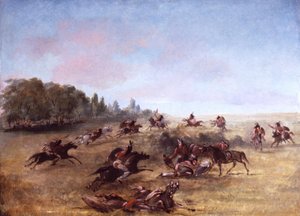
11Né-hee-ó-ee-wóo-tis, Wolf on the Hill, Chief of the Tribe (1832) de George CatlinNé-hee-ó-ee-wóo-tis, Wolf on the Hill, Chief of the Tribe1832 · Smithsonian American Art Museum 12Mún ne o ye, a Woman (1832) de George CatlinMún ne o ye, a Woman1832 · Smithsonian American Art Museum 13Mah táhp ta a, Rushes through the Middle, a Brave (1832) de George CatlinMah táhp ta a, Rushes through the Middle, a Brave1832 · Smithsonian American Art Museum 14A'h tee wát o mee, a Woman (1830) de George CatlinA'h tee wát o mee, a Woman1830 · Smithsonian American Art Museum 15Chin cha pee, Fire Bug That Creeps, Wife of Pigeon's Egg Head (1832) de George CatlinChin cha pee, Fire Bug That Creeps, Wife of Pigeon's Egg Head1832 · Smithsonian American Art Museum 16A'h sha la cóots ah, Mole in the Forehead, Chief of the Republican Pawnee (1832) de George CatlinA'h sha la cóots ah, Mole in the Forehead, Chief of the Republican Pawnee1832 · Smithsonian American Art Museum 17Stu mick o súcks, Buffalo Bull's Back Fat, Head Chief, Blood Tribe (1832) de George CatlinStu mick o súcks, Buffalo Bull's Back Fat, Head Chief, Blood Tribe1832 18Du cór re a, Chief of the Tribe, and His Family (1830) de George CatlinDu cór re a, Chief of the Tribe, and His Family1830 · Smithsonian American Art Museum 19Ish a ró yeh, He Who Carries a Wolf, a Distinguished Brave (1834) de George CatlinIsh a ró yeh, He Who Carries a Wolf, a Distinguished Brave1834 · Smithsonian American Art Museum 20Mun ne pús kee, He Who Is Not Afraid Ko ha túnk a, Big Crow and Nah cóm ee shee, Man of the Bed, Three Young Warriors (1834) de George CatlinMun ne pús kee, He Who Is Not Afraid Ko ha túnk a, Big Crow and Nah cóm ee shee, Man of the Bed, Three Young Warriors1834 · Smithsonian American Art Museum 21Hidatsa Village, Earth covered Lodges, on the Knife River, 1810 Miles above St. Louis (1832) de George CatlinHidatsa Village, Earth covered Lodges, on the Knife River, 1810 Miles above St. Louis1832 · Smithsonian American Art Museum 22Two Comanche Girls (1834) de George CatlinTwo Comanche Girls1834 · Smithsonian American Art Museum 23Náh se ús kuk, Whirling Thunder, Eldest Son of Black Hawk (1832) de George CatlinNáh se ús kuk, Whirling Thunder, Eldest Son of Black Hawk1832 · Smithsonian American Art Museum 24Le sháw loo láh le hoo, Big Elk, Chief of the Skidi (Wolf) Pawnee (1832) de George CatlinLe sháw loo láh le hoo, Big Elk, Chief of the Skidi (Wolf) Pawnee1832 · Smithsonian American Art Museum 25Wash ka mon ya, Fast Dancer, a Warrior (1844) de George CatlinWash ka mon ya, Fast Dancer, a Warrior1844 · Smithsonian American Art Museum 26No ho mun ya, One Who Gives No Attention (1844) de George CatlinNo ho mun ya, One Who Gives No Attention1844 · Smithsonian American Art Museum 27Shón ka ki he ga, Horse Chief, Grand Pawnee Head Chief (1832) de George CatlinShón ka ki he ga, Horse Chief, Grand Pawnee Head Chief1832 · Smithsonian American Art Museum 28Kid á day, a Distinguished Brave (1834) de George CatlinKid á day, a Distinguished Brave1834 · Smithsonian American Art Museum 29Tchán dee, Tobacco, an Oglala Chief (1832) de George CatlinTchán dee, Tobacco, an Oglala Chief1832 · Smithsonian American Art Museum 30Tóh to wah kón da pee, Blue Medicine, a Medicine Man of the Ting ta to ah Band (1835) de George CatlinTóh to wah kón da pee, Blue Medicine, a Medicine Man of the Ting ta to ah Band1835 · Smithsonian American Art Museum 31Hee láh dee, Pure Fountain, Wife of The Smoke (1832) de George CatlinHee láh dee, Pure Fountain, Wife of The Smoke1832 · Smithsonian American Art Museum 32Lay láw she kaw, Goes Up the River, an Aged Chief (1830) de George CatlinLay láw she kaw, Goes Up the River, an Aged Chief1830 · Smithsonian American Art Museum 33Wá nah de túnk ah, Big Eagle (or Black Dog), Chief of the O hah kas ka toh y an te Band (1835) de George CatlinWá nah de túnk ah, Big Eagle (or Black Dog), Chief of the O hah kas ka toh y an te Band1835 · Smithsonian American Art Museum 34Shon ta yi ga, Little Wolf, a Famous Warrior (1844) de George CatlinShon ta yi ga, Little Wolf, a Famous Warrior1844 · Smithsonian American Art Museum 35Big Bend on the Upper Missouri, 1900 Miles above St. Louis (1832) de George CatlinBig Bend on the Upper Missouri, 1900 Miles above St. Louis1832 · Smithsonian American Art Museum 36Battle Between Sioux and Sac and Fox (1848) de George CatlinBattle Between Sioux and Sac and Fox1848 · Smithsonian American Art Museum 37H'co a h'co a h'cotes min, No Horns on His Head, a Brave (1832) de George CatlinH'co a h'co a h'cotes min, No Horns on His Head, a Brave1832 · Smithsonian American Art Museum 38Eé shah kó nee, Bow and Quiver, First Chief of the Tribe (1834) de George CatlinEé shah kó nee, Bow and Quiver, First Chief of the Tribe1834 · Smithsonian American Art Museum 39Fort Pierre, Mouth of the Teton River, 1200 Miles above Saint Louis (1832) de George CatlinFort Pierre, Mouth of the Teton River, 1200 Miles above Saint Louis1832 · Smithsonian American Art Museum 40Lay lóo ah pee ái shee kaw, Grass, Bush, and Blossom, Semicivilized (1830) de George CatlinLay lóo ah pee ái shee kaw, Grass, Bush, and Blossom, Semicivilized1830 · Smithsonian American Art Museum 41Mah kée mee teuv, Grizzly Bear, Chief of the Tribe (1831) de George CatlinMah kée mee teuv, Grizzly Bear, Chief of the Tribe1831 · Smithsonian American Art Museum 42Ha na tá nu maúk, Wolf Chief, Head Chief of the Tribe (1832) de George CatlinHa na tá nu maúk, Wolf Chief, Head Chief of the Tribe1832 · Smithsonian American Art Museum 43Prairie Bluffs Burning (1832) de George CatlinPrairie Bluffs Burning1832 · Smithsonian American Art Museum 44Hard Hickory, an Amiable Man (1831) de George CatlinHard Hickory, an Amiable Man1831 · Smithsonian American Art Museum 45Bread, Chief of the Tribe (1831) de George CatlinBread, Chief of the Tribe1831 · Smithsonian American Art Museum 46On sáw kie, The Sauk, in the Act of Praying (1830) de George CatlinOn sáw kie, The Sauk, in the Act of Praying1830 · Smithsonian American Art Museum 47Ye hów lo gee, The Cloud, a Chief (1838) de George CatlinYe hów lo gee, The Cloud, a Chief1838 · Smithsonian American Art Museum 48Wá hón ga shee, No Fool, a Great Fop (1832) de George CatlinWá hón ga shee, No Fool, a Great Fop1832 · Smithsonian American Art Museum 49Máh to tóh pa, Four Bears, Second Chief in Mourning (1832) de George CatlinMáh to tóh pa, Four Bears, Second Chief in Mourning1832 · Smithsonian American Art Museum 50W'y ee yogh, Man of Sense, a Brave (1832) de George CatlinW'y ee yogh, Man of Sense, a Brave1832 · Smithsonian American Art Museum 51Is sa wáh tám ah, Wolf Tied with Hair, a Chief (1834) de George CatlinIs sa wáh tám ah, Wolf Tied with Hair, a Chief1834 · Smithsonian American Art Museum 52Ru ton ye wee ma, Strutting Pigeon, Wife of White Cloud (1844) de George CatlinRu ton ye wee ma, Strutting Pigeon, Wife of White Cloud1844 · Smithsonian American Art Museum 53Meach o shín gaw, Little White Bear, a Distinguished Brave (1832) de George CatlinMeach o shín gaw, Little White Bear, a Distinguished Brave1832 · Smithsonian American Art Museum 54Mandan Dance (also known as The Last Race, Mandan O-kee-pa Ceremony) (1832) de George CatlinMandan Dance (also known as The Last Race, Mandan O-kee-pa Ceremony)1832 55Tul lock chísh ko, Drinks the Juice of the Stone, in Ball player's Dress (1834) de George CatlinTul lock chísh ko, Drinks the Juice of the Stone, in Ball player's Dress1834 · Smithsonian American Art Museum 56Há-tchoo-túc-knee, Snapping Turtle, a Half-breed (1834) de George CatlinHá-tchoo-túc-knee, Snapping Turtle, a Half-breed1834 · Smithsonian American Art Museum 57White Sand Bluffs, on Santa Rosa Island, Near Pensacola (1835) de George CatlinWhite Sand Bluffs, on Santa Rosa Island, Near Pensacola1835 58Little Wolf (Shon-ta-ye-ga) (1846) de George CatlinLittle Wolf (Shon-ta-ye-ga)1846 59La-dóo-ke-a, Buffalo Bull, a Grand Pawnee Warrior (1832) de George CatlinLa-dóo-ke-a, Buffalo Bull, a Grand Pawnee Warrior1832 · Smithsonian American Art Museum 60Hón-je-a-pút-o, Wife of Bear-catcher (1832) de George CatlinHón-je-a-pút-o, Wife of Bear-catcher1832 · Smithsonian American Art Museum 61Tuch-ee, A Celebrated War Chief of the Cherokees (1834) de George CatlinTuch-ee, A Celebrated War Chief of the Cherokees1834 · Virginia Museum of Fine Arts 62Múk-a-tah-mish-o-káh-kaik, Black Hawk, Prominent Sac Chief (1832) de George CatlinMúk-a-tah-mish-o-káh-kaik, Black Hawk, Prominent Sac Chief1832 · Smithsonian American Art Museum 63The White Cloud, Head Chief of the Iowas (1844) de George CatlinThe White Cloud, Head Chief of the Iowas1844 · National Gallery of Art 64Bird (1839) de George CatlinBird1839 · Smithsonian American Art Museum 65Háw che ke súg ga, He Who Kills the Osages, Chief of the Tribe (1832) de George CatlinHáw che ke súg ga, He Who Kills the Osages, Chief of the Tribe1832 · Smithsonian American Art Museum 66Mó-sho-la-túb-bee, He Who Puts Out and Kills, Chief of the Tribe (1834) de George CatlinMó-sho-la-túb-bee, He Who Puts Out and Kills, Chief of the Tribe1834 · Smithsonian American Art Museum 67Portrait of a Gentleman (1827) de George CatlinPortrait of a Gentleman1827 · Metropolitan Museum of Art 68Boy Chief - Ojibbeway (1843) de George CatlinBoy Chief - Ojibbeway1843 · National Gallery of Art 69Mounted War Party Scouring a Thicket (1848) de George CatlinMounted War Party Scouring a Thicket1848 · Smithsonian American Art Museum 70See-non-ty-a, an Iowa Medicine Man (1844) de George CatlinSee-non-ty-a, an Iowa Medicine Man1844 · National Gallery of Art 71The Cheyenne Brothers Starting on Their Fall Hunt (1861) de George CatlinThe Cheyenne Brothers Starting on Their Fall Hunt1861 · National Gallery of Art 72Tul lock chísh ko, Drinks the Juice of the Stone (1834) de George CatlinTul lock chísh ko, Drinks the Juice of the Stone1834 · Smithsonian American Art Museum 73Wah pón jee a, The Swan, a Warrior (1830) de George CatlinWah pón jee a, The Swan, a Warrior1830 · Smithsonian American Art Museum 74Nóm ba mon nee, Double Walker, a Brave (1832) de George CatlinNóm ba mon nee, Double Walker, a Brave1832 · Smithsonian American Art Museum 75Naugh háigh hee kaw, He Who Moistens the Wood (1828) de George CatlinNaugh háigh hee kaw, He Who Moistens the Wood1828 · Smithsonian American Art Museum 76Turtle Hunt (1869) de George CatlinTurtle Hunt1869 77Ru-ton-wee-me, Pigeon on the Wing (1844) de George CatlinRu-ton-wee-me, Pigeon on the Wing1844 · Smithsonian American Art Museum 78William Clark (1832) de George CatlinWilliam Clark1832 · National Portrait Gallery 79Peh-tó-pe-kiss, Eagle's Ribs, a Piegan Chief (1832) de George CatlinPeh-tó-pe-kiss, Eagle's Ribs, a Piegan Chief1832 · Smithsonian American Art Museum 80Canoe Race Near Sault Ste. Marie (1837) de George CatlinCanoe Race Near Sault Ste. Marie1837 · Smithsonian American Art Museum 81Elk and Buffalo Grazing among Prairie Flowers, Texas (1848) de George CatlinElk and Buffalo Grazing among Prairie Flowers, Texas1848 · Smithsonian American Art Museum 82Túnk aht óh ye, Thunderer, a Boy, and Wun pán to mee, White Weasel, a Girl (1834) de George CatlinTúnk aht óh ye, Thunderer, a Boy, and Wun pán to mee, White Weasel, a Girl1834 · Smithsonian American Art Museum 83An Old Nayas Indian, His Granddaughter, and a Boy (1875) de George CatlinAn Old Nayas Indian, His Granddaughter, and a Boy1875 · National Gallery of Art 84Mrs. George Catlin (Clara Bartlet Gregory) (1830) de George CatlinMrs. George Catlin (Clara Bartlet Gregory)1830 · Metropolitan Museum of Art 85Theodore Burr Catlin, in Indian Costume (1840) de George CatlinTheodore Burr Catlin, in Indian Costume1840 · Smithsonian American Art Museum 86Háh nee, The Beaver, a Warrior (1834) de George CatlinHáh nee, The Beaver, a Warrior1834 · Smithsonian American Art Museum 87Pash ee pa hó, Little Stabbing Chief, the Younger, One of Black Hawk's Braves (1832) de George CatlinPash ee pa hó, Little Stabbing Chief, the Younger, One of Black Hawk's Braves1832 · Smithsonian American Art Museum 88Kotz a tó ah, Smoked Shield, a Distinguished Warrior (1834) de George CatlinKotz a tó ah, Smoked Shield, a Distinguished Warrior1834 · Smithsonian American Art Museum 89Eé hee a duck cée a, He Who Ties His Hair Before (1832) de George CatlinEé hee a duck cée a, He Who Ties His Hair Before1832 · Smithsonian American Art Museum 90Three Blackfoot Men (1862) de George CatlinThree Blackfoot Men1862 · National Gallery of Art 91Pash ee pa hó, Little Stabbing Chief, a Venerable Sauk Chief (1835) de George CatlinPash ee pa hó, Little Stabbing Chief, a Venerable Sauk Chief1835 · Smithsonian American Art Museum 92View on the Missouri, Alluvial Banks Falling in, 600 Miles above St. Louis (1832) de George CatlinView on the Missouri, Alluvial Banks Falling in, 600 Miles above St. Louis1832 · Smithsonian American Art Museum 93Two Apachee Warriors and a Woman (1862) de George CatlinTwo Apachee Warriors and a Woman1862 · National Gallery of Art 94Camanchees Lancing a Buffalo Bull (1865) de George CatlinCamanchees Lancing a Buffalo Bull1865 · National Gallery of Art 95Lengua Indians Ascending the Rapids of the Rio Uruguay (1861) de George CatlinLengua Indians Ascending the Rapids of the Rio Uruguay1861 · National Gallery of Art 96Mauhees Encampment (1869) de George CatlinMauhees Encampment1869 · National Gallery of Art 97A Lagoon of the Upper Amazon (1871) de George CatlinA Lagoon of the Upper Amazon1871 · National Gallery of Art 98The Last Race, Mandan O-Kee-Pa Ceremony (1832) de George CatlinThe Last Race, Mandan O-Kee-Pa Ceremony1832 · Smithsonian American Art Museum 99Assinneboine Chief before and after Civilization (1869) de George CatlinAssinneboine Chief before and after Civilization1869 · National Gallery of Art 100Nayas Village at Sunset (1875) de George CatlinNayas Village at Sunset1875 · National Gallery of Art

Pinturas famosas de George Catlin, período por período

Os temas que cativaram o olhar de George Catlin

Os quatro temas que mais se repetem nestas obras originais, cada um com o seu melhor exemplo.

Os museus que guardam os originais de George Catlin

Os 5 museus que detêm a maioria das pinturas desta página.

Museus Cidade Obras de George Catlin Pinturas desta lista
Smithsonian American Art Museum, Washington, D.C.Smithsonian American Art Museum Washington, D.C. 471 Say-say-gon, Hail Storm, War Chief, Sky se ró ka, Second Chief of the Tribe, Ee mat lá , King Phillip, Second Chief
National Gallery of Art, WashingtonNational Gallery of Art Washington 345 The White Cloud, Head Chief of the Iowas, Boy Chief - Ojibbeway, See-non-ty-a, an Iowa Medicine Man
Metropolitan Museum of Art, Nova YorkMetropolitan Museum of Art Nova York 4 Portrait of a Gentleman, Mrs. George Catlin (Clara Bartlet Gregory)
Virginia Museum of Fine Arts, RichmondVirginia Museum of Fine Arts Richmond 1 Tuch-ee, A Celebrated War Chief of the Cherokees
National Portrait Gallery, Washington, D.C.National Portrait Gallery Washington, D.C. 1 William Clark

George Catlin ao longo das décadas: uma obra original única para cada uma

Obras por década

Escolha uma década para ver a obra original que a define.

Pinturas de George Catlin: perguntas para a galeria

Qual é a obra mais famosa de George Catlin?Revelar a resposta

Say-say-gon, Hail Storm, War Chief (1845), Smithsonian American Art Museum, Washington, D.C.. Sky se ró ka, Second Chief of the Tribe (1834) e Ee mat lá , King Phillip, Second Chief (1838) vêm a seguir.

Com que idade George Catlin criou Say-say-gon, Hail Storm, War Chief?Revelar a resposta

49 anos: Say-say-gon, Hail Storm, War Chief data de 1845, e George Catlin nasceu em 1796.

Quais são as dez pinturas mais famosas de George Catlin?Revelar a resposta

Say-say-gon, Hail Storm, War Chief, Sky se ró ka, Second Chief of the Tribe, Ee mat lá , King Phillip, Second Chief, Eeh nís kim, Crystal Stone, Wife of the Chief, Steeh tcha kó me co, Great King (called Ben Perryman), a Chief, Cáh be múb bee, He Who Sits Everywhere, a Brave, Os ce o lá, The Black Drink, a Warrior of Great Distinction, Stán au pat, Bloody Hand, Chief of the Tribe, Wa kon chásh kaw, He Who Comes on the Thunder e Wah chee háhs ka, Man Who Puts All Out of Doors. O ranking acima apresenta o ano e o museu de cada uma.

Quantas obras de George Catlin são conhecidas?Revelar a resposta

Nosso catálogo contém 908 obras de George Catlin, datadas de 1827 a 1871.

Onde se pode ver os originais mais famosos de George Catlin?Revelar a resposta

Principalmente em Smithsonian American Art Museum (Washington, D.C.), National Gallery of Art (Washington) e Metropolitan Museum of Art (Nova York). A tabela de museus acima lista todos eles.

Em que período George Catlin criou as suas pinturas mais conhecidas?Revelar a resposta

Em 1830s: 72 das 100 obras nesta página foram feitas então, sendo Sky se ró ka, Second Chief of the Tribe delas.

Qual pintura famosa de George Catlin é a mais antiga e qual é a mais recente?Revelar a resposta

Nesta página, a mais antiga é Portrait of a Gentleman (1827) e a mais recente é A Lagoon of the Upper Amazon (1871).

Quais temas George Catlin preferia?Revelar a resposta

Native american (58), Indigenous culture (27) e Portraiture (27), entre as 100 obras nesta página.

Com quais materiais George Catlin mais pintou?Revelar a resposta

Oil On Canvas, para 68 das 100 obras nesta página.

A qual movimento pertence a obra de George Catlin?Revelar a resposta

Romanticism, a julgar pelos originais nesta página.

Quais originais de George Catlin posso ver no Smithsonian American Art Museum?Revelar a resposta

Say-say-gon, Hail Storm, War Chief, Sky se ró ka, Second Chief of the Tribe e Ee mat lá , King Phillip, Second Chief: o Smithsonian American Art Museum, Washington, D.C. detém 78 das obras desta página.

George Catlin: um retrato do artista

Juventude e Formação Jurídica

George Catlin nasceu em 1796, em Wilkes-Barre, Pensilvânia, sendo o quinto de quatorze filhos. Seu ambiente primordial foi moldado pelas realidades brutais da fronteira americana, especificamente através dos relatos de sua mãe, Polly Sutton. Ela havia sobrevivido ao ser capturada durante um ataque indígena, um fato que proporcionou uma conexão constante e visceral com as culturas nativas que ele viria a documentar mais tarde. Essa história pessoal ancorou seu interesse pelo Oeste muito antes de ele jamais empunhar um pincel para fins profissionais.

Seu caminho, inicialmente, não estava voltado para a tela. Aos 17 anos, ele ingressou na Litchfield Law School para se preparar para uma carreira jurídica, uma direção imposta por seus pais. Ele acabou alcançando o status profissional ao ser admitido na Ordem dos Advogados em 1819. No entanto, a profissão jurídica não conseguiu prender sua atenção. Ele exerceu o direito por apenas dois anos, percebendo que o tribunal era um substituto pobre para seus interesses reais. No momento em que abandonou seus livros de direito, o impulso de estudar arte e viajar já havia se tornado seu principal motor de vida.

Expedições e a Galeria Indígena

A magnitude da obra de George Catlin deriva da escala colossal de sua movimentação pelo Oeste Americano. Durante a década de 1830, ele empreendeu cinco extensas expedições, navegando pelo Rio Missouri para alcançar os territórios dos Mandan, Sioux, Blackfeet e Choctaw. Estas não eram meras viagens de turismo; ele atravessou essas terras com o propósito de documentar a vida de tribos específicas, coletando tanto pinturas quanto artefatos físicos. Esse acúmulo massivo de evidências visuais e materiais acabou por formar sua Indian Gallery, uma coleção que ultrapassa as 500 pinturas.

É a dimensão desta coleção que confere à sua produção uma importância histórica profunda. Ele não pintava apenas por memória; ele reuniu os frutos de suas viagens em um conjunto singular e monumental. Esse esforço para compilar um registro abrangente da fronteira foi expandido posteriormente por suas viagens pela América do Sul e Central entre 1852 e 1857. Seu foco permaneceu na realidade etnográfica dos povos que encontrava, priorizando a documentação de seus costumes e aparências em vez da mera pintura de paisagem.

Estilo Artístico e Documentação

A abordagem de George Catlin era impulsionada por uma necessidade específica e urgente: a documentação de um modo de vida que ele acreditava estar desaparecendo. Ele não se contentava com meras caricaturas ou com os estereótipos superficiais comuns no século XIX. Em vez disso, focou no indivíduo, tentando capturar a dignidade singular dos líderes tribais e a energia cinética encontrada nas cerimônias tradicionais. Sua pincelada priorizava o detalhe meticuloso, garantindo que as texturas dos trajes cerimoniais e as especificidades da vida cotidiana fossem registradas com precisão etnográfica. Este foi um esforço deliberado para preservar a essência dessas culturas antes que a expansão para o oeste as alterasse de forma irrevogável.

O impacto visual de sua obra repousa sobre o uso vibrante da cor e um contexto ambiental detalhado. Raramente ele pintava seus temas de forma isolada; em vez disso, posicionava-os dentro de cenários elaborados que forneciam informações situacionais essenciais. Esses ambientes frequentemente incluíam paisagens específicas, tipis ou objetos cerimoniais que ancoravam seus sujeitos em seus arredores reais. Ao incluir esses elementos, ele transcendeu o simples retrato para criar um registro visual abrangente da fronteira americana. Sua habilidade em renderizar a atmosfera de uma cena — desde a poeira de uma pradaria até a estrutura de um acampamento — transformou suas pinturas em evidências históricas, indo muito além de meros exercícios estéticos.

  • Mó-sho-la-túb-bee, He Who Puts Out and Kills, Chief of the Tribe (1834)
  • Ball-play of the Choctaw--Ball Up (1850)

Obras-Chave e Pinturas Notáveis

A produção de George Catlin funciona como um registro visual de momentos específicos e vividos, transcendendo o que seria uma mera prática de retratismo. Sua representação de 1834, Mó-sho-la-túb-bee, He Who Puts Out and Kills, Chief of the Tribe, captura um líder de olhar inabalável, projetando autoridade através de uma presença direta e despojada. De forma semelhante, Ball-play of the Choctaw afasta-se de poses estáticas para documentar a energia cinética de um jogo tradicional. Estas obras fornecem o detalhamento minucioso necessário para compreender as estruturas sociais tribais e as atividades comunitárias.

O artista também concentrou seu olhar na intersecção entre o povo e o seu meio ambiente. Prairie Meadows Burning registra uma queima controlada acompanhada por cavaleiros, capturando uma prática ecológica e social específica. Sua representação de Pipestone Quarry, Coteau Des Prairies identifica um local de profunda significância espiritual para muitas tribos. Mesmo seus temas mais íntimos ou incomuns carregam um peso imenso; Oó-je-en-á-he-a, Woman Who Lives in a Bear, pintada por volta de 1832, oferece um vislumbre de uma narrativa cultural específica, enquanto Little Wolf (Shon-ta-ye-ga), executada em 1846, permanece como uma peça significativa de sua documentação tardia.

  • Mó-sho-la-túb-bee, He Who Puts Out and Kills, Chief of the Tribe (1834)
  • Little Wolf (Shon-ta-ye-ga) (1846)

Publicações e Turnês

Os esforços de George Catlin para garantir um lar permanente para sua Galeria Indígena exigiam mais do que apenas evidências visuais; eles demandavam uma presença pública vibrante. Ele levou sua coleção em turnê pelos principais centros europeus, expondo em Londres, Paris e Berlim durante as décadas de 1840 e 1850. Essas exposições não eram meras exibições passivas. Ele acompanhava suas pinturas com palestras públicas, utilizando suas memórias pessoais da vida entre os nativos americanos para conferir um contexto oral às imagens. Essa combinação de visão e fala foi uma tentativa calculada de tornar as realidades da fronteira tangíveis para públicos situados muito longe das margens do Rio Missouri.

Sua obra escrita forneceu a estrutura intelectual para sua documentação visual. Em 1841, ele publicou Manners, Customs, and Condition of the North American Indians, um texto que tentava codificar as observações que havia reunido durante suas expedições. Mais tarde, em 1868, lançou Last Rambles amongst the Indians of the Rocky Mountains and the Andes. Essas publicações não eram apenas relatos de viagem; eram tentativas de fixar uma ordem social específica e em desaparecimento em um registro histórico permanente. Ele utilizou a palavra escrita para reforçar a legitimidade de suas pinturas, garantindo que suas observações sobrevivessem mesmo quando sua estabilidade financeira não o fez.

Anos Finais e Morte

A instabilidade financeira marcou as últimas décadas de George Catlin. Apesar de seus esforços incansáveis para assegurar um legado nacional para sua coleção, o artista passou grande parte de sua vida tardia lutando para recuperar os investimentos realizados em suas expedições. Em uma tentativa pragmática de recuperar fundos, ele recriou mais de 400 pinturas em uma "coleção de desenhos" reduzida. Este foi um movimento calculado para monetizar a obra de sua vida, mas, infelizmente, não proporcionou os retornos substanciais de que ele necessitava para alcançar a estabilidade.

A luta pela solvência persistiu até o seu último suspiro. George Catlin faleceu em 23 de dezembro de 1872, em Jersey City, Nova Jersey. Ele foi sepultado no Cemitério Green-Wood, no Brooklyn. Sua partida marcou o fim de uma vida dedicada a documentar uma fronteira que estava sendo rapidamente substituída pela própria expansão que ele havia previsto.

Legado e Significado Histórico

A importância de George Catlin reside no seu papel como uma fonte visual primária de valor inestimável. Ele foi o primeiro homem branco a retratar os povos das Planícies dentro de seus próprios territórios nativos, oferecendo um registro direto da vida antes do impacto total da expansão para o oeste. Suas pinturas oferecem um vislumbre de culturas que eram frequentemente mal representadas ou ignoradas pelas narrativas predominantes do século XIX. Em vez de depender de relatos de segunda mão, sua obra captura as especificidades dos costumes tribais e das estruturas sociais através da observação direta e imersiva.

O valor histórico de sua produção é concreto e profundo. Sua documentação fornece percepções sobre crenças religiosas e tradições cerimoniais que, de outra forma, poderiam ter se perdido nos anais da história. Essa qualidade de arquivo conferiu-lhe um reconhecimento significativo nos anos subsequentes. George Catlin foi incluído no National Rivers Hall of Fame em 2001 e no Luzerne County Arts & Entertainment Hall of Fame em 2023. Essas honrarias reconhecem o peso de sua contribuição para os registros históricos e culturais da América.

Onde Ver as Obras Hoje

O registro visual deixado por George Catlin encontra-se disperso por diversas instituições de renome, o que torna o estudo abrangente de sua produção uma jornada de visita a coleções específicas. A concentração mais significativa de seu legado reside em Washington, D.C. O Smithsonian American Art Museum detém 25 de suas pinturas, oferecendo o olhar mais profundo e substancial sobre sua documentação etnográfica. Nas proximidades, a National Gallery of Art, também em Washington, mantém uma de suas obras em seu acervo.

Para além da capital, sua presença é sentida em outros museus regionais que guardam peças individuais. O Denver Art Museum abriga uma obra, enquanto o Virginia Museum of Fine Arts, em Richmond, preserva outra. Esse espalhamento de acervos reflete a natureza fragmentada de sua original Indian Gallery e a dificuldade que o artista enfrentou para garantir um único e permanente lar para sua coleção durante sua vida.