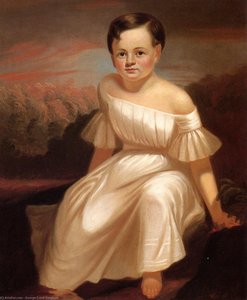
Retrato de George Caleb Bingham

As 100 Pinturas Mais Famosas de George Caleb Bingham, uma Seleção da Galeria

Atualizado em Outubro 2026 · classificado pela nossa pontuação de popularidade (pesquisas, visitas e pedidos de cada obra) · 189 obras de George Caleb Bingham em nosso catálogo

Em resumo

De todas as obras originais deixadas por George Caleb Bingham, a mais famosa é The Squatters (1850), da coleção do Museu de Belas Artes de Boston, em Boston. Logo atrás vêm Country Politician (1849) e Trappers' Return (1851). Nosso catálogo contém 189 obras de George Caleb Bingham; a galeria preservou as 100 que o mundo mais admira, cada uma exibida com sua data, seu museu e sua história.

1811 – 1879, Utreque American realism Mais obras: Saint Louis Art Museum

As 10 principais pinturas de George Caleb Bingham: a escolha da galeria

1
The Squatters (1850) de George Caleb Bingham

The Squatters

1850 · Oil On Canvas · Museu de Belas Artes de Boston, Boston

To gaze upon "The Squatters" is to be transported across time, standing at the threshold of a bygone American era. This painting captures more than just a scene; it encapsulates an entire ethos—the raw, tenacious spirit of early settlement in the vast American West during the mid-nineteenth century. The composition centers on two figures and their loyal dog, positioned before a humble, roughly constructed log cabin. It is a tableau…

2
Country Politician (1849) de George Caleb Bingham

Country Politician

1849 · Oil On Canvas · Fine Arts Museums of San Francisco, São Francisco

Step closer and observe the quiet intensity within this dimly lit interior. We find ourselves in a rural Missouri tavern, a space where the air feels heavy with the weight of local discourse. The scene is centered upon a small group of men, their faces illuminated by a soft, diffused light that seems to emanate from a nearby stove. One man, likely a politician, leans forward in an attempt to…

3
Trappers' Return (1851) de George Caleb Bingham

Trappers' Return

1851 · Oil On Canvas · Detroit Institute of Arts, Detroit

In the quietude of George Caleb Bingham’s 1851 masterpiece, Trappers' Return, we are transported to the untamed heart of the nineteenth-century American Midwest. This evocative oil on canvas serves as a profound window into the era of westward expansion, capturing a moment of serene triumph along the winding Missouri River. The scene centers upon two rugged men navigating a canoe through the gentle currents, their journey marked by the presence…

5
Washington Crossing the Delaware de George Caleb Bingham

Washington Crossing the Delaware

Acrylic On Canvas · Chrysler Museum of Art, Norfolk

Bingham’s background profoundly shaped his artistic vision. Born in Augusta County, Virginia, he witnessed firsthand the challenges and opportunities presented by westward expansion – a theme that permeates much of his work. This experience instilled within him an understanding of the American spirit: resilience, determination, and a belief in self-governance. Washington himself becomes more than just a military commander; he transforms into an archetype of American virtue, representing the values…

6
John Quincy Adams (1850) de George Caleb Bingham

John Quincy Adams

1850 · Oil · Detroit Institute of Arts, Detroit

This bust-length oil portrait is organized around a central subject who faces slightly toward the viewer's left. The composition is formal and somber, focusing the viewer's attention on the facial features and the character of the elderly man. A chiaroscuro-like lighting technique is employed, where light falls directly onto the subject's forehead, cheek, and collar. This directional light creates a sense of three-dimensional volume against the surrounding shadows. The background…

7
Old Woman Reading (1834) de George Caleb Bingham

Old Woman Reading

1834 · Oil On Canvas · Rijksmuseum, Amsterdã

The room is dim, held in a soft, amber-hued stillness that seems to swallow the sounds of the outside world. An elderly woman sits at the center of this private universe, her body forming a steady, triangular shape that anchors the composition. She is lost in the pages of a large book, her gaze fixed upon the text with a focus that suggests a deep, internal dialogue. A single, unseen…

8
Night School (1835) de George Caleb Bingham

Night School

1835 · Oil · Rijksmuseum, Amsterdã

In this 1835 oil painting, we find ourselves drawn into a nocturnal classroom, a space defined by the heavy presence of shadow and the soft, localized glow of candlelight. The composition relies heavily on a chiaroscuro technique, where the darkness of the room is interrupted by the warm, directional light emanating from a central shaded lamp and small candles. This light directs our attention toward the figures at the heart…

10
Old Man in his Study (1833) de George Caleb Bingham

Old Man in his Study

1833 · Oil · Rijksmuseum, Amsterdã

A Moment of Quiet Contemplation Old Man in his Study presents us with an intimate glimpse into a private world. The scene is centered on an elderly man, seated and lost in deep thought or perhaps succumbing to the weight of fatigue. He sits within a dimly lit room, where heavy, dark drapery frames the right and top edges of the composition, creating a sense of enclosure that pulls the…

A seleção de George Caleb Bingham continua, de 11 a 100

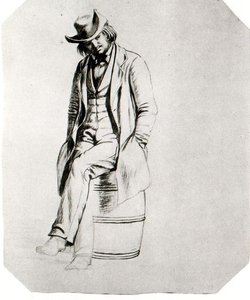
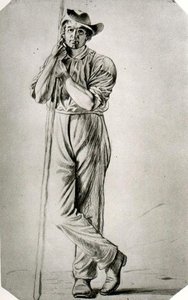
11Mrs. Henry Lewis (Elizabeth Morton Woodson) (1838) de George Caleb BinghamMrs. Henry Lewis (Elizabeth Morton Woodson)1838 · Saint Louis Art Museum 12Shooting for the Beef (1850) de George Caleb BinghamShooting for the Beef1850 · Brooklyn Museum 13The Student (Dr. Oscar Fitzland Potter) (1848) de George Caleb BinghamThe Student (Dr. Oscar Fitzland Potter)1848 · Saint Louis Art Museum 14Fiddler (study for the Jolly Flatboatmen) (1846) de George Caleb BinghamFiddler (study for the Jolly Flatboatmen)1846 · The Nelson-Atkins Museum of Art 15Study of a Boatman for Boatmen on the Missouri de George Caleb BinghamStudy of a Boatman for Boatmen on the Missouri 16Judge Henry Lewis (1838) de George Caleb BinghamJudge Henry Lewis1838 · Saint Louis Art Museum 17Deer in a Stormy Landscape (1852) de George Caleb BinghamDeer in a Stormy Landscape1852 18Order No. 11 (1868) de George Caleb BinghamOrder No. 111868 19The Checker Players (also known as Playing Checkers) (1850) de George Caleb BinghamThe Checker Players (also known as Playing Checkers)1850 · Detroit Institute of Arts 20Rachel Spears Johnston (1786-1850) (1837) de George Caleb BinghamRachel Spears Johnston (1786-1850)1837 · Minneapolis Institute of Art 21Dr. John Sappington (1834) de George Caleb BinghamDr. John Sappington1834 22Major James Sidney Rollins (1834) de George Caleb BinghamMajor James Sidney Rollins1834 23Miss Sallie Ann Camden (1839) de George Caleb BinghamMiss Sallie Ann Camden1839 24Landscape with Waterwheel and Boy Fishing (1853) de George Caleb BinghamLandscape with Waterwheel and Boy Fishing1853 · Museu de Belas Artes de Boston 25Captain William Johnston (1776-1850) (1850) de George Caleb BinghamCaptain William Johnston (1776-1850)1850 · Minneapolis Institute of Art 26Portrait of Reverend John Glanville (1845) de George Caleb BinghamPortrait of Reverend John Glanville1845 27Lighter Relieving the Steamboat Aground (1846) de George Caleb BinghamLighter Relieving the Steamboat Aground1846 28Family Life on the Frontier (1845) de George Caleb BinghamFamily Life on the Frontier1845 29John Locke Hardeman (1850) de George Caleb BinghamJohn Locke Hardeman1850 30Portrait of Mrs. George Caleb Bingham (nee. Eliza K. Thomas) (1849) de George Caleb BinghamPortrait of Mrs. George Caleb Bingham (nee. Eliza K. Thomas)1849 31The Verdict of the People (1854) de George Caleb BinghamThe Verdict of the People1854 32Mississippi Boatman (1850) de George Caleb BinghamMississippi Boatman1850 33The Wood Boat (1850) de George Caleb BinghamThe Wood Boat1850 · Saint Louis Art Museum 34Jolly Flatboatmen in Port (1857) de George Caleb BinghamJolly Flatboatmen in Port1857 · Saint Louis Art Museum 35Washington Crossing the Deleware (1856) de George Caleb BinghamWashington Crossing the Deleware1856 36Jolly Flatboatmen in Port (1857) de George Caleb BinghamJolly Flatboatmen in Port1857 37Mary Frances Ward (1871) de George Caleb BinghamMary Frances Ward1871 · The Nelson-Atkins Museum of Art 38The Puzzled Witness (1874) de George Caleb BinghamThe Puzzled Witness1874 39View of Pike's Peak (1872) de George Caleb BinghamView of Pike's Peak1872 · Amon Carter Museum of American Art 40Self Portrait (1877) de George Caleb BinghamSelf Portrait1877 · Nelson-Atkins Museum of Art 41Samuel Bullitt Churchill (1838) de George Caleb BinghamSamuel Bullitt Churchill1838 42Self Portrait (1834) de George Caleb BinghamSelf Portrait1834 · Saint Louis Art Museum 43Cottage Scene (1845) de George Caleb BinghamCottage Scene1845 · National Gallery of Art 44Raftsmen Playing Cards (1847) de George Caleb BinghamRaftsmen Playing Cards1847 45Marketstall at Evening de George Caleb BinghamMarketstall at EveningMuseum Boijmans Van Beuningen 46Wood-Boatmen on a River (1854) de George Caleb BinghamWood-Boatmen on a River1854 · Amon Carter Museum of American Art 47Raftsmen Playing Card de George Caleb BinghamRaftsmen Playing CardSaint Louis Art Museum 48Canvassing for a Vote (1851) de George Caleb BinghamCanvassing for a Vote1851 · Nelson-Atkins Museum of Art 49Jane Breathitt Sappington (also known as Mrs. John Sappington) (1834) de George Caleb BinghamJane Breathitt Sappington (also known as Mrs. John Sappington)1834 50Mrs. David Steele Lamme and Son, William Wirt (1837) de George Caleb BinghamMrs. David Steele Lamme and Son, William Wirt1837 51Leonidas Wetmore (1839) de George Caleb BinghamLeonidas Wetmore1839 52Landscape with Cattle (1846) de George Caleb BinghamLandscape with Cattle1846 · Saint Louis Art Museum 53part of a forest with figures (1846) de George Caleb Binghampart of a forest with figures1846 54The Jolly Flatboatmen (1846) de George Caleb BinghamThe Jolly Flatboatmen1846 55Mrs. George Caleb Bingham (Sarah Elizabeth Hutchinson) and Son Newton (1842) de George Caleb BinghamMrs. George Caleb Bingham (Sarah Elizabeth Hutchinson) and Son Newton1842 56Landscape with Cattle (1846) de George Caleb BinghamLandscape with Cattle1846 57Landscape: Rural Scene (1845) de George Caleb BinghamLandscape: Rural Scene1845 58Captured by Indians (1848) de George Caleb BinghamCaptured by Indians1848 · Saint Louis Art Museum 59The Dull Story (1843) de George Caleb BinghamThe Dull Story1843 · Saint Louis Art Museum 60The Concealed Enemy (1845) de George Caleb BinghamThe Concealed Enemy1845 61Market By Moonlight (1850) de George Caleb BinghamMarket By Moonlight1850 · Centraal Museum 62Mississippi Boatman (1850) de George Caleb BinghamMississippi Boatman1850 · National Gallery of Art 63Sarah (Sallie) thomas (1850) de George Caleb BinghamSarah (Sallie) thomas1850 64Stump Speaking (1853) de George Caleb BinghamStump Speaking1853 · Saint Louis Art Museum 65The County Election (no.2) (1852) de George Caleb BinghamThe County Election (no.2)1852 66Watching the Cargo (1849) de George Caleb BinghamWatching the Cargo1849 67In a Quandry (also known as Mississippi Raftsmen Playing Cards) (1851) de George Caleb BinghamIn a Quandry (also known as Mississippi Raftsmen Playing Cards)1851 68Watching the Cargo at Night (also known as Raftsmen at Night) (1854) de George Caleb BinghamWatching the Cargo at Night (also known as Raftsmen at Night)1854 69Portrait of a Woman with a Red Broach (1849) de George Caleb BinghamPortrait of a Woman with a Red Broach1849 70In a Quandary, or Mississippi Raftsmen at Cards (1851) de George Caleb BinghamIn a Quandary, or Mississippi Raftsmen at Cards1851 71The Emigration of Daniel Boone (1851) de George Caleb BinghamThe Emigration of Daniel Boone1851 72Mrs. Robert Levi Todd (Sallie Woodson Hall) and Daughter Matilda Téte (1860) de George Caleb BinghamMrs. Robert Levi Todd (Sallie Woodson Hall) and Daughter Matilda Téte1860 73Still Life With Jewelry Box (1867) de George Caleb BinghamStill Life With Jewelry Box1867 · Centraal Museum 74Martial Law (also known as Order No. 11) (1869) de George Caleb BinghamMartial Law (also known as Order No. 11)1869 75The Jolly Flatboatmen (2nd version) (1877) de George Caleb BinghamThe Jolly Flatboatmen (2nd version)1877 76Study of a Figure 41 de George Caleb BinghamStudy of a Figure 41 77Studies of Figures de George Caleb BinghamStudies of Figures 78Study of a Figure 33 de George Caleb BinghamStudy of a Figure 33 79Study of a Figure 44 de George Caleb BinghamStudy of a Figure 44 80Study of a Figure 42 de George Caleb BinghamStudy of a Figure 42 81Study of a Boatman 2 de George Caleb BinghamStudy of a Boatman 2 82Study of a Boatman 3 de George Caleb BinghamStudy of a Boatman 3 83Study of a Flatboatman de George Caleb BinghamStudy of a Flatboatman 84Study of a Figure 34 de George Caleb BinghamStudy of a Figure 34 85Study of a Figure 49 de George Caleb BinghamStudy of a Figure 49 86Study of a Figure 20 de George Caleb BinghamStudy of a Figure 20 87Study of a Boatman 1 de George Caleb BinghamStudy of a Boatman 1 88Study of a Figure for Stump Speaking de George Caleb BinghamStudy of a Figure for Stump Speaking 89Study of a Boatman for Boatmen on the Missouri 1 de George Caleb BinghamStudy of a Boatman for Boatmen on the Missouri 1 90Study of a Figure 11 de George Caleb BinghamStudy of a Figure 11 91Study of a Young Spectator de George Caleb BinghamStudy of a Young Spectator 92Study of a Fiddler de George Caleb BinghamStudy of a Fiddler 93Study of a Woodboatman 1 de George Caleb BinghamStudy of a Woodboatman 1 94Study of a Figure 46 de George Caleb BinghamStudy of a Figure 46 95Study of a Figure 37 de George Caleb BinghamStudy of a Figure 37 96Study of a Pioneer de George Caleb BinghamStudy of a Pioneer 97Study of a Figure 30 de George Caleb BinghamStudy of a Figure 30 98Study of a Figure 6 de George Caleb BinghamStudy of a Figure 6 99Study of a Figure 17 de George Caleb BinghamStudy of a Figure 17 100Study of a Figure 13 de George Caleb BinghamStudy of a Figure 13

Pinturas famosas de George Caleb Bingham, período por período

Os temas que cativaram o olhar de George Caleb Bingham

Os quatro temas que mais se repetem nestas obras originais, cada um com o seu melhor exemplo.

Os museus que guardam os originais de George Caleb Bingham

Os 8 museus que detêm a maioria das pinturas desta página.

Museus Cidade Obras de George Caleb Bingham Pinturas desta lista
Saint Louis Art Museum, Saint LouisSaint Louis Art Museum Saint Louis 15 Mrs. Henry Lewis (Elizabeth Morton Woodson), The Student (Dr. Oscar Fitzland Potter), Judge Henry Lewis
Detroit Institute of Arts, DetroitDetroit Institute of Arts Detroit 4 Trappers' Return, John Quincy Adams, The Checker Players (also known as Playing Checkers)
Rijksmuseum, AmsterdãRijksmuseum Amsterdã 3 Old Woman Reading, Night School, Old Man in his Study
Amon Carter Museum of American Art, Fort WorthAmon Carter Museum of American Art Fort Worth 3 View of Pike's Peak, Wood-Boatmen on a River
Nelson-Atkins Museum of Art, Kansas CityNelson-Atkins Museum of Art Kansas City 3 Self Portrait, Canvassing for a Vote
National Gallery of Art, WashingtonNational Gallery of Art Washington 3 Cottage Scene, Mississippi Boatman
Museu de Belas Artes de Boston, BostonMuseu de Belas Artes de Boston Boston 2 The Squatters, Landscape with Waterwheel and Boy Fishing
The Nelson-Atkins Museum of Art, Kansas CityThe Nelson-Atkins Museum of Art Kansas City 2 Fiddler (study for the Jolly Flatboatmen), Mary Frances Ward

George Caleb Bingham década a década: a obra original que define cada uma

Obras por década

Escolha uma década para ver a obra original que a define.

Perguntas de colecionadores sobre as pinturas de George Caleb Bingham

Por qual obra George Caleb Bingham é mais conhecido(a)?Revelar a resposta

The Squatters (1850), Museu de Belas Artes de Boston, Boston. Country Politician (1849) e Trappers' Return (1851) vêm a seguir.

Qual era a idade de George Caleb Bingham quando The Squatters foi feita?Revelar a resposta

39 anos: The Squatters data de 1850, e George Caleb Bingham nasceu em 1811.

Quais são as dez pinturas mais famosas de George Caleb Bingham?Revelar a resposta

The Squatters, Country Politician, Trappers' Return, The Mill Boy: The Boonville Juvenile Clay Club Banner, Washington Crossing the Delaware, John Quincy Adams, Old Woman Reading, Night School, George Caleb Bingham Self-Portrait e Old Man in his Study. O ranking acima apresenta o ano e o museu de cada uma.

Quantas pinturas George Caleb Bingham deixou?Revelar a resposta

Nosso catálogo contém 189 obras de George Caleb Bingham, datadas de 1833 a 1877.

Em quais museus estão expostas as obras-primas de George Caleb Bingham?Revelar a resposta

Principalmente em Saint Louis Art Museum (Saint Louis), Detroit Institute of Arts (Detroit) e Rijksmuseum (Amsterdã). A tabela de museus acima lista todos eles.

Em que anos George Caleb Bingham pintou as suas obras mais famosas?Revelar a resposta

Em 1850s: 27 das 100 obras nesta página foram feitas então, sendo The Squatters delas.

Quais são as primeiras e as últimas obras originais famosas de George Caleb Bingham?Revelar a resposta

Nesta página, a mais antiga é Old Man in his Study (1833) e a mais recente é Self Portrait (1877).

Quais temas George Caleb Bingham escolheu com mais frequência?Revelar a resposta

Portrait (13), 19th century (11) e Man (8), entre as 100 obras nesta página.

Qual técnica George Caleb Bingham mais utilizou?Revelar a resposta

Oil On Canvas, para 19 das 100 obras nesta página.

A qual movimento artístico pertence George Caleb Bingham?Revelar a resposta

American realism, a julgar pelos originais nesta página.

Quais obras de George Caleb Bingham estão expostas no Saint Louis Art Museum?Revelar a resposta

Mrs. Henry Lewis (Elizabeth Morton Woodson), The Student (Dr. Oscar Fitzland Potter) e Judge Henry Lewis: o Saint Louis Art Museum, Saint Louis detém 11 das obras desta página.

George Caleb Bingham: vida e obra

A Vida Pintada na Fronteira Americana

George Caleb Bingham, nascido em 1811, em meio aos paisagens onduladas da Virgínia, não foi destinado a uma vida imersa em convenções artísticas. Seus primeiros anos foram marcados por movimento e adaptação, com sua família se mudando para a crescente fronteira do Missouri, moldando profundamente sua perspectiva. Essa mudança do estabelecido Leste para a energia bruta do Oeste tornou-se o alicerce fundamental de sua visão artística. As dificuldades enfrentadas por sua família lhe infundiram uma consciência aguda das lutas e triunfos inerentes à experiência americana – temas que dominaram suas telas por décadas. Um encontro crucial aos nove anos com Chester Harding, um artista itinerante que passava por Franklin, Missouri, acendeu uma faísca. Essa breve exposição não foi apenas uma introdução à técnica; foi uma revelação do poder da arte para capturar não apenas a semelhança, mas a própria essência do caráter humano. Embora inicialmente majoritariamente autodidata, Bingham aperfeiçoou suas habilidades por meio de aprendizes, aprendendo desenho meticuloso e um olho para o detalhe – qualidades que se tornariam marcas registradas de seu estilo maduro. Em dezessete anos, já estava ganhando a vida como pintor de retratos, demonstrando um talento inato que rapidamente lhe garantiu um lugar na comunidade local. Esse sucesso precoce impulsionou-o em direção a St. Louis, um centro vibrante onde buscava refinar suas habilidades e se imergir em um crescente milieu artístico.
O Toque Luminista e o Realismo Americano

A jornada artística de Bingham não foi confinada por treinamento formal; foi profundamente entrelaçada com o mundo ao seu redor – os majestosos rios Mississippi e Missouri, as movimentadas cidades ribeirinhas cheias de vida e os diversos indivíduos que navegavam nesse cenário dinâmico. Ele se tornou um observador atento da sociedade americana, particularmente ao longo dessas rotas vitais que serviam como artérias de comércio e migração. Seu estilo evoluiu gradualmente, incorporando elementos do Luminismo, um movimento artístico caracterizado por sua ênfase em efeitos atmosféricos e na sutil interação entre luz e sombra. Isso é evidenciado de forma notável em obras como *Order at the Border* (1850), onde os tons dourados do entardecer iluminam uma negociação tensa entre colonos e nativos americanos, imbuindo a cena com beleza e tensão subjacente. No entanto, Bingham não era apenas um pintor Luminista; ele infundiu seu trabalho com uma poderosa dose de realismo, buscando retratar a vida americana com honestidade e autenticidade inabaláveis. *The County Election* (1844) se destaca como sua representação mais icônica disso – uma composição vibrante que captura a energia boêmia e o espírito democrático da política da fronteira. A pintura não é apenas um retrato de um evento; é um comentário social, oferecendo insights sobre os valores, ansiedades e aspirações dos americanos do século XIX. Sua habilidade em capturar a essência da cultura americana também é demonstrada poderosamente em *St. Louis Jockey, on the Battlefield* (1862), uma reflexão pungente sobre o impacto da Guerra Civil na vida cotidiana, revelando as cicatrizes sutis deixadas na psique da nação.

Temas da Vida na Fronteira e Comentário Social

Ao longo de sua carreira, Bingham consistentemente retornou a temas centrais à experiência americana: expansão para o oeste, participação política, os ritmos da vida ribeirinha e as complexidades das interações humanas. Ele não teve medo de abordar questões difíceis, muitas vezes incorporando comentários sociais sutis em representações aparentemente simples de cenas cotidianas. Suas pinturas não eram apenas esteticamente agradáveis; elas eram narrativas, oferecendo vislumbres da moralidade e dos dilemas éticos que enfrentavam uma jovem nação lutando para definir sua identidade. *Raftsmen Playing Cards* e *The Checker Players*, por exemplo, capturam momentos de lazer, mas também sugerem as dificuldades e incertezas enfrentadas por aqueles que trabalhavam nos rios. Esses trabalhos demonstram sua habilidade em imbuir atividades aparentemente mundanas com um senso de profundidade e significado. Ele não estava interessado em idealizar a fronteira; ele buscava retratá-la como ela era – um lugar de oportunidade, dificuldade e mudança constante. Suas pinturas oferecem um registro histórico valioso, fornecendo insights sobre os costumes sociais, atitudes políticas e vidas cotidianas dos americanos durante um período crucial de sua história. *Family Life on the Frontier* (1845) exemplifica essa abordagem, oferecendo uma representação terna, mas realista, da domesticidade em meio aos desafios da vida pioneira. Mesmo seus retratos, como o de Samuel Bullitt Churchill, revelam uma profundidade psicológica que vai além da mera representação física.

Redescoberta e Legado Duradouro

Apesar de sua proeminência durante sua vida, a obra de Bingham experimentou um período de obscuridade relativa após sua morte em 1879, impulsionada por uma crescente apreciação pelo Realismo e Regionalismo Americano. Essa redescoberta levou a uma reavaliação de suas contribuições para a história da arte americana, reconhecendo-o como mestre tanto da técnica Luminista quanto do comentário social. Até os anos 1930, quando o interesse por sua arte ressurgiu, impulsionado por um apreço crescente pela cultura americana. Sua influência continua a ressoar hoje, inspirando artistas que buscam capturar a beleza e a complexidade da paisagem americana e de seu povo. Seu legado se estende além de suas pinturas individuais; ele ajudou a definir uma voz artística distintamente americana, uma que celebrou o caráter único da nação e confrontou seus desafios com honestidade e perspicácia.
  • Canvassing for a Vote: Uma representação poderosa do engajamento político na fronteira.
  • Order No. 11: Ilustra as complexidades das interações entre colonos e nativos americanos.
  • Lighter Relieving the Steamboat Aground: Captura um momento da vida rural americana com detalhes impressionantes.
Explorar o mundo de Bingham através de reproduções permite que os entusiastas da arte se conectem com suas obras-primas de uma forma tangível, preservando seu legado para as gerações futuras.