Retrato de François Boucher

As 100 Pinturas Mais Famosas de François Boucher, uma Seleção da Galeria

Atualizado em Outubro 2026 · classificado pela nossa pontuação de popularidade (pesquisas, visitas e pedidos de cada obra) · 377 obras de François Boucher em nosso catálogo

Em resumo

De todas as obras originais que François Boucher deixou, a mais famosa é Diana saindo de seu banho (1742). Logo atrás vêm Bouguereau Song of the Angels e Madame de Pompadour (Jeanne-Antoinette Poisson, 1721 - 1764) (1758). Nosso catálogo contém 377 obras de François Boucher; a galeria preservou as 100 que o mundo mais admira, cada uma exibida com sua data, seu museu e sua história.

1703 – 1770, Paris Rococó Mais obras: Museu Hermitage

As 10 principais pinturas de François Boucher: a escolha da galeria

1
Diana saindo de seu banho (1742) de François Boucher

Diana saindo de seu banho

1742 · Óleo sobre tela

François Boucher criou Diana saindo de seu banho em 1742. A obra centra-se na deusa romana Diana, retratada em um estado de nudez. Ela está situada em um cenário de floresta densa, um ambiente natural que serve de pano de fundo para o seu emergir das águas.

2
Bouguereau Song of the Angels de François Boucher

Bouguereau Song of the Angels

Oil On Canvas

The air in this 18th-century French Rococo scene vibrates with an invisible melody. At the center, the quiet devotion of Mary and the infant Jesus anchors the composition. Around them, a choir of heavenly beings gathers to perform. One angel rests on the left, another occupies the middle, while two more flank the right side. They hold lyres, flutes, and strings, their movements precise and graceful. The music of the…

3
Madame de Pompadour (Jeanne-Antoinette Poisson, 1721 - 1764) (1758) de François Boucher

Madame de Pompadour (Jeanne-Antoinette Poisson, 1721 - 1764)

1758 · Oil On Canvas · Scottish National Gallery, Edimburgo

To gaze upon this portrait of Madame de Pompadour is to step directly into the gilded salons of 18th-century France, a world steeped in exquisite taste and whispered intrigue. Painted around 1758 by the master hand of François Boucher, this work transcends mere likeness; it captures an ephemeral moment of cultivated grace. The subject, Jeanne-Antoinette Poisson, is presented not just as a woman of high standing, but as an embodiment…

4
Madame Bergeret (1766) de François Boucher

Madame Bergeret

1766 · Oil On Canvas · National Gallery of Art, Washington

François Boucher’s “Madame Bergeret,” completed in 1766, stands as a quintessential exemplar of Rococo artistry—a style synonymous with aristocratic refinement and sensual beauty. More than just a depiction of a woman, it's an immersive experience into the opulent aesthetic sensibilities of Louis XV’s court, capturing not merely likeness but also an idealized vision of feminine grace.

5
The Interrupted Sleep (1750) de François Boucher

The Interrupted Sleep

1750 · Óleo sobre tela · Metropolitan Museum of Art, Nova York

In the heart of the French Rococo era, few works capture the ephemeral magic of a summer afternoon as tenderly as François Boucher’s The Interrupted Sleep. Created in 1750, this masterpiece serves as a window into an idealized world where the rigors of reality are replaced by a soft, melodic dreamscape. The painting invites the viewer to step into a lush, sun-drenched woodland, where the boundaries between music, nature, and…

6
The Setting of the Sun de François Boucher

The Setting of the Sun

Oil On Canvas

In the luminous realm of 18th-century French artistry, few works capture the ephemeral magic of twilight as profoundly as François Boucher’s The Setting of the Sun. This masterpiece serves as a breathtaking window into the Rococo era, an age defined by its pursuit of elegance, pleasure, and a certain dreamlike sensuality. As the sun descends, the canvas erupts into a dramatic and opulent spectacle, where the boundaries between the earthly…

7
Pastoral Scene (1745) de François Boucher

Pastoral Scene

François Boucher’s “Pastoral Scene,” painted in 1745, isn't merely a depiction of a rural landscape; it’s a carefully constructed invitation into an idealized world—a sanctuary of innocence and leisure nestled within the heart of France. The painting immediately draws the viewer in with its soft palette of browns, beiges, and muted greens, evoking a sense of gentle warmth and timeless serenity. Two young figures – a boy and girl –…

8
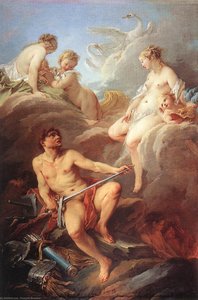
Venus at Vulcan (1769) de François Boucher

Venus at Vulcan

1769 · Oil On Canvas · Kimbell Art Museum, Fort Worth

François Boucher’s “Venus at Vulcan’s Forge,” painted in 1769, isn't merely a depiction of mythological figures; it’s a vibrant embodiment of reconciliation and the potent dance between opposing forces. Rooted firmly within the opulent Rococo style that defined late 18th-century France, the painting transports us to a dramatic tableau inspired by Virgil’s *Aeneid*. Here, Venus, goddess of love and beauty, and Vulcan, god of fire and craftsmanship, find themselves caught…

9
The Toilette (1742) de François Boucher

The Toilette

1742 · Oil On Canvas · Museu Thyssen-Bornemisza, Madrid

In the soft, luminous atmosphere of François Boucher’s 1742 masterpiece, La Toilette, we are invited to step into a world of refined grace and quiet domesticity. This exquisite oil on canvas serves as a quintessential window into the Rococo era—a period defined by its celebration of pleasure, light, and the delicate nuances of everyday life. The scene unfolds within a richly appointed room, where the warmth of a fireplace anchors…

10
Boreas Abducting Oreithyia (1769) de François Boucher

Boreas Abducting Oreithyia

1769 · Oil On Canvas · Kimbell Art Museum, Fort Worth

François Boucher’s “Boreas Abducting Oreithyia,” completed in 1769, is a captivating distillation of classical mythology rendered with the characteristic exuberance and sensual grace that defined the Rococo style. This painting, measuring an impressive 273 x 205 cm, transports us to a moment of violent disruption – a dramatic retelling of Ovid’s tale from the *Metamorphoses*, where the icy North Wind god, Boreas, forcibly claims the Athenian princess Oreithyia.

A seleção de François Boucher continua, de 11 a 100

11Juno Asking Aeolus to Release the Winds (1769) de François BoucherJuno Asking Aeolus to Release the Winds1769 · Kimbell Art Museum 12Study for The Bath of Venus (1751) de François BoucherStudy for The Bath of Venus1751 · Museu Hermitage 13Painter in his Studio de François BoucherPainter in his StudioMuseu do Louvre 14The Setting of the Sun (1752) de François BoucherThe Setting of the Sun1752 · Wallace Collection 15Young Woman Sleeping (1760) de François BoucherYoung Woman Sleeping1760 · Museu Hermitage 16The Forest (1740) de François BoucherThe Forest1740 · Museu do Louvre 17Vertumnus and Pomona de François BoucherVertumnus and PomonaBavarian State Painting Collections 18Madame de Pompadour (1754) de François BoucherMadame de Pompadour1754 · National Gallery of Victoria 19Mill at Charenton (1758) de François BoucherMill at Charenton1758 · Toledo Museum of Art 20Madame de Pompadour (1758) de François BoucherMadame de Pompadour1758 · Victoria and Albert Museum 21Young Country Girl Dancing (1770) de François BoucherYoung Country Girl Dancing1770 · Art Gallery of Ontario 22Blond Odalisque (L'Odalisque Blonde) (1752) de François BoucherBlond Odalisque (L'Odalisque Blonde)1752 · Alte Pinakothek 23The Mill (1751) de François BoucherThe Mill1751 · Museu do Louvre 24The Afternoon Meal (1739) de François BoucherThe Afternoon Meal1739 · Museu do Louvre 25Imaginary Landscape with the Palatine Hill from Campo Vaccino (1730) de François BoucherImaginary Landscape with the Palatine Hill from Campo Vaccino1730 · Metropolitan Museum of Art 26Pastorale (1760) de François BoucherPastorale1760 · Staatliche Kunsthalle Karlsruhe 27Vertumnus and Pomona (1757) de François BoucherVertumnus and Pomona1757 · Fine Arts Museums of San Francisco 28Death of Meleager (1727) de François BoucherDeath of Meleager1727 · Museu de Arte do Condado de Los Angeles 29Venus in the Workshop of Vulcan (1757) de François BoucherVenus in the Workshop of Vulcan1757 · Yale University Art Gallery 30Standing Nude Girl de François BoucherStanding Nude GirlAlbertina 31Arcadian Nymphs Making Music (1770) de François BoucherArcadian Nymphs Making Music1770 · Victoria and Albert Museum 32Triumph of Venus de François BoucherTriumph of VenusMuseu Hermitage 33Landscape with a Pond (1746) de François BoucherLandscape with a Pond1746 · Museu Hermitage 34Washerwomen (1768) de François BoucherWasherwomen1768 · Metropolitan Museum of Art 35The Billet-Doux de François BoucherThe Billet-Doux 36Venus and Mercury Instructing Cupid (1738) de François BoucherVenus and Mercury Instructing Cupid1738 · Museu de Arte do Condado de Los Angeles 37Monument to Mignard (1735) de François BoucherMonument to Mignard1735 · Museu de Arte do Condado de Los Angeles 38Venus Demanding Arms from Vulcan for Aeneas (1732) de François BoucherVenus Demanding Arms from Vulcan for Aeneas1732 · Museu do Louvre 39Young Girl and Eros (1750) de François BoucherYoung Girl and Eros1750 · Detroit Institute of Arts 40The Rising of the Sun (1750) de François BoucherThe Rising of the Sun1750 · Museu Plantin-Moretus 41Hercules and Omphale (1735) de François BoucherHercules and Omphale1735 · Museu Estatal Pushkin de Artes Visuais 42Project for a Cartouche: An Allegory of Minerva, Fame, History and Faith Overcoming Ignorance and Time (1727) de François BoucherProject for a Cartouche: An Allegory of Minerva, Fame, History and Faith Overcoming Ignorance and Time1727 · Museu de Arte do Condado de Los Angeles 43A young lady holding a pug dog (1745) de François BoucherA young lady holding a pug dog1745 · Art Gallery of New South Wales 44Saint John the Baptist (1755) de François BoucherSaint John the Baptist1755 · Minneapolis Institute of Art 45Bathing Nymph (1747) de François BoucherBathing Nymph1747 · Art Institute of Chicago 46River Landscape with an Antique Temple (1762) de François BoucherRiver Landscape with an Antique Temple1762 · Museu Thyssen-Bornemisza 47The Modiste (1746) de François BoucherThe Modiste1746 · Wallace Collection 48Head of a Young Girl (1750) de François BoucherHead of a Young Girl1750 · Museu Hermitage 49The Beautiful Country Woman (1732) de François BoucherThe Beautiful Country Woman1732 · Norton Simon Museum 50The Distorted Child (1742) de François BoucherThe Distorted Child1742 · Staatliche Kunsthalle Karlsruhe 51Breakfast de François BoucherBreakfast 52Diana and Callisto (1760) de François BoucherDiana and Callisto1760 · Slovak National Gallery 53Cupids. Allegory of Painting (1760) de François BoucherCupids. Allegory of Painting1760 · Museu Hermitage 54Pastoral (1730) de François BoucherPastoral1730 · Walters Art Museum 55A Pastoral Scene ('La Jardiniere Endormie') (1762) de François BoucherA Pastoral Scene ('La Jardiniere Endormie')1762 · Scottish National Gallery 56Virgin and Child with the Young Saint John the Baptist and Angels (1765) de François BoucherVirgin and Child with the Young Saint John the Baptist and Angels1765 · Metropolitan Museum of Art 57The Cherry Gatherers (1768) de François BoucherThe Cherry Gatherers1768 · Kenwood House 58A Pastoral Scene ('L'Offrande a la Villageoise') (1761) de François BoucherA Pastoral Scene ('L'Offrande a la Villageoise')1761 · Scottish National Gallery 59Allegory of Autumn (1753) de François BoucherAllegory of Autumn1753 · Metropolitan Museum of Art 60The Education of Cupid (1742) de François BoucherThe Education of Cupid1742 · Palácio de Charlottenburg 61The Birth of Venus (1740) de François BoucherThe Birth of Venus1740 · Nationalmuseum 62The Judgement of Susannah (1720) de François BoucherThe Judgement of Susannah1720 · Galeria Nacional do Canadá 63The Sleep of Loves (1725) de François BoucherThe Sleep of Loves1725 64Rebecca Receiving from the Hands of Eliezer the Gifts of Abraham (1728) de François BoucherRebecca Receiving from the Hands of Eliezer the Gifts of Abraham1728 65The Sacrifice of Gideon (1728) de François BoucherThe Sacrifice of Gideon1728 66Rest at the Fountain (1730) de François BoucherRest at the Fountain1730 · Bavarian State Painting Collections 67The Hunting Breakfast, Sketch. (1733) de François BoucherThe Hunting Breakfast, Sketch.1733 68"La Fontaine", Rococo Scene at the Fountain (1728) de François Boucher"La Fontaine", Rococo Scene at the Fountain1728 69Rebecca receives Abraham's gifts from Eliezer (1725) de François BoucherRebecca receives Abraham's gifts from Eliezer1725 · Musée des Beaux-Arts de Strasbourg 70Mercury Confiding the Infant Bacchus to the Nymphs (1733) de François BoucherMercury Confiding the Infant Bacchus to the Nymphs1733 · Wallace Collection 71Bacchus and Erigone (1745) de François BoucherBacchus and Erigone1745 · Wallace Collection 72Bird-Catching Cherubs (1732) de François BoucherBird-Catching Cherubs1732 · Rhode Island School of Design Museum of Art 73Head of a Young Woman (1732) de François BoucherHead of a Young Woman1732 · Cleveland Museum of Art 74'La vie champêtre' (1728) de François Boucher'La vie champêtre'1728 · Belton House 75La Femme au Chat: Les caresses dangereuses (1731) de François BoucherLa Femme au Chat: Les caresses dangereuses1731 · Fine Arts Museums of San Francisco 76The Bird Catchers (1748) de François BoucherThe Bird Catchers1748 · J. Paul Getty Museum 77Putti with Birds (1730) de François BoucherPutti with Birds1730 · Honolulu Museum of Art 78sleeping Amor (1728) de François Bouchersleeping Amor1728 79boy playing with a dog (1728) de François Boucherboy playing with a dog1728 · Musée d'Art et d'Histoire de Cholet Native Name 80Allegory of Autumn: Putti Playing with a Goat (1730) de François BoucherAllegory of Autumn: Putti Playing with a Goat1730 81Five Naked Children Playing by a Rocky Pool (1732) de François BoucherFive Naked Children Playing by a Rocky Pool1732 · National Trust 82The Forges of Vulcan (1737) de François BoucherThe Forges of Vulcan1737 83Pastoral Subject. The Sleeping Shepherdess (1743) de François BoucherPastoral Subject. The Sleeping Shepherdess1743 · Palais Bourbon 84The Marriage of Cupid and Psyche (1744) de François BoucherThe Marriage of Cupid and Psyche1744 · Musée des Beaux-Arts de Rouen 85Stable interior with amorous scene (1735) de François BoucherStable interior with amorous scene1735 · Musée Cognacq-Jay 86Air: Three Putti with Birds (1741) de François BoucherAir: Three Putti with Birds1741 · Victoria and Albert Museum 87The Egg Seller (1734) de François BoucherThe Egg Seller1734 · Wadsworth Atheneum 88Cupid and the Three Graces (1738) de François BoucherCupid and the Three Graces1738 · Calouste Gulbenkian Museum 89Cupids in Conspiracy (1740) de François BoucherCupids in Conspiracy1740 · Cleveland Museum of Art 90Music and Dance (1740) de François BoucherMusic and Dance1740 · Cleveland Museum of Art 91Mercury Entrusting the Infant Bacchus to the Nymphs of Nysa (1734) de François BoucherMercury Entrusting the Infant Bacchus to the Nymphs of Nysa1734 · Cincinnati Art Museum 92Rural idyll (1735) de François BoucherRural idyll1735 · Bavarian State Painting Collections 93The Nest, also known as the Berger Present (1737) de François BoucherThe Nest, also known as the Berger Present1737 94Young Lady with a Muff (1737) de François BoucherYoung Lady with a Muff1737 95Putti as Fisherman (1744) de François BoucherPutti as Fisherman1744 · Museum of Fine Arts 96Cupid Wounding Psyche (1741) de François BoucherCupid Wounding Psyche1741 · Museu de Arte do Condado de Los Angeles 97Young Woman with Flowers in Her Hair (1734) de François BoucherYoung Woman with Flowers in Her Hair1734 · Museu de Belas Artes de Boston 98The Rest of the Holy Family during the Flight into Egypt (1744) de François BoucherThe Rest of the Holy Family during the Flight into Egypt1744 · Statens Museum For Kunst 99Leopard hunt (1736) de François BoucherLeopard hunt1736 · Musée de Picardie 100Crocodile hunt (1739) de François BoucherCrocodile hunt1739 · Musée de Picardie

Pinturas famosas de François Boucher, período por período

Os temas que cativaram o olhar de François Boucher

Os quatro temas que mais se repetem nestas obras originais, cada um com o seu melhor exemplo.

Os museus que guardam os originais de François Boucher

Os 8 museus que detêm a maioria das pinturas desta página.

Museus Cidade Obras de François Boucher Pinturas desta lista
Museu Hermitage, São PetersburgoMuseu Hermitage São Petersburgo 11 Study for The Bath of Venus, Young Woman Sleeping, Triumph of Venus
Metropolitan Museum of Art, Nova YorkMetropolitan Museum of Art Nova York 13 The Interrupted Sleep, Imaginary Landscape with the Palatine Hill from Campo Vaccino, Washerwomen
Museu do Louvre, ParisMuseu do Louvre Paris 8 Painter in his Studio, The Forest, The Mill
Museu de Arte do Condado de Los Angeles, Los AngelesMuseu de Arte do Condado de Los Angeles Los Angeles 6 Death of Meleager, Venus and Mercury Instructing Cupid, Monument to Mignard
Wallace Collection, LondresWallace Collection Londres 21 The Setting of the Sun, The Modiste, Mercury Confiding the Infant Bacchus to the Nymphs
Scottish National Gallery, EdimburgoScottish National Gallery Edimburgo 5 Madame de Pompadour (Jeanne-Antoinette Poisson, 1721 - 1764), A Pastoral Scene ('La Jardiniere Endormie'), A Pastoral Scene ('L'Offrande a la Villageoise')
Cleveland Museum of Art, ClevelandCleveland Museum of Art Cleveland 5 Head of a Young Woman, Cupids in Conspiracy, Music and Dance
Kimbell Art Museum, Fort WorthKimbell Art Museum Fort Worth 4 Venus at Vulcan, Boreas Abducting Oreithyia, Juno Asking Aeolus to Release the Winds

François Boucher década a década: a obra original que define cada uma

Obras por década

Escolha uma década para ver a obra original que a define.

Perguntas de colecionadores sobre as pinturas de François Boucher

Por qual obra François Boucher é mais conhecido(a)?Revelar a resposta

Diana saindo de seu banho (1742). Bouguereau Song of the Angels e Madame de Pompadour (Jeanne-Antoinette Poisson, 1721 - 1764) (1758) vêm a seguir.

Qual era a idade de François Boucher quando Diana saindo de seu banho foi feita?Revelar a resposta

39 anos: Diana saindo de seu banho data de 1742, e François Boucher nasceu em 1703.

Quais são as dez pinturas mais famosas de François Boucher?Revelar a resposta

Diana saindo de seu banho, Bouguereau Song of the Angels, Madame de Pompadour (Jeanne-Antoinette Poisson, 1721 - 1764), Madame Bergeret, The Interrupted Sleep, The Setting of the Sun, Pastoral Scene, Venus at Vulcan, The Toilette e Boreas Abducting Oreithyia. O ranking acima apresenta o ano e o museu de cada uma.

Quantas pinturas François Boucher deixou?Revelar a resposta

Nosso catálogo contém 377 obras de François Boucher, datadas de 1720 a 1770.

Em quais museus estão expostas as obras-primas de François Boucher?Revelar a resposta

Principalmente em Museu Hermitage (São Petersburgo), Metropolitan Museum of Art (Nova York) e Museu do Louvre (Paris). A tabela de museus acima lista todos eles.

Em que anos François Boucher pintou as suas obras mais famosas?Revelar a resposta

Em 1730s: 28 das 100 obras nesta página foram feitas então, sendo The Afternoon Meal delas.

Quais são as primeiras e as últimas obras originais famosas de François Boucher?Revelar a resposta

Nesta página, a mais antiga é The Judgement of Susannah (1720) e a mais recente é Young Country Girl Dancing (1770).

Quais temas François Boucher escolheu com mais frequência?Revelar a resposta

Woman (33), Clouds (23) e Trees (21), entre as 100 obras nesta página.

Qual técnica François Boucher mais utilizou?Revelar a resposta

Oil On Canvas, para 74 das 100 obras nesta página.

A qual movimento artístico pertence François Boucher?Revelar a resposta

Rococó, a julgar pelos originais nesta página.

Quais obras de François Boucher estão expostas no Museu Hermitage?Revelar a resposta

Study for The Bath of Venus, Young Woman Sleeping e Triumph of Venus: o Museu Hermitage, São Petersburgo detém 6 das obras desta página.

François Boucher: vida e obra

Infância, Família e Formação

Nas ruas movimentadas de Paris, na França, a história de François Boucher teve início em 29 de setembro de 1703. Ele nasceu em um lar onde as artes visuais já eram um estilo de vida, sendo filho de Nicolas Boucher, um homem que ganhava a vida como designer de rendas. Essa exposição precoce às complexidades de padrões e desenhos provavelmente moldou o olhar atento do jovem para os detalhes muito antes de ele jamais tocar um pincel em uma tela. Seu pai proporcionou as primeiras lições, instilando nele as habilidades fundamentais necessárias para navegar pelos competitivos círculos artísticos da cidade.

Conforme o menino crescia, seu talento atraía a atenção daqueles que já estavam estabelecidos no ofício. Aos dezessessete anos, François Boucher tornou-se aprendiz de François Lemoyne, um homem de prestígio significativo. Esse período de instrução foi breve, no entanto, pois o caminho do jovem artista tomou um rumo repentino após apenas três meses. Ele passou da orientação de Lemoyne para trabalhar sob a tutela do gravador Jean-François Cars, uma transição que lhe permitiu dominar a precisão da linha e a mecânica da gravura.

Ambição e talento logo convergiram em um momento de grande triunfo. Em 1720, François Boucher alcançou uma distinção que alteraria o curso de sua vida: ele venceu o prestigiado Grand Prix de Rome. Essa vitória não foi um feito pequeno, marcando-o como uma força ascendente entre seus pares e fornecendo o ímpeto necessário para ir além dos ateliês de Paris e seguir em direção aos palcos mais grandiosos da arte europeia.

Desenvolvimento Artístico e a Influência Italiana

Após conquistar o prestigiado Grand Prix de Rome, o jovem artista voltou seus olhos para a Itália. Ele chegou a Roma em 1728 para estudar na Academia Francesa, um período que moldaria fundamentalmente sua sensibilidade artística. Os ideais clássicos que encontrou sob a luz italiana e as obras dos grandes mestres não lhe ensinaram apenas técnica; eles instilaram nele uma nova forma de enxergar o mundo. François Boucher sentiu-se atraído pela pincelada expressiva e pela abordagem pictórica e rústica dos mestres do Barroco, uma preferência que, eventualmente, o distinguiria das tradições acadêmicas mais rígidas de seus contemporâneos.

Ao retornar à França, sua ascensão pelas fileiras do establishment artístico foi vertiginosa. Foi admitido na Académie Royale de Peinture et de Sculpture em 1731 e, por volta de 1734, já havia alcançado o status de pintor histórico dentro da Academia. Esse reconhecimento formal forneceu o alicerce para uma carreira que logo transitaria do estudo silencioso das formas clássicas para a vida agitada e opulenta da corte francesa. Seus primeiros sucessos foram construídos sobre esse matrimônio entre o treinamento rigoroso e as lições vibrantes e expressivas aprendidas durante seus anos no exterior.

Patronos, Ateliê e Encomendas

O sucesso na corte francesa exigia, muitas vezes, mais do que o mero talento; demandava o favor daqueles que detinham as chaves do gosto real. François Boucher encontrou uma aliada tão poderosa em Madame de Pompadour, a influente favorita do Rei Luís XV. A conexão entre ambos foi profunda, pois ela se tornou sua cliente mais proeminente, encomendando uma variedade de obras que ajudaram a definir a linguagem visual de sua era. Através do apoio dela, sua reputação evoluiu de um pintor habilidoso para uma figura central da própria identidade da corte francesa.

Sua influência acabou por permear as próprias instituições que governavam a arte francesa. Em 1755, foi nomeado Diretor da Real Manufatura de Gobelins, um cargo que permitiu que sua visão se estendesse ao reino das artes decorativas. Ele também emprestou seu talento aos ateliês de Beauvais, onde seus designs eram transformados em obras tecidas. Sua criatividade não se limitava à tela; ele transitava pelo mundo do teatro, desenhando tanto os figurinos quanto os cenários que davam vida aos espetáculos dramáticos. Essa versatilidade garantiu que sua estética fosse sentida em todos os cantos da vida aristocrática, desde as paredes de um palácio até o palco de uma peça.

O ápice de seu reconhecimento oficial chegou em 1765, quando foi nomeado Premier Peintre du Roi. Este título de Primeiro Pintor do Rei marcou sua ascensão ao topo de sua profissão. Ele havia se tornado um homem cujo nome era sinônimo de uma era, um criador cujas obras eram buscadas pelas mais altas autoridades do reino. Sua carreira foi uma ascensão constante através das fileiras da Academia, movendo-se de professor a reitor e, finalmente, ao serviço da própria coroa.

Técnica e Estilo Rococó

François Boucher transitava pelo mundo da arte com uma predileção pelo que era leve e encantador, frequentemente voltando as costas às sombras densas do passado. Sua mão era guiada por uma pincelada delicada que favorecia cores luminosas e uma paleta suave de tons pastel. Ele buscava capturar uma sensação de prazer e graça, utilizando frequentemente composições assimétricas para criar um sentimento de movimento e fluidez. Essa abordagem permitia-lhe transformar até as narrativas mitológicas mais sérias em cenas de paixão e erotismo íntimo, onde os deuses pareciam mais amantes lúdicos do que divindades distantes.

Havia um certo desafio na maneira como ele via o mundo natural. Ele famosamente comentou que a natureza era "trop verte et mal éclairée" — excessivamente verde e mal iluminada — sugerindo que o mundo bruto e sem adornos carecia do refinamento que ele buscava proporcionar. Em vez da realidade austera do ar livre, ele preferia construir um reino idealizado e idílico. Em suas mãos, a paisagem tornava-se um palco para o lazer e a beleza, um lugar onde a luz parecia sempre cair da forma perfeita para lisonjear a pele de seus modelos.

Sua habilidade estendia-se para além da tela, alcançando as texturas mais sutis de seus temas. Ele possuía uma atenção meticulosa aos detalhes, particularmente ao renderizar o brilho de tecidos finos ou a suavidade da carne humana. Essa precisão técnica ajudou-o a definir a linguagem visual do Rococó francês, criando um mundo de luxo e refinamento que espelhava os gostos da corte. Sua obra não tratava meramente da representação de uma cena, mas sim da criação de uma atmosfera de elegância e deleite sofisticado.

Obras-Chave e Obras-Primas

À medida que o seu talento florescia nos salões da Academia, François Boucher procurava provar o seu valor através das grandes narrativas da antiguidade. Em 1734, apresentou Rinaldo e Armida como o seu morceau de réception, uma obra que sinalizou a sua chegada entre os mestres da época. Esta peça permitiu-lhe demonstrar um domínio sobre o drama mitológico, preparando o terreno para uma carreira definida pela busca da graça e pela representação da beleza idealizada.

O seu pincel encontrou os seus temas mais frequentes no divino e no sensual. Por volta de 1740, completou O Nascimento de Vénus, uma tela que capturou a deusa emergindo da espuma do mar. Esta fascinação pelo feminino e pelo mitológico continuou durante a década de 1750. Em 1751, produziu O Toalete de Vénus e Vénus, Consolando o Amor, obras que enfatizavam as texturas suaves da pele e a natureza lúdica e íntima das suas composições. Estas pinturas refletiam um mundo onde até os deuses viviam num estado de lazer refinado.

Para além dos mitos, a mão de François Boucher era frequentemente chamada para capturar a semelhança daqueles que detinham as rédeas da influência francesa. O seu Retrato da Marquesa de Pompadour de 1756 permanece como um registo significativo da sua patronesse mais importante. Através de tais retratos, ele traduziu a elegância da corte numa linguagem visual de tons pastel e postura sofisticada.

  • Rinaldo e Armida (1734)
  • O Nascimento de Vénus (c. 1740)
  • O Toalete de Vénus (1751)
  • Vénus, Consolando o Amor (1751)
  • Retrato da Marquesa de Pompadour (1756)

Onde Ver as Obras Hoje

Para testemunhar o legado deste pintor, é necessário viajar por muitas terras, pois o seu toque alcançou muito além das fronteiras da França. Em Paris, o Louvre abriga várias de suas telas, preservando o espírito da vida cortesã que ele tão cuidadosamente retratou. Aqueles que buscam sua essência nas Américas encontrarão grande parte de sua produção no Metropolitan Museum of Art, em Nova York, onde suas cenas de lazer e mitologia permanecem em exibição pública. Sua presença é sentida em inúmeros salões, uma vez que sua arte era cobiçada por todos que valorizavam a elegância de seu pincel.

O alcance de seu talento estende-se pelas grandes coleções do Oriente e do Ocidente. Em São Petersburgo, o Museu Hermitage guarda sua arte, mantendo viva a sua visão para aqueles que passeiam por suas vastas galerias. Enquanto isso, em Fort Worth, o Kimbell Art Museum detém suas obras, permitindo que o espectador moderno encontre as paletas suaves e os temas mitológicos que definiram sua carreira. Suas pinturas residem nestes diversos santuários, aguardando pelo olhar curioso que as descubra.