Retrato de Edward Lear

As 100 Pinturas Mais Famosas de Edward Lear, Cada Uma Única

Atualizado em Outubro 2026 · classificado pela nossa pontuação de popularidade (pesquisas, visitas e pedidos de cada obra) · 419 obras de Edward Lear em nosso catálogo

Em resumo

Cogoleto, Italy é a pintura de Edward Lear que mais atrai olhares. Depois disso, o olhar recai sobre Crescenza e Blue And Yellow Macaw. Entre as 419 obras de Edward Lear em nosso catálogo, estas 100 são as mais famosas, cada uma uma original única apresentada com o seu ano, o seu museu e a razão pela qual perdura.

1812 – 1888, Highgate Romanticism Mais obras: Yale Center for British Art

As 10 principais pinturas de Edward Lear, sob o olhar da galeria

1
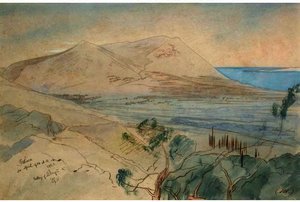
Cogoleto, Italy de Edward Lear

Cogoleto, Italy

Watercolor

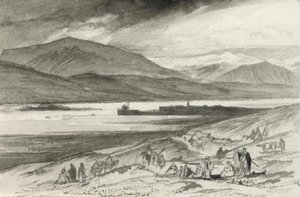
The sun rests upon a sandy shore in Cogoleto, Italy. A mountain rises in the background, its silhouette watching over the water. Along the edge of the sea, small figures move through the light. Some people gather near the tide, while others linger further away, lost in the vastness of the landscape. A single dog wanders toward the right, a small presence against the expanse of the beach. The scene…

7
The Temple of Apollo at Bassae (1855) de Edward Lear

The Temple of Apollo at Bassae

1855 · Oil On Canvas · Museu Fitzwilliam, Cambridge

The ruins of the Temple of Apollo at Bassae emerge from a rugged landscape, defined by heavy stone columns that support a weathered roof structure. In the foreground, the primary temple dominates the view, its pillars standing as silent witnesses to a lost era. Beyond this central structure, two smaller temples are visible in the distance, partially obscured by the natural terrain. The composition places the viewer amidst a scattering…

Pinturas famosas de Edward Lear, números 11 a 100

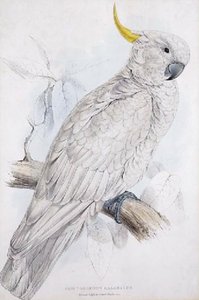
11A Great Green Macaw de Edward LearA Great Green Macaw 12Great Sulphur Cockatoo (Plyctolophus Sulphureus) de Edward LearGreat Sulphur Cockatoo (Plyctolophus Sulphureus) 13Diano, South Of France de Edward LearDiano, South Of France 14Philae, Egypt (1863) de Edward LearPhilae, Egypt1863 · Yale Center for British Art 15The Plains of Lombardy from Monte Generoso (1880) de Edward LearThe Plains of Lombardy from Monte Generoso1880 · The Ashmolean Museum of Art and Archaeology 16Between Olavano and Civitella (1842) de Edward LearBetween Olavano and Civitella1842 · Yale Center for British Art 17Civita Castellana (1839) de Edward LearCivita Castellana1839 18As Montanhas de Termópilas (1852) de Edward LearAs Montanhas de Termópilas1852 · Bristol Museum - Art Gallery 19A Study of Ferns, Civitella (1842) de Edward LearA Study of Ferns, Civitella1842 · Yale Center for British Art 20Landscape with Goatherd (1842) de Edward LearLandscape with Goatherd1842 · Yale Center for British Art 21Temple of Venus and Roma, Rome (1840) de Edward LearTemple of Venus and Roma, Rome1840 · Yale Center for British Art 22Rome, a View of the Forum from a Terrace (1841) de Edward LearRome, a View of the Forum from a Terrace1841 23Rome, a View of the Forum with the Temple of Venus (1841) de Edward LearRome, a View of the Forum with the Temple of Venus1841 24A View of the Roman Campagna, a Villa and Aqueduct in the Distance (1841) de Edward LearA View of the Roman Campagna, a Villa and Aqueduct in the Distance1841 25A View of the Roman Campagna with Travelers Passing a Ruined Brick Tomb, an Aqueduct in the Distance (1841) de Edward LearA View of the Roman Campagna with Travelers Passing a Ruined Brick Tomb, an Aqueduct in the Distance1841 26Study of Rocks, Shrubs, and Tree Trunks at Monte Casale near Sansepolcro, Tuscany (1842) de Edward LearStudy of Rocks, Shrubs, and Tree Trunks at Monte Casale near Sansepolcro, Tuscany1842 27Venosa (1852) de Edward LearVenosa1852 · Toledo Museum of Art 28Corfu from near the Village of Virós (1858) de Edward LearCorfu from near the Village of Virós1858 · Rhode Island School of Design Museum of Art 29Jerusalem from the Mount of Olives (1858) de Edward LearJerusalem from the Mount of Olives1858 · Museu de Israel 30Corfu from Ascension (1860) de Edward LearCorfu from Ascension1860 · Yale Center for British Art 31Corfu from Ascension (1862) de Edward LearCorfu from Ascension1862 · Yale Center for British Art 32Corfu from Santa Decca (1862) de Edward LearCorfu from Santa Decca1862 · Yale Center for British Art 33Butrinto, Albania (1861) de Edward LearButrinto, Albania1861 · Yale Center for British Art 34Zagori, Greece (1860) de Edward LearZagori, Greece1860 · Yale Center for British Art 35Masada on the Dead Sea (1858) de Edward LearMasada on the Dead Sea1858 · Fine Arts Museums of San Francisco 36View of the Ducal Palace, Massa, Northern Italy (1858) de Edward LearView of the Ducal Palace, Massa, Northern Italy1858 37View in the Campagna, Rome (with a River) (1861) de Edward LearView in the Campagna, Rome (with a River)1861 38View in the Campagna, Rome (with Ruins) (1861) de Edward LearView in the Campagna, Rome (with Ruins)1861 39View of Florence from Villa San Firenze (1862) de Edward LearView of Florence from Villa San Firenze1862 · Government Art Collection 40Corfu (1863) de Edward LearCorfu1863 41The Forest of Valdoniello, Corsica (1869) de Edward LearThe Forest of Valdoniello, Corsica1869 · Yale Center for British Art 42Denderah on the Nile (1867) de Edward LearDenderah on the Nile1867 43Feluccas on the Nile near Abu-Simbel (1867) de Edward LearFeluccas on the Nile near Abu-Simbel1867 44A Distant View of Nice from the Hills (1864) de Edward LearA Distant View of Nice from the Hills1864 45Thermopylae (1872) de Edward LearThermopylae1872 · The Ashmolean Museum of Art and Archaeology 46Kinchinjunga (1877) de Edward LearKinchinjunga1877 · Yale Center for British Art 47Campagna di Roma (1878) de Edward LearCampagna di Roma1878 48Buon Ricovero, in the Roman Campagna (1878) de Edward LearBuon Ricovero, in the Roman Campagna1878 49Kangchenjunga from Darjeeling (1879) de Edward LearKangchenjunga from Darjeeling1879 · Yale Center for British Art 50The Marble Rocks - Nerbudda Jubbolpore (1882) de Edward LearThe Marble Rocks - Nerbudda Jubbolpore1882 · Yale Center for British Art 51Argos from Mycene (1884) de Edward LearArgos from Mycene1884 52A View of Adam's Peak, Ceylon (1882) de Edward LearA View of Adam's Peak, Ceylon1882 · Government Art Collection 53Snowy Owl de Edward LearSnowy Owl 54Villa Borghese, Rome de Edward LearVilla Borghese, Rome 55Studies Of Sheep And Herdsmen de Edward LearStudies Of Sheep And Herdsmen 56Views In Rome And Its Environs 2 de Edward LearViews In Rome And Its Environs 2 57Opposite Calvi de Edward LearOpposite Calvi 58Arabs Approaching Mount Sinai de Edward LearArabs Approaching Mount Sinai 59Bocche Di Cattaro, Montenegro de Edward LearBocche Di Cattaro, Montenegro 60Palaiukhora, Crete de Edward LearPalaiukhora, Crete 61Naples, Italy de Edward LearNaples, Italy 62Katholikó Akrotiri, Crete de Edward LearKatholikó Akrotiri, Crete 63Damascus 3 de Edward LearDamascus 3 64View Of Sermoneta, Italy de Edward LearView Of Sermoneta, Italy 65Arkodyllus, Corfu de Edward LearArkodyllus, Corfu 66View Of Jerusalem 1 de Edward LearView Of Jerusalem 1 67The Monastery Of Baarlam, Meteora de Edward LearThe Monastery Of Baarlam, Meteora 68Windermere From Lowwood, Cumbria de Edward LearWindermere From Lowwood, Cumbria 69View Of Philae de Edward LearView Of Philae 70Musta, Malta de Edward LearMusta, Malta 71Modica, Sicily de Edward LearModica, Sicily 72A View Of Sorrento, Italy de Edward LearA View Of Sorrento, Italy 73Parnassus de Edward LearParnassus 74Isola Pescatore, Lake Maggiore, Italy de Edward LearIsola Pescatore, Lake Maggiore, Italy 75A View Of Santa Maura, Levkas, Ionian Islands de Edward LearA View Of Santa Maura, Levkas, Ionian Islands 76Corfu From The Hill Of Gastouri de Edward LearCorfu From The Hill Of Gastouri 77Pompey's Pillar de Edward LearPompey's Pillar 78Figures On The Shore Near Edfu de Edward LearFigures On The Shore Near Edfu 79Joannina, Epirus, Albania de Edward LearJoannina, Epirus, Albania 80Travellers On A Road, Subiaco, Italy de Edward LearTravellers On A Road, Subiaco, Italy 81The Pyramids Road de Edward LearThe Pyramids Road 82View Of Eze, Côte D'azur, France 1 de Edward LearView Of Eze, Côte D'azur, France 1 83An Arab Encampment In Wadi Feiran, Egypt de Edward LearAn Arab Encampment In Wadi Feiran, Egypt 84The Claudian Aqueduct On The Via Appia Near Rome de Edward LearThe Claudian Aqueduct On The Via Appia Near Rome 85A Distant View Of Mdina, Malta de Edward LearA Distant View Of Mdina, Malta 86Galata, Constantinople de Edward LearGalata, Constantinople 87Benares On The Ganges de Edward LearBenares On The Ganges 88Sunrise At Erment, Egypt de Edward LearSunrise At Erment, Egypt 89Porto Maurizio, Italy de Edward LearPorto Maurizio, Italy 90The Nile Above Aswan de Edward LearThe Nile Above Aswan 91A View Of Pauna, In The Ionian Islands de Edward LearA View Of Pauna, In The Ionian Islands 92View Of Ratnapura, Ceylon de Edward LearView Of Ratnapura, Ceylon 93Stairs Leading To S. Pietro In Vincoli de Edward LearStairs Leading To S. Pietro In Vincoli 94Mount Oeta And Thermopylae From Near Lamia de Edward LearMount Oeta And Thermopylae From Near Lamia 95Damascus de Edward LearDamascus 96Arabs At Mount Sinai, Egypt de Edward LearArabs At Mount Sinai, Egypt 97View Of Cythera, Greece de Edward LearView Of Cythera, Greece 98The Upper Nile, Toske, Egypt de Edward LearThe Upper Nile, Toske, Egypt 99Saffron-Coloured Aracari And Golden-Green Aracari de Edward LearSaffron-Coloured Aracari And Golden-Green Aracari 100Prince Of Wales Road, Malta de Edward LearPrince Of Wales Road, Malta

Os temas que cativaram o olhar de Edward Lear

Os quatro temas que mais se repetem nestas obras originais, cada um com o seu melhor exemplo.

Os museus que guardam os originais de Edward Lear

Os 8 museus que detêm a maioria das pinturas desta página.

Museu Cidade Obras de Edward Lear Pinturas desta lista
Yale Center for British Art, New HavenYale Center for British Art New Haven 16 Philae, Egypt, Between Olavano and Civitella, A Study of Ferns, Civitella
Government Art Collection, LondresGovernment Art Collection Londres 5 View of Florence from Villa San Firenze, A View of Adam's Peak, Ceylon
The Ashmolean Museum of Art and Archaeology, OxfordThe Ashmolean Museum of Art and Archaeology Oxford 3 The Plains of Lombardy from Monte Generoso, Thermopylae
Museu de Israel, JerusalémMuseu de Israel Jerusalém 2 View of Bethlehem, Jerusalem from the Mount of Olives
Museu Fitzwilliam, CambridgeMuseu Fitzwilliam Cambridge 1 The Temple of Apollo at Bassae
Bristol Museum - Art Gallery, BristolBristol Museum - Art Gallery Bristol 1 As Montanhas de Termópilas
Toledo Museum of Art, ToledoToledo Museum of Art Toledo 1 Venosa
Rhode Island School of Design Museum of Art, ProvidenceRhode Island School of Design Museum of Art Providence 1 Corfu from near the Village of Virós

Edward Lear ao longo das décadas: uma obra original única para cada uma

Obras por década

Escolha uma década para ver a obra original que a define.

Pinturas de Edward Lear: perguntas para a galeria

Qual é a obra mais famosa de Edward Lear?Revelar a resposta

Cogoleto, Italy. Crescenza e Blue And Yellow Macaw vêm a seguir.

Quais são as dez pinturas mais famosas de Edward Lear?Revelar a resposta

Cogoleto, Italy, Crescenza, Blue And Yellow Macaw, View of Taormina in Sicily with Etna in the distance, View of Bethlehem, The Pyramids of Ghizeh, The Temple of Apollo at Bassae, Plains Of Ashdod, Israel, View Of Eze, Italy e Ithaca, Ionian Islands. O ranking acima apresenta o ano e o museu de cada uma.

Quantas obras de Edward Lear são conhecidas?Revelar a resposta

Nosso catálogo contém 419 obras de Edward Lear, datadas de 1839 a 1884.

Onde se pode ver os originais mais famosos de Edward Lear?Revelar a resposta

Principalmente em Yale Center for British Art (New Haven), Government Art Collection (Londres) e The Ashmolean Museum of Art and Archaeology (Oxford). A tabela de museus acima lista todos eles.

Em que período Edward Lear criou as suas pinturas mais conhecidas?Revelar a resposta

Em 1860s: 14 das 100 obras nesta página foram feitas então, sendo Philae, Egypt delas.

Qual pintura famosa de Edward Lear é a mais antiga e qual é a mais recente?Revelar a resposta

Nesta página, a mais antiga é Civita Castellana (1839) e a mais recente é Argos from Mycene (1884).

Quais temas Edward Lear preferia?Revelar a resposta

Landscape (11), Scenes (11) e Italy (11), entre as 100 obras nesta página.

Com quais materiais Edward Lear mais pintou?Revelar a resposta

Watercolor, para 2 das 100 obras nesta página.

A qual movimento pertence a obra de Edward Lear?Revelar a resposta

Romanticism, a julgar pelos originais nesta página.

Quais originais de Edward Lear posso ver no Yale Center for British Art?Revelar a resposta

Philae, Egypt, Between Olavano and Civitella e A Study of Ferns, Civitella: o Yale Center for British Art, New Haven detém 14 das obras desta página.

Onde posso encomendar uma reprodução pintada à mão de Edward Lear?Revelar a resposta

Sim, como uma reprodução: a obra original permanece no seu museu, mas qualquer pintura desta página pode ser pintada à mão para você, feita sob encomenda uma a uma, a partir da própria página da pintura.

Edward Lear: um retrato do artista

A Life Painted in Nonsense and Light

Edward Lear, a name inextricably linked to whimsical verse and delightfully peculiar illustrations, was far more than simply the purveyor of limericks and fantastical creatures that often define his legacy. Born in 1812 in Holloway, North London, into a family teeming with twenty-one children – a veritable whirlwind of siblings – Lear’s early life was profoundly shaped by both financial instability and an astonishingly early artistic talent. His father, Jeremiah Lear, faced considerable hardship following the Napoleonic Wars, forcing young Edward to begin earning a living through his drawings at the tender age of fifteen. This necessity, however, ignited within him a lifelong passion that would propel him across continents, capturing the world in vibrant hues and playful lines. The shadow of familial difficulty – compounded by early health challenges, including recurring epileptic seizures and bouts of melancholia he himself termed “the Morbids” – instilled within Lear a gentle solitude and an inclination towards imaginative escape; qualities that are profoundly reflected in both his art and his writing.

From Ornithological Precision to Landscape’s Embrace

Lear's artistic journey began with a remarkable degree of precision. Initially employed by the Zoological Society of London, he honed his skills illustrating birds and animals – demanding an unparalleled eye for detail and anatomical accuracy. This early work brought him to the immediate attention of Edward Stanley, the 13th Earl of Derby, who commissioned Lear to meticulously document the exotic creatures residing within his private menagerie at Knowsley Hall. These formative years spent amongst lions, tigers, and parrots not only refined Lear’s draftsmanship beyond measure but also fostered a deep and enduring connection with the natural world – a connection that would become a cornerstone of his later landscape paintings. However, the relentless demands of this exacting work, coupled with increasingly debilitating respiratory issues and failing eyesight, eventually led him to relinquish the precise details of ornithological illustration. He turned instead to landscape painting, embarking on extensive and transformative travels throughout Europe and beyond. Italy, in particular, became a sanctuary – offering not only respite from his physical ailments but also an abundance of inspiring vistas that would forever shape his artistic vision. His landscapes are characterized by a unique blend of topographical accuracy and atmospheric sensitivity; he masterfully captured the subtle nuances of light and shadow, employing delicate watercolors to evoke a sense of tranquility and wonder.

The Poet of Nonsense: A World Unbound

While celebrated primarily as a painter, it is perhaps for his literary contributions that Edward Lear remains most widely remembered. His “nonsense” poetry – particularly his limericks – revolutionized children’s literature and captivated audiences of all ages. *A Book of Nonsense*, published in 1846 under the pseudonym "Derry down Derry," introduced a world populated by owls and pussycats sailing in pea-green boats, dongs with luminous noses, and other delightfully absurd creations. These verses weren’t merely frivolous; they were imbued with a subtle melancholy and a playful subversion of conventional logic. Lear didn't simply invent nonsense words; he crafted entire worlds governed by their own internal rules, inviting readers to suspend disbelief and embrace the joy of imagination. *The Owl and the Pussy-Cat*, arguably his most famous poem, remains a beloved classic, its enduring appeal stemming from its lyrical rhythm and evocative imagery. Lear’s work demonstrated an innovative approach to poetry, liberating verse from rigid structures and embracing playful experimentation – a radical departure from the prevailing literary norms of the time.

Influences and Artistic Development

  • Early Influences: Lear’s initial artistic training focused on scientific illustration, demanding precision and observation. This foundation shaped his meticulous approach to detail, even as he later embraced more expressive styles.
  • Travel & Landscape Painting: His extensive travels through Italy, Greece, Egypt, and beyond profoundly influenced his landscape work. He absorbed the light, colors, and textures of these diverse regions, developing a distinctive style characterized by atmospheric perspective and delicate brushwork.
  • Literary Inspiration: While he popularized the limerick, Lear was also inspired by earlier nonsense verse traditions. His unique contribution lay in his ability to imbue this form with emotional depth and lyrical beauty.
  • Personal Experiences: Lear’s lifelong struggles with health issues and melancholy deeply informed his artistic vision. The sense of isolation and longing that permeates much of his work reflects his own personal experiences.

A Legacy of Innovation and Enduring Charm

Edward Lear's influence extends far beyond the realm of children's literature. He pioneered a new form of poetic expression, liberating verse from rigid structures and embracing playful experimentation. His landscapes, though often overshadowed by his poetry, demonstrate a keen artistic sensibility and a mastery of watercolor technique. He was a true polymath – artist, illustrator, musician (he composed musical settings for Tennyson’s poems), author, and poet – whose diverse talents converged to create a unique and enduring legacy. He challenged conventional boundaries, blurring the lines between art, literature, and music. His work continues to inspire artists, writers, and dreamers alike, reminding us of the power of imagination and the beauty of embracing the absurd. His paintings can be found in esteemed collections like The Ashmolean Museum, Oxford, a testament to his skill as a landscape artist. Lear’s life, marked by both personal struggles and creative triumphs, serves as a poignant reminder that even amidst darkness, there is always room for light, laughter, and the boundless possibilities of the human spirit.

Todas as 419 obras de Edward Lear →