Portrait of Edward Hopper

Edward Hopper Paintings: The 100 Most Famous, Through a Gallery's Eye

Updated Outubro 2026 · ranked by our popularity score (searches, visits and orders for each work) · 366 works by Edward Hopper in our catalogue

In short

To the gallery's eye, Edward Hopper's most famous painting is Edward Hopper (1942), whose original hangs in the Art Institute of Chicago, Chicago. Automat (small) and Casa à Beira da Ferrovia (1925) complete the trio every eye recognises. Of the 366 works by Edward Hopper in our catalog, the gallery presents the 100 most famous below, each original with its year, its museum and what makes it unique.

1882 – 1967, Upper Nyack Realismo contemporâneo Most works: MoMA - Museu de Arte Moderna

The gallery's top 10 Edward Hopper paintings

1
Edward Hopper (1942) by Edward Hopper

Edward Hopper

1942 · Óleo sobre tela · Art Institute of Chicago, Chicago

Um Farol na Noite: Explorando a Obra-Prima de Hopper Criada em 1942, esta icônica pintura captura uma cena noturna dentro de um diner aberto durante toda a noite, tornando-se uma das imagens mais reconhecíveis da arte americana. Mais do que uma simples representação da vida urbana, é uma profunda exploração do isolamento moderno e a silenciosa solidão encontrada mesmo em meio às cidades movimentadas. Hopper não apenas pintou o que…

2
Automat (small) by Edward Hopper

Automat (small)

Acrylic On Canvas · Des Moines Art Center, Des Moines

Edward Hopper’s “Automat” (small), a deceptively simple depiction of a woman seated alone at a cafe table, is a masterclass in conveying the profound sense of solitude that characterized much of 20th-century American life. Painted during a period of rapid urbanization and social change, this work resonates with a quiet melancholy that speaks to the alienation inherent in modern existence. Hopper’s ability to capture fleeting moments of human experience –…

3
Casa à Beira da Ferrovia (1925) by Edward Hopper

Casa à Beira da Ferrovia

1925 · Óleo sobre tela · MoMA - Museu de Arte Moderna, Nova York

Introduction to Edward Hopper and His Work Edward Hopper, a renowned American artist, is celebrated for his captivating oil paintings that often depicted modern life in the early 20th century. One of his most notable works is "House by the Railroad," which is currently housed at the Museum of Modern Art (New York, United States). This painting, created in 1925, showcases Hopper's unique style and ability to evoke a sense…

4
Filme de Nova York (1939) by Edward Hopper

Filme de Nova York

1939 · Acrílico sobre tela · MoMA - Museu de Arte Moderna, Nova York

A Pintura "CITE>New York Movie" de Edward Hopper é uma comovente pintura a óleo sobre tela criada em 1939. Atualmente, a obra encontra-se no prestigiado Museum of Modern Art (MoMA), na cidade de Nova York, Estados Unidos. Esta obra-prima exemplifica a habilidade única de Hopper em capturar a essência da vida urbana, focando frequentemente em temas de isolamento e contemplação. Composição e Simbolismo A pintura retrata uma mulher sozinha diante…

5
untitled (5560) by Edward Hopper

untitled (5560)

Oil On Canvas · MoMA - Museu de Arte Moderna, Nova York

Edward Hopper's untitled (5560) is far more than a mere depiction of a roadside service station; it is a distilled essence of the American experience, a moment frozen in time that speaks volumes about human connection and the profound weight of isolation. Painted during the transformative years between 1942 and 1945, this monochrome masterpiece captures a scene familiar to the mid-century traveler—the late-night glow of artificial light illuminating a sparsely…

6
Early sunday morning Whitney Museum of American (1930) by Edward Hopper

Early sunday morning Whitney Museum of American

1930 · Oil On Canvas · Whitney Museum of American Art, Nova Iorque

Early Sunday Morning: A Portrait of Quietude Edward Hopper’s “Early Sunday Morning,” painted in 1930, isn't merely a depiction of a New York City street; it’s an arresting distillation of the anxieties and aspirations inherent in the American psyche during the Depression era. Executed in oil paint on canvas, this iconic piece exemplifies Hopper’s signature style – American Scene Painting—characterized by stark realism combined with a palpable sense of solitude…

7
Automat (1927) by Edward Hopper

Automat

1927 · Óleo sobre tela

Uma Obra-Prima de Solidão e Luz A obra "Automat" (1927), de Edward Hopper, é um exemplo quintessencial do Realismo Americano, capturando a quietude solitária e o clima introspectivo que definem grande parte de seu trabalho. Esta pintura evocativa convida os espectadores para um interior mal iluminado, onde uma mulher solitária se senta à mesa redonda em o que parece ser um automat—um tipo de restaurante de autoatendimento popular na América…

8
Domingo (1926) by Edward Hopper

Domingo

1926 · Óleo sobre tela · The Phillips Collection, Washington, D.C.

A Essência da Solidão Urbana "Domingo", de Edward Hopper, captura a quietude e a introspecção de uma cena urbana no que parece ser uma manhã de domingo. A pintura apresenta um homem solitário sentado em um banco de madeira diante de vitrines fechadas, evocando um senso de solidão e contemplação que é característico da obra de Hopper. Esta peça é uma exploração magistral da condição humana, ambientada no cenário da…

9
Gas (1940) by Edward Hopper

Gas

1940 · Óleo sobre tela

Uma Representação Atemporal da Solidão Americana A obra "Gas" (1940), de Edward Hopper, é uma exploração magistral da solidão e da nostalgia, capturando um posto de gasolina à moda antiga banhado por uma luz suave e natural. Esta pintura evocativa convida os espectadores a um momento congelado no tempo, onde a quietude da América rural é palpável. A cena exala um senso de introspecção, tornando-se uma adição fascinante para qualquer…

10
Chop Suey (1929) by Edward Hopper

Chop Suey

1929 · Óleo sobre tela

"Chop Suey", criada por Edward Hopper em 1929, é uma pintura a óleo cativante que convida os espectadores para o mundo íntimo, porém isolado, de uma lanchonete dos anos 1920. Esta obra-prima exemplifica o estilo característico de Hopper, fundindo o Realismo Americano com sutis influências Expressionistas para evocar um sentimento de nostalgia e introspeciente quietude.

Edward Hopper paintings, ranked 11 to 100

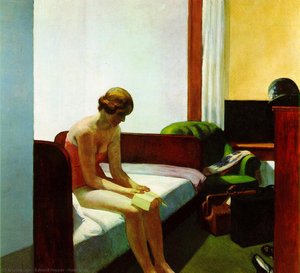
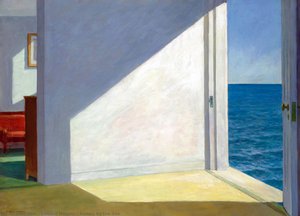
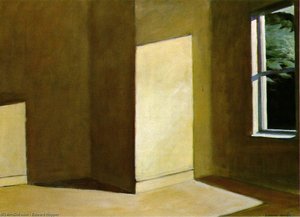
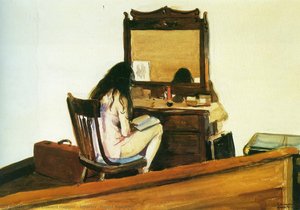
11"Office at Night" -> "Escritório À Noite" (1940) by Edward Hopper"Office at Night" -> "Escritório À Noite"1940 12Verão (1943) by Edward HopperVerão1943 13Solitude em uma Cafeteria (1958) by Edward HopperSolitude em uma Cafeteria1958 · Yale University Art Gallery 14Pessoas ao Sol (1960) by Edward HopperPessoas ao Sol1960 15Cape Cod Morning (1950) by Edward HopperCape Cod Morning1950 16Quartos para Turistas (1945) by Edward HopperQuartos para Turistas1945 · Yale University Art Gallery 17nighthawks (1942) by Edward Hoppernighthawks1942 · Art Institute of Chicago 18Vagão Compartimento C by Edward HopperVagão Compartimento C 19Dois Comediantes (1965) by Edward HopperDois Comediantes1965 20Second Story Sunlight, , Whitney Museum of Ameri (1960) by Edward HopperSecond Story Sunlight, , Whitney Museum of Ameri1960 21New York Movie, MoMA, NY (1939) by Edward HopperNew York Movie, MoMA, NY1939 22Summer Evening (1947) by Edward HopperSummer Evening1947 23Hotel room (1931) by Edward HopperHotel room1931 24Excursion into Philosophy by Edward HopperExcursion into Philosophy 25The Cat Boat (1922) by Edward HopperThe Cat Boat1922 · Smithsonian American Art Museum 26Rooms By The Sea (1951) by Edward HopperRooms By The Sea1951 27Reclining Nude (1927) by Edward HopperReclining Nude1927 28Rooms by the Sea (1951) by Edward HopperRooms by the Sea1951 29House At Dusk (1935) by Edward HopperHouse At Dusk1935 30Drug Store (1927) by Edward HopperDrug Store1927 · Museu de Belas Artes de Boston 31Sun on Prospect Street (Gloucester, Massachusetts) (1934) by Edward HopperSun on Prospect Street (Gloucester, Massachusetts)1934 32Woman in the Sun (1961) by Edward HopperWoman in the Sun1961 33Second Story Sunlight (1960) by Edward HopperSecond Story Sunlight1960 34Night Windows (1928) by Edward HopperNight Windows1928 · MoMA - Museu de Arte Moderna 35New York Office (1962) by Edward HopperNew York Office1962 36Office in a Small City (1953) by Edward HopperOffice in a Small City1953 37City Roofs (1932) by Edward HopperCity Roofs1932 38Self-Portrait (1930) by Edward HopperSelf-Portrait1930 39Casas de Monhegan, Maine by Edward HopperCasas de Monhegan, Maine 40Four Lane Road by Edward HopperFour Lane Road 41Woman at Cafe Table (1907) by Edward HopperWoman at Cafe Table1907 · Whitney Museum of American Art 42First Row Orchestra (1951) by Edward HopperFirst Row Orchestra1951 · Hirshhorn Museum and Sculpture Garden 43House by the Railroad by Edward HopperHouse by the Railroad 44untitled (3714) by Edward Hopperuntitled (3714) 45el palacio (1946) by Edward Hopperel palacio1946 46the city (1927) by Edward Hopperthe city1927 47rooms by the sea by Edward Hopperrooms by the sea 48A Woman in the Sun, Whitney Museum of American (1961) by Edward HopperA Woman in the Sun, Whitney Museum of American1961 49The Camel's Hump (1931) by Edward HopperThe Camel's Hump1931 50the el station by Edward Hopperthe el station 51Dawn in Pennsylvania (1942) by Edward HopperDawn in Pennsylvania1942 52Corn Hill (1930) by Edward HopperCorn Hill1930 53tramp steamer (1908) by Edward Hoppertramp steamer1908 54Self Portrait, , Whitney Museum of American (1930) by Edward HopperSelf Portrait, , Whitney Museum of American1930 55Rocks at the Fort Gloucester (1924) by Edward HopperRocks at the Fort Gloucester1924 56Morning sun, Columbus Museum of Art, Columbus, (1952) by Edward HopperMorning sun, Columbus Museum of Art, Columbus,1952 57Study of a Seated Woman (1899) by Edward HopperStudy of a Seated Woman1899 58Portrait Of Orleans by Edward HopperPortrait Of Orleans 59sun empty room by Edward Hoppersun empty room 60The Long Leg (1930) by Edward HopperThe Long Leg1930 61Bridle Path (1939) by Edward HopperBridle Path1939 62night windows by Edward Hoppernight windows 63Hotel by a Railroad (1952) by Edward HopperHotel by a Railroad1952 64Queensborough-Bridge (1913) by Edward HopperQueensborough-Bridge1913 65paris street by Edward Hopperparis street 66cape cod morning by Edward Hoppercape cod morning 67sunday by Edward Hoppersunday 68Evening Wind by Edward HopperEvening Wind 69sem título (7523) by Edward Hoppersem título (7523) 70People in the Sun (1960) by Edward HopperPeople in the Sun1960 71The lee shore, private (1941) by Edward HopperThe lee shore, private1941 72Rocks and Sea (1919) by Edward HopperRocks and Sea1919 · Whitney Museum of American Art 73Autorretratos by Edward HopperAutorretratos 74Sheridan Theatre by Edward HopperSheridan Theatre 75Freight Car at Truro by Edward HopperFreight Car at Truro 76Lighthouse at Two Lights (1929) by Edward HopperLighthouse at Two Lights1929 77summer interior (1909) by Edward Hoppersummer interior1909 78cape cod evening by Edward Hoppercape cod evening 79Pennsylvania Coal Town by Edward HopperPennsylvania Coal Town 80rooms for tourists by Edward Hopperrooms for tourists 81Manhã em Carolina do Sul by Edward HopperManhã em Carolina do Sul 82Intermission (small) by Edward HopperIntermission (small) 83untitled (7096) by Edward Hopperuntitled (7096) 84Eleven AM by Edward HopperEleven AM 85New York Pavements, (1924) by Edward HopperNew York Pavements,1924 86Lighthouse and Building, Portland by Edward HopperLighthouse and Building, Portland 87Circle Theatre by Edward HopperCircle Theatre 88Room in Brooklyn (1932) by Edward HopperRoom in Brooklyn1932 · Museu de Belas Artes de Boston 89Interior (Model Reading) (1925) by Edward HopperInterior (Model Reading)1925 · Art Institute of Chicago 90Seven A.M. (1948) by Edward HopperSeven A.M.1948 91The City (1927) by Edward HopperThe City1927 92First Row Orchestra (1951) by Edward HopperFirst Row Orchestra1951 93House with big pine by Edward HopperHouse with big pine 94Valley Of The Seine (1908) by Edward HopperValley Of The Seine1908 95Ryder's House (1933) by Edward HopperRyder's House1933 96Intermission by Edward HopperIntermission 97Gas, Moma, NY (1940) by Edward HopperGas, Moma, NY1940 98Cape Cod Morning (1950) by Edward HopperCape Cod Morning1950 99Room for tourists, Yale University Art Gallery, (1945) by Edward HopperRoom for tourists, Yale University Art Gallery,1945 100Eleven A.M. (1926) by Edward HopperEleven A.M.1926

Edward Hopper's famous paintings, period by period

The subjects that held Edward Hopper's eye

The four subjects that come back most often in these originals, each with its finest example.

The museums that keep Edward Hopper's originals

The 8 museums that hold the most of the paintings on this page.

Museum City Works by Edward Hopper Paintings from this list
MoMA - Museu de Arte Moderna, Nova YorkMoMA - Museu de Arte Moderna Nova York 4 Casa à Beira da Ferrovia, Filme de Nova York, untitled (5560)
Whitney Museum of American Art, Nova IorqueWhitney Museum of American Art Nova Iorque 10 Early sunday morning Whitney Museum of American, Woman at Cafe Table, Rocks and Sea
Art Institute of Chicago, ChicagoArt Institute of Chicago Chicago 3 Edward Hopper, nighthawks, Interior (Model Reading)
Yale University Art Gallery, HartfordYale University Art Gallery Hartford 3 Solitude em uma Cafeteria, Quartos para Turistas
Museu de Belas Artes de Boston, BostonMuseu de Belas Artes de Boston Boston 3 Drug Store, Room in Brooklyn
Hirshhorn Museum and Sculpture Garden, Washington, D.C.Hirshhorn Museum and Sculpture Garden Washington, D.C. 3 First Row Orchestra
Smithsonian American Art Museum, Washington, D.C.Smithsonian American Art Museum Washington, D.C. 2 The Cat Boat
Des Moines Art Center, Des MoinesDes Moines Art Center Des Moines 1 Automat (small)

Edward Hopper, one signature painting per decade

Works per decade

Pick a decade to see the original that defines it.

Edward Hopper's paintings: the gallery answers

Which Edward Hopper painting is the most famous of all?Reveal the answer

Edward Hopper (1942), Art Institute of Chicago, Chicago. Automat (small) and Casa à Beira da Ferrovia (1925) come next.

How old was Edward Hopper on completing Edward Hopper?Reveal the answer

60 years old: Edward Hopper dates from 1942, and Edward Hopper was born in 1882.

Which are Edward Hopper's top 10 paintings?Reveal the answer

Edward Hopper, Automat (small), Casa à Beira da Ferrovia, Filme de Nova York, untitled (5560), Early sunday morning Whitney Museum of American, Automat, Domingo, Gas and Chop Suey. The ranking above gives each one's year and museum.

How many works did Edward Hopper create?Reveal the answer

Our catalog holds 366 works by Edward Hopper, dated from 1899 to 1965.

Where do Edward Hopper's most famous originals hang?Reveal the answer

Mostly in MoMA - Museu de Arte Moderna (Nova York), Whitney Museum of American Art (Nova Iorque) and Art Institute of Chicago (Chicago). The museum table above lists them all.

When did Edward Hopper create the most famous paintings?Reveal the answer

In 1920s: 15 of the 100 works on this page were made then, Casa à Beira da Ferrovia among them.

Which are Edward Hopper's earliest and latest famous works?Reveal the answer

On this page, the earliest is Study of a Seated Woman (1899) and the latest Dois Comediantes (1965).

Which subjects did Edward Hopper return to most?Reveal the answer

Solitude (46), Isolation (35) and Urban landscape (27), across the 100 works on this page.

Which medium did Edward Hopper work in most?Reveal the answer

Oil On Canvas, for 34 of the 100 works on this page.

Which movement is Edward Hopper associated with?Reveal the answer

Realismo contemporâneo and American realism, judging by the originals on this page.

Which Edward Hopper originals does the MoMA - Museu de Arte Moderna hold?Reveal the answer

Casa à Beira da Ferrovia, Filme de Nova York and untitled (5560): the MoMA - Museu de Arte Moderna, Nova York holds 4 of the works on this page.

Edward Hopper: the artist

A Quietude da Cena Americana

Edward Hopper nasceu em Upper Nyack, Estados Unidos da América. Seus primeiros anos foram dedicados a observar o mundo com um olhar atento, um hábito que começou com esboços de infância meticulosamente datados e assinados. Embora seus pais tenham sugerido um caminho prático na ilustração comercial, seu foco permaneceu nas belas artes. Ele estudou na New York School of Art sob a orientação de William Merritt Chase e Robert Henri. Esses anos lhe conferiram a habilidade técnica necessária para retratar o mundo de forma crua e honesta. Ele não buscou as pinceladas fugazes dos Impressionistas que encontrou em Paris; em vez disso, desenvolveu uma forma de ver que privilegiava a quietude de um momento em detrimento do movimento de uma multidão.

Sua obra frequentemente se concentra no cotidiano. Ele observava casas, lanchonetes, escritórios e quartos de hotel, despojando as cenas de detalhes desnecessários para encontrar a verdade emocional subjacente. Em House by the Railroad (1925), uma composição simples revela um senso de mistério e isolamento. Ele utilizava a luz e a sombra não apenas para descrever um ambiente, mas para estabelecer um estado de espírito. A renderização precisa de uma sombra em uma parede ou a maneira como a luz incide sobre uma janela tornou-se sua forma de comunicar o estado psicológico de seus sujeitos.

Luz e o Interior Urbano

A maneira como a luz penetra em um espaço é um personagem central em suas pinturas. Em Nighthawks (1942), a luz fluorescente e crua de uma lanchonete de madrugada corta a escuridão de uma rua urbana deserta. As figuras no interior estão fisicamente próximas, mas parecem perdidas em seus próprios pensamentos, desconectadas umas das outras. Esse senso de anonimato em uma cidade lotada tornou-se um tema recorrente. Ele capturou a tensão de estar sozinho em um lugar público, um sentimento que ressoa em obras como Automat e Office in a Small City. Ele estava interessado na forma como a luz artificial interage com a escuridão natural da noite.

Sua esposa, Josephine Nivison Hopper, era uma presença constante. Ela era uma artista e frequentemente servia como sua modelo, e sua presença é sentida na caracterização de muitas de suas figuras femininas. Juntos, eles levavam uma vida modesta, passando frequentemente os verões na Nova Inglaterra, o que influenciou as paisagens que ele pintava. Suas representações da paisagem americana, tanto rurais quanto urbanas, frequentemente enfatizam uma certa austeridade ou vazio. Seja em um posto de gasolina à beira da estrada em Gas (1940) ou em um quarto silencioso de um hotel, o tema é sempre a intersecção entre um lugar físico e uma experiência interna e privada.

Um Legado de Observação

A influência de Hopper estende-se à linguagem visual do cinema e da literatura. Sua capacidade de criar uma sensação de tensão psicológica através da composição foi notada por muitos que estudam a forma como histórias são contadas por meio de imagens. Suas pinturas permanecem em grandes museus ao redor do mundo, integradas a coleções como a do Whitney Museum of American Art e do Museum of Fine Arts, em Boston. Ele não buscava grandes narrativas históricas; encontrou seu tema nos cantos silenciosos da vida cotidiana, transformando uma janela simples ou um estranho que passa em um estudo da condição humana. Sua obra permanece como um estudo do silêncio que existe entre as pessoas.

All 366 works by Edward Hopper →