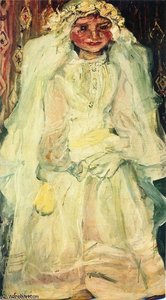
Retrato de Chaim Soutine

Pinturas de Chaim Soutine: As 100 mais famosas, sob o olhar de uma galeria

Atualizado em Outubro 2026 · classificado pela nossa pontuação de popularidade (pesquisas, visitas e pedidos de cada obra) · 118 obras de Chaim Soutine em nosso catálogo

Em resumo

Aos olhos da galeria, a pintura mais famosa de Chaim Soutine é Chicken Hanging in Front of a Brick Wall (1924), cuja obra original está exposta no Kunstmuseum Bern, em Berna. O Pássaro Pendurado (1925) e Suburban Landscape with Red Houses (1917) completam o trio que todos reconhecem. Dos 118 trabalhos de Chaim Soutine em nosso catálogo, a galeria apresenta abaixo as 100 obras mais famosas, cada uma original, com seu ano, seu museu e o que a torna única.

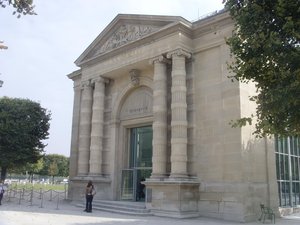
1893 – 1943, Smilavichy Expressionism Mais obras: Musée de l'Orangerie

As 10 principais pinturas de Chaim Soutine na galeria

2
O Pássaro Pendurado (1925) de Chaim Soutine

O Pássaro Pendurado

1925 · Óleo sobre tela · Ohara Museum of Art, Kurashiki

Uma Visão Sobre o Trabalho de Chaim Soutine: Uma Jornada pela Expressão e pelo Surrealismo Chaim Soutine (1893-1943), um artista russo que encontrou seu lar na França, permanece uma figura fascinante no mundo da arte moderna. Sua obra é marcada por uma intensidade emocional rara, uma busca constante pela beleza bruta e uma habilidade excepcional em capturar a essência do movimento humano e natural. Este artigo explora o universo artístico…

3
Suburban Landscape with Red Houses (1917) de Chaim Soutine

Suburban Landscape with Red Houses

1917 · Oil On Canvas

In the turbulent landscape of early 20th-century modernism, few voices resonate with as much raw, visceral energy as that of Chaim Soutine. His 1917 masterpiece, Suburban Landscape with Red Houses, serves as a breathtaking window into the heart of Expressionism. This is not merely a depiction of a quiet neighborhood; it is an emotional upheaval captured on canvas. The painting invites the viewer into a world where the boundaries between…

4
Girl in Red (1919) de Chaim Soutine

Girl in Red

1919 · Oil

A woman sits, draped in a heavy shade of red. The color is thick, a visceral weight of pigment that seems to pulse against the surface. She is seated upon a chair, her hands resting upon its back, while a smaller chair sits in the distance, a silent companion in the room. A handbag lies near her feet, a solitary object in a space defined by shadow. Her face remains…

5
Portrait of a Child (1937) de Chaim Soutine

Portrait of a Child

1937 · Oil

In this intimate work, titled Portrait of a Child, the artist Chaim Soutine turns his gaze toward the quiet vulnerability of youth. Created about 1937, the painting presents a portrait of a young child, capturing a moment of profound stillness. There is a certain weight to the subject's presence, a sense of being caught in a private moment of thought.

7
Beef and calf's head (1923) de Chaim Soutine

Beef and calf's head

1923 · Oil On Canvas · Musée de l'Orangerie, Paris

The composition is dominated by a large, central mass of meat that occupies most of the frame. To the left, a severed animal head is positioned within the arrangement. The color palette relies on highly saturated, warm tones, specifically crimson, vermilion, and ochre, which contrast against dark, murky browns and blacks in the background. Thick, gestural lines create a sense of movement across the surface. The shapes are organic and…

8
The Gipsy (1926) de Chaim Soutine

The Gipsy

1926 · Oil On Canvas · Statens Museum For Kunst, Copenhague

The Gipsy by Chaim Soutine, created about 1926, is a centered, bust-length portrait of a single figure. The subject possesses dark hair and directs the gaze slightly off-center rather than toward the viewer. This figure is positioned against a dark, indistinct background that lacks measurable depth, which focuses the attention entirely on the person. A saturated red scarf is wrapped around the neck, providing a sharp contrast to the surrounding…

9
Return from School After the Storm de Chaim Soutine

Return from School After the Storm

Oil

Two children navigate a dirt path through an open field, their figures positioned closely as they walk under a heavy, cloud-scattered sky. The scene captures a moment of transition, where the aftermath of a storm leaves a sense of stillness in the air. In the distance, a solitary figure moves away from the pair, adding a layer of quiet isolation to the natural setting. The composition focuses on the relationship…

Pinturas de Chaim Soutine, classificadas de 11 a 100

11Still Life with Fowl [Nature Morte à La Volaille] (1918) de Chaim SoutineStill Life with Fowl [Nature Morte à La Volaille]1918 · Nagoya City Art Museum 12Self-Portrait (1916) de Chaim SoutineSelf-Portrait1916 · Museu Hermitage 13The big altar boy (1925) de Chaim SoutineThe big altar boy1925 · Centre Pompidou 14Woman in Red Blouse (1919) de Chaim SoutineWoman in Red Blouse1919 · Metropolitan Museum of Art 15Portrait of Moise Kisling (1920) de Chaim SoutinePortrait of Moise Kisling1920 16Woman in a Blue Dress (1924) de Chaim SoutineWoman in a Blue Dress1924 · Musée d’Art Moderne de la Ville de Paris 17Young Woman in a White Blouse (1923) de Chaim SoutineYoung Woman in a White Blouse1923 · Courtauld Gallery 18Seated Woman (1923) de Chaim SoutineSeated Woman1923 · Cleveland Museum of Art 19Pastry Chef (1923) de Chaim SoutinePastry Chef1923 20Servant Girl in Blue (1934) de Chaim SoutineServant Girl in Blue1934 21Man with Horse (1920) de Chaim SoutineMan with Horse1920 · Metropolitan Museum of Art 22Still Life with Violin, Bread, and Fish (1922) de Chaim SoutineStill Life with Violin, Bread, and Fish1922 · Kunstmuseum Basel 23Duck on Blue Background (1925) de Chaim SoutineDuck on Blue Background1925 · Staatliche Kunsthalle Karlsruhe 24Little Girl in Blue (1935) de Chaim SoutineLittle Girl in Blue1935 · Kunstmuseum Bern 25Dead Fowl (1926) de Chaim SoutineDead Fowl1926 · Art Institute of Chicago 26untitled (8824) de Chaim Soutineuntitled (8824) 27The Table (1919) de Chaim SoutineThe Table1919 · Musée de l'Orangerie 28The Turkey (1925) de Chaim SoutineThe Turkey1925 · Musée de l'Orangerie 29Landscape de Chaim SoutineLandscapeMuseu de Israel 30The Child de Chaim SoutineThe Child 31untitled (4004) de Chaim Soutineuntitled (4004) 32Apples (1917) de Chaim SoutineApples1917 · Metropolitan Museum of Art 33Self Portrait with Beard (1917) de Chaim SoutineSelf Portrait with Beard1917 34Self Portrait by Curtain (1917) de Chaim SoutineSelf Portrait by Curtain1917 35The Plane Trees at Céret (1920) de Chaim SoutineThe Plane Trees at Céret1920 36Vase of Flowers (1918) de Chaim SoutineVase of Flowers1918 · Musée d’Unterlinden 37Landscape with Flight of Stairs (1922) de Chaim SoutineLandscape with Flight of Stairs1922 · National Gallery of Ireland 38Hill in Céret (1921) de Chaim SoutineHill in Céret1921 · Museu de Israel 39View of Céret (1921) de Chaim SoutineView of Céret1921 · Cincinnati Art Museum 40Landscape with character (1918) de Chaim SoutineLandscape with character1918 · Musée de l'Orangerie 41The Houses (1920) de Chaim SoutineThe Houses1920 · Musée de l'Orangerie 42Landscape at Ceret (1918) de Chaim SoutineLandscape at Ceret1918 · Fine Arts Museums of San Francisco 43Still Life with Fish (1920) de Chaim SoutineStill Life with Fish1920 · Metropolitan Museum of Art 44Chemin de la Fontaine des Tins at Céret (1920) de Chaim SoutineChemin de la Fontaine des Tins at Céret1920 45Steeple of Saint-Pierre at Céret (1922) de Chaim SoutineSteeple of Saint-Pierre at Céret1922 46Houses at Ceret (1920) de Chaim SoutineHouses at Ceret1920 47View of Ceret (1921) de Chaim SoutineView of Ceret1921 48Ceret Landscape (1920) de Chaim SoutineCeret Landscape1920 49Self Portrait (1918) de Chaim SoutineSelf Portrait1918 50A Fille de Ferme (1919) de Chaim SoutineA Fille de Ferme1919 · Nagoya City Art Museum 51Portrait of a Boy (1928) de Chaim SoutinePortrait of a Boy1928 · Worcester Art Museum 52Calf and Red Curtain (1924) de Chaim SoutineCalf and Red Curtain1924 · Museu de Israel 53Still Life with Rayfish (1923) de Chaim SoutineStill Life with Rayfish1923 · Cleveland Museum of Art 54The Chicken (1926) de Chaim SoutineThe Chicken1926 · Museum of Fine Arts 55The Village (1923) de Chaim SoutineThe Village1923 · Musée de l'Orangerie 56Landscape at Cagnes (1923) de Chaim SoutineLandscape at Cagnes1923 · Art Institute of Chicago 57Dead fowl, (1924) de Chaim SoutineDead fowl,1924 58(Carcass of beef) Minneapolis Institute of Arts (1926) de Chaim Soutine(Carcass of beef) Minneapolis Institute of Arts1926 · Minneapolis Institute of Art 59Gorge de Loup-sur-Vence (1923) de Chaim SoutineGorge de Loup-sur-Vence1923 · Scottish National Gallery of Modern Art 60Houses of Cagnes (1925) de Chaim SoutineHouses of Cagnes1925 61The White House (1933) de Chaim SoutineThe White House1933 · Musée de l'Orangerie 62The Alley of Trees (1935) de Chaim SoutineThe Alley of Trees1935 · Musée de Grenoble 63Woman in Profile (Portrait of Madame Tennent) (1937) de Chaim SoutineWoman in Profile (Portrait of Madame Tennent)1937 64Landscape at Céret [Paysage à Céret] (1922) de Chaim SoutineLandscape at Céret [Paysage à Céret]1922 · Nagoya City Art Museum 65The old mill de Chaim SoutineThe old mill 66Landscape with trees in the wind (1919) de Chaim SoutineLandscape with trees in the wind1919 · The Ema Klabin House Museum 67Windy Day, Auxerre de Chaim SoutineWindy Day, AuxerreThe Phillips Collection 68Jeune Servante (Waiting Maid, also known as La Soubrette) (1933) de Chaim SoutineJeune Servante (Waiting Maid, also known as La Soubrette)1933 · Ben Uri Gallery and Museum 69The Pheasant de Chaim SoutineThe PheasantThe Phillips Collection 70Woman in Profile de Chaim SoutineWoman in ProfileThe Phillips Collection 71Return from School After the Storm de Chaim SoutineReturn from School After the StormThe Phillips Collection 72Landscape of Gréolières de Chaim SoutineLandscape of Gréolières 73The Artist's Workshop in the City of Falguière de Chaim SoutineThe Artist's Workshop in the City of Falguière 74The Falguière City de Chaim SoutineThe Falguière City 75Homes in a Landscape de Chaim SoutineHomes in a Landscape 76untitled (7655) de Chaim Soutineuntitled (7655) 77untitled (9695) de Chaim Soutineuntitled (9695) 78untitled (7349) de Chaim Soutineuntitled (7349) 79untitled (8701) de Chaim Soutineuntitled (8701) 80untitled (2675) de Chaim Soutineuntitled (2675) 81untitled (4171) de Chaim Soutineuntitled (4171) 82untitled (1043) de Chaim Soutineuntitled (1043) 83untitled (1362) de Chaim Soutineuntitled (1362) 84untitled (7544) de Chaim Soutineuntitled (7544) 85untitled (4036) de Chaim Soutineuntitled (4036) 86untitled (484) de Chaim Soutineuntitled (484) 87untitled (1818) de Chaim Soutineuntitled (1818) 88untitled (7142) de Chaim Soutineuntitled (7142) 89untitled (2412) de Chaim Soutineuntitled (2412) 90untitled (3452) de Chaim Soutineuntitled (3452) 91untitled (2795) de Chaim Soutineuntitled (2795) 92untitled (7502) de Chaim Soutineuntitled (7502) 93untitled (2684) de Chaim Soutineuntitled (2684) 94untitled (2219) de Chaim Soutineuntitled (2219) 95untitled (5106) de Chaim Soutineuntitled (5106) 96untitled (80) de Chaim Soutineuntitled (80) 97untitled (3865) de Chaim Soutineuntitled (3865) 98untitled (7795) de Chaim Soutineuntitled (7795) 99untitled (1693) de Chaim Soutineuntitled (1693) 100untitled (5980) de Chaim Soutineuntitled (5980)

Pinturas famosas de Chaim Soutine, período por período

Os temas que cativaram o olhar de Chaim Soutine

Os quatro temas que mais se repetem nestas obras originais, cada um com o seu melhor exemplo.

Os museus que guardam os originais de Chaim Soutine

Os 8 museus que detêm a maioria das pinturas desta página.

Museu Cidade Obras de Chaim Soutine Pinturas desta lista
Musée de l'Orangerie, ParisMusée de l'Orangerie Paris 9 Beef and calf's head, The Table, The Turkey
Metropolitan Museum of Art, Nova YorkMetropolitan Museum of Art Nova York 7 Woman in Red Blouse, Man with Horse, Apples
The Phillips Collection, Washington, D.C.The Phillips Collection Washington, D.C. 4 Windy Day, Auxerre, The Pheasant, Woman in Profile
Nagoya City Art Museum, NagoyaNagoya City Art Museum Nagoya 3 Still Life with Fowl [Nature Morte à La Volaille], A Fille de Ferme, Landscape at Céret [Paysage à Céret]
Museu de Israel, JerusalémMuseu de Israel Jerusalém 3 Landscape, Hill in Céret, Calf and Red Curtain
Kunstmuseum Bern, BernaKunstmuseum Bern Berna 2 Chicken Hanging in Front of a Brick Wall, Little Girl in Blue
Cleveland Museum of Art, ClevelandCleveland Museum of Art Cleveland 2 Seated Woman, Still Life with Rayfish
Art Institute of Chicago, ChicagoArt Institute of Chicago Chicago 2 Dead Fowl, Landscape at Cagnes

Chaim Soutine, uma pintura emblemática por década

Obras por década

Escolha uma década para ver a obra original que a define.

Pinturas de Chaim Soutine: a galeria responde

Qual pintura de Chaim Soutine é a mais famosa de todas?Revelar a resposta

Chicken Hanging in Front of a Brick Wall (1924), Kunstmuseum Bern, Berna. O Pássaro Pendurado (1925) e Suburban Landscape with Red Houses (1917) vêm a seguir.

Qual era a idade de Chaim Soutine ao concluir Chicken Hanging in Front of a Brick Wall?Revelar a resposta

31 anos: Chicken Hanging in Front of a Brick Wall data de 1924, e Chaim Soutine nasceu em 1893.

Quais são as 10 principais pinturas de Chaim Soutine?Revelar a resposta

Chicken Hanging in Front of a Brick Wall, O Pássaro Pendurado, Suburban Landscape with Red Houses, Girl in Red, Portrait of a Child, Untitled (1411), Beef and calf's head, The Gipsy, Return from School After the Storm e Ceret Lanscape. O ranking acima apresenta o ano e o museu de cada uma.

Quantas obras Chaim Soutine criou?Revelar a resposta

Nosso catálogo contém 118 obras de Chaim Soutine, datadas de 1916 a 1937.

Onde estão expostos os originais mais famosos de Chaim Soutine?Revelar a resposta

Principalmente em Musée de l'Orangerie (Paris), Metropolitan Museum of Art (Nova York) e The Phillips Collection (Washington, D.C.). A tabela de museus acima lista todos eles.

Quando é que Chaim Soutine criou as suas pinturas mais famosas?Revelar a resposta

Em 1920s: 38 das 100 obras nesta página foram feitas então, sendo Chicken Hanging in Front of a Brick Wall delas.

Quais são as obras mais famosas de Chaim Soutine no início e no fim de sua carreira?Revelar a resposta

Nesta página, a mais antiga é Self-Portrait (1916) e a mais recente é Portrait of a Child (1937).

Quais temas Chaim Soutine mais explorou?Revelar a resposta

Portrait (5), Meat (4) e Woman (4), entre as 100 obras nesta página.

Em qual técnica Chaim Soutine mais trabalhou?Revelar a resposta

Oil On Canvas, para 15 das 100 obras nesta página.

Com qual movimento Chaim Soutine está associado(a)?Revelar a resposta

Expressionism, a julgar pelos originais nesta página.

Quais obras originais de Chaim Soutine o Musée de l'Orangerie possui?Revelar a resposta

Beef and calf's head, The Table e The Turkey: o Musée de l'Orangerie, Paris detém 7 das obras desta página.

Posso ter uma pintura de Chaim Soutine reproduzida à mão?Revelar a resposta

Sim, como uma reprodução: a obra original permanece no seu museu, mas qualquer pintura desta página pode ser pintada à mão para você, feita sob encomenda uma a uma, a partir da própria página da pintura.

Chaim Soutine: o artista

A Life Forged in Turmoil: The World of Chaim Soutine

Chaim Soutine, a name synonymous with raw emotion and turbulent landscapes, was born into a world of profound hardship in Smilovichi, a small Jewish shtetl near Minsk, Russia (present-day Belarus) on January 13, 1893. His early life was steeped in poverty and the constraints of his Orthodox upbringing—a formative experience that would indelibly shape his artistic vision. Despite being the tenth child of a poor tailor, Soutine’s innate talent for drawing blossomed amidst these limitations, hinting at the passionate intensity he would later unleash on canvas. Formal training at an art academy in Vilna (now Vilnius) from 1910 to 1913 provided him with foundational skills, but it was his emigration to Paris in 1913 that proved truly transformative. Enrolling at the École des Beaux-Arts under Fernand Cormon, Soutine found himself immersed in a vibrant artistic community—yet he remained largely outside its prevailing trends, forging an intensely personal and unconventional path. The initial years in Paris were marked by extreme poverty, a struggle mirroring the emotional turbulence simmering beneath his paintings. This period of hardship, however, fueled his creative fire, forcing him to distill his experiences into powerful visual statements.

An Expressionist Apart: Style and Influences

While often categorized as an Expressionist, reducing Soutine solely to this label feels reductive. His style was a remarkably individual synthesis—a potent blend of traditional European painting techniques, particularly those of the Dutch Masters like Rembrandt and Chardin, and the Realism of Courbet—filtered through a lens of raw emotional intensity. He didn’t merely imitate these masters; he absorbed their compositional strategies and masterful use of light and shadow, then violently reinterpreted them to convey his own inner world. Bold colors – often applied with thick impasto, a textured application of paint that gives his canvases a palpable physicality – and agitated brushwork are hallmarks of his style. Soutine wasn’t interested in precise representation; he sought to capture the *essence* of his subjects—their emotional weight, their psychological state—rather than simply depicting them realistically. Landscapes, portraits, and still lifes became his primary vehicles for this exploration, each imbued with a sense of unease, longing, or even outright turmoil. Recurring themes like food and animals – often rendered in unsettling detail – reflected both personal experiences and the Jewish heritage that profoundly influenced his worldview. His work wasn’t about beauty; it was about confronting the complexities and contradictions of human existence.

Development and Defining Works

Soutine's artistic development unfolded through distinct periods, each marked by a shift in style and subject matter. The early Parisian years (1913-1917) were characterized by experimentation and struggle—a time when he wrestled with his voice amidst financial hardship. He sought inspiration from the works of artists like Van Gogh, whose expressive use of color and brushwork resonated deeply with Soutine’s own desire to convey raw emotion. The period spent in Céret between 1919 and 1922 proved crucial. Surrounded by the dramatic landscapes of southern France—the rugged cliffs, the swirling skies, the vibrant colors – he produced many of his most celebrated works. These paintings are characterized by an almost feverish energy, with sweeping brushstrokes that distort forms and create a sense of movement and instability. Trees, cliffs, and fields become swirling masses of paint, reflecting not just what Soutine *saw* but how he *felt* in their presence. His portraits, too, stand apart for their psychological depth—often depicting working-class individuals with a raw honesty that challenged conventional portraiture, revealing the dignity and vulnerability of his subjects. Notable works from this period include studies related to “The Dance of Life,” alongside numerous landscapes capturing the essence of Céret, and poignant portraits of Russian émigrés in Paris.

Recognition, Legacy, and Lasting Impact

Despite facing initial skepticism and limited recognition during his lifetime, Chaim Soutine’s work gradually gained prominence. The art dealer Leopold Zborowski played a pivotal role in promoting Soutine's work and securing his financial stability, recognizing the unique power of his vision. Initial critical reception was mixed, but his reputation steadily grew over time. His expressive use of paint and emotional intensity profoundly influenced later artists, including Willem de Kooning and Francis Bacon, who saw in Soutine a kindred spirit—an artist willing to push the boundaries of representation in pursuit of authentic expression. Today, Chaim Soutine is rightfully recognized as a major figure in Expressionism and a significant contributor to 20th-century art. His works are held in prestigious museums worldwide – including the Art Institute of Chicago, the Hermitage Museum in St. Petersburg, The Museum of Modern Art in New York, the Tate Gallery in London, and the Musée de l’Orangerie in Paris – testaments to his enduring legacy. He represents a crucial bridge between traditional European painting techniques and the emerging forms of Abstract Expressionism, prioritizing emotional expression over objective representation and developing an artistic voice that transcended typical Expressionist concerns. His innovative style paved the way for future generations of artists seeking to explore the depths of human emotion through the power of paint.

Todas as 118 obras de Chaim Soutine →