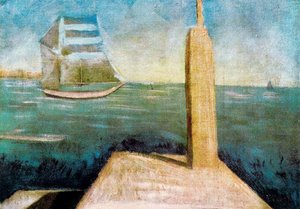
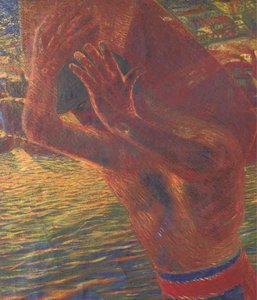
Retrato de Carlo Carrà

As 100 Pinturas Mais Famosas de Carlo Carrà, uma Seleção da Galeria

Atualizado em Novembro 2026 · classificado pela nossa pontuação de popularidade (pesquisas, visitas e pedidos de cada obra) · 123 obras de Carlo Carrà em nosso catálogo

Em resumo

De todas as obras originais deixadas por Carlo Carrà, a mais famosa é Florence, da coleção do MAGA - Museo Arte Gallarate, em Gallarate. Logo atrás vêm Partindo do Teatro (1910) e Manifestazione Interventista. Nosso catálogo contém 123 obras de Carlo Carrà; a galeria preservou as 100 que o mundo mais admira, cada uma exibida com sua data, seu museu e sua história.

1881 – 1966, Quargnento Futurist expressionismo italiano Mais obras: MAGA - Museo Arte Gallarate

As 10 principais pinturas de Carlo Carrà: a escolha da galeria

1
Florence de Carlo Carrà

Florence

Oil On Canvas · MAGA - Museo Arte Gallarate, Gallarate

To gaze upon this depiction of Florence is to step through a veil of time, into a moment suspended between vibrant history and quiet contemplation. Carlo Carrà’s vision captures more than just the magnificent dome of Santa Maria del Fiore; it encapsulates the very soul of Florentine artistry—a spirit rooted in the rigorous beauty of the Quattrocento. The composition itself feels like an archaeological discovery rendered in paint, presenting the…

2
Partindo do Teatro (1910) de Carlo Carrà

Partindo do Teatro

1910 · Óleo sobre tela · Estorick Collection of Modern Italian Art, Londres

Uma Jornada pela Cinzenta da Revolução Futurista: Leaving the Theater de Carlo Carrà A pintura italiana de início de século XX testemunhou uma explosão de ideias e estilos que desafiaram profundamente as normas estabelecidas. Entre os artistas mais influentes dessa época, Carlo Carrà se destaca como um pioneiro da estética futurista, um movimento que buscava romper com o passado artístico em favor de uma visão dinâmica e inovadora do mundo…

3
Manifestazione Interventista de Carlo Carrà

Manifestazione Interventista

Collage

Manifestazione Interventista is a work by Carlo Carrà, an artist who emerged from the quietude of Quargnento, Italy. Born on February 11, 1881, his hands first learned the weight of materials through an apprenticeship as a mural decorator. This early contact with the physical substance of art shaped a vision that would eventually help define the Futurist movement. He was a leading figure of this movement, a force that sought…

4
Funeral of the Anarchist Galli de Carlo Carrà

Funeral of the Anarchist Galli

The painting Funeral of the Anarchist Galli by Carlo Carrà is a quintessential representation of the Futurist movement, which emerged in Italy during the early 20th century. This artwork is a testament to the artist's unique style and his ability to capture the essence of the movement. Futurism Style and Elements The painting depicts a chaotic scene of a funeral procession, with a group of people gathered around a horse-drawn…

10
Untitled (1915) de Carlo Carrà

Untitled

1915 · Oil On Board · Museu de Arte Moderna do Rio de Janeiro, Rio de Janeiro

The painting depicts a man's torso, which is rendered as an incomplete figure. The figure is positioned against a muted brown background, creating a sense of contrast. The man appears to be naked from the waist down, giving him a strange appearance. The subject is depicted without facial features. This work is an oil on board.

A seleção de Carlo Carrà continua, de 11 a 100

11Pettinarsi de Carlo CarràPettinarsi 12Dopo il Tramonto de Carlo CarràDopo il Tramonto 13Marina di Carrara de Carlo CarràMarina di Carrara 14Il Mulino di Sant'Anna de Carlo CarràIl Mulino di Sant'Anna 15Notturno A Piazza Beccaria di Milano de Carlo CarràNotturno A Piazza Beccaria di Milano 16Ritratto di Marinetti de Carlo CarràRitratto di Marinetti 17Portrait of Giovanni Ballerio (1928) de Carlo CarràPortrait of Giovanni Ballerio1928 · Ca’ Granda – Ospedale Maggiore Policlinico 18Simultaneità-La Donna al Balcone de Carlo CarràSimultaneità-La Donna al Balcone 19The Horseman of the Apocalipse de Carlo CarràThe Horseman of the ApocalipseArt Institute of Chicago 20Engineer's Lover de Carlo CarràEngineer's Lover 21Filippo Tommaso Marinetti (1910) de Carlo CarràFilippo Tommaso Marinetti1910 22Don Chisciotte cavaliere de Carlo CarràDon Chisciotte cavaliere 23Scomposizione di bottiglia II de Carlo CarràScomposizione di bottiglia II 24Festival de Carlo CarràFestival 25Il Bersaglio de Carlo CarràIl Bersaglio 26Horse and rider de Carlo CarràHorse and rider 27Penelope (1917) de Carlo CarràPenelope1917 28The Galleria in Milan (1912) de Carlo CarràThe Galleria in Milan1912 29Hermaphroditic Idol (1917) de Carlo CarràHermaphroditic Idol1917 30Pursuit (1915) de Carlo CarràPursuit1915 · Peggy Guggenheim Collection 31The Red House (1927) de Carlo CarràThe Red House1927 32Mother and Son (1917) de Carlo CarràMother and Son1917 33Untitled de Carlo CarràUntitled 34Natura morta de Carlo CarràNatura morta 35Marina 2 de Carlo CarràMarina 2 36Venere anadiomene de Carlo CarràVenere anadiomene 37Flowers and fruits de Carlo CarràFlowers and fruits 38La loggia de Carlo CarràLa loggia 39MARINA 4 de Carlo CarràMARINA 4 40Marina 1 de Carlo CarràMarina 1 41Marina a Castiglioncello de Carlo CarràMarina a Castiglioncello 42Veliero e Molo de Carlo CarràVeliero e Molo 43Marina de Carlo CarràMarina 44Marina e capanno de Carlo CarràMarina e capanno 45MARINA 5 de Carlo CarràMARINA 5 46Nudo Accovacciato de Carlo CarràNudo Accovacciato 47Lo squero di San Trovaso de Carlo CarràLo squero di San Trovaso 48Marina 3 de Carlo CarràMarina 3 49Fiumara de Carlo CarràFiumara 50Paesaggio de Carlo CarràPaesaggio 51Le vele de Carlo CarràLe vele 52Saltimbanks de Carlo CarràSaltimbanks 53Death nature with fish de Carlo CarràDeath nature with fish 54Pagliai de Carlo CarràPagliai 55Mare de Carlo CarràMare 56Winter Lake de Carlo CarràWinter Lake 57Solitudine de Carlo CarràSolitudine 58Paesaggio a Forte dei Marmi de Carlo CarràPaesaggio a Forte dei Marmi 59Marina con veliero e barca de Carlo CarràMarina con veliero e barca 60Lido al Forte dei Marmi de Carlo CarràLido al Forte dei Marmi 61Inverno all'Aprica de Carlo CarràInverno all'Aprica 62MARINA 7 de Carlo CarràMARINA 7 63Solitudine 1 de Carlo CarràSolitudine 1 64Natura morta 1 de Carlo CarràNatura morta 1 65Estate de Carlo CarràEstate 66Vasi sul davanzale de Carlo CarràVasi sul davanzale 67LA CHIESA ROMANICA de Carlo CarràLA CHIESA ROMANICA 68Sera sul Lago de Carlo CarràSera sul Lago 69Canal in Venice de Carlo CarràCanal in Venice 70Autunno al mare de Carlo CarràAutunno al mare 71Vele Nel Porto de Carlo CarràVele Nel Porto 72MARINA 6 de Carlo CarràMARINA 6 73Le Figlie di Loth de Carlo CarràLe Figlie di Loth 74Bagnanti de Carlo CarràBagnanti 75Antigrazioso de Carlo CarràAntigrazioso 76Nuotatrici de Carlo CarràNuotatrici 77Drunk Gentlemen de Carlo CarràDrunk Gentlemen 78Lo scaricatore di porto de Carlo CarràLo scaricatore di porto 79La Musa Metafisica de Carlo CarràLa Musa Metafisica 80CONTRASTI de Carlo CarràCONTRASTI 81Mio Figlio de Carlo CarràMio Figlio 82Nuotatori de Carlo CarràNuotatori 83LACERBA E BOTTIGLIA de Carlo CarràLACERBA E BOTTIGLIA 84L'Ovale delle Apparizioni de Carlo CarràL'Ovale delle Apparizioni 85Casa Abbandonata de Carlo CarràCasa Abbandonata 86Still Life with Soda Syphon de Carlo CarràStill Life with Soda Syphon 87The Mouth of River Cinquale de Carlo CarràThe Mouth of River Cinquale 88Ídolo hermafrodita de Carlo CarràÍdolo hermafrodita 89Meriggio d'Ottobre de Carlo CarràMeriggio d'Ottobre 90The Chase de Carlo CarràThe Chase 91Il Faro de Carlo CarràIl Faro 92Ritmi e Spazialità de Carlo CarràRitmi e Spazialità 93La Casa dell'Amore de Carlo CarràLa Casa dell'Amore 94Sobbalzi di Carrozza de Carlo CarràSobbalzi di Carrozza 95Omaggio a Betuda Futurista de Carlo CarràOmaggio a Betuda Futurista 96Angolo Rustico de Carlo CarràAngolo Rustico 97Salida del teatro de Carlo CarràSalida del teatro 98Mattino al Mare de Carlo CarràMattino al Mare 99Natura Morta con Squadra de Carlo CarràNatura Morta con Squadra 100La Segheria dei Marmi de Carlo CarràLa Segheria dei Marmi

Pinturas famosas de Carlo Carrà, período por período

Os temas que cativaram o olhar de Carlo Carrà

Os quatro temas que mais se repetem nestas obras originais, cada um com o seu melhor exemplo.

Os museus que guardam os originais de Carlo Carrà

Os 6 museus que detêm a maioria das pinturas desta página.

Museus Cidade Obras de Carlo Carrà Pinturas desta lista
MAGA - Museo Arte Gallarate, GallarateMAGA - Museo Arte Gallarate Gallarate 1 Florence
Estorick Collection of Modern Italian Art, LondresEstorick Collection of Modern Italian Art Londres 1 Partindo do Teatro
Museu de Arte Moderna do Rio de Janeiro, Rio de JaneiroMuseu de Arte Moderna do Rio de Janeiro Rio de Janeiro 1 Untitled
Ca’ Granda – Ospedale Maggiore Policlinico, MilãoCa’ Granda – Ospedale Maggiore Policlinico Milão 1 Portrait of Giovanni Ballerio
Art Institute of Chicago, ChicagoArt Institute of Chicago Chicago 1 The Horseman of the Apocalipse
Peggy Guggenheim Collection, VenezaPeggy Guggenheim Collection Veneza 1 Pursuit

Carlo Carrà década a década: a obra original que define cada uma

Obras por década

Escolha uma década para ver a obra original que a define.

Perguntas de colecionadores sobre as pinturas de Carlo Carrà

Por qual obra Carlo Carrà é mais conhecido(a)?Revelar a resposta

Florence, MAGA - Museo Arte Gallarate, Gallarate. Partindo do Teatro (1910) e Manifestazione Interventista vêm a seguir.

Quais são as dez pinturas mais famosas de Carlo Carrà?Revelar a resposta

Florence, Partindo do Teatro, Manifestazione Interventista, Funeral of the Anarchist Galli, Barcaiolo, Ciò Che Mi Ha Detto Il Tram, A Pine near the Sea, The Drunken Gentleman, The Daughters of Lot, 3 e Untitled. O ranking acima apresenta o ano e o museu de cada uma.

Quantas pinturas Carlo Carrà deixou?Revelar a resposta

Nosso catálogo contém 123 obras de Carlo Carrà, datadas de 1910 a 1940.

Em quais museus estão expostas as obras-primas de Carlo Carrà?Revelar a resposta

Principalmente em MAGA - Museo Arte Gallarate (Gallarate), Estorick Collection of Modern Italian Art (Londres) e Museu de Arte Moderna do Rio de Janeiro (Rio de Janeiro). A tabela de museus acima lista todos eles.

Em que anos Carlo Carrà pintou as suas obras mais famosas?Revelar a resposta

Em 1910s: 9 das 100 obras nesta página foram feitas então, sendo Partindo do Teatro delas.

Quais são as primeiras e as últimas obras originais famosas de Carlo Carrà?Revelar a resposta

Nesta página, a mais antiga é Partindo do Teatro (1910) e a mais recente é The Daughters of Lot, 3 (1940).

Quais temas Carlo Carrà escolheu com mais frequência?Revelar a resposta

Sea (11), Abstracted (6) e Life (6), entre as 100 obras nesta página.

Qual técnica Carlo Carrà mais utilizou?Revelar a resposta

Oil On Canvas, para 4 das 100 obras nesta página.

A qual movimento artístico pertence Carlo Carrà?Revelar a resposta

Futurist expressionismo italiano, a julgar pelos originais nesta página.

Carlo Carrà: vida e obra

Early Life and the Seeds of Artistic Rebellion

Carlo Carrà, born in Quargnento near Alessandria, Italy, on February 11, 1881, embarked on a path diverging sharply from academic tradition. His youth was marked by necessity; at twelve years old, he left his family to apprentice as a mural decorator. This formative experience, steeped in the physicality of art-making and craftsmanship, indelibly shaped his artistic sensibilities. It wasn't merely applying paint—it was immersion into color, form, and visual communication. A sojourn to Paris at the turn of the century, decorating pavilions for the Exposition Universelle, exposed him to burgeoning currents of contemporary French art, a crucial awakening that broadened his horizons beyond Italian provincialism. This exposure was followed by a brief period in London, where he encountered exiled Italian anarchists—a political undercurrent subtly informing his early work with themes of social unrest and rebellion. Returning to Milan in 1901, Carrà honed his skills, eventually enrolling at the Brera Academy in 1906, studying under Cesare Tallone. Yet, even within the academy’s structure, a restless spirit persisted, yearning for artistic innovation.

Embracing Dynamism: The Futurist Years

The year 1910 proved pivotal. Carrà joined Umberto Boccioni, Luigi Russolo, and Giacomo Balla, signing the manifesto of the Futurist painters—a declaration irrevocably altering Italian art’s course. Futurism was a radical ideology, an explosive celebration of modernity, speed, technology, youth, and the machine age's relentless energy. It rejected the past, embracing dynamism and anticipating a future defined by progress. Carrà’s early Futurist works, such as The Funeral of the Anarchist Galli (1911) and Rhythms of Objects (1911), vividly embody these principles. The Funeral of the Anarchist Galli, a chaotic yet compelling depiction of grief and protest, isn’t merely representation but a visceral experience of movement and emotion. The fractured forms and jarring colors convey the raw energy of the crowd and disruptive political force. Rhythms of Objects further demonstrates his exploration of dynamism, breaking down everyday objects into fragmented shapes suggesting motion and transformation. These paintings weren't about *what* was depicted but *how* it was perceived—a revolutionary approach to representation. Carrà wasn’t just painting scenes; he attempted to capture the very essence of modern life in all its frenetic glory.

From Futurism to Metaphysics and Beyond

The fervor of Futurism waned for Carrà as World War I loomed, his artistic trajectory taking an unexpected turn. Around 1917, a profound shift occurred, influenced by his encounter with Giorgio de Chirico in Ferrara. De Chirico’s “Metaphysical Painting”—characterized by unsettling juxtapositions, eerie perspectives, and a dreamlike atmosphere—resonated deeply with Carrà. He began incorporating mannequin imagery into his work, as seen in The Daughters of Lot (1919), creating scenes both familiar and disturbing. This period marked a move away from Futurism’s outward dynamism toward an inward exploration of psychological states and existential anxieties. The 1920s and ’30s witnessed another evolution as Carrà turned to landscape painting. He developed a more atmospheric style, characterized by flattened perspectives and textured brushwork, exemplified in works like Morning by the Sea (1928). This wasn’t a rejection of earlier experimentation but an integration into a new visual language—a quieter, more contemplative approach to art.

Notable Artworks

Carrà's artistic legacy rests on several iconic pieces that exemplify his distinctive style and philosophical vision:
  • The Funeral of the Anarchist Galli (1911): A monumental Futurist canvas capturing the turbulent energy of a funeral procession.
  • Rhythms of Objects (1911): Demonstrates Carrà’s pioneering exploration of synaesthesia and his commitment to portraying movement as an integral element of visual experience.
  • The Daughters of Lot (1919): Represents Carrà's foray into Metaphysical Painting, utilizing unsettling imagery and dreamlike compositions to convey psychological depth.
  • Morning by the Sea (1928): Embodies Carrà’s mature landscape style—characterized by simplified forms and evocative textures—reflecting a contemplative engagement with nature.

Legacy and Historical Significance

Carlo Carrà stands as one of the most influential figures in Italian art history, shaping the trajectory of Futurist and Metaphysical Painting. His uncompromising pursuit of artistic innovation challenged conventions and paved the way for subsequent generations of artists to explore new expressive possibilities. He remains a testament to the transformative power of artistic experimentation and the enduring fascination with confronting existential questions through visual language.