Retrato de Carl Heinrich Bloch

As 65 Pinturas Mais Famosas de Carl Heinrich Bloch, Cada Uma Única

Atualizado em Outubro 2026 · classificado pela nossa pontuação de popularidade (pesquisas, visitas e pedidos de cada obra) · 65 obras de Carl Heinrich Bloch em nosso catálogo

Em resumo

Em uma Osteria Romana (1866) é a pintura de Carl Heinrich Bloch que mais atrai olhares; a obra original pertence ao Statens Museum For Kunst, Copenhague. Depois disso, o olhar recai sobre The Last Supper (1876) e Jesus Raises Lazarus from the Dead (1871). Entre as 65 obras de Carl Heinrich Bloch em nosso catálogo, estas 65 são as mais famosas, cada uma uma original única apresentada com o seu ano, o seu museu e a razão pela qual perdura.

1834 – 1890, Copenhaga Romantic realism Mais obras: Statens Museum For Kunst

As 10 principais pinturas de Carl Heinrich Bloch, sob o olhar da galeria

1
Em uma Osteria Romana (1866) de Carl Heinrich Bloch

Em uma Osteria Romana

1866 · Óleo sobre tela · Statens Museum For Kunst, Copenhague

Em meados do século XIX, um profundo fascínio pela calidez e vitalidade da cultura italiana varreu os círculos artísticos do Norte da Europa. A obra-prima de 1866 de Carl Heinrich Bloch, Em uma Osteria Romana, ergue-se como um testemunho deslumbrante desta era, oferecendo muito mais do que um mero registro da vida social. É uma janela para um mundo de convivialidade, onde as fronteiras entre o espectador e os sujeitos…

2
The Last Supper (1876) de Carl Heinrich Bloch

The Last Supper

1876 · Oil On Canvas

In this oil painting on canvas, twelve figures sit around a long, rectangular table within an enclosed room. Jesus occupies the center of the composition at the head of the table. The scene is illuminated by light entering from a window located on the right side of the frame. This light source casts shadows across the faces and clothing of the disciples, defining their physical forms. The background contains architectural…

4
Let the Little Children Come unto Me de Carl Heinrich Bloch

Let the Little Children Come unto Me

Oil

In this intimate scene, we find Jesus at the center of a gathering that feels both profound and deeply human. He is surrounded by children, some sitting upon the ground and others standing, all drawn toward him by an invisible pull of curiosity and reverence. There is a palpable sense of movement in the air, a gentle energy that arises from the children's attentive faces and the soft, expressive gestures…

5
Christ in Gethsemane (1875) de Carl Heinrich Bloch

Christ in Gethsemane

1875

The Artist: Carl Heinrich Bloch Carl Heinrich Bloch (1834-1890) was a renowned Danish painter, known for his religious and historical works. Born in Copenhagen, he studied at the Royal Danish Academy of Art under Wilhelm Marstrand. Later, he traveled to Italy, where he became acquainted with the work of Rembrandt, which greatly influenced his style. The Painting: 'Christ in Gethsemane' 'Christ in Gethsemane' is one of Bloch's most famous and…

6
Sermon on the Mount (1877) de Carl Heinrich Bloch

Sermon on the Mount

1877 · Oil On Canvas

In this work, titled Sermon on the Mount, we encounter a significant piece by the Danish painter Carl Bloch. Created around 1877, the painting belongs to a substantial body of work known as the Frederiksborg Castle commission. This series was specifically intended for the King's Oratory within Frederiksborg Castle, marking a period of profound creative focus for the artist.

7
The Twelve-Year-Old Jesus in the Temple (1869) de Carl Heinrich Bloch

The Twelve-Year-Old Jesus in the Temple

1869 · Oil On Copper

In The Twelve-Year-Old Jesus in the Temple, Carl Bloch captures a profound moment of discovery within the temple courts. This work, painted by Carl Bloch, illustrates the specific narrative found in the biblical passage Luke 2:41-52. It depicts the moment Mary and Joseph finally locate their son after a three-day search through Jerusalem. The scene focuses on the young Jesus, who is surrounded by a gathering of people within the…

8
The Meeting of Mary and Elizabeth (1866) de Carl Heinrich Bloch

The Meeting of Mary and Elizabeth

1866 · Oil On Canvas

In the quiet, luminous atmosphere of Carl Heinrich Bloch’s 1866 masterpiece, "The Meeting of Mary and Elizabeth," we are invited into a moment of profound spiritual significance. This painting captures the biblical Visitation, the sacred instant when Mary, carrying the unborn Jesus, encounters her cousin Elizabeth, who is pregnant with John the Baptist. The scene is far more than a mere historical reenactment; it is an intimate study of connection,…

9
The Denial of Peter de Carl Heinrich Bloch

The Denial of Peter

Oil On Copper

The Denial of Peter by the Danish artist Carl Heinrich Bloch captures a heavy, fractured moment from the Gospel of Luke. In this scene, Peter denies knowing Jesus three times. The air holds the weight of a prophecy fulfilled: the rooster's cry will soon pierce the silence, marking the moment Peter's words undo his devotion. It is a significant piece in the history of art, freezing the instant where human…

10
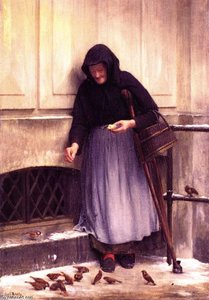
The Woman with the Sparrows (1886) de Carl Heinrich Bloch

The Woman with the Sparrows

1886

A woman sits by a window, her black dress absorbing the light. She wears a hooded shawl that frames a face turned toward a small, intimate miracle. Her hand rests upon the sill, a steady anchor in a world of movement. From her open palm, small birds descend. They are sparrows, seeking sustenance in the stillness of the room. A handbag rests nearby on the floor, a silent witness to…

Pinturas famosas de Carl Heinrich Bloch, números 11 a 65

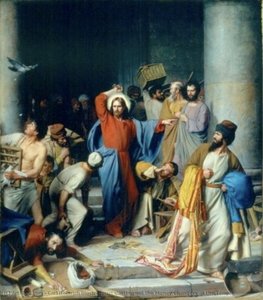
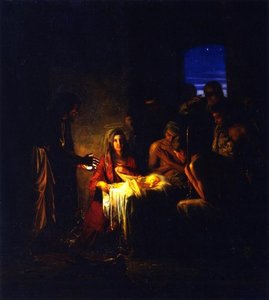
11Healing of the Blind Man (1871) de Carl Heinrich BlochHealing of the Blind Man1871 12A Fisherman from Sorrento, Italy (1860) de Carl Heinrich BlochA Fisherman from Sorrento, Italy1860 · Statens Museum For Kunst 13En gammel bondekone, der ser ud af et vindue (1874) de Carl Heinrich BlochEn gammel bondekone, der ser ud af et vindue1874 · Statens Museum For Kunst 14The Transfiguration (1872) de Carl Heinrich BlochThe Transfiguration1872 · Frederiksborg Palace 15A Fishwife (1875) de Carl Heinrich BlochA Fishwife1875 · Statens Museum For Kunst 16The Artist’s Parents, Mr. and Mrs. J. P. Bloch in Their Sitting Room (1855) de Carl Heinrich BlochThe Artist’s Parents, Mr. and Mrs. J. P. Bloch in Their Sitting Room1855 17The Daughter of Jairius (1863) de Carl Heinrich BlochThe Daughter of Jairius1863 · Statens Museum For Kunst 18Christ on the Cross (1870) de Carl Heinrich BlochChrist on the Cross1870 19Fishermen's families avaiting their return in an approsching storm. From the west coast of Jutland. (1858) de Carl Heinrich BlochFishermen's families avaiting their return in an approsching storm. From the west coast of Jutland.1858 · Hirschsprung Collection 20Two monks (1861) de Carl Heinrich BlochTwo monks1861 21Prometheus Unbound (1864) de Carl Heinrich BlochPrometheus Unbound1864 · Ribe Kunstmuseum 22The Artist's Wife, Alma Bloch, née Trepka (1868) de Carl Heinrich BlochThe Artist's Wife, Alma Bloch, née Trepka1868 · Statens Museum For Kunst 23A boy on a bench. (1871) de Carl Heinrich BlochA boy on a bench.1871 24The Temptation of Jesus (1868) de Carl Heinrich BlochThe Temptation of Jesus1868 25Two women talking (1874) de Carl Heinrich BlochTwo women talking1874 · Nivaagaards Malerisamling 26Still Life with Fish (1878) de Carl Heinrich BlochStill Life with Fish1878 · Statens Museum For Kunst 27A girl in white dress (1873) de Carl Heinrich BlochA girl in white dress1873 28Jesus Casting out the Money Changers at the Temple (1874) de Carl Heinrich BlochJesus Casting out the Money Changers at the Temple1874 29A Fransciscan monk (1873) de Carl Heinrich BlochA Fransciscan monk1873 30Reading lady (1882) de Carl Heinrich BlochReading lady1882 31Windy weather (1885) de Carl Heinrich BlochWindy weather1885 32Christ and the Sinner (1890) de Carl Heinrich BlochChrist and the Sinner1890 33Portrait of Clara Emilie Rose Bloch (1886) de Carl Heinrich BlochPortrait of Clara Emilie Rose Bloch1886 34A baker cooling off (1888) de Carl Heinrich BlochA baker cooling off1888 35A girl washing herself for carnival (1887) de Carl Heinrich BlochA girl washing herself for carnival1887 36Landscape from Hellebæk (1886) de Carl Heinrich BlochLandscape from Hellebæk1886 37Adoration of the Shepherds (1882) de Carl Heinrich BlochAdoration of the Shepherds1882 · Nationalmuseum 38En ung pige, der lugter til en rose (1889) de Carl Heinrich BlochEn ung pige, der lugter til en rose1889 · Statens Museum For Kunst 39Velhos (1874) de Carl Heinrich BlochVelhos1874 · Hirschsprung Collection 40Self Portrait (1886) de Carl Heinrich BlochSelf Portrait1886 41En forstyrret middagssøvn (1870) de Carl Heinrich BlochEn forstyrret middagssøvn1870 · Statens Museum For Kunst 42Evening at a moonlit lake. (1871) de Carl Heinrich BlochEvening at a moonlit lake.1871 43Massacre of the Innocents (1868) de Carl Heinrich BlochMassacre of the Innocents1868 44The Wedding at Cana (1870) de Carl Heinrich BlochThe Wedding at Cana1870 45Rear view of a writing man with a hat (1866) de Carl Heinrich BlochRear view of a writing man with a hat1866 46The Holy Night (1867) de Carl Heinrich BlochThe Holy Night1867 47The Resurrection (1873) de Carl Heinrich BlochThe Resurrection1873 48Christus Colsulator (1875) de Carl Heinrich BlochChristus Colsulator1875 49Jesus and the Samaritan Woman (1872) de Carl Heinrich BlochJesus and the Samaritan Woman1872 50Cleansing of the Temple (1874) de Carl Heinrich BlochCleansing of the Temple1874 51A Slaughterhouse in Hellebæk (1884) de Carl Heinrich BlochA Slaughterhouse in Hellebæk1884 · Statens Museum For Kunst 52A conversation between two fishermen, Hornbæk (1880) de Carl Heinrich BlochA conversation between two fishermen, Hornbæk1880 53The Shepherds and the Angel (1879) de Carl Heinrich BlochThe Shepherds and the Angel1879 54Landscape at Ellekilde in North Zealand. Sunset. (1889) de Carl Heinrich BlochLandscape at Ellekilde in North Zealand. Sunset.1889 · Statens Museum For Kunst 55Descent from the Cross (1886) de Carl Heinrich BlochDescent from the Cross1886 · Statens Museum For Kunst 56Stone beach shore (1889) de Carl Heinrich BlochStone beach shore1889 57View of the sea (1887) de Carl Heinrich BlochView of the sea1887 58Man in profile de Carl Heinrich BlochMan in profile 59Let's go for a Swim! de Carl Heinrich BlochLet's go for a Swim!Statens Museum For Kunst 60Surprise! de Carl Heinrich BlochSurprise! 61View of the Roman Campagna (preparatory study for To Munke, Aften) de Carl Heinrich BlochView of the Roman Campagna (preparatory study for To Munke, Aften) 62Temple ruins (from Paestum?) de Carl Heinrich BlochTemple ruins (from Paestum?) 63Samson and the Philistines (1863) de Carl Heinrich BlochSamson and the Philistines1863 · Statens Museum For Kunst 64Prometheus' Liberation (1864) de Carl Heinrich BlochPrometheus' Liberation1864 65Christian II in Prison at Sonderborg Castle (1871) de Carl Heinrich BlochChristian II in Prison at Sonderborg Castle1871 · Statens Museum For Kunst

Os temas que cativaram o olhar de Carl Heinrich Bloch

Os quatro temas que mais se repetem nestas obras originais, cada um com o seu melhor exemplo.

Os museus que guardam os originais de Carl Heinrich Bloch

Os 6 museus que detêm a maioria das pinturas desta página.

Museu Cidade Obras de Carl Heinrich Bloch Pinturas desta lista
Statens Museum For Kunst, CopenhagueStatens Museum For Kunst Copenhague 15 Em uma Osteria Romana, A Fisherman from Sorrento, Italy, En gammel bondekone, der ser ud af et vindue
Hirschsprung Collection, CopenhagueHirschsprung Collection Copenhague 2 Fishermen's families avaiting their return in an approsching storm. From the west coast of Jutland., Velhos
Frederiksborg Palace, HillerødFrederiksborg Palace Hillerød 1 The Transfiguration
Ribe Kunstmuseum, EsbjergRibe Kunstmuseum Esbjerg 1 Prometheus Unbound
Nivaagaards Malerisamling, NibeNivaagaards Malerisamling Nibe 1 Two women talking
Nationalmuseum, EstocolmoNationalmuseum Estocolmo 1 Adoration of the Shepherds

Carl Heinrich Bloch ao longo das décadas: uma obra original única para cada uma

Obras por década

Escolha uma década para ver a obra original que a define.

Pinturas de Carl Heinrich Bloch: perguntas para a galeria

Qual é a obra mais famosa de Carl Heinrich Bloch?Revelar a resposta

Em uma Osteria Romana (1866), Statens Museum For Kunst, Copenhague. The Last Supper (1876) e Jesus Raises Lazarus from the Dead (1871) vêm a seguir.

Com que idade Carl Heinrich Bloch criou Em uma Osteria Romana?Revelar a resposta

32 anos: Em uma Osteria Romana data de 1866, e Carl Heinrich Bloch nasceu em 1834.

Quais são as dez pinturas mais famosas de Carl Heinrich Bloch?Revelar a resposta

Em uma Osteria Romana, The Last Supper, Jesus Raises Lazarus from the Dead, Let the Little Children Come unto Me, Christ in Gethsemane, Sermon on the Mount, The Twelve-Year-Old Jesus in the Temple, The Meeting of Mary and Elizabeth, The Denial of Peter e The Woman with the Sparrows. O ranking acima apresenta o ano e o museu de cada uma.

Quantas obras de Carl Heinrich Bloch são conhecidas?Revelar a resposta

Nosso catálogo contém 65 obras de Carl Heinrich Bloch, datadas de 1855 a 1890.

Onde se pode ver os originais mais famosos de Carl Heinrich Bloch?Revelar a resposta

Principalmente em Statens Museum For Kunst (Copenhague), Hirschsprung Collection (Copenhague) e Frederiksborg Palace (Hillerød). A tabela de museus acima lista todos eles.

Em que período Carl Heinrich Bloch criou as suas pinturas mais conhecidas?Revelar a resposta

Em 1870s: 25 das 65 obras nesta página foram feitas então, sendo The Last Supper delas.

Qual pintura famosa de Carl Heinrich Bloch é a mais antiga e qual é a mais recente?Revelar a resposta

Nesta página, a mais antiga é The Artist’s Parents, Mr. and Mrs. J. P. Bloch in Their Sitting Room (1855) e a mais recente é Christ and the Sinner (1890).

Quais temas Carl Heinrich Bloch preferia?Revelar a resposta

People (8), Woman (7) e Jesus (5), entre as 65 obras nesta página.

Com quais materiais Carl Heinrich Bloch mais pintou?Revelar a resposta

Oil On Canvas, para 12 das 65 obras nesta página.

A qual movimento pertence a obra de Carl Heinrich Bloch?Revelar a resposta

Romantic realism, a julgar pelos originais nesta página.

Quais originais de Carl Heinrich Bloch posso ver no Statens Museum For Kunst?Revelar a resposta

Em uma Osteria Romana, A Fisherman from Sorrento, Italy e En gammel bondekone, der ser ud af et vindue: o Statens Museum For Kunst, Copenhague detém 15 das obras desta página.

Onde posso encomendar uma reprodução pintada à mão de Carl Heinrich Bloch?Revelar a resposta

Sim, como uma reprodução: a obra original permanece no seu museu, mas qualquer pintura desta página pode ser pintada à mão para você, feita sob encomenda uma a uma, a partir da própria página da pintura.

Carl Heinrich Bloch: um retrato do artista

Uma Vida Dedicada à Arte e à Fé

Carl Heinrich Bloch, nascido em Copenhague em 23 de maio de 1834, foi um pintor dinamarquês cujo nome se tornou sinônimo de representações profundamente comoventes de narrativas bíblicas e da dignidade silenciosa da vida cotidiana. Sua jornada como artista não foi inicialmente acolhida por seus pais, que vislumbravam um caminho mais convencional para o filho – uma carreira no mar. No entanto, a paixão inabalável de Bloch pela arte provou ser irresistível, levando-o a ingressar na Real Academia Dinamarquesa de Arte em 1855 sob a tutela de Wilhelm Marstrand. Esse treinamento formal lançou as bases cruciais para seu desenvolvimento artístico, aprimorando suas habilidades e moldando sua sensibilidade estética. As primeiras obras revelaram um olhar atento à observação, focando em cenas rurais e capturando a essência da existência ordinária com notável sensibilidade.

O Despertar Italiano e a Maturação Artística

Um momento crucial na evolução artística de Bloch chegou com sua longa estadia na Itália, de 1859 a 1866. Esse período se mostrou transformador, expondo-o a uma riqueza de patrimônio artístico e influenciando profundamente seu estilo. Foi durante esses anos que ele encontrou as obras de Rembrandt van Rijn, um encontro que marcaria indelivelmente sua abordagem à pintura. O domínio do mestre holandês no uso da luz e sombra – a interação dramática entre iluminação e escuridão – ressoou profundamente em Bloch, tornando-se uma característica definidora de seu próprio trabalho. Ele absorveu não apenas aspectos técnicos, mas também a profundidade emocional e o *insight* psicológico que Rembrandt trouxe às suas telas. Em Roma, ele também encontrou felicidade pessoal, casando-se com Alma Trepka em 1868; seu casamento foi uma fonte de alegria até sua prematura morte em 1886, um evento que lançou uma longa sombra sobre seus anos posteriores.

Triunfo em Frederiksborg e Legado Duradouro

A ascensão de Bloch à proeminência começou com a exposição de *Prometheus Unbound* em Copenhague em 1865, sinalizando um ponto de virada em sua carreira. Ele rapidamente se estabeleceu como um artista líder, sucedendo Marstrand na conclusão da decoração do salão cerimonial da Universidade de Copenhague. No entanto, foi seu encargo de criar vinte e três pinturas para a Capela Real no Palácio de Frederiksborg (entre 1865 e 1879) que consolidou seu legado. Essas cenas da vida de Cristo – renderizadas com detalhes impressionantes e intensidade emocional – tornaram-se imensamente populares e são amplamente consideradas entre suas maiores conquistas. O poder dessas imagens se estendeu além das fronteiras da Dinamarca; Bloch criou subsequentemente altares baseados nas pinturas de Frederiksborg, que encontraram lares em igrejas por toda a Dinamarca e Suécia.

Estilo, Influências e Impacto Duradouro

O estilo artístico de Bloch foi uma combinação convincente de realismo e romantismo. Ele possuía uma capacidade excepcional de retratar narrativas bíblicas com precisão histórica e profunda ressonância emocional. A influência de Rembrandt é inegável em sua manipulação magistral da luz e sombra, criando efeitos dramáticos que intensificam a sensação de espiritualidade e drama humano. Ele também pertencia à “Tradição Eckersberg” dentro da arte dinamarquesa, uma escola conhecida por seu compromisso com o realismo e temas nacionais. Além de sua habilidade técnica, o trabalho de Bloch ressoou com o público devido à sua genuína empatia e profundidade espiritual. Suas pinturas não eram meramente ilustrações; eram convites para contemplar a fé, o sofrimento e a redenção. Seu impacto se estende muito além do reino da belas artes. A Igreja de Jesus Cristo dos Santos dos Últimos Dias utilizou extensivamente as pinturas do Palácio de Frederiksborg de Bloch em seus edifícios religiosos e materiais impressos, reconhecendo seu poder para transmitir histórias bíblicas com clareza e força emocional. Elas serviram até mesmo como referências visuais para filmes que retratam relatos bíblicos. H.C. Andersen, o celebrado autor dinamarquês, reconheceu o talento excepcional de Bloch, prevendo que ele “se tornaria nobre aqui na Terra” e ascenderia em direção ao “grande céu da arte”. Karl Madsen declarou-o igualmente um dos "mais nobres de todos!" Carl Heinrich Bloch faleceu em Copenhague em 22 de fevereiro de 1890, deixando para trás um corpo de trabalho que continua a inspirar admiração e reverência. Suas pinturas permanecem testemunhos de seu gênio artístico e fé duradoura – um legado que garante seu lugar como um dos artistas religiosos mais amados do século XIX.

Todas as 65 obras de Carl Heinrich Bloch →